


 In echtem Maßstab anzeigen
 Versenden als Grußkarte
 Teilen
 Details anzeigen
 Leitfaden öffnen

 Herunterladen
 Ähnliche Objekte
 Röntgenaufnahme
 Diashow
 Besucherstatistiken
Landscape 20

 Mehr anzeigen
Giclée / Kunstdruck
Giclée- oder Leinwanddruck in Museumsqualität mit schneller Produktion und flexiblen Veredelungsoptionen. ( Handgemalte Reproduktion kaufen Zum digitalen Bild wechseln)




P118B $10

P118H $10

P118W $10

P438Z $10

P508JH $12

P508YH $12

P805H $10

P805Z $10

P919BZ $10

P919G $10

P919XJ $10

P959ZH $10

P968JZ $12

W106C $8

W218G $10

W218JH $8

W218Y $10

W307PJ $10

W316G $10

W316PJ $8

W316Y $10

W398PJ $8

W4111J $10

W500HY $15

W500JH $15

W692G $12

W849H $8

W940BG $15

W953PJ $8




Wählen Sie aus unseren vordefinierten Formaten, die den ursprünglichen Proportionen des Kunstwerks entsprechen.

Sie können Ihre eigenen Maße eingeben, um ein bestimmtes Format oder einen speziellen Platz einzupassen. Wenn das von Ihnen gewählte Format nicht den Proportionen des Originalbildes entspricht, werden wir das Kunstwerk entweder beschneiden oder das Bild mit einem gespiegelten oder einfarbigen Rand erweitern. Ein digitaler Entwurf wird Ihnen zur Genehmigung zugesandt, bevor die Produktion beginnt.
Bitte beachten Sie, dass die Vorschau auf dem Bildschirm nicht den tatsächlichen Zuschnitt oder die Erweiterung widerspiegelt. Nur der Entwurf zeigt die endgültige Komposition präzise an.
Obwohl Sondermaße verfügbar sind, empfehlen wir die Auswahl eines Maßes aus der vordefinierten Liste, um die ursprünglichen Proportionen zu bewahren.
Weltweiter Versand () innerhalb von 2 Wochen statt der üblichen 4/5 Wochen. (27 September)

Kostenloser weltweiter Expressversand

Hochwertige Leinenleinwand

Vollständiger Versicherungsschutz beim Versand

Zollgebühren-Rückerstattungsgarantie

Garantie für exakte Farbtreue

100-tägiges Rückgaberecht (nur bei Mängeln)

100% Geld-zurück-Garantie

Angebot für Mengenrabatt
 Die Glasoption ist nur für Größen unter 110 cm verfügbar.

Landscape 20
Giclée / Kunstdruck
Format der Reproduktion
-


Gesamtpreis
$ 62
Pierre-Auguste Renoir’s “Landscape Near Cagnes” – A Symphony of Light and Impression
Renoir's "Landscape Near Cagnes," a captivating canvas measuring 20x20 inches, isn’t merely a depiction of a Provençal field; it’s an immersion into the very essence of Impressionism. Painted in 1897 during his sojourn in southern France – a period profoundly influencing his artistic evolution – this work embodies Renoir's masterful ability to capture fleeting moments and transform them into enduring visual poetry. The scene unfolds with a remarkable sense of immediacy, as if we’ve stepped directly onto the sun-drenched earth alongside the artist himself. It’s a landscape imbued not just with beauty, but with an almost palpable feeling of warmth and tranquility.
The painting's style is quintessential Renoir – a vibrant celebration of color and light. He eschews precise detail in favor of capturing the *impression* of the scene: the shimmering heat haze above the grasses, the dappled sunlight filtering through the trees, the subtle shifts in hue as the day progresses. This commitment to capturing atmospheric effects defines Impressionism, moving away from academic realism towards a more subjective and emotional representation of reality. Renoir’s brushstrokes are loose and visible, creating a sense of movement and spontaneity that draws the eye across the canvas. The colors themselves—a rich palette of ochres, greens, blues, and yellows—are applied in broken touches, allowing them to blend optically in the viewer's eye, mimicking the way light actually interacts with the landscape.
The Provençal Setting: A Source of Inspiration
Cagnes-sur-Mer, a charming coastal town near Nice, served as a vital retreat for Renoir during his later years. The region’s distinctive light, its rolling hills dotted with olive groves and vineyards, and the vibrant local culture provided an unparalleled source of inspiration. Unlike some of his earlier works focused on Parisian life, this landscape series reflects a shift towards a more personal and contemplative style. The artist sought to capture not just the physical appearance of the region but also its spirit – a sense of relaxed beauty and simple pleasures.
Renoir’s choice of subject matter—a seemingly unremarkable field—is deliberate. He wasn't interested in grand vistas or dramatic compositions; instead, he focused on the quiet details: the swaying grasses, the distant trees, the subtle variations in color and texture. This intimate approach allows the viewer to connect with the landscape on a deeply personal level, fostering a sense of peace and serenity.
Symbolism and Emotional Resonance
While seemingly straightforward, “Landscape Near Cagnes” is rich in symbolic meaning. The warm sunlight evokes feelings of joy and optimism, while the vibrant colors suggest abundance and vitality. The presence of trees – often associated with life, growth, and connection to nature – reinforces this sense of harmony. The painting’s overall mood is one of contentment and well-being, reflecting Renoir's own desire for a simpler, more fulfilling existence.
Furthermore, the composition itself contributes to the work’s emotional impact. The use of horizontal lines creates a sense of stability and grounding, while the diagonal lines of the trees add movement and dynamism. This careful balance between stability and movement reflects Renoir's ability to capture both the beauty and the energy of the natural world.
Reproductions: Bringing Renoir’s Vision Home
A high-quality reproduction of “Landscape Near Cagnes” offers a remarkable opportunity to bring this masterpiece into your home or office. The meticulous detail captured by Renoir – from the shimmering heat haze to the subtle variations in color – is faithfully reproduced, allowing you to experience the painting’s beauty and emotional resonance firsthand. Whether displayed as a statement piece in a living room or a calming accent in an office space, this reproduction serves as a constant reminder of the power of art to transport us to another time and place.
Consider commissioning a hand-painted reproduction from Vegeholms slott – a process that ensures the highest level of artistic fidelity. Each brushstroke is carefully recreated by skilled artisans, capturing the essence of Renoir’s original vision.
Ähnliche Kunstwerke


Biografie des Künstlers
frühes Leben und Karriere
pierre-auguste renoir, ein prägender französischer Künstler, wurde am 25. Februar 1841 in Limoges, Frankreich, geboren. Er spielte eine entscheidende Rolle bei der Gestaltung des Impressionismus und war bekannt für sein lebendiges Licht und seine gesättigten Farben. Renoirs Werk feierte Schönheit, insbesondere weibliche Sinnlichkeit, und platzierte ihn in einer Linie von Künstlern, die von Rubens bis Watteau reicht.Künstlerisches Erbe
Renoirs Vermächtnis erstreckte sich über seine Leinwand hinaus, da er der Patriarche einer Familie war, in der Kunst in verschiedenen Formen blühte. Seine Kinder, pierre renoir (1885–1952), Filmemacher jean renoir (1894–1979) und Keramikkünstler claude renoir (1901–1969), leisteten alle bedeutende Beiträge in ihren jeweiligen Bereichen. Sein Enkel, Filmemacher claude renoir (1913–1993), vertiefte das künstlerische Erbe der Familie weiter.Bekannte Werke und Museen
* Dance at Bougival, ein bemerkenswertes Gemälde von Renoir, zeigt seine Meisterschaft beim Festhalten der Essenz des Impressionismus. * Das Musée des Collettes, das sich in Cagnes-sur-Mer, Frankreich, befindet, ist ein Muss für Kunstliebhaber. Dieses Museum, das einst das Zuhause von Pierre-Auguste Renoir war, dient als Zeugnis seines Lebens und Werks und beherbergt fünfzehn seiner Gemälde. * Das Musée Maurice Denis, ein weiteres verstecktes Juwel in Frankreich, präsentiert eine beeindruckende Sammlung französischer Postimpressionistischer Gemälde aus dem späten 19. und frühen 20. Jahrhundert.Renoirs Kunst mit ArtsDot entdecken
- Entdecken Sie den Charme des Musée des Collettes (Frankreich) und seiner Impressionistenkunst bei ArtsDot: [https://ArtsDot.com/@@/a@d3aupf](https://ArtsDot.com/@@/a@d3aupf)
- Erkunden Sie die Wunder des Musée Maurice Denis (Frankreich) mit ArtsDot: /de/art/show/art-d3aue3-de/
- Ansehen Sie sich Renoirs Gemälde, einschließlich Dance at Bougival, bei ArtsDot: [https://ArtsDot.com/@/pierre-auguste renoir](https://ArtsDot.com/@/pierre-auguste%20renoir)

Pierre-Auguste Renoir
1841 - 1919 , Frankreich
Eckdaten zum Künstler
- Beeinflusste Künstler:
- Rubens
- Watteau
- Bemerkenswerte Werke:
- Tanz im Moulin de la Galette
- Bootsfahrt-Mittagessen
- Nach dem Bad
- Tanz in Bougival
- Geburtsdatum: 25. Februar 1841
- Geburtsort: Limoges, Frankreich
- Künstlerischer Stil: Impressionismus
- Nationalität: Französisch
- Todatum: 3. Dezember 1919
- Vollständiger Name: Pierre-Auguste Renoir
- Von Künstlern Beeinflusst:
- Camille Pissarro
- Édouard Manet
Verwandte Artikel

Evocations of Place: A Historical Journey Through Landscape Art
Explore the rich history of landscape art with ArtsDot. Discover renowned artists, movements like Impressionism & Romanticism, and expert guidance for collecting timeless pieces. Find your perfect serene escape today!

Paul Cézanne: Die 25 Meisterwerke des Impressionismus | ArtsDot
Entdecken Sie die 25 Meisterwerke von Paul Cézanne! Tauchen Sie ein in die Welt des Impressionismus und Postimpressionismus. Erfahren Sie mehr über seine Stillleben, Landschaften & berühmten Gemälde – jetzt hochwertige Kunstdrucke auf ArtsDot.com.
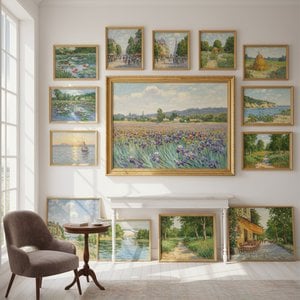
Impressionistische Landschaften: Die 10 Meisterwerke, die eine Kunstrichtung prägten | ArtsDot
Entdecken Sie die 10 Meisterwerke des Impressionismus! Von Monet bis Van Gogh – erleben Sie die Geschichten hinter berühmten Landschaftsbildern. Hochwertige Kunst Reproduktionen für Ihr Zuhause auf ArtsDot.com.

Pierre-Auguste Renoir: Die 25 Meisterwerke des Impressionismus für Ihr Zuhause | ArtsDot
Entdecken Sie die 25 schönsten Meisterwerke von Pierre-Auguste Renoir! Tauchen Sie ein in die Welt des Impressionismus, erleben Sie berühmte Gemälde wie 'Bal au moulin de la Galette' und finden Sie hochwertige Kunstdrucke für Ihr Zuhause. Jetzt auf ArtsDot.com!

Impressionistische Landschaften: Die 10 Meisterwerke, die eine Epoche prägten | ArtsDot
Entdecken Sie die 10 Meisterwerke des Impressionismus! Von Monet bis Renoir – erleben Sie die Geschichte, Technik und zeitlose Schönheit ikonischer Landschaftsbilder. Hochwertige Kunstdrucke auf ArtsDot.com. Jetzt entdecken!


