
Woman Hand-painted in oil, just for your walls


The picture follows your choices: , .
Beschreibung des Sammlerstücks
 Weiterlesen
Künstlerbiografie
Erforschen Sie die revolutionäre Kunst von Jackson Pollock (1912-1956), Pionier des Abstrakten Expressionismus und der Tropftechnik! Entdecken Sie seine ikonischen Leinwände und seine emotionale Intensität.
Handgefertigte Ölreproduktion
Handgemaltes Ölgemälde auf Leinwand in Ihrer Wunschgröße und mit Rahmen, auf Bestellung von unseren Künstlern angefertigt. ( Zum Druck wechseln Zum digitalen Bild wechseln)
Order your painting in four simple steps
Take your time. You can change any answer; the price in your order card follows each choice.
1 Step one of four
Which size would you like?
These sizes keep the proportions of the original painting. The drawing shows your choice on a wall, above a two-metre sofa.
Or give your own measurements
Wählen Sie aus unseren vordefinierten Formaten, die den ursprünglichen Proportionen des Kunstwerks entsprechen.

Geben Sie die Breite und die Höhe an, die Sie für Ihren Rahmen oder Ihre Wand benötigen. Da dieses Werk handgemalt ist, kann der Künstler bei einer anderen Form etwas mehr um das Bild herum malen oder etwas abschneiden – Sie entscheiden. Wir senden Ihnen ein digitales Mockup zur Freigabe, bevor mit dem Malen begonnen wird. Das auf dieser Seite gezeigte Bild stellt nicht das tatsächliche Ergebnis dar – dies tut nur das Mockup.
2 Step two of four
How should it be prepared: rolled, stretched or framed?
The prices below are for the size you chose in step one.
Choose the edges of the stretched canvas
Choose your frame

White €1

Blurside €1

Extended €1

P118B €10

P118H €10

P118W €10

P438Z €10

P508JH €12

P508YH €12

P805H €10

P805Z €10

P919BZ €10

P919G €10

P919XJ €10

P959ZH €10

P968JZ €12

W106C €8

W218G €10

W218JH €8

W218Y €10

W307PJ €10

W316G €10

W316PJ €8

W316Y €10

W398PJ €8

W4111J €10

W500HY €15

W500JH €15

W692G €12

W849H €8

W940BG €15

W953PJ €8

H24-GOLD €30

H24-SILVER €30

H36-GOLD €45

H36-SILVER €45
Gerahmt
Moulding: . Overall size with the frame: .
3 Step three of four
Would you like anything changed in the painting?
Most people answer no. Because each painting is made by hand, our artist can also adapt it for you.
After order, ArtsDot.com team will email client for instructions and provide a mockup preview
4 Step four of four
A few finishing options
All of them are optional. The answers already selected cost nothing extra.
Who paints it?
Weltweiter Versand () in nur 3 bis 4 Wochen statt der üblichen 5 Wochen. (29 Oktober). Keine Kompromisse bei der Qualität.
A nameplate, as in a museum?
Details der gravierten Bronzetafel
This elegant plaque features the artist's name and the title of the artwork, finely engraved for a timeless presentation.
It is made from bronze with a refined, elegant finish. The text is precisely laser-engraved for a sharp and permanent result. Measuring 9x2 cm, the plaque is compact yet easy to read. It's built to be durable and scratch-resistant, offering a professional, museum-quality look. Mounting is simple thanks to the included adhesive backing.
Details zur Acrylglas-Plakette (transparent)
The plaque includes essential engraved details such as the artist's name, the title of the artwork, the date it was created, the type of media used-like oil on canvas or watercolor-a brief description of the piece, and a QR code that links to the complete artwork information.
It is crafted from clear acrylic, offering a sleek, modern appearance. The text is UV-engraved in black to ensure strong visual contrast. With a size of 10x15 cm, it ensures optimal readability. It comes equipped with two metal hooks for secure wall mounting. The plaque is designed to be weather-resistant, making it suitable for various environments, and it includes interactive features that work seamlessly with smartphone scanning.
Details zur schwarzen Acryltafel
This elegant plaque includes engraved information such as the artist's name, the title of the artwork, the date it was created, the type of media used (like oil on canvas or watercolor), a short description of the artwork, and a QR code for quick access to more information.
The plaque itself is made from refined black acrylic with a premium finish. The text is laser-engraved in white for high contrast and readability. Its size is 10x15 cm, designed to be easy to read. It comes with two metal hooks for professional mounting. The design is sleek and fits any interior style. It is also weather-resistant and durable, with built-in digital integration for mobile compatibility.
A protective varnish?
When do you need it?
✓ Check and order
Your painting, as you ordered it

Woman
Art der Reproduktion
Format der Reproduktion
-

Erstklassige Meisterkünstler
Mehr Detailtiefe, Raffinesse und zusätzliche Produktionszeit
-

Rahmen für Reproduktionen
-
-
Bei Kunstwerken oder Reproduktionen, die an einer Seite größer als 105 cm (ca. 41 Zoll) sind, wird der Rahmen zerlegt als Bausatz geliefert. Diese Methode gewährleistet eine sichere Zustellung und verhindert Schäden während des Transports.
Professionelle Montage erforderlich – dies ist kein DIY-Produkt.
Der Bausatz muss von einem erfahrenen professionellen Rahmenmacher zusammengebaut und die Leinwand gespannt werden. Hierfür werden Holzleim (nicht im Lieferumfang enthalten), eine Leinwandspannzange sowie Klemmen benötigt, um die Keilleisten während des Trocknungsvorgangs rechtwinklig zu halten. Eine unsachgemäße Montage oder eine ungleichmäßige Spannung der Leinwand kann das Kunstwerk dauerhaft beschädigen und ist nicht durch unsere Garantie abgedeckt.
 Bei Kunstwerken oder Reproduktionen, die an einer Seite größer als 105 cm (ca. 41 Zoll) sind, wird der Rahmen zerlegt als Bausatz geliefert. Diese Methode gewährleistet eine sichere Zustellung und verhindert Schäden während des Transports.
Alle Vollholzkomponenten sind enthalten, präzise auf Maß zugeschnitten.
Der Zusammenbau erfolgt mit den mitgelieferten Schrauben sowie Holzkleber für die Eckverbindungen, der nicht im Lieferumfang enthalten ist und vom Rahmenbauer selbst beschafft werden muss.
Professionelles Werkzeug ist erforderlich und nicht im Lieferumfang enthalten: eine Keilrahmenzange (Spannwerkzeug) sowie Klammern, um die Leisten während der Trocknungszeit des Klebers rechtwinklig zu fixieren.
Wichtiger Hinweis:
Für die Eckverbindungen wird Holzleim benötigt, die Leisten müssen mit Zwingen fixiert werden, bis der Leim vollständig getrocknet ist, und das Spannen der Leinwand auf dem fertigen Rahmen erfordert eine Keilrahmen-Zange. Keines dieser Utensilien ist im Set enthalten. Bitte stellen Sie sicher, dass ein erfahrener Rahmenmacher zur Verfügung steht, bevor Sie diese Größe bestellen.

Beschriftung
-
-

Schutzlackierung
Glanzlack (verstärkt die Farben, schützt vor Licht und Feuchtigkeit)
-

Mein Kunstwerk personalisieren
Beispiele für Anpassungsmöglichkeiten: Gesicht durch Kundenfoto ersetzen; Haustier hinzufügen (z. B. Katze durch Hund ersetzen); Versteckte Nachricht im Hintergrund einfügen; Hintergrundlandschaft oder -elemente ändern.
-

Eilt sehr
Weltweiter Versand () in nur 3 bis 4 Wochen statt der üblichen 5 Wochen. (29 Oktober). Keine Kompromisse bei der Qualität.
-
Expressversand
Weltweiter Versand () innerhalb von 5 Wochen. (5 November).
Inklusive Versand
Endpreis
€ 232
Die Glasoption ist nur für Größen unter 110 cm verfügbar.
Included with every order
- Kostenloser weltweiter Expressversand
- Hochwertige Leinenleinwand
- Umfassender Versicherungsschutz beim Versand
- Zollgebühren-Rückerstattungsgarantie
- Garantie für exakte Farbtreue
- 100 Tage Rückgaberecht (nur bei Mängeln)
- 100% Geld-zurück-Garantie
- Mengenrabatt verfügbar


A Dance of Color and Emotion: Unveiling Jackson Pollock’s ‘Woman’
Jackson Pollock's “Woman,” completed in 1945 and currently residing within the hallowed halls of the Museum of Modern Art in New York City, isn’t merely a painting; it’s an immersive experience. This monumental work, measuring a substantial 60 x 38 inches, plunges the viewer into the heart of abstract expressionism – a movement defined by its raw emotionality and radical departure from traditional artistic conventions. More than just a depiction of a figure, “Woman” is a visceral exploration of the human psyche, a swirling vortex of color and gesture that speaks to the complexities of relationships, desire, and perhaps even the turbulent spirit of post-war America.
Pollock’s signature technique – what he termed “all-over painting” or “action painting” – is utterly central to understanding this piece. Forget carefully constructed compositions and defined forms; here, the canvas becomes a battlefield for pigment. Using his unique ‘drip’ method, Pollock poured, flung, and splattered layers of oil paint directly onto the linen surface, often working from all angles simultaneously. This process wasn't about creating an image to be *seen*, but rather about experiencing the act of painting itself – a dynamic, almost primal engagement with the materials and the space around him. The resulting web of lines, drips, and pools creates a mesmerizing rhythm, drawing the eye across the entire surface and inviting endless interpretation.
Decoding the Figure: Myth, Memory, and the Female Form
At first glance, “Woman” presents a strikingly unconventional representation of femininity. The central figure is undeniably female, though rendered in an abstract, fragmented manner. Her form isn’t clearly defined; instead, it emerges from the chaotic interplay of color and line – a suggestion rather than a precise depiction. Many art historians have speculated about the inspiration behind this enigmatic portrayal. A prevalent theory suggests that Pollock was influenced by his wife, Lee Krasner, a fellow abstract expressionist whose own work often explored themes of female identity and experience. However, the painting’s complexity resists simple explanation. It's possible that Pollock was grappling with broader ideas – perhaps anxieties about domesticity, the pressures of marriage, or even the shifting roles of women in society during this era.
Adding to the intrigue are the other figures interwoven within the composition. Some resemble distorted echoes of the central woman, while others appear as independent entities, engaged in a silent dance around her. These secondary forms could represent fragments of memory, desires, or even the internal conflicts that shape human relationships. The sheer density of imagery creates a sense of claustrophobia and intensity, mirroring the emotional turmoil often associated with complex interpersonal dynamics.
A Reflection of an Era: Post-War Anxiety and Artistic Rebellion
“Woman” was created in 1945, a pivotal year following the devastation of World War II. The painting reflects the widespread anxieties and uncertainties of the post-war period – a time marked by political instability, economic hardship, and a profound sense of loss. Abstract expressionism, with its emphasis on raw emotion and subjective experience, emerged as a direct response to this atmosphere of disillusionment. Pollock’s work, in particular, embodies a rejection of traditional artistic values and a bold assertion of individual freedom.
The painting's vibrant colors – reds, yellows, blues, and greens – contribute significantly to its emotional impact. These hues aren’t used in a representational manner; instead, they are deployed with an almost reckless abandon, creating a sense of energy and dynamism. The layering of paint further intensifies this effect, suggesting the accumulation of experiences, memories, and emotions over time. “Woman” is not simply a visual spectacle; it's a powerful testament to the transformative potential of art – its ability to capture and convey the most profound aspects of human existence.
Bringing ‘Woman’ Home: A High-Quality Reproduction
ArtsDot offers meticulously crafted, hand-painted reproductions of Jackson Pollock’s “Woman,” allowing you to bring this iconic masterpiece into your own space. Our skilled artists replicate Pollock's unique drip technique with exceptional precision, capturing the painting’s vibrant colors and dynamic energy. We use only archival-quality materials to ensure that your reproduction will last for generations to come. Whether you are an art collector, a design enthusiast, or simply someone who appreciates the beauty of abstract expressionism, a ArtsDot reproduction of “Woman” is a stunning addition to any collection.
Explore our selection today and discover the perfect way to experience the captivating power of Jackson Pollock’s “Woman.”
Fragen & Antworten
Welche Stimmung erzeugen die Farben von "Woman" von Jackson Pollock?
In "Woman" begleiten Earthy-Farbtöne ein Mysterious Gefühl.
Sind die Farben von "Woman" von Jackson Pollock leuchtend oder eher dezent?
"Woman" von Jackson Pollock zeichnet sich durch eine Sättigung von Subtle Color und eine Intensität von Balanced aus.
Für welche Verwendung wird ein Druck von "Woman" empfohlen?
Eine Reproduktion von "Woman" von Jackson Pollock wird für Statement empfohlen. Dieser Vorschlag ergibt sich aus dem Motiv, der Stimmung und den Farben des Werkes.

Jackson Pollock
1912 - 1956, Vereinigte Staaten von Amerika
Künstlerbiografie
Frühes Leben und die Keime der Innovation
Paul Jackson Pollock, geboren 1912 in Cody, Wyoming, war von Beginn an ein rastloser Geist. Sein frühes Leben war geprägt von häufigen Ortswechseln, da sein Vater als Landvermesser in den weiten Landschaften des amerikanischen Westens arbeitete. Diese wandernde Existenz vermittelte dem jungen Pollock eine tiefe Verbindung zur natürlichen Welt und machte ihn mit vielfältigen Kulturen vertraut – insbesondere durch Begegnungen mit der Kunst der amerikanischen Ureinwohner während jener Vermessungsreisen, Eindrücke, die seine künstlerische Vision im späteren Leben subtil durchdringen sollten. Obwohl er indigene Stile nie explizit imitierte, hinterließen die rohe Energie und die spirituelle Resonanz dieser frühen Erfahrungen zweifellos ihre Spuren.
Pollocks formale künstlerische Ausbildung begann an der Manual Arts High School in Los Angeles, gefolgt von Studien an der Art Students League in New York unter der Anleitung von Thomas Hart Benton. Benton, eine prominente Figur der Regionalismus-Bewegung, legte Wert auf rhythmische Komposition und narrative Themen, die im amerikanischen Leben verwurzelt waren. Während Pollock diese Lektionen anfangs verinnerlichte, neigte seine angeborene Veranlagung zu abstrakteren Erkundungen. Er wurde auch tief von mexikanischen Muralisten wie José Clemente Orozco beeinflusst, deren kraftvolle Darstellungen des sozialen Kampfes bei ihm tiefen Widerhall fanden. Diese frühen Einflüsse legten ein Fundament, doch es war die aufstrebende Welt des Surrealismus, die Pollocks künstlerisches Potenzial wahrhaftig entfesselte.
Die Geburtsstunde des Action Painting und eine revolutionäre Technik
In den 1930er Jahren experimentierte Pollock mit verschiedenen Techniken und suchte nach Alternativen zum traditionellen Pinselstrich. Er begann, Farbe zu gießen, und erforschte deren Fließfähigkeit und unvorhersehbare Natur. Um das Jahr 1947 jedoch erfuhr seine künstlerische Laufbahn eine radikale Transformation. Indem er die Stafflei gänzlich aufgab, legte Pollock die Leinwände direkt auf den Boden und initiierte das, was als seine „Drip-Technik“ bekannt werden sollte. Er begann, Farbe von oben auf die Leinwand zu tropfen, zu spritzen und zu schleudern, wodurch er einen dynamischen Tanz zwischen Künstler, Medium und Oberfläche orchestrierte.
Dabei ging es nicht bloß um das Auftragen von Farbe; es ging darum, den Akt des Erschaffens selbst zu verkörpern. Pollocks Leinwände wurden zu Arenen physischen Ausdrucks, die die Unmittelbarkeit seiner Gesten und Emotionen einfingen. Die resultierenden Gemälde zeichnen sich durch ihre „All-over“-Komposition aus – ein Mangel an zentralem Fokus, der den Betrachter dazu einlädt, die gesamte Oberfläche als ein einheitliches Energiefeld zu erkunden. Komplexe Netzwerke aus Linien und Farben verflechten sich und schaffen eine visuelle Komplexität, die zugleich fesselnd und herausfordernd ist. Er verwendete unkonventionelle Werkzeuge – Stöcke, Messer, sogar Spritzen –, um die Farbe auf unvorhersehbare Weise zu manipulieren, was die spontane Natur seines Prozesses weiter unterstrich.
Dieser innovative Ansatz positionierte Pollock als zentrale Figur der aufstrebenden Abstrakten Expressionismus-Bewegung, die im New York der Nachkriegszeit entstand. Der Abstrakte Expressionismus priorisierte die spontane Geste, das monumentale Format und die nicht-gegenständliche Bildsprache und spiegelte einen breiteren kulturellen Wandel weg von traditionellen künstlerischen Konventionen wider. Auch seine Ehe mit der Mitkünstlerin Lee Krasner war entscheidend; sie bot ihm unerschütterliche emotionale Unterstützung und förderte aktiv seine künstlerische Entwicklung, da sie das bahnbrechende Wesen seiner Arbeit erkannte.
Ikonische Werke und ein bleibendes Vermächtnis
Pollocks berühmteste Werke – wie Number 1, 1950 (Lavender Mist), One: Number 31, 1950, Blue Poles: Number 11, 1952 und Convergence – sind Zeugnisse seiner revolutionären Technik. Diese Gemälde sind nicht einfach nur Bilder; sie sind Aufzeichnungen einer Performance, durchdrungen von der physischen Präsenz und emotionalen Intensität des Künstlers. Die dynamische Energie, die von diesen Leinwänden ausgeht, ist greifbar und zieht den Betrachter in eine Welt reiner Abstraktion.
Sein Stil transzendiert reine Ästhetik; er ist eine Untersuchung des Prozesses über das Produkt. Pollock suchte danach, die Unmittelbarkeit seiner Handlungen und Emotionen auf der Leinwand festzuhalten, indem er traditionelle Vorstellungen von Komposition und Repräsentation ablehnte. Er vertiefte sich in die Jungsche Psychologie und erforschte Archetypen sowie das Unterbewusste in seiner Kunst, um universelle Symbole und Urkräfte anzuzapfen.
Pollocks Einfluss auf die Kunstgeschichte ist unermesslich. Er veränderte grundlegend die Art und Weise, wie Künstler der Malerei entgegentraten, indem er sich von staffeleibasierten Methoden befreite und einen performativeren Ansatz wählte. Sein Werk half dabei, die Position New Yorks als globales Zentrum der modernen Kunst zu festigen und verlagerte den Fokus weg von der europäischen Dominanz. Sein Einfluss zeigt sich in den Werken unzähliger nachfolgender Künstler, einschließlich jener, die mit der Color Field Painting-Bewegung und späteren Formen des Abstrakten Expressionismus verbunden sind.
Obwohl er anfangs auf gemischte Kritiken stieß – einige Kritiker taten sein Werk als chaotisch oder handwerklich unzulänglich ab – wuchs Pollocks Ruf nach seinem frühen Tod im Jahr 1956 im Alter von 44 Jahren stetig an. Heute wird er universell als einer der bedeutendsten und einflussreichsten Künstler des 20. Jahrhunderts anerkannt – ein Visionär, der es wagte, Konventionen herauszufordern und die Grenzen des künstlerischen Ausdrucks neu zu definieren. Seine innovativen Techniken und sein expressiver Stil inspirieren und provozieren bis heute und sichern ihm ein unvergängliches Vermächtnis für kommende Generationen.
Quick facts about Jackson Pollock
- Artistic Movement Or Style: Abstrakt Expressionismus
- Artists Who Influenced This Artist:
- José Clemente Orozco
- Thomas Hart Benton
- Date Of Birth: Januar 28, 1912
- Date Of Death: August 11, 1956
- Full Name: Paul Jackson Pollock
- Nationality: Amerikanisch
- Notable Artworks:
- Number 1, 1950 (Lavender Mist)
- One: Number 31, 1950
- Blue Poles: Number 11, 1952
- Convergence
- Place Of Birth: Cody, USA
Ähnliche Kunstwerke


Ähnliche Artikel
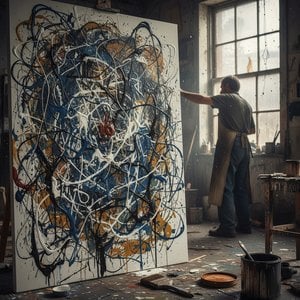
Jackson Pollock: Ein radikaler Aufbruch und das Erbe des Abstrakten Expressionismus
Entdecken Sie Jackson Pollocks revolutionäres Werk und das Erbe des Abstrakten Expressionismus. Expertenanalyse, Hintergrundinformationen & Investitionstipps für Kunstsammler.

Jacob Kainen: A Pioneer of American Color Field Painting & Abstract Expressionism
Explore the life & work of Jacob Kainen, a pivotal figure in American Abstract Expressionism and Color Field painting. Discover his journey from Social Realism to vibrant abstraction and lasting influence on 20th-century art.

Beyond Representation: Exploring the Emotional Landscape of Abstract Expressionism
Explore the profound emotional world of Abstract Expressionism with ArtsDot. Discover key artists like Pollock & Rothko, learn about collecting, and find museum-quality reproductions to inspire your space.

Beyond Representation: Exploring the Evolution & Enduring Impact of Abstract Art
Explore the evolution of Abstract Expressionism & its profound impact on modern art. Discover key artists, defining styles, collecting insights & build your own significant collection with ArtsDot.

Abstrakter Expressionismus: Die 10 Meisterwerke, die eine Kunstbewegung prägten |
Entdecken Sie die 10 Meisterwerke des Abstrakten Expressionismus! Von Jackson Pollock bis Mark Rothko – erfahren Sie die Geschichten hinter ikonischen Gemälde und finden Sie hochwertige Reproduktionen für Ihr Zuhause. Jetzt bei entdecken!
 Vorschau anzeigen
 Versenden
 Teilen
 Details anzeigen
 Leitfaden

 Herunterladen
 Ähnliche Objekte
 Röntgenaufnahme
 Diashow
 Q&A
Q&A Statistiken