
 Acryl auf Leinwand
- Wandkunst
- Post-Impressionism
 1860
1860- – Hochmittelalter
 23.0 x 31.0 cm

The picture follows your choices: , .
Beschreibung des Sammlerstücks
Paul Cézannes Mühle mit Landschaft (1860) verkörpert den Übergang von Impressionismus zu Kubismus und beeindruckt durch seine einzigartige Komposition und Verwendung von Licht und Farbe.
 Weiterlesen
Künstlerbiografie
Erkunden Sie die revolutionäre Kunst von Paul Cézanne (1839–1906), einem Postimpressionisten, der Impressionismus und Kubismus miteinander verband. Entdecken Sie seine geometrischen Formen, seine einzigartigen Pinselstriche, Stilllebenmalereien und seinen bleibenden Einfluss auf die moderne Kunst. #Cézanne #PostImpressionismus
Handgefertigte Ölreproduktion
Handgemaltes Ölgemälde auf Leinwand in Ihrer Wunschgröße und mit Rahmen, auf Bestellung von unseren Künstlern angefertigt. ( Zum Druck wechseln Zum digitalen Bild wechseln)
More about this painting
 Vorschau anzeigen
 Versenden
 Teilen
 Details anzeigen
 Leitfaden

 Herunterladen
 Ähnliche Objekte
 Röntgenaufnahme
 Diashow
 Q&A
Q&A Statistiken
Order your painting in four simple steps
Take your time. You can change any answer; the price in your order card follows each choice.
1 Step one of four
Which size would you like?
These sizes keep the proportions of the original painting. The drawing shows your choice on a wall, above a two-metre sofa.
Or give your own measurements
Wählen Sie aus unseren vordefinierten Formaten, die den ursprünglichen Proportionen des Kunstwerks entsprechen.

Geben Sie die Breite und die Höhe an, die Sie für Ihren Rahmen oder Ihre Wand benötigen. Da dieses Werk handgemalt ist, kann der Künstler bei einer anderen Form etwas mehr um das Bild herum malen oder etwas abschneiden – Sie entscheiden. Wir senden Ihnen ein digitales Mockup zur Freigabe, bevor mit dem Malen begonnen wird. Das auf dieser Seite gezeigte Bild stellt nicht das tatsächliche Ergebnis dar – dies tut nur das Mockup.
2 Step two of four
How should it be prepared: rolled, stretched or framed?
The prices below are for the size you chose in step one.
Choose the edges of the stretched canvas
Choose your frame

White €1

Blurside €1

Extended €1

P118B €10

P118H €10

P118W €10

P438Z €10

P508JH €12

P508YH €12

P805H €10

P805Z €10

P919BZ €10

P919G €10

P919XJ €10

P959ZH €10

P968JZ €12

W106C €8

W218G €10

W218JH €8

W218Y €10

W307PJ €10

W316G €10

W316PJ €8

W316Y €10

W398PJ €8

W4111J €10

W500HY €15

W500JH €15

W692G €12

W849H €8

W940BG €15

W953PJ €8

H24-GOLD €30

H24-SILVER €30

H36-GOLD €45

H36-SILVER €45
Gerahmt
Moulding: . Overall size with the frame: .
3 Step three of four
Would you like anything changed in the painting?
Most people answer no. Because each painting is made by hand, our artist can also adapt it for you.
After order, ArtsDot.com team will email client for instructions and provide a mockup preview
4 Step four of four
A few finishing options
All of them are optional. The answers already selected cost nothing extra.
Who paints it?
Weltweiter Versand () in nur 3 bis 4 Wochen statt der üblichen 5 Wochen. (31 Oktober). Keine Kompromisse bei der Qualität.
A nameplate, as in a museum?
Details der gravierten Bronzetafel
This elegant plaque features the artist's name and the title of the artwork, finely engraved for a timeless presentation.
It is made from bronze with a refined, elegant finish. The text is precisely laser-engraved for a sharp and permanent result. Measuring 9x2 cm, the plaque is compact yet easy to read. It's built to be durable and scratch-resistant, offering a professional, museum-quality look. Mounting is simple thanks to the included adhesive backing.
Details zur Acrylglas-Plakette (transparent)
The plaque includes essential engraved details such as the artist's name, the title of the artwork, the date it was created, the type of media used-like oil on canvas or watercolor-a brief description of the piece, and a QR code that links to the complete artwork information.
It is crafted from clear acrylic, offering a sleek, modern appearance. The text is UV-engraved in black to ensure strong visual contrast. With a size of 10x15 cm, it ensures optimal readability. It comes equipped with two metal hooks for secure wall mounting. The plaque is designed to be weather-resistant, making it suitable for various environments, and it includes interactive features that work seamlessly with smartphone scanning.
Details zur schwarzen Acryltafel
This elegant plaque includes engraved information such as the artist's name, the title of the artwork, the date it was created, the type of media used (like oil on canvas or watercolor), a short description of the artwork, and a QR code for quick access to more information.
The plaque itself is made from refined black acrylic with a premium finish. The text is laser-engraved in white for high contrast and readability. Its size is 10x15 cm, designed to be easy to read. It comes with two metal hooks for professional mounting. The design is sleek and fits any interior style. It is also weather-resistant and durable, with built-in digital integration for mobile compatibility.
A protective varnish?
When do you need it?
✓ Check and order
Your painting, as you ordered it

Mühle mit Landschaft
Art der Reproduktion
Format der Reproduktion
-

Erstklassige Meisterkünstler
Mehr Detailtiefe, Raffinesse und zusätzliche Produktionszeit
-

Rahmen für Reproduktionen
-
-
Bei Kunstwerken oder Reproduktionen, die an einer Seite größer als 105 cm (ca. 41 Zoll) sind, wird der Rahmen zerlegt als Bausatz geliefert. Diese Methode gewährleistet eine sichere Zustellung und verhindert Schäden während des Transports.
Professionelle Montage erforderlich – dies ist kein DIY-Produkt.
Der Bausatz muss von einem erfahrenen professionellen Rahmenmacher zusammengebaut und die Leinwand gespannt werden. Hierfür werden Holzleim (nicht im Lieferumfang enthalten), eine Leinwandspannzange sowie Klemmen benötigt, um die Keilleisten während des Trocknungsvorgangs rechtwinklig zu halten. Eine unsachgemäße Montage oder eine ungleichmäßige Spannung der Leinwand kann das Kunstwerk dauerhaft beschädigen und ist nicht durch unsere Garantie abgedeckt.
 Bei Kunstwerken oder Reproduktionen, die an einer Seite größer als 105 cm (ca. 41 Zoll) sind, wird der Rahmen zerlegt als Bausatz geliefert. Diese Methode gewährleistet eine sichere Zustellung und verhindert Schäden während des Transports.
Alle Vollholzkomponenten sind enthalten, präzise auf Maß zugeschnitten.
Der Zusammenbau erfolgt mit den mitgelieferten Schrauben sowie Holzkleber für die Eckverbindungen, der nicht im Lieferumfang enthalten ist und vom Rahmenbauer selbst beschafft werden muss.
Professionelles Werkzeug ist erforderlich und nicht im Lieferumfang enthalten: eine Keilrahmenzange (Spannwerkzeug) sowie Klammern, um die Leisten während der Trocknungszeit des Klebers rechtwinklig zu fixieren.
Wichtiger Hinweis:
Für die Eckverbindungen wird Holzleim benötigt, die Leisten müssen mit Zwingen fixiert werden, bis der Leim vollständig getrocknet ist, und das Spannen der Leinwand auf dem fertigen Rahmen erfordert eine Keilrahmen-Zange. Keines dieser Utensilien ist im Set enthalten. Bitte stellen Sie sicher, dass ein erfahrener Rahmenmacher zur Verfügung steht, bevor Sie diese Größe bestellen.

Beschriftung
-
-

Schutzlackierung
Glanzlack (verstärkt die Farben, schützt vor Licht und Feuchtigkeit)
-

Mein Kunstwerk personalisieren
Beispiele für Anpassungsmöglichkeiten: Gesicht durch Kundenfoto ersetzen; Haustier hinzufügen (z. B. Katze durch Hund ersetzen); Versteckte Nachricht im Hintergrund einfügen; Hintergrundlandschaft oder -elemente ändern.
-

Eilt sehr
Weltweiter Versand () in nur 3 bis 4 Wochen statt der üblichen 5 Wochen. (31 Oktober). Keine Kompromisse bei der Qualität.
-
Expressversand
Weltweiter Versand () innerhalb von 5 Wochen. (7 November).
Inklusive Versand
Endpreis
€ 233
Die Glasoption ist nur für Größen unter 110 cm verfügbar.
Included with every order
- Kostenloser weltweiter Expressversand
- Hochwertige Leinenleinwand
- Umfassender Versicherungsschutz beim Versand
- Zollgebühren-Rückerstattungsgarantie
- Garantie für exakte Farbtreue
- 100 Tage Rückgaberecht (nur bei Mängeln)
- 100% Geld-zurück-Garantie
- Mengenrabatt verfügbar


Landschaft mit Mühle
Paul Cézannes Landschaft mit Mühle gilt als ein Eckpfeiler der modernen Kunst. Es verkörpert Cézannes revolutionären Ansatz der Darstellung und festigte sein Vermächtnis als einer der einflussreichsten Maler des späten 19. Jahrhunderts. Weit mehr als nur die Abbildung einer ländlichen Szene – ein Haus, das zwischen Bäumen eingebettet ist und in gesprenkeltem Sonnenlicht badet – ist es eine Erkundung von Form, Farbe und Wahrnehmung, die nachfolgende künstlerische Bewegungen wie den Kubismus tiefgreifend beeinflusst hat.Künstlerischer Stil und Einfluss
Cézanne lehnte die Konventionen der akademischen Kunst ab und gab formalen Qualitäten den Vorzug gegenüber einem akribischen Realismus. Er löste die traditionelle Perspektive auf, ebnete den Raum und vereinfachte Formen, um die zugrunde liestenden strukturellen Elemente zu betonen – eine Technik, die er als „bildnerische Vereinfachung“ bezeichnete. Diese bewusste Missachtung etablierter Regeln war nicht bloß stilistischer Natur; sie war eine philosophische Behauptung, dass die visuelle Erfahrung über die reine optische Täuschung hinausgeht. Cézannes repetitive Pinselstriche – oft dicke, pastose Züge – wurden sofort erkennbar und übten einen tiefen Einfluss aus, indem sie Künstler dazu inspirierten, Textur und Materialität als expressive Werkzeuge zu experimentieren. Sein Werk ebnete direkt den Weg für den Kubismus, angeführt von Picasso und Matisse, die Cézannes Fragmentierung der Form und die gleichzeitigen Blickwinkel als grundlegende Prinzipien übernahmen.Komposition und Elemente
Die Komposition des Gemäldes ist täuschend ruhig und dennoch akribisch ausgearbeitet. Cézanne präsentiert eine friedliche Landschaft, die von einem bescheidenen Haus mit einem leuchtend roten Dach dominiert wird – ein markantes visuelles Element, das den Blick sofort auf sich zieht. Zwei Figuren stehen vor dem Gebäude, subtil positioniert, um ein Gleichgewicht innerhalb des Rahmens zu schaffen. Verstreute Vögel unterbrechen den Vordergrund, verleihen der Szene Dynamik und deuten die Präsenz der natürlichen Welt an. Ein Boot ruht auf der Wasseroberfläche und verankert die Szene vor dem Hintergrund dichten Blattwerks – eine bewusste Entscheidung, um die Tiefenwahrnehmung zu verstärken und ein Gefühl der Stille zu vermitteln. Cézannes sorgfältige Beobachtung seiner Motive ist greifbar; jedes Element trägt zu einem Gesamteindruck kontemplativer Schönheit bei.Licht und Farbe
Cézannes meisterhafter Einsatz von Licht und Farbe erhebt die Landschaft mit Mühle über die bloße visuelle Darstellung hinaus. Das Licht spielt eine entscheidende Rolle bei der Gestaltung der Wahrnehmung, beeinflusst die Farbe und erzeugt Volumen – ein Prinzip, das Cézanne in seinem gesamten Werk vertrat. Das Zusammenspiel von Licht und Schatten formt die Konturen des Hauses und der Bäume, erzeugt Tiefe und verstärkt die atmosphärische Qualität des Gemäldes. Cézanne verwendete eine Palette, die durch gedämpfte Töne charakterisiert ist – vor allem Ocker, Braun und Grün –, moduliert mit subtilen Abstufungen, um den Eindruck von dunstigem Sonnenlicht zu vermitteln, das durch das Laub filtert. Dieses zurückhaltende Farbschema unterstreicht die kontemplative Stimmung des Bildes und verstärkt seine Verbindung zu impressionistischen Idealen.Moderne und Vermächtnis
Cézannes Beitrag zur modernen Kunst ist unbestreitbar; er forderte künstlerische Konventionen grundlegend heraus und leitete eine neue Ära des Experimentierens ein. Sein Beharren darauf, die zugrunde liegende Struktur zu erforschen und die Form zu vereinfachen, fand tiefen Widerhall bei Künstlern, die nach innovativem Ausdruck strebten. Er reagierte nicht nur auf den Impressionismus, sondern konstruierte aktiv eine visuelle Sprache, die die radikalen Transformationen des Kubismus und nachfolgender Bewegungen vorwegnahm – ein Zeugnis seines visionären Intellekts und seines dauerhaften Einflusses auf die Kunstgeschichte. Heute inspiriert die Landschaft mit Mühle Künstler und Sammler gleichermaßen – ein zeitloses Meisterwerk, das Cézannes unerschütterliche Hingabe an künstlerische Wahrheit und Innovation verkörpert.- Der Kuss der Muse von Paul Cézanne
- Paul Cézanne auf Wikipedia
- Landschaft mit Mühle von Paul Cézanne auf ArtsDot
Für weitere Informationen über Paul Cézanne und seine Werke besuchen Sie bitte https://AllArtsDot.com.
Fragen & Antworten
Wirken die Farben von "Mühle mit Landschaft" eher kräftig oder sanft?
Die Farbsättigung von „Mühle mit Landschaft“ ist Ausgewogen. Die Intensität beschreibt, wie kräftig die Farben wirken.
In welcher Phase der Karriere von Paul Cézanne lässt sich „Mühle mit Landschaft“ angesichts seines Entstehungsdatums einordnen?
"Mühle mit Landschaft", entstanden im Jahr 1860, stammt aus der Mature Period von Paul Cézanne.
Ist die Abbildung von "Mühle mit Landschaft" von Paul Cézanne gemeinfrei?
Die urheberrechtliche Situation für "Mühle mit Landschaft" von Paul Cézanne: Das Werk ist gemeinfrei – das Urheberrecht ist abgelaufen. Dies bestimmt, ob Reproduktionen des Bildes frei erstellt werden dürfen.
Ähnliche Kunstwerke


Paul Cézanne
1839 - 1906, Frankreich
Künstlerbiografie
frühes Leben und Einflüsse
Paul Cézanne, ein französischer Post-Impressionist-Maler, wurde am 19. Januar 1839 in Aix-en-Provence, Frankreich, geboren. Sein frühes Leben war geprägt von einer starken Verbindung zu seiner Familie’s Bankgeschäft, das ihm finanzielle Sicherheit verschaffte. Dies ermöglichte es ihm, sich ohne finanziellen Druck auf seine künstlerischen Bestrebungen zu konzentrieren. Les Nabis, Neo-Impressionismus und Symbolismus beeinflussten Cézannes frühe Arbeit, die sich durch seinen Schwerpunkt auf geometrische Formen und eine reduzierte Farbpalette auszeichnete. Sein Interesse an den Werken von Paul Gauguin und Georges Seurat festigte seinen Post-Impressionismusstil.Künstlerischer Stil und Techniken
Cézannes innovative Verwendung von Farbflächen und kleinen, sich wiederholenden Pinselstrichen schuf komplexe Felder, die seine intensive Beschäftigung mit den Motiven widerspiegelten. Sein oft explorativer Ansatz in der Kunst führte zur Entwicklung einer neuen bildlichen Sprache, die die zugrunde liegende Struktur von Objekten in einer Komposition betonte.- Schlüsselmerkmale:
- Geometrische Formen und Facetten
- Reduzierte Farbpalette
- Betonung der konstruktiven Essenz der physischen Welt
- Mehrere Perspektiven und Simultaneität
- Einflussreiche Werke:
- The Pond at Jas de Bouffan (1880)
- Portrait of Emile Zola (1866)
- Wald (1892)
- Museen mit Cézannes Werken:
- Musée Marmottan Monet in Paris, Frankreich
- The Museum of Fine Arts in Houston, Vereinigte Staaten
Vermächtnis und Einfluss
Cézannes bahnbrechende Arbeit im Post-Impressionismus ebnete den Weg für verschiedene Avantgarde-Bewegungen, darunter Kubismus, Fauvismus und Surrealismus. Sein Einfluss ist in den Werken von Pablo Picasso, Henri Matisse und Georges Braque zu sehen. Cézannes Vermächtnis inspiriert weiterhin Künstler und Kunstinteressierte gleichermaßen und festigt seinen Platz als eine zentrale Figur in der Geschichte der modernen Kunst.- Verwandte Kunstbewegungen:
- Betrachten Sie Cézannes Werke:


Ähnliche Artikel
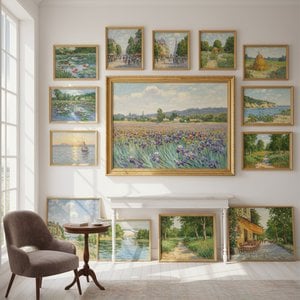
Impressionistische Landschaften: Die 10 Meisterwerke, die eine Kunstrichtung prägten | ArtsDot
Entdecken Sie die 10 Meisterwerke des Impressionismus! Von Monet bis Van Gogh – erleben Sie die Geschichten hinter berühmten Landschaftsbildern. Hochwertige Kunst Reproduktionen für Ihr Zuhause auf ArtsDot.com.

Die 25 besten Gemälde von Paul Cézanne: Meisterwerke der Form
Entdecken Sie die 25 Meisterwerke von Paul Cézanne und den Postimpressionismus. Alle Klassiker auf ArtsDot.com online erleben.

Impressionistische Landschaften: Die 10 Meisterwerke, die eine Epoche prägten | ArtsDot
Entdecken Sie die 10 Meisterwerke des Impressionismus! Von Monet bis Renoir – erleben Sie die Geschichte, Technik und zeitlose Schönheit ikonischer Landschaftsbilder. Hochwertige Kunstdrucke auf ArtsDot.com. Jetzt entdecken!