


 In echtem Maßstab anzeigen
 Versenden als Grußkarte
 Teilen
 Details anzeigen
 Leitfaden öffnen

 Herunterladen
 Ähnliche Objekte
 Röntgenaufnahme
 Diashow
 Besucherstatistiken
Blumen in einer Vase


 Mehr anzeigen
Handgefertigte Ölreproduktion
Handgemaltes Ölgemälde auf Leinwand in Ihrer Wunschgröße und mit Rahmen, auf Bestellung von unseren Künstlern angefertigt. ( Zum Druck wechseln Zum digitalen Bild wechseln)




P118B €10

P118H €10

P118W €10

P438Z €10

P508JH €12

P508YH €12

P805H €10

P805Z €10

P919BZ €10

P919G €10

P919XJ €10

P959ZH €10

P968JZ €12

W106C €8

W218G €10

W218JH €8

W218Y €10

W307PJ €10

W316G €10

W316PJ €8

W316Y €10

W398PJ €8

W4111J €10

W500HY €15

W500JH €15

W692G €12

W849H €8

W940BG €15

W953PJ €8




Wählen Sie aus unseren vordefinierten Formaten, die den ursprünglichen Proportionen des Kunstwerks entsprechen.

Geben Sie die Breite und die Höhe an, die Sie für Ihren Rahmen oder Ihre Wand benötigen. Da dieses Werk handgemalt ist, kann der Künstler bei einer anderen Form etwas mehr um das Bild herum malen oder etwas abschneiden – Sie entscheiden. Wir senden Ihnen ein digitales Mockup zur Freigabe, bevor mit dem Malen begonnen wird. Das auf dieser Seite gezeigte Bild stellt nicht das tatsächliche Ergebnis dar – dies tut nur das Mockup.
Nach der Bestellung wird das ArtsDot.com-Team dem Kunden Anweisungen per E-Mail zusenden und eine Mockup-Vorschau bereitstellen.
Weltweiter Versand () in nur 3 bis 4 Wochen statt der üblichen 5 Wochen. (22 Oktober). Keine Kompromisse bei der Qualität.

Kostenloser weltweiter Expressversand

Hochwertige Leinenleinwand

Vollständiger Versicherungsschutz beim Versand

Zollgebühren-Rückerstattungsgarantie

Garantie für exakte Farbtreue

100-tägiges Rückgaberecht (nur bei Mängeln)

100% Geld-zurück-Garantie

Angebot für Mengenrabatt
 Die Glasoption ist nur für Größen unter 110 cm verfügbar.

Blumen in einer Vase
Reproduktionsmedium
Format der Reproduktion
-


Gesamtpreis
€ 231
The Painting and Its Artist
Paul Cézanne, a French painter, is renowned for his pivotal role in the transition from 19th-century Impressionism to early 20th-century Cubism. His work, characterized by repetitive brushstrokes and an emphasis on structure, laid the groundwork for avant-garde movements. “Flowers in a Blue Vase,” created in 1875, is one of his notable works that exemplify his unique style. It’s more than just a depiction of flowers; it's a distillation of Cézanne’s obsession with capturing the essence of form and solidity—a radical departure from Impressionism’s fleeting impressions of light. The painting embodies Cézanne’s meticulous observation of nature combined with an intellectual understanding of its underlying geometric principles.Artistic Style and Technique
This painting is a quintessential example of Post-Impressionism, a movement that emerged as a reaction against the naturalistic depiction of light and color in Impressionist art. Cézanne’s use of planes of color and small brushstrokes creates complex fields, giving the painting a dynamic and expressive quality. Unlike Impressionists who sought to reproduce what they saw exactly, Cézanne actively reshaped his subject matter, simplifying it into basic geometric forms—cylinders, cones, and cubes—to convey its fundamental structure. This technique is evident in the vase itself, which appears to be constructed from overlapping planes of blue and ochre, rather than simply reflecting light. The brushstrokes are deliberately visible, contributing to the painting’s textural richness and conveying Cézanne's unwavering commitment to capturing the materiality of his subject.Historical Context
In 1875, when “Flowers in a Blue Vase” was painted, Cézanne was still developing his style. His early works were influenced by Romanticism and Realism, but he soon moved towards a more innovative approach. He was deeply affected by the Impressionist painters who preceded him—particularly Monet and Renoir—but Cézanne refused to accept their aesthetic limitations. The painting reflects his intense study of subjects and his emphasis on the underlying structure of objects. It’s considered a cornerstone of Post-Impressionism, marking a decisive step away from Impressionistic idealism toward a more assertive exploration of form and color.Reception and Legacy
Initially, Cézanne's work was met with incomprehension and ridicule. Critics dismissed it as clumsy and lacking in finesse, arguing that it betrayed Cézanne’s disregard for traditional artistic conventions. However, fellow artists like Camille Pissarro and art dealer Ambroise Vollard recognized his genius. They championed his vision of art—a vision rooted in observation but driven by intellectual curiosity—and defended him against the scorn of mainstream critics. The first solo exhibition of his works in 1895 at Vollard’s gallery marked a turning point in his career, attracting considerable attention and establishing Cézanne as a leading figure in the burgeoning avant-garde movement. Both Henri Matisse and Pablo Picasso acknowledged Cézanne as “the father of us all,” recognizing his profound influence on their own artistic development. His work continues to inspire artists today, demonstrating that beauty can be found not only in capturing fleeting moments but also in revealing the enduring essence of form and substance.Current Location and Significance
“Flowers in a Blue Vase” is housed at the The State Hermitage Museum in Russia, a testament to its enduring importance. This painting, alongside others by Cézanne—such as “Still Life with Curtain and Flowered Pitcher”—represents a pivotal moment in art history, signaling the birth of Cubism and fundamentally altering the course of modern artistic expression. For those interested in exploring more of Cézanne’s works, Paul Cézanne: Flowers in a Blue Vase and Paul Cézanne: Still Life with Curtain and Flowered Pitcher are available at ArtsDot. These hand-made oil painting reproductions offer a unique opportunity to own a piece of art history.- Post-Impressionism Art Movement: A predominantly French movement that developed roughly between 1886 and 1905, characterized by a reaction against Impressionists’ concern for the naturalistic depiction of light and color. Learn more about Post-Impressionism.
- Paul Cézanne's Biography: A French painter who introduced new modes of representation and influenced avant-garde artistic movements. Read more about Paul Cézanne on Wikipedia.
- History of Art: The history of art focuses on objects made by humans for various purposes, with a primary emphasis on their aesthetic visual form. Explore the History of Art on Wikipedia.
This article provides an in-depth look at “Flowers in a Blue Vase” by Paul Cézanne, highlighting its significance within the Post-Impressionist movement and its enduring influence on modern art.
Fragen & Antworten
Wann wurde "Blumen in einer Vase" von Paul Cézanne geschaffen und welcher Stil liegt ihm zugrunde?
"Blumen in einer Vase" von Paul Cézanne datiert aus dem Jahr 1875 und gehört zur Post-Impressionism.
Wie kann ich eine Reproduktion von "Blumen in einer Vase" von Paul Cézanne in der Vorschau ansehen?
Auf der Vorschau-Seite von „Blumen in einer Vase“ können Sie das Kunstwerk vor der Bestellung in einer Vorschau betrachten.
Wie intensiv sind die Farben in "Blumen in einer Vase" von Paul Cézanne?
"Blumen in einer Vase" von Paul Cézanne weist eine Leuchtend Farbintensität auf.
Ähnliche Kunstwerke


Biografie des Künstlers
frühes Leben und Einflüsse
Paul Cézanne, ein französischer Post-Impressionist-Maler, wurde am 19. Januar 1839 in Aix-en-Provence, Frankreich, geboren. Sein frühes Leben war geprägt von einer starken Verbindung zu seiner Familie’s Bankgeschäft, das ihm finanzielle Sicherheit verschaffte. Dies ermöglichte es ihm, sich ohne finanziellen Druck auf seine künstlerischen Bestrebungen zu konzentrieren. Les Nabis, Neo-Impressionismus und Symbolismus beeinflussten Cézannes frühe Arbeit, die sich durch seinen Schwerpunkt auf geometrische Formen und eine reduzierte Farbpalette auszeichnete. Sein Interesse an den Werken von Paul Gauguin und Georges Seurat festigte seinen Post-Impressionismusstil.Künstlerischer Stil und Techniken
Cézannes innovative Verwendung von Farbflächen und kleinen, sich wiederholenden Pinselstrichen schuf komplexe Felder, die seine intensive Beschäftigung mit den Motiven widerspiegelten. Sein oft explorativer Ansatz in der Kunst führte zur Entwicklung einer neuen bildlichen Sprache, die die zugrunde liegende Struktur von Objekten in einer Komposition betonte.- Schlüsselmerkmale:
- Geometrische Formen und Facetten
- Reduzierte Farbpalette
- Betonung der konstruktiven Essenz der physischen Welt
- Mehrere Perspektiven und Simultaneität
- Einflussreiche Werke:
- The Pond at Jas de Bouffan (1880)
- Portrait of Emile Zola (1866)
- Wald (1892)
- Museen mit Cézannes Werken:
- Musée Marmottan Monet in Paris, Frankreich
- The Museum of Fine Arts in Houston, Vereinigte Staaten
Vermächtnis und Einfluss
Cézannes bahnbrechende Arbeit im Post-Impressionismus ebnete den Weg für verschiedene Avantgarde-Bewegungen, darunter Kubismus, Fauvismus und Surrealismus. Sein Einfluss ist in den Werken von Pablo Picasso, Henri Matisse und Georges Braque zu sehen. Cézannes Vermächtnis inspiriert weiterhin Künstler und Kunstinteressierte gleichermaßen und festigt seinen Platz als eine zentrale Figur in der Geschichte der modernen Kunst.- Verwandte Kunstbewegungen:
- Betrachten Sie Cézannes Werke:

Paul Cézanne
1839 - 1906 , Frankreich
Eckdaten zum Künstler
- Beeinflusste Künstler:
- Paul Gauguin
- Georges Seurat
- Bemerkenswerte Werke:
- Der Teich in Jas de Bouffan
- Porträt von Émile Zola
- Wald
- Mont Sainte-Victoire
- Geburtsdatum: 19. Januar 1839
- Geburtsort: Aix-en-Provence, Frankreich
- Künstlerische Bewegung: Postimpressionismus
- Nationalität: Französisch
- Sterbedatum: 1906
- Vollständiger Name: Paul Cézanne
- Von Ihm Beeinflusste Künstler:
- Pablo Picasso
- Henri Matisse
- Georges Braque
Verwandte Artikel

Beyond Impressionism: Exploring Emotional Depth & Formal Innovation in Post-Impressionist Art
Explore the profound emotional depth & formal innovations of Post-Impressionism with our expert guide. Discover Cézanne, Van Gogh, Gauguin & more. Learn about art history, collecting, and investing in this pivotal movement.

Impressionismus Meisterwerke: Die Top 10 Kunstwerke für Ihr Zuhause | ArtsDot
Entdecken Sie die Top 10 Meisterwerke des Impressionismus! Von Monet bis Renoir – erfahren Sie die Geschichten hinter berühmten Gemälden, Techniken & Farben. Hochwertige Kunstdrucke auf ArtsDot.com.

Jenseits des Impressionismus: Die emotionale Tiefe der postimpressionistischen Malerei
Entdecken Sie die emotionale Tiefe des Postimpressionismus! Analysieren Sie Cézanne, van Gogh, Gauguin & Seurat. Expertenwissen über Kunstgeschichte und Einfluss auf die Moderne.

Paul Klee: Die 25 Meisterwerke des Abstrakten – Kunst für Ihr Zuhause | ArtsDot
Entdecken Sie die 25 Meisterwerke von Paul Klee! Tauchen Sie ein in seine abstrakte Welt, voller Expressionismus und Bauhaus-Einflüsse. Hochwertige Kunst für Ihr Zuhause – jetzt bei ArtsDot entdecken!
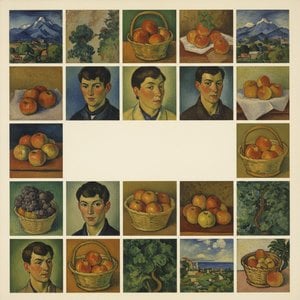
Paul Cézanne: Die 25 Meisterwerke des Impressionismus | ArtsDot
Entdecken Sie die 25 Meisterwerke von Paul Cézanne! Tauchen Sie ein in die Welt des Impressionismus und Postimpressionismus. Erfahren Sie mehr über seine Stillleben, Landschaften & berühmten Gemälde – jetzt hochwertige Kunstdrucke auf ArtsDot.com.


