


The picture follows your choices: , .
Beschreibung des Sammlerstücks
A stunning botanical illustration by Pancrace Bessa from 1835, depicting a vibrant poppy flower. This exquisite stipple engraving showcases Bessa's mastery of detail and color, capturing the beauty of nature.
 Weiterlesen
Künstlerbiografie
Entdecken Sie Pancrace Bessa (1772-1846), einen französischen Meister der botanischen Kunst! Erkunden Sie seine exquisiten Blumen- und Fruchtillustrationen, Stipple-Radierungen und sein Erbe in der 19. Jahrhundert Naturgeschichte Malerei.
Handgefertigte Ölreproduktion
Handgemaltes Ölgemälde auf Leinwand in Ihrer Wunschgröße und mit Rahmen, auf Bestellung von unseren Künstlern angefertigt. ( Zum Druck wechseln Zum digitalen Bild wechseln)
More about this painting
 Vorschau anzeigen
 Versenden
 Teilen
 Details anzeigen
 Leitfaden

 Herunterladen
 Ähnliche Objekte
 Röntgenaufnahme
 Diashow
 Q&A
Q&A Statistiken
Order your painting in four simple steps
Take your time. You can change any answer; the price in your order card follows each choice.
1 Step one of four
Which size would you like?
These sizes keep the proportions of the original painting. The drawing shows your choice on a wall, above a two-metre sofa.
Or give your own measurements
Wählen Sie aus unseren vordefinierten Formaten, die den ursprünglichen Proportionen des Kunstwerks entsprechen.

Geben Sie die Breite und die Höhe an, die Sie für Ihren Rahmen oder Ihre Wand benötigen. Da dieses Werk handgemalt ist, kann der Künstler bei einer anderen Form etwas mehr um das Bild herum malen oder etwas abschneiden – Sie entscheiden. Wir senden Ihnen ein digitales Mockup zur Freigabe, bevor mit dem Malen begonnen wird. Das auf dieser Seite gezeigte Bild stellt nicht das tatsächliche Ergebnis dar – dies tut nur das Mockup.
2 Step two of four
How should it be prepared: rolled, stretched or framed?
The prices below are for the size you chose in step one.
Choose the edges of the stretched canvas
Choose your frame

White €1

Blurside €1

Extended €1

P118B €10

P118H €10

P118W €10

P438Z €10

P508JH €12

P508YH €12

P805H €10

P805Z €10

P919BZ €10

P919G €10

P919XJ €10

P959ZH €10

P968JZ €12

W106C €8

W218G €10

W218JH €8

W218Y €10

W307PJ €10

W316G €10

W316PJ €8

W316Y €10

W398PJ €8

W4111J €10

W500HY €15

W500JH €15

W692G €12

W849H €8

W940BG €15

W953PJ €8

H24-GOLD €30

H24-SILVER €30

H36-GOLD €45

H36-SILVER €45
Gerahmt
Moulding: . Overall size with the frame: .
3 Step three of four
Would you like anything changed in the painting?
Most people answer no. Because each painting is made by hand, our artist can also adapt it for you.
After order, ArtsDot.com team will email client for instructions and provide a mockup preview
4 Step four of four
A few finishing options
All of them are optional. The answers already selected cost nothing extra.
Who paints it?
Weltweiter Versand () in nur 3 bis 4 Wochen statt der üblichen 5 Wochen. (1 November). Keine Kompromisse bei der Qualität.
A nameplate, as in a museum?
Details der gravierten Bronzetafel
This elegant plaque features the artist's name and the title of the artwork, finely engraved for a timeless presentation.
It is made from bronze with a refined, elegant finish. The text is precisely laser-engraved for a sharp and permanent result. Measuring 9x2 cm, the plaque is compact yet easy to read. It's built to be durable and scratch-resistant, offering a professional, museum-quality look. Mounting is simple thanks to the included adhesive backing.
Details zur Acrylglas-Plakette (transparent)
The plaque includes essential engraved details such as the artist's name, the title of the artwork, the date it was created, the type of media used-like oil on canvas or watercolor-a brief description of the piece, and a QR code that links to the complete artwork information.
It is crafted from clear acrylic, offering a sleek, modern appearance. The text is UV-engraved in black to ensure strong visual contrast. With a size of 10x15 cm, it ensures optimal readability. It comes equipped with two metal hooks for secure wall mounting. The plaque is designed to be weather-resistant, making it suitable for various environments, and it includes interactive features that work seamlessly with smartphone scanning.
Details zur schwarzen Acryltafel
This elegant plaque includes engraved information such as the artist's name, the title of the artwork, the date it was created, the type of media used (like oil on canvas or watercolor), a short description of the artwork, and a QR code for quick access to more information.
The plaque itself is made from refined black acrylic with a premium finish. The text is laser-engraved in white for high contrast and readability. Its size is 10x15 cm, designed to be easy to read. It comes with two metal hooks for professional mounting. The design is sleek and fits any interior style. It is also weather-resistant and durable, with built-in digital integration for mobile compatibility.
A protective varnish?
When do you need it?
✓ Check and order
Your painting, as you ordered it

Untitled
Art der Reproduktion
Format der Reproduktion
-

Erstklassige Meisterkünstler
Mehr Detailtiefe, Raffinesse und zusätzliche Produktionszeit
-

Rahmen für Reproduktionen
-
-
Bei Kunstwerken oder Reproduktionen, die an einer Seite größer als 105 cm (ca. 41 Zoll) sind, wird der Rahmen zerlegt als Bausatz geliefert. Diese Methode gewährleistet eine sichere Zustellung und verhindert Schäden während des Transports.
Professionelle Montage erforderlich – dies ist kein DIY-Produkt.
Der Bausatz muss von einem erfahrenen professionellen Rahmenmacher zusammengebaut und die Leinwand gespannt werden. Hierfür werden Holzleim (nicht im Lieferumfang enthalten), eine Leinwandspannzange sowie Klemmen benötigt, um die Keilleisten während des Trocknungsvorgangs rechtwinklig zu halten. Eine unsachgemäße Montage oder eine ungleichmäßige Spannung der Leinwand kann das Kunstwerk dauerhaft beschädigen und ist nicht durch unsere Garantie abgedeckt.
 Bei Kunstwerken oder Reproduktionen, die an einer Seite größer als 105 cm (ca. 41 Zoll) sind, wird der Rahmen zerlegt als Bausatz geliefert. Diese Methode gewährleistet eine sichere Zustellung und verhindert Schäden während des Transports.
Alle Vollholzkomponenten sind enthalten, präzise auf Maß zugeschnitten.
Der Zusammenbau erfolgt mit den mitgelieferten Schrauben sowie Holzkleber für die Eckverbindungen, der nicht im Lieferumfang enthalten ist und vom Rahmenbauer selbst beschafft werden muss.
Professionelles Werkzeug ist erforderlich und nicht im Lieferumfang enthalten: eine Keilrahmenzange (Spannwerkzeug) sowie Klammern, um die Leisten während der Trocknungszeit des Klebers rechtwinklig zu fixieren.
Wichtiger Hinweis:
Für die Eckverbindungen wird Holzleim benötigt, die Leisten müssen mit Zwingen fixiert werden, bis der Leim vollständig getrocknet ist, und das Spannen der Leinwand auf dem fertigen Rahmen erfordert eine Keilrahmen-Zange. Keines dieser Utensilien ist im Set enthalten. Bitte stellen Sie sicher, dass ein erfahrener Rahmenmacher zur Verfügung steht, bevor Sie diese Größe bestellen.

Beschriftung
-
-

Schutzlackierung
Glanzlack (verstärkt die Farben, schützt vor Licht und Feuchtigkeit)
-

Mein Kunstwerk personalisieren
Beispiele für Anpassungsmöglichkeiten: Gesicht durch Kundenfoto ersetzen; Haustier hinzufügen (z. B. Katze durch Hund ersetzen); Versteckte Nachricht im Hintergrund einfügen; Hintergrundlandschaft oder -elemente ändern.
-

Eilt sehr
Weltweiter Versand () in nur 3 bis 4 Wochen statt der üblichen 5 Wochen. (1 November). Keine Kompromisse bei der Qualität.
-
Expressversand
Weltweiter Versand () innerhalb von 5 Wochen. (8 November).
Inklusive Versand
Endpreis
€ 234
Die Glasoption ist nur für Größen unter 110 cm verfügbar.
Included with every order
- Kostenloser weltweiter Expressversand
- Hochwertige Leinenleinwand
- Umfassender Versicherungsschutz beim Versand
- Zollgebühren-Rückerstattungsgarantie
- Garantie für exakte Farbtreue
- 100 Tage Rückgaberecht (nur bei Mängeln)
- 100% Geld-zurück-Garantie
- Mengenrabatt verfügbar


Pancrace Bessa’s “Untitled”: A Window into 1835 Paris
Pancrace Bessa's "Untitled," painted in 1835, isn’t merely a depiction of a poppy; it’s a carefully constructed tableau brimming with quiet observation and the burgeoning spirit of Romanticism. Born in Paris amidst the artistic ferment of the early 19th century, Bessa was a master of botanical illustration, trained initially by the exacting Gerard van Spaendonck – a lineage that instilled within him an unparalleled dedication to detail and a profound understanding of color and texture. This piece, though lacking a formal title, speaks volumes about his skill and artistic sensibility. The composition is deceptively simple: a vibrant red poppy dominates the foreground, its petals rendered with astonishing realism, each vein and delicate curve meticulously captured. Yet, it’s not simply a botanical study; the inclusion of two smaller, less defined flowers in the background, alongside three figures – their identities deliberately obscured – introduces an element of narrative ambiguity, inviting the viewer to contemplate the scene's deeper meaning.
- Technique: Bessa’s mastery lies primarily in his use of stipple engraving, a technique perfected during this era. This method, demanding immense patience and control, allowed him to build up layers of tone and color through tiny dots, creating an incredibly rich and textured surface. The effect is remarkably tactile; one can almost feel the velvety softness of the petals and the delicate weight of the leaves.
- Color Palette: The painting’s palette is dominated by a striking contrast between the fiery red of the poppy and the verdant greens of its foliage. These colors aren't merely descriptive; they evoke a sense of vitality, passion, and perhaps even a hint of melancholy – a common theme in Romantic art.
- Historical Context: Bessa’s work reflects the broader artistic trends of his time. The Romantic movement, which emphasized emotion, individualism, and the beauty of nature, was gaining momentum in Europe. Botanical illustration, often considered a ‘minor’ genre, provided a crucial avenue for artists to engage with the natural world and explore its inherent symbolism.
The Language of Flowers: Symbolism Within the Scene
Beyond its technical brilliance, “Untitled” is rich in symbolic meaning. The poppy itself carries a complex history of associations – representing sleep, death, remembrance, and even beauty. Its prominence in the composition immediately draws our attention, suggesting a central theme or message. The presence of the three figures adds another layer of interpretation. They are not portraits; their anonymity encourages speculation about their roles within the scene. Are they observers? Participants? Perhaps they represent the fleeting nature of human experience against the backdrop of enduring natural beauty? The subtle positioning of these figures – one on the left, two towards the bottom – creates a sense of depth and invites us to consider our own relationship with the subject matter.
Note: It’s important to remember that symbolism is often culturally specific. While poppies generally represent remembrance, other interpretations may apply depending on the viewer's background and perspective.Bessa’s Legacy and the Reproduction Process
Pancrace Bessa enjoyed considerable success during his lifetime, exhibiting regularly at the prestigious Paris Salon. His meticulous botanical illustrations were highly sought after by royalty and collectors alike. Today, his work is recognized for its exceptional detail, technical skill, and evocative atmosphere. When commissioning a reproduction of “Untitled,” it’s crucial to understand that these are not simply copies; they are painstakingly crafted works of art in their own right, mirroring Bessa's original techniques. The process involves skilled artists meticulously recreating the stipple engraving effect, carefully matching the color palette and ensuring an accurate representation of the painting’s texture and depth.
- Material Quality: High-quality reproductions utilize archival inks on fine art paper to ensure longevity and preserve the artwork's vibrancy.
- Detail Replication: The reproduction process prioritizes faithful replication of Bessa’s stipple engraving technique, capturing the subtle nuances of tone and texture that define his style.
- Artistic Interpretation: While striving for accuracy, skilled artisans also bring their own artistic sensibility to the reproduction, ensuring a visually compelling and emotionally resonant result.
Bringing “Untitled” into Your Space
“Untitled” transcends its botanical subject matter to become a poignant meditation on beauty, mortality, and the human condition. Its rich colors, intricate details, and subtle symbolism make it an ideal addition to any interior space – whether a formal study, a sun-drenched conservatory, or a tranquil bedroom. The painting’s quiet elegance and evocative atmosphere create a sense of serenity and contemplation, inviting viewers to pause and appreciate the simple wonders of the natural world. A carefully reproduced version offers a tangible connection to this remarkable artist and his timeless vision, allowing you to bring a piece of 19th-century Parisian artistry into your home.
Fragen & Antworten
Welche Farbpalette und welche Leitfarbe prägen "Untitled"?
Die Farbidentität von "Untitled" von Pancrace Bessa: eine Neutrals-Palette, dominiert von White (#eeeee9).
Welche Druckgröße von "Untitled" von Pancrace Bessa passt in den empfohlenen Raum?
Für einen Living Room wird für „Untitled“ ein Druckformat von Medium empfohlen.
In welchem Jahr wurde "Untitled" von Pancrace Bessa geschaffen?
"Untitled" stammt aus dem Jahr 1835. Dieses Datum ordnet das Werk in die Schaffensperiode von Pancrace Bessa sowie in dessen Epoche ein.
Ähnliche Kunstwerke


Pancrace Bessa
1772 - 1846, Frankreich
Künstlerbiografie
Pancrace Bessa: Ein Leben in der Botanischen Kunst
Frühes Leben und Ausbildung
Pancrace Bessa (1. Januar 1772 – 11. Juni 1846) war ein französischer Naturkundekünstler, der für seine exquisiten botanischen Illustrationen gefeiert wurde. Geboren in Paris, Frankreich, begann Bessa seinen künstlerischen Weg als Schüler des angesehenen Graviers Gerard van Spaendonck. Diese fundierte Ausbildung verlieh ihm eine akribische Detailgenauigkeit und eine raffinierte Technik, die seine spätere Arbeit prägten.
Künstlerische Entwicklung und Einflüsse
Bessas künstlerische Entwicklung wurde maßgeblich von seiner Verbindung mit Pierre-Joseph Redouté, einem weiteren bedeutenden botanischen Künstler der Zeit, beeinflusst. Der Einfluss von Redouté ist in Bessa’s zarter Behandlung der Motive und seiner Fähigkeit zu erkennen, die subtilen Nuancen des Pflanzenlebens einzufangen, deutlich. Er beherrschte eine meisterhafte Verwendung von Stippenätzung, einer essentiellen Technik für den Farbdruck zu dieser Zeit.
Karriere und Salon-Ausstellungen
Bessa etablierte sich als regelmäßiger Aussteller auf den renommierten Pariser Salons zwischen 1806 und 1831. Diese konsequente Präsenz zeigte sein Talent einem breiten Publikum und festigte seinen Ruf innerhalb der künstlerischen Gemeinschaft. Seine Arbeiten erlangten schnell Anerkennung für ihre Genauigkeit, Schönheit und wissenschaftliche Bedeutung.
Schirmherrliches Patronat und Königliche Aufträge
Ein entscheidender Moment in Bessa’s Karriere kam 1816, als er vom Schirmherrlichen Patronschaft der Duchesse de Berry, der Tochter des Königs Charles X von Frankreich, erhielt. Diese Unterstützung bot nicht nur finanzielle Stabilität, sondern führte auch zu Möglichkeiten, Malunterricht für die Familie de Berry zu geben – eine Verbindung, die an die künstlerischen Traditionen der Très riches heures du duc de Berry erinnerte. Darüber hinaus widmete sich Bessa einen Großteil seiner späteren Karriere dem Arbeiten am Velins du Roi (Königlichen Pergament-Sammlung) von 1823 bis zu seinem Tod.
Wichtige Werke und Kooperationen
- Histoire des arbres forestiers de l'amerique septentrionale: Ein gemeinsames Projekt mit Redouté, das nordamerikanische Bäume zeigt.
- L’herbier général de l’amateur: Bessa stellte schätzungsweise 572 Aquarellen für dieses umfangreiche Herbarium zusammen von Mordant de Launey und Loiseleur-Longchamp her.
- Description des plantes cultivées à Malmaison et à Navarre: Dieses Werk enthielt neun Illustrationen von Bessa neben fünfzig-vier von Redouté.
- Flore des jardiniers: Veröffentlicht 1836, war dies Bessa’s letzte bedeutende Publikation.
Künstlerischer Stil und Technik
Bessa’s Stil ist durch seine Präzision, die zarte Darstellung von Details und lebendige Farbpaletten gekennzeichnet. Er konzentrierte sich hauptsächlich auf Früchte und Blumen, gelegentlich auch auf Vögel und Säugetiere. Seine Meisterschaft der Stippenätzung ermöglichte es ihm, reichhaltig texturierte und optisch ansprechende botanische Illustrationen zu schaffen.
Historische Bedeutung
Im frühen neunzehnten Jahrhundert spielte Bessa, zusammen mit Künstlern wie Redouté, Jean-Louis Prévost, Lancelot-Théodore Turpin de Crissé und Madame Vincent, eine entscheidende Rolle bei der Förderung Frankreichs zu einer führenden Position in der botanischen Malerei. Seine Werke trugen nicht nur zur ästhetischen Schönheit der Zeit bei, sondern verbesserten auch das wissenschaftliche Verständnis durch genaue Darstellungen von Pflanzenleben. Bessa’s Vermächtnis inspiriert Künstler und Botaniker bis heute.
Ähnliche Artikel

Victorian Botanical Painting: Science, Art & Aesthetic Sensibility
Explore the exquisite world of Victorian botanical art! Discover the science & artistry behind stunning floral illustrations by Gould, Muckley & more. Learn about collecting, value & investment at ArtsDot.

The Flourishing Canvas: A Historical Journey Through Botanical Illustration
Explore the captivating history of botanical illustration! Discover renowned artists like Robert Havell & Mary Walcott, learn about techniques, and find museum-quality art at ArtsDot.com.
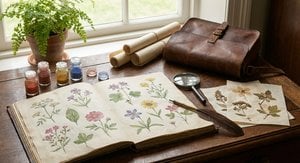
The Flourishing Canvas: A Historical Journey Through Botanical Illustration
Explore the captivating history of botanical illustration! Discover renowned artists like Robert Havell & Mary Walcott, learn about techniques, and find museum-quality art at ArtsDot.com.