


 Vorschau anzeigen
 Versenden
 Teilen
 Details anzeigen

 Herunterladen
 Ähnliche Objekte
 Röntgenaufnahme
 Diashow
Bäuferin am Strand
 Öl auf Leinwand
- Wandkunst
- Cubist Surrealism
 1929
1929- Moderne
 163.0 x 129.0 cm
 Weiterlesen
Handgefertigte Ölreproduktion
Handgemaltes Ölgemälde auf Leinwand in Ihrer Wunschgröße und mit Rahmen, auf Bestellung von unseren Künstlern angefertigt. ( Druck bestellen Bild kaufen)




P118B $10

P118H $10

P118W $10

P438Z $10

P508JH $12

P508YH $12

P805H $10

P805Z $10

P919BZ $10

P919G $10

P919XJ $10

P959ZH $10

P968JZ $12

W106C $8

W218G $10

W218JH $8

W218Y $10

W307PJ $10

W316G $10

W316PJ $8

W316Y $10

W398PJ $8

W4111J $10

W500HY $15

W500JH $15

W692G $12

W849H $8

W940BG $15

W953PJ $8




Wählen Sie aus unseren vordefinierten Formaten, die den ursprünglichen Proportionen des Kunstwerks entsprechen.

Sie können Ihre eigenen Maße eingeben, um einen bestimmten Rahmen oder Platz auszufüllen. Wenn die gewählte Größe nicht den Proportionen des Originalbildes entspricht, werden wir das Kunstwerk entweder beschneiden oder das Gemälde durch zusätzliche, handgemalte Elemente erweitern. Ein digitales Mockup wird Ihnen zur Genehmigung zugesandt, bevor die Produktion beginnt.
Bitte beachten Sie, dass die Bildschirmvorschau nicht die tatsächliche Beschneidung oder Erweiterung widerspiegelt. Nur das Mockup zeigt die endgültige Komposition exakt an.
Obwohl Sondermaße verfügbar sind, empfehlen wir, eine Größe aus der vordefinierten Liste zu wählen, um die ursprünglichen Proportionen beizubehalten.
Nach der Bestellung wird das ArtsDot.com-Team dem Kunden Anweisungen per E-Mail zusenden und eine Mockup-Vorschau bereitstellen.
Weltweiter Versand () in nur 3 bis 4 Wochen statt der üblichen 5 Wochen. (24 August). Keine Kompromisse bei der Qualität.

Kostenloser weltweiter Expressversand

Hochwertige Leinenleinwand

Umfassender Versicherungsschutz beim Versand

Zollgebühren-Rückerstattungsgarantie

Garantie für exakte Farbtreue

60 Tage Rückgaberecht (nur bei Mängeln)

100% Geld-zurück-Garantie

Mengenrabatt verfügbar
 Die Glasoption ist nur für Größen unter 110 cm verfügbar.

Bäuferin am Strand
Art der Reproduktion
Format der Reproduktion
-


Gesamtpreis
$ 263
Beschreibung des Kunstwerks
Pablo Picasso’s “Seated Bather on the Beach”: A Surrealist Dance of Form and Emotion
In the vibrant landscape of early 20th-century art, Pablo Picasso stands as an undeniable titan – a revolutionary whose relentless experimentation shattered conventions and redefined our perception of reality. His "Seated Bather on the Beach," painted in 1929, isn’t merely a depiction of a woman relaxing on a shore; it's a carefully constructed dialogue between realism and surrealism, a testament to Picasso’s masterful manipulation of form and color, and a poignant reflection of the era’s shifting artistic sensibilities. This painting, currently residing in the esteemed collection of the Museo Öffentliche Kunstsammlung in Basel, Switzerland, offers a captivating glimpse into the mind of one of history's most influential artists.
The genesis of “Seated Bather” lies within Picasso’s exploration of Surrealism during the late 1920s. Following his groundbreaking work with Georges Braque in developing Cubism, Picasso began to deliberately incorporate dreamlike elements and unexpected juxtapositions into his paintings. This period saw a loosening of traditional representational constraints, allowing for a greater emphasis on emotion, symbolism, and the subconscious. The painting’s subject – a woman seated on a beach – is instantly familiar, yet immediately unsettling due to Picasso's distinctive treatment. Her posture, with hands casually behind her head, exudes an air of relaxed contemplation, but her features are subtly distorted, hinting at a deeper, perhaps even melancholic, state of mind.
A Fusion of Styles: Cubism and the Dawn of Surrealism
Technically, “Seated Bather” is a remarkable synthesis of Picasso’s established styles. The foundation remains firmly rooted in his Cubist explorations – evident in the fragmented depiction of the figure's body, where planes are broken down into geometric shapes and reassembled in an unconventional manner. However, this fragmentation isn’t simply analytical; it possesses a distinctly expressive quality. The use of oil paint allows for rich textures and subtle gradations of color, contributing to the painting’s overall sense of depth and atmosphere. The palette is dominated by muted blues and greens, evoking the tranquility of the sea and sky while simultaneously creating an undercurrent of mystery and introspection.
Crucially, the painting also embodies the burgeoning influence of Surrealism. The woman's attire – a strikingly modern bikini for its time – immediately signals this connection. This deliberate inclusion of contemporary fashion reflects Picasso’s interest in capturing the spirit of his era and challenging traditional notions of beauty. Furthermore, the slightly abstracted quality of her features, particularly her eyes, contributes to the painting’s dreamlike atmosphere. They seem to gaze beyond the confines of the canvas, inviting the viewer into a realm of subconscious imagery.
Historical Context: A World in Transition
1929 was a pivotal year in art history – a time of immense social and political upheaval. The Great Depression had begun, casting a shadow over Europe, while artistic movements like Surrealism were gaining momentum, challenging established norms and exploring the depths of human psychology. Picasso’s “Seated Bather” can be understood as a reflection of this turbulent period. It captures a sense of unease and uncertainty, mirroring the anxieties of a world grappling with rapid change. The painting's ambiguity – its refusal to offer easy answers or definitive interpretations – is precisely what makes it so compelling and enduring.
Symbolism and Emotional Resonance
Beyond its formal qualities, “Seated Bather” is rich in symbolic meaning. The beach itself represents a liminal space – a transition between the known and the unknown, the conscious and the unconscious. The woman’s solitary figure suggests themes of isolation, contemplation, and perhaps even vulnerability. Her relaxed posture could be interpreted as an attempt to find solace amidst the chaos of the world. Picasso masterfully uses color and form to evoke a complex range of emotions – from serenity and tranquility to melancholy and introspection. The painting invites viewers to project their own experiences and interpretations onto its surface, creating a deeply personal connection with the artwork.
Reproductions: Bringing Picasso’s Vision Home
For art enthusiasts seeking to experience the beauty and complexity of “Seated Bather” firsthand, handmade oil painting reproductions are now available through ArtsDot.com. These meticulously crafted replicas capture the essence of Picasso’s original masterpiece, allowing you to appreciate the intricate details and vibrant colors in your own home. Owning a reproduction is not merely acquiring an image; it's gaining access to a significant work of art history – a window into the mind of one of the 20th century’s most visionary artists.
Ähnliche Kunstwerke


Über den Künstler
Pablo Picasso: Ein revolutionärer Künstler
Frühes Leben und Ausbildung (1881-1904)
- Geboren am 25. Oktober 1881 in Málaga, Spanien, zeigte Pablo Ruiz y Picasso von sehr jungem an sein künstlerisches Talent.
- Sein Vater, José Ruiz y Blasco, war Kunstlehrer und gab seinem Sohn eine frühe Ausbildung. Es heißt, Picassos erste Worte waren “piz, piz” – ein Versuch, ‘Bleistift’ zu sagen.
- Picasso übertraf seine Vaters Fähigkeiten schnell und zeigte bemerkenswerte Begabung in naturalistischen Darstellungen.
- Die Familie zog nach A Coruña und später nach Barcelona nach dem tragischen Verlust Picassos Schwester.
- In Barcelona besuchte er die Kunsthochschule, störte sich aber oft an der traditionellen akademischen Lehre. Er studierte kurzzeitig an der Königlichen Akademie San Fernando in Madrid und fand es beengend, bevorzugte aber das unabhängige Studium von Meistern wie Velázquez und Goya.
Die Blauen und Rosafarbenen Perioden (1901-1906)
- Die Blaue Periode (ungefähr 1901-1904) ist durch düstere Gemälde geprägt, die von Blautönen und Blaugrün dominiert werden.
- Diese Werke stellen oft marginalisierte Figuren dar – Bettler, blinde Menschen, Prostituierte – und spiegeln Melancholie und sozialen Kommentar wider. Wichtige Beispiele sind La Vie (1903) und Der alte Gitarrist (1903-1904).
- Nachfolgend entstand die Rosafarbene Periode (1904-1906) mit wärmeren Tönen – Rosa-, Orange- und Rottönen.
- Diese Periode spiegelt eine optimistischere Sichtweise wider und stellt oft Zirkusclowns, Harlekinen und Akrobaten dar. Familie der Saltimbanques (1905) ist ein Beispiel dafür.
Die revolutionären Jahre: Kubismus und darüber hinaus (1907-1919)
- 1907 markierte einen Wendepunkt mit Les Demoiselles d'Avignon, der von iberischer Skulptur und afrikanischen Masken beeinflusst wurde. Dieses Gemälde zerstörte die traditionelle Perspektive und ebnete den Weg für den Kubismus.
- Picasso arbeitete eng mit Georges Braque zusammen und gründete den Kubismus, der die Art und Weise, wie Künstler Realität darstellten, grundlegend veränderte.
- Analytischer Kubismus (1909-1912) zeichnete sich durch fragmentierte Formen, gedämpfte Farben und die Zerlegung von Objekten in geometrische Formen aus.
- Synthetischer Kubismus (1912-1919) integrierte Collagen – Zeitungsartikel, Stoffreste – um texturierte Oberflächen und neue visuelle Schichten zu schaffen.
Neoklassizismus und Surrealismus (1920er - 1930er Jahre)
- In den 1920er Jahren erkundete Picasso neoklasische Stile mit monumentalen Figuren, die klassische Formen betonten.
- Er beschäftigte sich auch mit dem Surrealismus, obwohl er sich nie vollständig mit dessen Prinzipien identifizierte. Seine Werke vermischten frühere Stile mit surrealistischer Bildsprache und verzerrten Perspektiven.
Spätere Jahre und Vermächtnis (1940-1973)
- Während des Zweiten Weltkriegs blieb Picasso in Frankreich und produzierte kraftvolle Antikriegserklärungen wie Guernica (1937), eine wirkliche Reaktion auf den Angriff auf Guernica während des Spanischen Bürgerkriegs.
- Guernica wurde zu einem bleibenden Symbol der Schrecken des Krieges und gilt als eines seiner bekanntesten Werke.
- In den 1950er und 60er Jahren experimentierte Picasso weiterhin mit verschiedenen Medien – Keramik, Skulptur, Druckgrafik – und demonstrierte bemerkenswerte Vielseitigkeit.
- Er heiratete Jacqueline Roque im Jahr 1961. Er starb am 8. April 1973 in Mougins, Frankreich.
Einflüsse und historische Bedeutung
- Picassos künstlerische Entwicklung wurde von spanischen Meistern wie Velázquez und Goya, iberischer Skulptur, afrikanischer Kunst und Henri Matisse geprägt.
- Sein Einfluss auf die Kunst des 20. Jahrhunderts ist unermesslich. Er gründete den Kubismus, pionierte Collagen und konstruktive Skulpturen und stellte traditionelle künstlerische Konventionen kontinuierlich in Frage.
- Picassos unerbittliche Experimentierfreude definierte die moderne Kunst neu und inspiriert Künstler bis heute.
- Seine fruchtbare Produktion – geschätzt auf über 50.000 Werke – festigt seine Position als einer der wichtigsten und einflussreichsten Künstler in der Geschichte.

Pablo Picasso
1881 - 1973 , Spanien
Kurzinfos
- Beeinflusste Künstler:
- Velázquez
- Goya
- Henri Matisse
- Bemerkenswerte Werke:
- Les Demoiselles d'Avignon
- Guernica
- Der alte Gitarrist
- Familie der Saltimbanques
- Geburtsdatum: 25. Oktober 1881
- Geburtsort: Málaga, Spanien
- Künstlerische Richtung: Kubismus, Surrealismus
- Nationalität: Spanisch
- Sterbedatum: 8. April 1973
- Vollständiger Name: Pablo Picasso
- Von Künstlern Beeinflusst:
- Iberische Skulptur
- Afrikanische Kunst
Ähnliche Artikel

Die 10 Meisterwerke des Kubismus: Kunst für Ihr Zuhause | ArtsDot
Entdecken Sie die 10 bedeutendsten Meisterwerke des Kubismus von Picasso, Braque & Gris! Erfahren Sie mehr über Kunstgeschichte, Techniken und Farben. Hochwertige Kunstdrucke auf ArtsDot.com – für stilvolle Wandgestaltung.

Pablo Picasso: Eine revolutionäre Vision – Kubismus, Symbolik und bleibendes Erbe
Entdecken Sie Pablo Picassos revolutionäres Werk! Analysen zu Kubismus, Symbolik und seinem bleibenden Einfluss auf die moderne Kunst. Wertvolle Einblicke für Sammler & Kenner.

Deconstructing Reality: Cubism's Revolutionary Impact on 20th-Century Art
Explore the revolutionary world of Cubism with ArtsDot. Discover Picasso & Braque's groundbreaking techniques, its philosophical roots, and lasting impact on modern art. Expert insights for collectors.
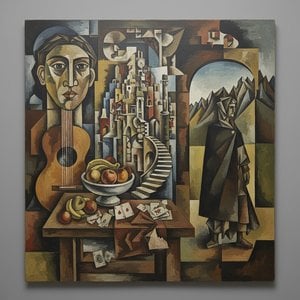
Kubismus: Die 10 Meisterwerke, die eine Revolution definierten | ArtsDot
Entdecken Sie die 10 Meisterwerke des Kubismus! Von Picasso bis Braque – erleben Sie die Revolution abstrakter Kunst. Kunstdrucke & Wandbilder für Ihr Zuhause auf ArtsDot.com.

Die 10 Meisterwerke des Kubismus: Revolutionäre Porträts für Ihr Zuhause | ArtsDot
Entdecken Sie die 10 revolutionärsten kubistischen Porträts von Picasso, Braque & Co.! Erfahren Sie die Geschichten hinter Meisterwerken der Moderne und lassen Sie sich für Ihre Wohnraumgestaltung inspirieren. Museum-Qualität bei ArtsDot.



