


 In echtem Maßstab anzeigen
 Versenden als Grußkarte
 Teilen
 Details anzeigen
 Leitfaden öffnen

 Herunterladen
 Ähnliche Objekte
 Röntgenaufnahme
 Diashow
 Besucherstatistiken
Aurora


 Mehr anzeigen
Giclée / Kunstdruck
Giclée- oder Leinwanddruck in Museumsqualität mit schneller Produktion und flexiblen Veredelungsoptionen. ( Handgemalte Reproduktion kaufen Zum digitalen Bild wechseln)




P118B €10

P118H €10

P118W €10

P438Z €10

P508JH €12

P508YH €12

P805H €10

P805Z €10

P919BZ €10

P919G €10

P919XJ €10

P959ZH €10

P968JZ €12

W106C €8

W218G €10

W218JH €8

W218Y €10

W307PJ €10

W316G €10

W316PJ €8

W316Y €10

W398PJ €8

W4111J €10

W500HY €15

W500JH €15

W692G €12

W849H €8

W940BG €15

W953PJ €8




Wählen Sie aus unseren vordefinierten Formaten, die den ursprünglichen Proportionen des Kunstwerks entsprechen.

Geben Sie die Breite und die Höhe an, die Sie benötigen, damit der Druck perfekt in Ihren Rahmen oder an Ihre Wand passt. Ein Druck kann nur beschnitten werden und niemals größer als das Originalbild gemacht werden; daher verliert ein Format mit einer anderen Proportion einen Teil des Bildes. Wir senden Ihnen ein digitales Mockup zur Freigabe, bevor wir den Druck ausführen. Das auf dieser Seite gezeigte Bild zeigt nicht den tatsächlichen Beschnitt – dies ist nur im Mockup ersichtlich.
Weltweiter Versand () innerhalb von 2 Wochen statt der üblichen 4/5 Wochen. (18 Oktober)

Kostenloser weltweiter Expressversand

Hochwertige Leinenleinwand

Vollständiger Versicherungsschutz beim Versand

Zollgebühren-Rückerstattungsgarantie

Garantie für exakte Farbtreue

100-tägiges Rückgaberecht (nur bei Mängeln)

100% Geld-zurück-Garantie

Angebot für Mengenrabatt
 Die Glasoption ist nur für Größen unter 110 cm verfügbar.

Aurora
Giclée / Kunstdruck
Format der Reproduktion
-


Gesamtpreis
€ 54
A Dreamscape of Dawn: The Ethereal Vision of Odilon Redon
In the quiet intersection where the waking world meets the realm of dreams, Odilon Redon’s Aurora resides. Created in 1910, this mesmerizing oil on canvas serves as a profound testament to the Symbolist movement, offering a window into a psyche that sought to transcend the mere observation of nature. Unlike the Impressionists, who were captivated by the fleeting dance of light upon water, Redon turned his gaze inward, painting not what the eye sees, but what the soul feels. In Aurora, we encounter a scene of profound stillness and mystical transition, where the boundaries between reality and myth dissolve into a soft, luminous haze.
The composition centers on a woman resting in the gentle embrace of sleep, her form nestled within a bed that seems to exist outside of time. Above her, a bird takes flight, its movement a delicate punctuation mark in the silent atmosphere, while horses—symbols of primal energy and the inevitable passage of time—frame the scene. This arrangement is far from accidental; it is a carefully orchestrated mythological allegory. The woman represents Aurora herself, the personification of the dawn, whose arrival signals the triumph of light over the shadows of night. The presence of the horses suggests the rhythmic, unstoppable movement of the sun across the heavens, bridging the gap between the nocturnal subconscious and the clarity of day.
Technique and the Alchemy of Color
Redon’s technical evolution is beautifully captured in this late masterpiece. Having spent much of his earlier career immersed in the "noirs"—his famous charcoal drawings and lithographs characterized by deep, somber shadows—Redon underwent a radical transformation around 1900. In Aurora, we witness the full flowering of his mastery over color. The artist employs a vibrant, almost hallucinogenic palette that breathes warmth and vitality into the canvas. His use of oil paint allows for a rich, layered texture that creates a sense of depth and luminosity, making the light appear as though it is emanating from within the painting itself rather than reflecting off its surface.
The interplay of colors serves to heighten the emotional resonance of the piece. Soft, glowing tones mingle with more saturated hues, creating a sense of atmospheric pressure that feels both heavy with mystery and light with hope. For the discerning collector or interior designer, this painting offers a unique decorative power; it possesses the ability to transform a room into a sanctuary of contemplation. The warmth of the palette can anchor a space, providing a focal point that invites long periods of gazing, while the dreamlike subject matter provides an intellectual depth that transcends simple ornamentation.
A Legacy of Symbolism and Emotional Resonance
To possess or display a reproduction of Aurora is to invite the enigmatic spirit of the Belle Époque into one's surroundings. Redon’s work remains eternally relevant because it speaks to the universal human experience of dreaming, longing, and the search for meaning beneath the surface of the visible world. The painting does not demand attention through shock or aggression; instead, it seduces the viewer through its quiet intensity and its ability to evoke a sense of wonder.
For those seeking to curate an environment filled with art that inspires thought and provides emotional solace, Redon’s Aurora stands as an incomparable choice. It is more than a depiction of a mythological moment; it is an invitation to explore the mysteries of the human psyche. Whether placed in a private study, a sophisticated living area, or a curated gallery space, this work continues to act as a bridge between the tangible and the transcendent, reminding us that even in the deepest sleep, there is a dawn waiting to break.
Fragen & Antworten
Ist "Aurora" typisch für das, was Odilon Redon üblicherweise geschaffen hat?
"Aurora" stellt woman, horse, bird, bed, vase, pillow dar, während die dokumentierten Themen von Odilon Redon symbolist dreamlike visions, mythological dawn themes, subconscious and mystical realms, transition from night to day, evolution from his noirs sind. Ein Vergleich der beiden zeigt, wie das Werk mit den üblichen Sujets des Künstlers in Verbindung steht.
Wo kann ich "Aurora" von Odilon Redon herunterladen?
Für „Aurora“ steht ein Download zur Verfügung: Die Download-Seite des Kunstwerks bietet ein hochauflösender digitaler Bild-Download.
Welche Art von Farben verwendet "Aurora"?
Die Farben von "Aurora" bilden eine Earthy-Palette. Diese Klassifizierung beschreibt die dominierenden Farbfamilien.
Ähnliche Kunstwerke


Biografie des Künstlers
Frühes Leben und Karriere
Odilon Redon, geboren am 20. April 1840 in Bordeaux, Aquitanien, aus einer wohlhabenden Familie, war ein französischer Symbolistischer Maler, Grafiker, Zeichner und Pastellkünstler. Der junge Bertrand-Jean Redon erhielt von seiner Mutter Odile den Spitznamen "Odilon". Seine künstlerische Reise begann früh; bereits mit zehn Jahren gewann er einen Zeichenpreis in der Schule. Er zeigte schon früh Talent und Leidenschaft für die Kunst.Künstlerische Entwicklung
Redons frühe Studien in Architektur führten zu einer kurzen Tätigkeit unter Jean-Léon Gérôme im Jahr 1864. Seine wahre künstlerische Berufung offenbarte sich jedoch bald. Er widmete sich der Bildhauerei und verfeinerte später seine Fähigkeiten in der Radierung und Lithographie unter Rodolphe Bresdin. Diese Zeit war entscheidend für die Entwicklung seines einzigartigen Stils, der von Fantasie und Mysterium geprägt ist. Seine frühen Werke waren oft düster und introspektiv.Hauptwerke und Einflüsse
Redons Werk wurde stark von östlicher Kultur beeinflusst. "Der Tod des Buddha" (1899) zeugt von seinem Interesse an hinduistischer und buddhistischer Kultur. "Jakob und der Engel" (1905) ist ein Beweis für seine Japonismus-Einflüsse, die sich in seinen Kompositionen und Farbwahlen widerspiegeln. Er entwickelte eine Faszination für Hinduismus und Buddhismus, die zunehmend in seinen Werken sichtbar wurde. Die Auftragsarbeiten für Baron Robert de Domecy, 17 dekorative Paneele für das Château de Domecy-sur-le-Vault, markierten einen Übergang von ornamentaler zu abstrakter Malerei. Seine Porträts der Baroness de Domecy und ihrer Tochter Jeanne sind bemerkenswerte Beispiele seiner Arbeit in dieser Phase.Auszeichnungen und Vermächtnis
Redon wurde 1903 die Legion d'Honneur verliehen, eine Anerkennung seines künstlerischen Beitrags. Seine Popularität stieg mit der Veröffentlichung eines Katalogs von Radierungen und Lithographien durch André Mellerio im Jahr 1913, gefolgt von einer umfassenden Ausstellung auf der New Yorker Armory Show. Redons Werk gilt als Vorläufer des Surrealismus und beeinflusste nachfolgende Künstlergenerationen maßgeblich. Seine Erkundung des menschlichen Geistes und sein Interesse an östlichen Kulturen inspirieren weiterhin Künstler und Kunstliebhaber.Bedeutung in der Kunstgeschichte
Odilon Redons bahnbrechende Arbeit im Symbolismus hat ihre Spuren in der Welt der Kunst hinterlassen. Seine "Noirs", die frühen Holzschnitte und Lithographien in Schwarz-Weiß, waren revolutionär für seine Zeit. Er trug dazu bei, die Grenzen der traditionellen Malerei zu erweitern und den Weg für neue künstlerische Ausdrucksformen zu ebnen. Sein Werk wird heute weithin anerkannt und geschätzt als ein wichtiger Beitrag zur Entwicklung des modernen Kunstverständnisses. Seine Fähigkeit, Traumwelten und innere Emotionen auf Leinwand festzuhalten, macht ihn zu einem einzigartigen Künstler seiner Zeit.
Odilon Redon
1840 - 1916 , Frankreich
Eckdaten zum Künstler
- Beeinflusste Künstler: ['Surrealismus']
- Bemerkenswerte Werke:
- Wächtergeist der Wasser
- Dans le Rêve
- Der Tod des Buddha
- Jakob und der Engel
- Einflüsse:
- Rodolphe Bresdin
- Charles Baudelaire
- Edgar Allan Poe
- Geburtsdatum: 20. April 1840
- Geburtsort: Bordeaux, Frankreich
- Künstlerische Bewegung: Symbolismus
- Nationalität: Französisch
- Sterbedatum: 6. Juli 1916
- Vollständiger Name: Odilon Redon
Verwandte Artikel

Echoes of Olympus: Mythological Narratives in Western Art Through the Ages
Explore the captivating history of mythological narratives in Western art! From ancient Greece to modern masterpieces, discover iconic artworks & symbolism. Expert analysis and high-quality reproductions at ArtsDot.
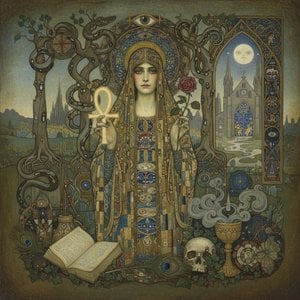
The Evocative Realm of Symbolism: Exploring Meaning & Mysticism in Late 19th-Century Art
Explore the captivating world of Symbolism art! Discover key artists, defining themes & its lasting influence on modern movements. A deep dive into late 19th-century masterpieces.

Symbolismus in der Kunst: Die 10 Meisterwerke, die eine Ära prägten | ArtsDot
Entdecken Sie die 10 Meisterwerke des Symbolismus! Von Klimt bis Munch – erfahren Sie die Geschichten hinter ikonischen Gemälden, ihre Techniken & Bedeutung. Finden Sie Ihre perfekte Reproduktion auf ArtsDot.com.

The Ethereal Realm on Canvas: Exploring Themes of Fantasy & Imagination in Art History
Explore the captivating world of fantasy & surreal art history with ArtsDot. Discover iconic artists like De Chirico & Moreau, and expert guidance for collecting timeless masterpieces. Find your dream artwork today!

Persönliche Mythologien auf Leinwand: Die Transformation individueller Erzählungen in symbolträchtige Meisterwerke
Entdecken Sie die Kunst Ihrer persönlichen Mythologie! Maßgeschneiderte Gemälde von erfahrenen Künstlern – verwandeln Sie Erinnerungen in einzigartige Meisterwerke. Jetzt bestellen!


