


 Vorschau anzeigen
 Versenden
 Teilen
 Details anzeigen

 Herunterladen
 Ähnliche Objekte
 Röntgenaufnahme
 Diashow
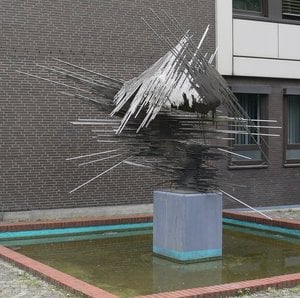
Plastik, (2) (1980)

 Weiterlesen
Handgefertigte Ölreproduktion
Handgemaltes Ölgemälde auf Leinwand in Ihrer Wunschgröße und mit Rahmen, auf Bestellung von unseren Künstlern angefertigt. ( Druck bestellen Bild kaufen)




































Wählen Sie aus unseren vordefinierten Formaten, die den ursprünglichen Proportionen des Kunstwerks entsprechen.

Sie können Ihre eigenen Maße eingeben, um einen bestimmten Rahmen oder Platz auszufüllen. Wenn die gewählte Größe nicht den Proportionen des Originalbildes entspricht, werden wir das Kunstwerk entweder beschneiden oder das Gemälde durch zusätzliche, handgemalte Elemente erweitern. Ein digitales Mockup wird Ihnen zur Genehmigung zugesandt, bevor die Produktion beginnt.
Bitte beachten Sie, dass die Bildschirmvorschau nicht die tatsächliche Beschneidung oder Erweiterung widerspiegelt. Nur das Mockup zeigt die endgültige Komposition exakt an.
Obwohl Sondermaße verfügbar sind, empfehlen wir, eine Größe aus der vordefinierten Liste zu wählen, um die ursprünglichen Proportionen beizubehalten.
Nach der Bestellung wird das ArtsDot.com-Team dem Kunden Anweisungen per E-Mail zusenden und eine Mockup-Vorschau bereitstellen.
Weltweiter Versand () in nur 3 bis 4 Wochen statt der üblichen 5 Wochen. (25 August). Keine Kompromisse bei der Qualität.

Kostenloser weltweiter Expressversand

Hochwertige Leinenleinwand

Umfassender Versicherungsschutz beim Versand

Zollgebühren-Rückerstattungsgarantie

Garantie für exakte Farbtreue

60 Tage Rückgaberecht (nur bei Mängeln)

100% Geld-zurück-Garantie

Mengenrabatt verfügbar
 Die Glasoption ist nur für Größen unter 110 cm verfügbar.

Plastik, (2) (1980)
Art der Reproduktion
Format der Reproduktion
-


Gesamtpreis
$ 263
Beschreibung des Kunstwerks
Plastik, (2) (1980) von Norbert Kricke: Eine minimalistische Erkundung der Form
- Künstler: Norbert Kricke
- Datum: 1980
- Medium: Metallskulptur
Motiv und Beschreibung
“Plastik, (2)” ist eine eindrucksvolle Metallskulptur des deutschen Künstlers Norbert Kricke, entstanden im Jahr 1980. Das Kunstwerk präsentiert sich als abstrakte Darstellung eines Baumes, konstruiert aus miteinander verbundenen Metallrohren. Diese Rohre sind sorgfältig angeordnet, um die Verzweigungsstruktur eines natürlichen Baumes nachzuahmen, wobei das metallische Material den Eindruck von Blättern erweckt. Die Skulptur befindet sich in einer urbanen Umgebung, was durch Gebäude im Hintergrund erkennbar ist. Zwei Bänke verleihen dem Werk eine menschliche Note und suggerieren einen Raum für Kontemplation oder Interaktion mit der Kunst. Drei Pflanzgefäße mildern zusätzlich die industrielle Ästhetik und führen organische Formen in das Gesamtbild ein.
Stil und Technik: Minimalistische Einflüsse & L'Art Informel
Krickes “Plastik, (2)” exemplifiziert sowohl den Minimalismus als auch Elemente von L’Art Informel. Die geometrische Konstruktion der Skulptur und die Verwendung industrieller Materialien sind Kennzeichen der minimalistischen Bewegung, die danach strebte, die Kunst auf ihre wesentlichen Formen zu reduzieren und repräsentative Bildsprache auszuschalten. Dennoch deutet die organische, fließende Qualität der Äste und das insgesamt dynamische Wachstum auf einen Einfluss von L’Art Informel hin, einer post-II. Weltkrieg europäischen künstlerischen Bewegung, die durch spontane, gestische Abstraktion gekennzeichnet ist. Krickes Technik umfasst geschicktes Schweißen und Montieren von Metallrohren zur Schaffung dieser komplexen, aber scheinbar mühelosen Struktur. Die Wahl des Metalls verleiht der Skulptur ein Gefühl von Beständigkeit und industrieller Stärke, während die fließenden Linien ein Element der Fragilität einführen.
Historischer Kontext: ZERO Gruppe & Post-War Abstraktion
Dieses Werk entstand in einer Zeit bedeutender künstlerischer Experimente im Nachkriegseuropa. Kricke war mit der ZERO-Gruppe verbunden, einem internationalen Künstlerkollektiv, das traditionelle Kunstvorstellungen ablehnte und industrielle Materialien sowie technologische Prozesse annahm. ZERO zielte darauf ab, Kunst zu schaffen, die den Fokus auf Wissenschaft, Technologie und Raumfahrt widerspiegelt. “Plastik, (2)” steht in Einklang mit diesem Ethos durch die Verwendung von Metall – einem Material, das für Industrie steht – und seine abstrakte Form, die von repräsentativen Darstellungen der Natur abrückt. Die Skulptur spiegelt auch einen breiteren Trend in der Nachkriegskunst hin zur Abstraktion wider, da Künstler neue Wege suchten, um Emotionen und Ideen jenseits traditioneller figurativer Formen auszudrücken.
Symbolik und emotionale Wirkung
Obwohl abstrakt, ruft “Plastik, (2)” kraftvolle symbolische Assoziationen hervor. Die Baumform, selbst in Metall dargestellt, suggeriert Wachstum, Widerstandsfähigkeit und Verbindung zur Natur – Themen, die tief im menschlichen Erleben verwurzelt sind. Das Vorhandensein der Skulptur in einer urbanen Umgebung schafft eine eindringliche Gegenüberstellung von Natur und Menschenwerk, was zu Reflexionen über das Verhältnis des Menschen zu seiner Umwelt anregt. Das Werk inspiriert zu einem Gefühl ruhiger Kontemplation; die fließenden Linien und die ausgewogene Komposition erzeugen einen visuell harmonischen Effekt. Es ist sowohl imposant in seiner Größe als auch zart in der Ausführung und lädt Betrachter ein, die Schönheit industrieller Materialien zu schätzen, die in ein eindringliches künstlerisches Statement verwandelt wurden.
Ähnliche Kunstwerke


Über den Künstler
Norbert Kricke: Sculpting the Flow of Space and Time
Norbert Kricke (1922-1984) wasn’t merely a sculptor; he was an architect of perception, a pioneer who wrestled with the very essence of space and movement. Born in Düsseldorf during a period of profound societal upheaval following World War II, Kricke’s artistic journey was deeply intertwined with the post-war desire to rebuild—not just physical structures, but also the foundations of human experience. His work, often characterized by its stark minimalism and evocative use of wire, steel, and concrete, represents a pivotal moment in the evolution of abstract sculpture, bridging the gap between the formal rigor of the Constructivists and the expressive freedom of L’Art Informel.
Kricke's early artistic training under Richard Scheibe and Hans Uhlmann at the Hochschule für Bildende Künste in Berlin provided him with a crucial grounding in traditional sculptural techniques. However, he quickly moved beyond mere representation, seeking to capture something far more elusive: the dynamic quality of space itself. This shift was profoundly influenced by his exposure to the theories of John Anthony Thwaites, particularly their exploration of “Forms of Water,” which posited that space and time were inextricably linked—a concept Kricke sought to embody in his sculptures.
The Dawn of Raumplastik
Kricke’s breakthrough came with the development of what he termed *Raumplastiken* – ‘spatial sculptures.’ These weren't static objects; they were investigations into the very fabric of space, utilizing wire as a primary medium. Unlike earlier sculptors who focused on mass and volume, Kricke concentrated on line—the fundamental element that defines form and creates the illusion of depth. He meticulously crafted these lines, often employing complex geometric patterns, to suggest movement and dynamism within a confined space. This approach was revolutionary, challenging conventional notions of sculpture as a three-dimensional object and instead presenting it as an active participant in shaping our perception.
Early examples like *Raumplastik Gelb* (1951) demonstrate this shift powerfully. The work’s seemingly simple arrangement of wire immediately draws the eye, inviting viewers to trace the lines and contemplate their relationship to the surrounding space. This focus on line continued to evolve throughout his career, culminating in works that appeared almost fluid, capturing the essence of movement without depicting it literally.
Connections to L'Art Informel and Beyond
Kricke’s work resonated deeply with the burgeoning L’Art Informel movement, a post-war European artistic current characterized by its rejection of formal constraints and embrace of spontaneous expression. However, Kricke distinguished himself within this group through his rigorous intellectual approach and his systematic exploration of spatial relationships. He also maintained close ties with ZERO, a German collective that similarly challenged traditional sculptural conventions, and the Nouveau Réalisme movement in France, demonstrating a broad awareness of international artistic trends.
His collaboration with Yves Klein on exploring the properties of light and space further solidified his position as a key figure in the avant-garde. The influence of Walter Gropius is also notable, particularly in Kricke’s design for water configurations for the new university complex in Baghdad – a project that underscored his belief in the interconnectedness of art, science, and human experience.
Major Works and Legacy
Throughout his career, Kricke created numerous significant works, including the iconic *Water Forest* sculpture outside the Gelsenkirchen Opera House (1957), a testament to his fascination with flowing water and its transformative power. His wire sculptures for Münster Theatre (1955/56) and fountains for the University of Baghdad showcased his versatility and technical skill. Perhaps most notably, Kricke served as director of the Düsseldorf Art Academy from 1972 until his death in 1984, shaping a generation of artists.
Kricke’s legacy extends far beyond his individual creations. He fundamentally altered our understanding of sculpture, demonstrating that form and space are not mutually exclusive but rather inextricably linked. His pioneering use of wire as a medium—a material often associated with industry and construction—transformed it into a tool for exploring the most profound questions about human perception and the nature of reality. His work continues to inspire artists today, reminding us of the power of art to challenge conventions and expand our horizons.
Further Exploration
- Plastik, (2) (1980): Explore Norbert Kricke’s ‘Plastik, (2)’ (1980) – a striking metal sculpture blending Minimalist and L’Art Informel influences. A unique German artwork for collectors. Link to Artwork Database
- Raumplastik grosse kurve i, (2) (1980): Discover Norbert Kricke’s ‘Raumplastik grosse kurve i,’ a striking Minimalist sculpture in a park setting. Explore this 1980 German artwork's metal form & integration with nature. Link to Artwork Database
- Raum-Zeit-Plastik, (1956): Discover Norbert Kricke’s ‘Raum-Zeit-Plastik’ (1956) – a striking concrete architectural photograph. Minimalist, geometric & evocative of mid-century German art. Link to Artwork Database
- Norbert Kricke - Wikipedia: Link to Wikipedia
norbert kricke
1922 - 1984
Kurzinfos
- Artistic Movement Or Style: Minimalist Sculpture, L’Art Informel, ZERO group
- Artists Who Influenced This Artist: ['Richard Scheibe, Hans Uhlmann],\n "Artists or movements influenced by this artist": ["Yves Klein", "John Anthony Thwaites"]\n}']
- Date Of Birth: November 30, 1922
- Date Of Death: June 28, 1984
- Full Name: Norbert Kricke
- Nationality: German
- Notable Artworks:
- Plastik, (2) (1980)
- Raumplastik grosse kurve i, (2) (1980)
- Raum-Zeit-Plastik, (1956)
- Place Of Birth: Düsseldorf, Germany
Ähnliche Artikel

Bronze-Meisterwerke: Die 10 Skulpturen, die Kunstgeschichte schrieben | ArtsDot
Entdecken Sie die 10 legendärsten Bronze Skulpturen der Kunstgeschichte! Von Michelangelo bis Rodin – erfahren Sie die Geschichten hinter den Meisterwerken und lassen Sie sich von Wanddeko-Ideen inspirieren. Hochwertige Kunstdrucke auf ArtsDot.com.

The Enduring Form: Exploring Themes & Techniques in Sculpture Across Historical Periods
Explore the rich history of sculpture from ancient masterpieces to contemporary innovations. Discover key techniques, influential artists & investment potential for discerning art collectors.

Die 10 legendärsten Bronzestatuen: Meisterwerke, die Kunstgeschichte schrieben | ArtsDot
Entdecken Sie die 10 legendärsten Bronzestatuen der Kunstgeschichte! Von Rodin bis Michelangelo – erfahren Sie die Geschichten hinter ikonischen Skulpturen und finden Sie hochwertige Reproduktionen für Ihr Zuhause. Jetzt bei ArtsDot entdecken!

The Enduring Form: Sculpture Across History, Technique & Emotional Resonance
Explore the rich history of sculpture with ArtsDot. Discover key techniques, influential artists & investment potential for discerning collectors. Expert insights into valuing and collecting timeless masterpieces.

Das bleibende Erbe der Bronzeskulptur: Geschichte, Techniken und zeitgenössische Interpretationen
Entdecken Sie die faszinierende Geschichte der Bronzeskulptur – von den Anfängen bis zur modernen Kunst. Expertenwissen, Techniken & Tipps für Sammler.


