


 In echtem Maßstab anzeigen
 Versenden als Grußkarte
 Teilen
 Details anzeigen
 Leitfaden öffnen

 Herunterladen
 Ähnliche Objekte
 Röntgenaufnahme
 Diashow
 Besucherstatistiken
Triptych
 Öl auf Tafel
- Early Renaissance
 1461
1461- Renaissance
 175.0 x 134.0 cm
 Galleria degli Uffizi
 Mehr anzeigen
Handgefertigte Ölreproduktion
Handgemaltes Ölgemälde auf Leinwand in Ihrer Wunschgröße und mit Rahmen, auf Bestellung von unseren Künstlern angefertigt. ( Zum Druck wechseln Zum digitalen Bild wechseln)




P118B €10

P118H €10

P118W €10

P438Z €10

P508JH €12

P508YH €12

P805H €10

P805Z €10

P919BZ €10

P919G €10

P919XJ €10

P959ZH €10

P968JZ €12

W106C €8

W218G €10

W218JH €8

W218Y €10

W307PJ €10

W316G €10

W316PJ €8

W316Y €10

W398PJ €8

W4111J €10

W500HY €15

W500JH €15

W692G €12

W849H €8

W940BG €15

W953PJ €8




Wählen Sie aus unseren vordefinierten Formaten, die den ursprünglichen Proportionen des Kunstwerks entsprechen.

Geben Sie die Breite und die Höhe an, die Sie für Ihren Rahmen oder Ihre Wand benötigen. Da dieses Werk handgemalt ist, kann der Künstler bei einer anderen Form etwas mehr um das Bild herum malen oder etwas abschneiden – Sie entscheiden. Wir senden Ihnen ein digitales Mockup zur Freigabe, bevor mit dem Malen begonnen wird. Das auf dieser Seite gezeigte Bild stellt nicht das tatsächliche Ergebnis dar – dies tut nur das Mockup.
Nach der Bestellung wird das ArtsDot.com-Team dem Kunden Anweisungen per E-Mail zusenden und eine Mockup-Vorschau bereitstellen.
Weltweiter Versand () in nur 3 bis 4 Wochen statt der üblichen 5 Wochen. (21 Oktober). Keine Kompromisse bei der Qualität.

Kostenloser weltweiter Expressversand

Hochwertige Leinenleinwand

Vollständiger Versicherungsschutz beim Versand

Zollgebühren-Rückerstattungsgarantie

Garantie für exakte Farbtreue

100-tägiges Rückgaberecht (nur bei Mängeln)

100% Geld-zurück-Garantie

Angebot für Mengenrabatt
 Die Glasoption ist nur für Größen unter 110 cm verfügbar.

Triptych
Reproduktionsmedium
Format der Reproduktion
-


Gesamtpreis
€ 230
A Divine Narrative in Wood and Pigment
Behold this magnificent triptych, a profound meditation on the life of Jesus Christ, executed by the master hand of Nicolas Froment in 1461. This work is not merely a depiction; it is a devotional journey across three pivotal moments of Christian history—the serene beginnings, the agonizing sacrifice, and the triumphant dawn of resurrection. The sheer narrative scope contained within these panels invites the viewer into an intimate dialogue with sacred storytelling. From the gentle glow surrounding the Nativity scene in the first panel, where Mary cradles the infant Jesus amidst shepherds and angels, to the dramatic tension etched into the crucifixion tableau, and finally to the radiant emergence from the tomb, each segment pulses with untold human drama and divine mystery.
Mastery of the Early Renaissance Style
Nicolas Froment stands at a fascinating crossroads in art history—a painter whose work beautifully bridges the lingering grace of the Gothic tradition with the burgeoning naturalism whispered by Flemish influences. His technique, characteristic of the Second School of Avignon, allows for an astonishing level of detail while maintaining a spiritual resonance. Observe the figures: they are not static icons but breathing participants. The drapery falls with convincing weight, and the faces carry distinct, palpable emotions—a mixture of awe, sorrow, piety, and wonder. This commitment to naturalism, coupled with the vibrant palette achieved through meticulous hand-painting, gives the entire piece an immediate, almost tangible presence that transcends its age.
Symbolism and Emotional Resonance
The symbolism woven throughout this triptych is rich and deeply layered. The progression from birth to death to resurrection encapsulates the core tenets of Christian faith—the cycle of sacrifice leading inevitably to eternal life. Each figure, whether a Roman soldier, a grieving disciple, or an angelic messenger, carries symbolic weight. For the modern collector or decorator, owning such a piece means acquiring more than just art; it is acquiring a focal point for contemplation and spiritual reflection. The vibrant colors are employed not just for beauty, but to heighten the emotional stakes of each scene, drawing the eye through the narrative arc.
A Statement Piece for Any Grand Interior
Measuring 175 x 134 cm, this triptych possesses a commanding presence. It is designed to anchor a significant space—perhaps a grand hall, a library, or a chapel-inspired room. While the original wood paneling speaks of centuries of history, acquiring a high-quality reproduction allows you to integrate this monumental piece of art into your contemporary décor with confidence. The depth and complexity of Froment’s vision ensure that it will remain a captivating centerpiece, drawing admiration for its masterful execution and profound subject matter.
Fragen & Antworten
Welche Farbharmonie weist "Triptych" von Nicolas Froment auf?
Die Farben von "Triptych" von Nicolas Froment zeigen eine Starke farbliche Einheitlichkeit Harmonie. Harmonie beschreibt, wie die Farben zueinander in Beziehung stehen.
Welche nationale Herkunft steht hinter der Early Renaissance von „Triptych“?
Das Werk "Triptych" aus der Epoche des Early Renaissance wurde von einem Künstler geschaffen, der in Frankreich geboren wurde.
Welche Maße hat das Originalwerk "Triptych"?
Das Originalwerk "Triptych" von Nicolas Froment hat die Maße 175 x 134 cm.
Ähnliche Kunstwerke


Biografie des Künstlers
Nicolas Froment: Ein flämisches Echo in der Provence der Frührenaissance
Nicolas Froment (ca. 1435 – ca. 1486) steht als eine zentrale Figur innerhalb der Zweiten Schule von Avignon und markiert einen entscheidenden Übergang zwischen der gotischen Tradition und dem aufkommenden flämischen Naturalismus in der französischen Kunst des fünfzehnten Jahrhunderts. Geboren in Uzès, Frankreich, fiel Froments künstlerischer Werdegang in eine Epoche, die tiefgreifend vom päpstlichen Patronat und dem Reiz italienischer Renaissance-Ideale geprägt war – eine Dynamik, die stilistische Experimente befeuerte und ihn letztlich als einen der gefeiertesten Maler der Provence etablierte.- Frühes Leben & Ausbildung: Präzise biografische Details über Froments formative Jahre bleiben schwer fassbar, was zu anhaltenden wissenschaftlichen Debatten über seine künstlerischen Ursprünge führt. Dennoch deutet vieles darauf hin, dass er seine Fähigkeiten in Paris unter der Anleitung von Jean Fouquet verfeinerte, einem bedeutenden gotischen Künstler, dessen Einfluss Froments anfängliche stilistische Sensibilität unbestreitbar prägte.
- Die Avignonesische Schule & flämischer Einfluss: Froments Mitwirkung an der Zweiten Schule von Avignon – einem Kollektiv, das danach strebte, den künstlerischen Ausdruck inmitten des päpstlichen Exils zu revitalisieren – war entscheidend für die Einführung flämischer Maltechniken in Frankreich. Künstler wie Rogier van der Weyden und Hugo van der Goes hatten die europäische Kunst durch ihre meisterhafte Darstellung von Realismus, emotionaler Intensität und akribischer Detailtreue revolutioniert – Prinzipien, die Froment mit großem Geschick übernahm.
Bemerkenswerte Werke & Künstlerischer Stil
Froments Œuvre zeichnet sich durch eine unverwechselbare Mischung aus gotischer Eleganz und flämischem Naturalismus aus. Er erlangte beträchtlichen Ruhm durch sein monumentales Altarbild, das in Aix-en-Provence für Catherine Spifami in Auftrag gegeben wurde; es stellt die Passion Christi dar und integriert Szenen aus dem Leben der Maria Magdalena – ein Zeugnis der vorherrschenden religiösen Hingabe jener Zeit. Besonders hervorzuheben ist „Der brennende Dornbusch“, ein Tafelgemälde im Metropolitan Museum of Art in New York, das Froments meisterhafte Beherrschung von Farbe und Textur zur Schau stellt. Die Komposition fängt den dramatischen Moment ein, in dem Moses Gott inmitten der Flammen begegnet, und verkörpert so eine tiefe spirituelle Symbolik.- „Der brennende Dornbusch“ ist ein Paradebeispiel für Froments Fähigkeit, Emotionen durch akribische Beobachtung und geschickten Pinselstrich zu vermitteln – ein Markenzeichen der flämischen Malerei.
- Sein Retabel der Pérussis, ebenfalls im Metropolitan Museum of Art zu finden, demonstriert weiter seine Auseinandersetzung mit dem flämischen Naturalismus durch eine lebendige Darstellung der Verehrung des Heiligen Kreuzes.
Vermächtnis & Historische Bedeutung
Trotz der Schwierigkeiten, zahlreiche Werke eindeutig Froment zuzuordnen – ein häufiges Problem für Künstler seiner Ära –, bleibt sein Beitrag zur französischen Kunstgeschichte unbestreitbar. Er fungierte als entscheidendes Bindeglied für die Verbreitung flämischer künstlerischer Innovationen und trieb die Zweite Schule von Avignon hin zu einer ausdrucksstärkeren und realistischeren Ästhetik voran. Darüber hinaus dient Froments Werk als ein unschätzbares Fenster in die Kulturlandschaft der Provence des fünfzehnten Jahrhunderts, das sowohl das bleibende Erbe der gotischen Tradition als auch die transformative Kraft der Renaissance-Ideale widerspiegelt – eine Synthese, die bis heute Kunsthistoriker und Sammler gleichermaßen inspiriert.Weiterführende Informationen
Für ein tieferes Verständnis von Nicolas Froments künstlerischen Errungenschaften und seiner Rolle bei der Gestaltung der französischen Renaissance-Kunst können folgende Ressourcen herangezogen werden:
- Wikipedia:
- Britannica:

Nicolas Froment
1430 - 1484 , Frankreich
Eckdaten zum Künstler
- Artistic Movement Or Style: Zweite Schule von Avignon; Flämischer Stil
- Artists Or Movements Influenced By This Artist: ['Italienische Kunst']
- Artists Who Influenced This Artist: ['Jean Fouquet']
- Date Of Birth: c. 1435
- Date Of Death: c. 1486
- Full Name: Nicolas Froment
- Nationality: Französisch
- Notable Artworks: ['Der Brennendes Dornbusch']
- Place Of Birth: Uzès, Frankreich
Verwandte Artikel

The Radiant Dusk of Medieval Vision: Exploring Late Gothic Art's Synthesis of Faith, Form & Emotionality (c. 1300-1500)
Explore the exquisite beauty & spiritual depth of Late Gothic art (c. 1300-1500). Discover key artists, symbolism, and its lasting influence on the Renaissance. Expert insights at ArtsDot.

Beyond Borders: The Spiritual & Stylistic Innovations of International Gothic Art
Explore the exquisite beauty & spiritual depth of International Gothic art. Discover key artists like Simone Martini & Pol de Limbourg, its origins, symbolism, and lasting influence on European painting. Expert insights at ArtsDot.

The Shadow of Faith: Exploring Gothic Art's Spiritual Intensity & Architectural Innovation
Explore the spiritual intensity & architectural innovation of Gothic art! Discover the symbolism behind cathedrals, stained glass & master artists like Giotto and Monet. A deep dive into medieval history & artistic expression.
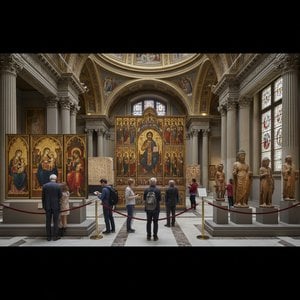
Sacred Narratives Embodied: A Comprehensive Exploration of Religious Iconography in Art History
Explore the rich history of religious iconography in art! Discover symbolism, movements & masterpieces from Byzantine to Renaissance periods. Expert insights for collectors and enthusiasts at ArtsDot.

Fra Angelico: Die 25 Meisterwerke des italienischen Frührenaissance-Malers | ArtsDot
Entdecken Sie die 25 schönsten Meisterwerke von Fra Angelico! Erleben Sie religiöse Kunst der italienischen Renaissance, himmlische Fresken & Panelgemälde. Finden Sie hochwertige Kunstdrucke und Reproduktionen für Ihr Zuhause auf ArtsDot.com.