

 Vorschau anzeigen
 Versenden
 Teilen
 Details anzeigen
 Leitfaden

 Herunterladen
 Ähnliche Objekte
 Röntgenaufnahme
 Diashow
 Q&A
Q&A Statistiken
Upcoming

- 127.0 x 91.0 cm


 Weiterlesen
Giclée / Kunstdruck
Giclée- oder Leinwanddruck in Museumsqualität mit schneller Produktion und flexiblen Veredelungsoptionen. ( Handgemalte Reproduktion bestellen Zum digitalen Bild wechseln)




P118B €10

P118H €10

P118W €10

P438Z €10

P508JH €12

P508YH €12

P805H €10

P805Z €10

P919BZ €10

P919G €10

P919XJ €10

P959ZH €10

P968JZ €12

W106C €8

W218G €10

W218JH €8

W218Y €10

W307PJ €10

W316G €10

W316PJ €8

W316Y €10

W398PJ €8

W4111J €10

W500HY €15

W500JH €15

W692G €12

W849H €8

W940BG €15

W953PJ €8




Wählen Sie aus unseren vordefinierten Formaten, die den ursprünglichen Proportionen des Kunstwerks entsprechen.

Geben Sie die benötigte Breite und Höhe an, damit der Druck perfekt in Ihren Rahmen oder an Ihre Wand passt. Ein Druck kann nur beschnitten, aber niemals größer als das Originalbild angefertigt werden; daher verliert ein Format mit anderen Proportionen einen Teil des Bildes. Wir senden Ihnen ein digitales Mockup zur Freigabe, bevor wir den Druck ausführen. Das auf dieser Seite gezeigte Bild zeigt nicht den tatsächlichen Beschnitt – dies ist nur im Mockup ersichtlich.
Weltweiter Versand () innerhalb von 2 Wochen statt der üblichen 4/5 Wochen. (2 November)

Kostenloser weltweiter Expressversand

Hochwertige Leinenleinwand

Umfassender Versicherungsschutz beim Versand

Zollgebühren-Rückerstattungsgarantie

Garantie für exakte Farbtreue

100 Tage Rückgaberecht (nur bei Mängeln)

100% Geld-zurück-Garantie

Mengenrabatt verfügbar
 Die Glasoption ist nur für Größen unter 110 cm verfügbar.

Upcoming
Giclée / Kunstdruck
Format der Reproduktion
-


Endpreis
€ 55
Upcoming by Nicholas Roerich: A Window into Byzantine Mysticism
Nicholas Roerich’s “Upcoming,” painted in 1907, is more than just a depiction of two figures; it's an immersion into the profound spiritual currents that defined the Byzantine art movement. This oil on wood painting, measuring 127 x 91 cm, resonates with a timeless quality, drawing the viewer into a world of golden hues, intricate patterns, and deeply symbolic representation. Created during a period of intense artistic and philosophical inquiry, “Upcoming” exemplifies Roerich’s mastery in translating complex spiritual ideas into a visually arresting composition – a testament to his unique vision and ability to evoke profound emotion.
The Byzantine Echo: Style and Technique
- Paleologan Renaissance Influence: The painting is firmly rooted in the Paleologan Renaissance, a pivotal era within the Byzantine tradition. This movement, flourishing from roughly 330 to 750 AD, sought to revitalize Christian art through a renewed emphasis on gold leaf, elaborate ornamentation, and stylized figures – elements vividly present in “Upcoming.”
- Rich Color Palette: The dominant use of gold is characteristic of Byzantine iconography, symbolizing divine light, eternity, and spiritual transcendence. This opulent color scheme immediately draws the eye and establishes a sense of sacredness.
- Intricate Detail & Patterning: Roerich meticulously renders intricate patterns within the background, echoing the decorative richness prevalent in Byzantine mosaics and frescoes. These patterns aren’t merely ornamental; they contribute to the overall feeling of depth and mystery.
Symbolism and Narrative
The scene depicts a man and a woman standing before a wall, engaged in what appears to be a solemn conversation. The man, likely a religious figure – perhaps a priest – holds a cross, a potent symbol of faith and sacrifice. His interaction with the woman suggests a dialogue between earthly concerns and spiritual guidance. While specific interpretations remain open to contemplation, the composition powerfully evokes themes of communication, revelation, and the search for meaning. The elongated figures, a hallmark of Byzantine art, contribute to the painting’s ethereal quality, suggesting a realm beyond the purely physical.
Roerich's Vision: A Legacy of Spiritual Art
Created in 1907, “Upcoming” represents a crucial moment in Nicholas Roerich’s artistic development. His deep engagement with Eastern philosophy and his unwavering belief in the interconnectedness of art, science, and spirituality informed every aspect of his work. As a masterpiece of the Byzantine art movement, "Upcoming" continues to inspire awe and contemplation, inviting viewers to ponder timeless questions about faith, humanity, and the universe. Roerich’s dedication to preserving cultural heritage and promoting peace resonates powerfully through this evocative artwork.
Fragen & Antworten
Was stellt "Upcoming" dar?
"Upcoming" von Nikolai Konstantinowitsch Roerich zeigt: roerich, byzantine, spiritual, religious, figures, gold hues, mysticism.
Welche Stimmung vermittelt "Upcoming" von Nikolai Konstantinowitsch Roerich innerhalb der Byzantine Art Movement?
Die Spiritual Ausstrahlung von „Upcoming“ wird durch seinen Byzantine Art Movement-Stil ergänzt.
Wo lässt sich eine Reproduktion von "Upcoming" von Nikolai Konstantinowitsch Roerich am besten präsentieren?
Mit seinem Portrait-Format wird eine Reproduktion von „Upcoming“ für ein Living Room empfohlen.
Ähnliche Kunstwerke


Künstlerbiografie
Nicholas Roerich: Leben, Kunst und Vermächtnis
Frühes Leben und Ausbildung
- Nikolai Konstantinowitsch Roerich wurde am 9. Oktober 1874 in Sankt Petersburg, Russland, geboren.
- Sein Vater, ein baltischer Deutscher Notar, und seine Mutter, eine russische Frau, förderten von frühester Kindheit sein Interesse an den Künsten.
- Roerich studierte sowohl Jura als auch Kunst gleichzeitig und nahm 1893 am St. Petersburger Universität und der Kaiserlichen Akademie der Künste auf.
- Er erhielt 1897 den Titel „Künstler“ und das Jurastudium im Folgejahr.
Künstlerische Bestrebungen und Einflüsse
- Roerichs künstlerische Entwicklung wurde maßgeblich von Russischer Symbolismus, einer Bewegung, die Spiritualität und emotionale Tiefe betonte, beeinflusst.
- Er engagierte sich in der „Weltkunst“-Gesellschaft von Sergei Diaghilew und war von 1910 bis 1916 deren Präsident.
- Seine frühen Arbeiten zeigten eine Faszination für Archäologie und Bühnenbild, was zu Kooperationen bei Produktionen für die Ballets Russes führte.
- Er ließ sich auch von apokryphen und mittelalterlichen sektiererischen Schriften wie dem Dovenbuch beeinflussen.
Zusammenarbeit mit den Ballets Russes
- Roerichs Bühnenbilder für die Ballets Russes wurden hoch gelobt, insbesondere seine Arbeit an Alexander Borodins Fürst Igor (1909) und Igor Strawinskys Das Ritus des Frühlings (1913).
- Seine Bühnenbilder vereinten historische Forschung mit fantasievoller Kunst und schufen visuell beeindruckende Produktionen.
- Diese Zusammenarbeit etablierte ihn als eine führende Figur im Theaterdesign im frühen 20. Jahrhundert.
Künstlerische Entwicklung und Themen
- Roerichs Gemälde entwickelten sich weiter und integrierten zunehmend mystische und spirituelle Themen, die seine wachsende Interesse an der Theosophie und den östlichen Religionen widerspiegelten.
- Seine Serie Architektonische Studien (1904–1905) demonstrierte sein architektonisches Können und sein Engagement für den Erhalt des kulturellen Erbes.
- Wiederkehrende Motive in seiner Arbeit sind majestätische Landschaften, antike Städte und religiöse Figuren wie St. Pantaleimon und Kuan Yin.
- Er stellte oft die Himalaya-Region dar, die für ihn eine tiefe spirituelle Bedeutung hatte.
Wichtige Errungenschaften und Anerkennung
- Roerich war ein engagierter Verfechter des Schutzes von Kunst und Architektur in Kriegszeiten.
- Seine Bemühungen führten zur Schaffung des Roerich-Pakt (1935), eines internationalen Vertrags zum Schutz kultureller Objekte, für die er mehrere Nominierungen für den Friedensnobelpreis erhielt.
- Er reiste weite Teile Zentralasiens ab und führte archäologische Forschungen durch und dokumentierte alte Kulturen.
- Seine Werke sind in bedeutenden Museumssammlungen auf der ganzen Welt zu sehen, darunter die Staatliche Astrakhan-Gemäldegalerie.
Historische Bedeutung und Vermächtnis
- Nicholas Roerichs Einfluss auf die russische Kunst und Kultur ist unermesslich.
- Er schloss die Lücke zwischen künstlerischem Ausdruck und spiritueller Erforschung und beeinflusste Generationen von Künstlern und Denkern.
- Sein Engagement für den Schutz des kulturellen Erbes ist auch heute noch relevant und unterstreicht die Bedeutung des Schutzes unseres gemeinsamen Erbes.
- Roerichs Vermächtnis erstreckt sich über seine Gemälde hinaus; er wird als visionärer Künstler, Gelehrter und Humanitär in Erinnerung behalten.

Nikolai Konstantinowitsch Roerich
1874 - 1947 , Russland
Kurzinfos
- Beeinflusste Künstler: ['Helena Blavatsky']
- Beeinflusste Richtungen:
- Russische Kunst
- Spirituelle Kunst
- Bemerkenswerte Werke:
- St. Pantaleimon der Heiler
- Kuan Yin
- Architektonische Studien
- Ballets Russes (Fürst Igor)
- Geburtsdatum: 9. Oktober 1874
- Geburtsort: Sankt Petersburg, Russland
- Künstlerische Richtung: Symbolismus, Russischer Symbolismus
- Nationalität: Russisch
- Sterbedatum: 13. Dezember 1947
- Vollständiger Name: Nikolai Konstantinowitsch Rerich
Ähnliche Artikel

The Allure of Gold in Art History: Symbolism, Technique & Cultural Significance
Explore the rich history of gold in art! Discover symbolism, techniques & cultural significance from ancient civilizations to Klimt's masterpieces. Expert insights for collectors at ArtsDot.

Goldene Meisterwerke: Die Top 10 berühmtesten Gemälde mit Blattgold – ArtsDot
Entdecken Sie die Top 10 Gemälde, die von Blattgold verzaubern! Von Klimt bis zur Renaissance – erfahren Sie die Geschichten hinter ikonischen Kunstwerke & lassen Sie sich für Ihre Wohnraumgestaltung inspirieren. Hochwertige Reproduktionen auf ArtsDot.com.

Nikolai Roerich: Mystik, Berge und die Suche nach zeitloser Weisheit in der Kunst
Entdecken Sie das faszinierende Werk von Nikolai Roerich! Erfahren Sie mehr über seine Himalaya-Gemälde, die Philosophie des Agni Yoga und sein Engagement für kulturellen Schutz. Ein tiefer Einblick in Leben und Kunst eines spirituellen Meisters.

Golden Glow: How to Use Metallic Gold Artworks to Elevate Your Home Decor with Timeless Luxury
Discover how to elevate your home with the timeless elegance of metallic gold artworks. From sculptural metal pieces to gilded oil paintings, learn expert interior design tips for integrating luxurious gold accents into your space with sophistication and grace.
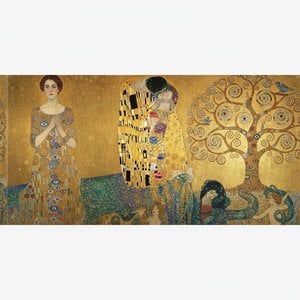
Goldene Meisterwerke: Die 25 besten Kunstwerke von Gustav Klimt
Erleben Sie Klimts goldene Meisterwerke der Wiener Secession. Entdecken Sie alle Highlights auf ArtsDot.com.


