Vorschau anzeigen
 Versenden
 Teilen
 Details anzeigen

 Herunterladen
 Ähnliche Objekte
 Röntgenaufnahme
 Diashow
Stylites


 Weiterlesen
Handgefertigte Ölreproduktion
Handgemaltes Ölgemälde auf Leinwand in Ihrer Wunschgröße und mit Rahmen, auf Bestellung von unseren Künstlern angefertigt. ( Zum Druck wechseln Zum Bild wechseln)




P118B $10

P118H $10

P118W $10

P438Z $10

P508JH $12

P508YH $12

P805H $10

P805Z $10

P919BZ $10

P919G $10

P919XJ $10

P959ZH $10

P968JZ $12

W106C $8

W218G $10

W218JH $8

W218Y $10

W307PJ $10

W316G $10

W316PJ $8

W316Y $10

W398PJ $8

W4111J $10

W500HY $15

W500JH $15

W692G $12

W849H $8

W940BG $15

W953PJ $8




Wählen Sie aus unseren vordefinierten Formaten, die den ursprünglichen Proportionen des Kunstwerks entsprechen.

Sie können Ihre eigenen Maße eingeben, um einen bestimmten Rahmen oder Platz auszufüllen. Wenn die gewählte Größe nicht den Proportionen des Originalbildes entspricht, werden wir das Kunstwerk entweder beschneiden oder das Gemälde durch zusätzliche, handgemalte Elemente erweitern. Ein digitales Mockup wird Ihnen zur Genehmigung zugesandt, bevor die Produktion beginnt.
Bitte beachten Sie, dass die Bildschirmvorschau nicht die tatsächliche Beschneidung oder Erweiterung widerspiegelt. Nur das Mockup zeigt die endgültige Komposition exakt an.
Obwohl Sondermaße verfügbar sind, empfehlen wir, eine Größe aus der vordefinierten Liste zu wählen, um die ursprünglichen Proportionen beizubehalten.
Nach der Bestellung wird das ArtsDot.com-Team dem Kunden Anweisungen per E-Mail zusenden und eine Mockup-Vorschau bereitstellen.
Weltweiter Versand () in nur 3 bis 4 Wochen statt der üblichen 5 Wochen. (10 August). Keine Kompromisse bei der Qualität.

Kostenloser weltweiter Expressversand

Hochwertige Leinenleinwand

Umfassender Versicherungsschutz beim Versand

Zollgebühren-Rückerstattungsgarantie

Garantie für exakte Farbtreue

60 Tage Rückgaberecht (nur bei Mängeln)

100% Geld-zurück-Garantie

Mengenrabatt verfügbar
 Die Glasoption ist nur für Größen unter 110 cm verfügbar.

Stylites
Art der Reproduktion
Format der Reproduktion
-


Gesamtpreis
$ 263
Beschreibung des Kunstwerks
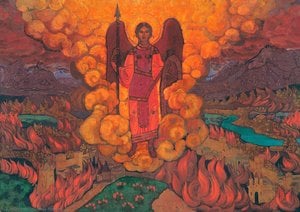
The Silent Sentinel – An Exploration of “Stylites” by Nicholas Roerich
Nicholas Roerich’s “Stylites,” painted in 1917, isn't merely a depiction of a solitary figure; it’s an invitation to contemplate the profound intersection of spirituality, isolation, and the enduring human quest for connection. This arresting image, rendered in a palette of evocative blues and purples – colors often associated with introspection and the ethereal – immediately draws the viewer into a scene both starkly simple and deeply resonant. The central figure, seated before a monumental rock formation that dominates the landscape, embodies a quiet dignity and an almost unnerving stillness. He’s not gazing outward, but inward, suggesting a journey of profound self-reflection.
Roerich's artistic lineage is complex and fascinating. Initially influenced by Russian Symbolism – a movement characterized by its exploration of the mystical and spiritual realms through art – he evolved into an artist deeply connected to Eastern philosophies, particularly Theosophy and Vedanta. This confluence of influences profoundly shaped his work, imbuing it with layers of symbolism and a sense of timelessness. “Stylites” exemplifies this evolution; the figure’s posture and the surrounding landscape evoke ancient ascetic traditions, hinting at a deliberate detachment from worldly concerns in pursuit of enlightenment.
The Pillar – A Symbol of Perseverance and Spiritual Ascent
The most striking element of the painting is undoubtedly the pillar itself. It's not simply a geological feature; it’s a potent symbol of endurance, sacrifice, and spiritual ascent. The legend of Simeon Stylites, the Syrian monk who spent nearly four decades standing atop a pillar in the desert, served as a powerful inspiration for Roerich. This historical figure became a metaphor within his work for those who choose to dedicate their lives to a singular pursuit – whether it be artistic creation, philosophical inquiry, or spiritual practice. The painting subtly references this legend, prompting us to consider what it means to commit oneself fully to a path of self-discipline and inner transformation.
Roerich’s technique is notable for its expressive brushwork and masterful use of color. He employs loose, gestural strokes that convey both the solidity of the rock formation and the ethereal quality of the figure's presence. The blues and purples are not applied uniformly; they shift and blend, creating a sense of depth and atmosphere. Notice how he uses light to sculpt the form of the pillar, suggesting its immense weight and the challenges it represents. The subtle details – the bird in flight, the trees – add layers of narrative without overwhelming the central theme.
Historical Context & Roerich’s Vision
“Stylites” was created during a period of tremendous upheaval in Russia—the aftermath of World War I and the tumultuous events surrounding the Bolshevik Revolution. Roerich, deeply concerned with preserving cultural heritage and promoting peace, saw art as a powerful tool for spiritual renewal. He believed that through artistic expression, one could transcend the limitations of the material world and connect with something larger than oneself. This conviction is evident in his work’s emphasis on symbolism, mythology, and the exploration of universal themes.
The painting's connection to Simeon Stylites reflects Roerich’s fascination with Eastern asceticism and its potential for spiritual growth. He saw in the monk’s solitary existence a model for those seeking to overcome ego and achieve enlightenment. Furthermore, Roerich was deeply interested in the Himalayas, viewing them as a sacred landscape imbued with ancient wisdom. “Stylites” can be interpreted as an attempt to capture the essence of this mystical realm – a place where the boundaries between the earthly and the divine blur.
A Timeless Reflection - The Emotional Resonance
Ultimately, "Stylites" is a profoundly moving work that invites contemplation. It’s not simply a portrait; it's an allegory of the human condition—a testament to the enduring power of faith, perseverance, and the search for meaning in a world often characterized by chaos and uncertainty. The painting’s quiet intensity and symbolic richness resonate with viewers on a deep emotional level, prompting us to reflect on our own journeys of self-discovery and the choices we make along the way. It serves as a reminder that even in solitude, there is an opportunity for profound connection – not just with others, but with something far greater than ourselves.


Über den Künstler
Nicholas Roerich: Leben, Kunst und Vermächtnis
Frühes Leben und Ausbildung
- Nikolai Konstantinowitsch Roerich wurde am 9. Oktober 1874 in Sankt Petersburg, Russland, geboren.
- Sein Vater, ein baltischer Deutscher Notar, und seine Mutter, eine russische Frau, förderten von frühester Kindheit sein Interesse an den Künsten.
- Roerich studierte sowohl Jura als auch Kunst gleichzeitig und nahm 1893 am St. Petersburger Universität und der Kaiserlichen Akademie der Künste auf.
- Er erhielt 1897 den Titel „Künstler“ und das Jurastudium im Folgejahr.
Künstlerische Bestrebungen und Einflüsse
- Roerichs künstlerische Entwicklung wurde maßgeblich von Russischer Symbolismus, einer Bewegung, die Spiritualität und emotionale Tiefe betonte, beeinflusst.
- Er engagierte sich in der „Weltkunst“-Gesellschaft von Sergei Diaghilew und war von 1910 bis 1916 deren Präsident.
- Seine frühen Arbeiten zeigten eine Faszination für Archäologie und Bühnenbild, was zu Kooperationen bei Produktionen für die Ballets Russes führte.
- Er ließ sich auch von apokryphen und mittelalterlichen sektiererischen Schriften wie dem Dovenbuch beeinflussen.
Zusammenarbeit mit den Ballets Russes
- Roerichs Bühnenbilder für die Ballets Russes wurden hoch gelobt, insbesondere seine Arbeit an Alexander Borodins Fürst Igor (1909) und Igor Strawinskys Das Ritus des Frühlings (1913).
- Seine Bühnenbilder vereinten historische Forschung mit fantasievoller Kunst und schufen visuell beeindruckende Produktionen.
- Diese Zusammenarbeit etablierte ihn als eine führende Figur im Theaterdesign im frühen 20. Jahrhundert.
Künstlerische Entwicklung und Themen
- Roerichs Gemälde entwickelten sich weiter und integrierten zunehmend mystische und spirituelle Themen, die seine wachsende Interesse an der Theosophie und den östlichen Religionen widerspiegelten.
- Seine Serie Architektonische Studien (1904–1905) demonstrierte sein architektonisches Können und sein Engagement für den Erhalt des kulturellen Erbes.
- Wiederkehrende Motive in seiner Arbeit sind majestätische Landschaften, antike Städte und religiöse Figuren wie St. Pantaleimon und Kuan Yin.
- Er stellte oft die Himalaya-Region dar, die für ihn eine tiefe spirituelle Bedeutung hatte.
Wichtige Errungenschaften und Anerkennung
- Roerich war ein engagierter Verfechter des Schutzes von Kunst und Architektur in Kriegszeiten.
- Seine Bemühungen führten zur Schaffung des Roerich-Pakt (1935), eines internationalen Vertrags zum Schutz kultureller Objekte, für die er mehrere Nominierungen für den Friedensnobelpreis erhielt.
- Er reiste weite Teile Zentralasiens ab und führte archäologische Forschungen durch und dokumentierte alte Kulturen.
- Seine Werke sind in bedeutenden Museumssammlungen auf der ganzen Welt zu sehen, darunter die Staatliche Astrakhan-Gemäldegalerie.
Historische Bedeutung und Vermächtnis
- Nicholas Roerichs Einfluss auf die russische Kunst und Kultur ist unermesslich.
- Er schloss die Lücke zwischen künstlerischem Ausdruck und spiritueller Erforschung und beeinflusste Generationen von Künstlern und Denkern.
- Sein Engagement für den Schutz des kulturellen Erbes ist auch heute noch relevant und unterstreicht die Bedeutung des Schutzes unseres gemeinsamen Erbes.
- Roerichs Vermächtnis erstreckt sich über seine Gemälde hinaus; er wird als visionärer Künstler, Gelehrter und Humanitär in Erinnerung behalten.

Nikolai Konstantinowitsch Roerich
1874 - 1947 , Russland
Kurzinfos
- Beeinflusste Künstler: ['Helena Blavatsky']
- Beeinflusste Richtungen:
- Russische Kunst
- Spirituelle Kunst
- Bemerkenswerte Werke:
- St. Pantaleimon der Heiler
- Kuan Yin
- Architektonische Studien
- Ballets Russes (Fürst Igor)
- Geburtsdatum: 9. Oktober 1874
- Geburtsort: Sankt Petersburg, Russland
- Künstlerische Richtung: Symbolismus, Russischer Symbolismus
- Nationalität: Russisch
- Sterbedatum: 13. Dezember 1947
- Vollständiger Name: Nikolai Konstantinowitsch Rerich
Ähnliche Artikel

Gustave Moreau: Der Enigmatische Visionär des Symbolismus und Wegbereiter moderner Fantasy-Kunst
Entdecken Sie das faszinierende Werk Gustave Moreaus, des wichtigsten Vertreters des Symbolismus! Analysen, Biografien und Einblicke in seine mythologischen Gemälde. Jetzt lesen!

Navigating Symbolism & Sentiment: A Comprehensive Exploration of Boats in Art History
Explore the rich history of boats in art! Discover symbolism & style from ancient myths to Impressionist masterpieces. Expert insights for collectors at ArtsDot.

Jan van Eyck: Innovation, Symbolik und die Morgendämmerung der frühniederländischen Malerei
Entdecken Sie die Innovationen und tiefgründige Symbolik von Jan van Eyck! Analysieren Sie mit uns seine Meisterwerke, die Ölmaltechnik und den Einfluss auf die frühniederländische Renaissance. Jetzt lesen!

Wein, Wände und Wärme: Eine kuratorische Anleitung zur Kunstauswahl für Weinkeller und Verkostungsräume – Die Steigerung der önologischen Erfahrung durch Landschaft, Symbolik und innere Harmonie
Gestalten Sie Ihren Weinkeller oder Verkostungsraum mit Kunst! Expertenrat zur Auswahl von Gemälden, Symbolik & Ästhetik für ein unvergleichliches Weinerlebnis. Jetzt entdecken!
Symbolismus in der Kunst: Die 10 bedeutendsten Werke für Ihr Zuhause | ArtsDot
Entdecken Sie die faszinierende Welt des Symbolismus! Von Klimt bis Munch – wir präsentieren 10 ikonische Gemälde und ihre tiefgründige Bedeutung. Hochwertige Kunstdrucke & Inspiration für Ihr Zuhause auf ArtsDot.com.