Vorschau anzeigen
 Versenden
 Teilen
 Details anzeigen

 Herunterladen
 Ähnliche Objekte
 Röntgenaufnahme
 Diashow
untitled (3407)

 Weiterlesen
Giclée / Kunstdruck
Giclée- oder Leinwanddruck in Museumsqualität mit schneller Produktion und flexiblen Veredelungsoptionen. ( Handgemalte Reproduktion bestellen Bild kaufen)




P118B $10

P118H $10

P118W $10

P438Z $10

P508JH $12

P508YH $12

P805H $10

P805Z $10

P919BZ $10

P919G $10

P919XJ $10

P959ZH $10

P968JZ $12

W106C $8

W218G $10

W218JH $8

W218Y $10

W307PJ $10

W316G $10

W316PJ $8

W316Y $10

W398PJ $8

W4111J $10

W500HY $15

W500JH $15

W692G $12

W849H $8

W940BG $15

W953PJ $8




Wählen Sie aus unseren vordefinierten Formaten, die den ursprünglichen Proportionen des Kunstwerks entsprechen.

Sie können Ihre eigenen Maße eingeben, um ein bestimmtes Format oder einen speziellen Platz einzupassen. Wenn das von Ihnen gewählte Format nicht den Proportionen des Originalbildes entspricht, werden wir das Kunstwerk entweder beschneiden oder das Bild mit einem gespiegelten oder einfarbigen Rand erweitern. Ein digitaler Entwurf wird Ihnen zur Genehmigung zugesandt, bevor die Produktion beginnt.
Bitte beachten Sie, dass die Vorschau auf dem Bildschirm nicht den tatsächlichen Zuschnitt oder die Erweiterung widerspiegelt. Nur der Entwurf zeigt die endgültige Komposition präzise an.
Obwohl Sondermaße verfügbar sind, empfehlen wir die Auswahl eines Maßes aus der vordefinierten Liste, um die ursprünglichen Proportionen zu bewahren.
Weltweiter Versand () innerhalb von 2 Wochen statt der üblichen 4/5 Wochen. (16 August)

Kostenloser weltweiter Expressversand

Hochwertige Leinenleinwand

Umfassender Versicherungsschutz beim Versand

Zollgebühren-Rückerstattungsgarantie

Garantie für exakte Farbtreue

60 Tage Rückgaberecht (nur bei Mängeln)

100% Geld-zurück-Garantie

Mengenrabatt verfügbar
 Die Glasoption ist nur für Größen unter 110 cm verfügbar.

untitled (3407)
Giclée / Kunstdruck
Format der Reproduktion
-


Gesamtpreis
$ 62
Sammlerstück-Beschreibung
The Haunting Geometry of Absence: Unpacking Max Ernst’s ‘Untitled (3407)’
Max Ernst's “Untitled (3407)” isn’t merely a depiction of a damaged boat; it’s a meticulously constructed tableau of psychological unease and fractured reality. The image, rendered in a style deeply rooted in Surrealism, immediately arrests the viewer with its stark simplicity and unsettling core: a solitary wooden vessel riddled with a gaping hole in its center. This isn't a scene of dramatic action or immediate danger; instead, it’s imbued with a profound sense of isolation, decay, and the inherent instability of perception. The muted palette – primarily reds and browns – contributes to this atmosphere of melancholic stillness, while the background hints at other vessels, suggesting a wider, equally desolate landscape.
Ernst, born in Brühl, Germany, in 1891, was a restless intellectual and artist who deliberately rejected traditional artistic training. His journey began with philosophical inquiry, fueled by a fascination with psychology and psychiatry – disciplines he studied rigorously at the University of Bonn. This academic grounding profoundly shaped his approach to art, moving beyond mere representation towards an exploration of the subconscious mind and the illogical structures of dreams. His early experiences during World War I, marked by trauma and disillusionment, undoubtedly informed this preoccupation with fractured realities and the unsettling nature of existence – themes that resonate powerfully within “Untitled (3407).”
Technique and Innovation: The Language of Frottage
The painting’s distinctive quality stems largely from Ernst's innovative techniques, most notably *frottage*. This method, developed by Ernst himself, involved rubbing a pencil over textured surfaces – wood grain, fabric, or even the pages of books – to create seemingly random patterns. These patterns were then incorporated into his compositions, adding layers of hidden imagery and suggestive symbolism. In “Untitled (3407),” traces of this technique are subtly present, contributing to the painting’s dreamlike quality and hinting at a deeper, unseen narrative.
Furthermore, Ernst frequently employed *grattage*, scraping paint across the canvas to reveal the textures beneath – often creating layered images that defy easy interpretation. This process mirrors the disruption of the boat's structure, visually representing the breakdown of order and the emergence of unexpected forms. The deliberate roughness and unevenness of the surface further enhance the painting’s unsettling effect, inviting viewers to contemplate the fragility of form and the inherent ambiguity of visual experience.
Symbolism and Psychological Depth
The central image of the damaged boat is rich in symbolic potential. It can be interpreted as a representation of vulnerability, loss, or perhaps even the human condition itself – susceptible to damage, adrift without direction, and bearing the scars of past experiences. The hole within the vessel isn’t simply a structural flaw; it's a portal, an opening into the unknown, suggesting a descent into the subconscious or a confrontation with repressed memories. The surrounding boats in the background could represent other journeys, other lives, all equally vulnerable to the forces of time and circumstance.
Ernst’s frequent use of birds – often depicted as enigmatic figures within his work – adds another layer of complexity. In “Untitled (3407),” the absence of a bird suggests a loss of guidance or a disruption in the natural order. The overall composition evokes a sense of disorientation and uncertainty, mirroring the psychological landscape explored by Ernst throughout his career.
A Legacy of Surrealist Innovation
“Untitled (3407)” stands as a testament to Max Ernst’s pioneering spirit and his profound impact on 20th-century art. His exploration of subconscious imagery, innovative techniques like *frottage* and *grattage*, and willingness to challenge conventional artistic norms cemented his place as a central figure in the Surrealist movement. Reproductions of this evocative work offer a unique opportunity to experience the unsettling beauty and psychological depth of Ernst’s vision – a journey into the heart of the surreal.
Ähnliche Kunstwerke


Über den Künstler
Max Ernst: Ein Leben im Surrealismus
Frühes Leben und Ausbildung
- Geboren: 1. April 1891 in Brühl, Deutschland.
- Ernsts Vater, Philipp Ernst, war Lehrer für Gehörlose und Amateurmaler, der Maxes frühes Interesse an Kunst förderte.
- Von 1909 studierte er Philosophie, Kunstgeschichte, Literatur, Psychologie und Psychiatrie an der Universität Bonn.
- Dieser vielfältige akademische Hintergrund beeinflusste seine späteren künstlerischen Erkundungen maßgeblich.
Künstlerische Entwicklung & Einflüsse
- Ein einschneidendes Ereignis war die Sonderbund-Ausstellung in Köln (1912), wo er Werke von Pablo Picasso, Vincent van Gogh, und Paul Gauguin entdeckte.
- Im Jahr 1914 lernte er Hans Arp kennen, der eine lebenslange Freundschaft schloss, die seine künstlerische Reise maßgeblich prägte.
- Der Erste Weltkrieg hatte einen tiefgreifenden Einfluss auf Ernst; seine Erfahrungen als Soldat führten zu Enttäuschung und einer kritischen Sicht auf die Gesellschaft.
- Er ließ sich von den Schriften Sigmund Freuds beeinflussen und erkundete Themen des Unterbewusstseins in seiner Kunst.
Dada & Surrealismus
- Nach dem Ersten Weltkrieg wurde Ernst eine Schlüsselfigur der Kölner Dada-Gruppe, die sich gegen traditionelle künstlerische Konventionen aussprach.
- Er entwickelte innovative Techniken wie Frottage (Erhitzen von Bleistift auf texturierte Oberflächen) und Grattage (Abkratzen von Farbe, um darunterliegende Schichten freizulegen).
- In den 1920er Jahren trat er der Surrealistischen Bewegung in Paris bei und arbeitete mit Künstlern wie Paul Éluard zusammen.
- Seine Werke dieser Zeit erforschten traumhafte Bilder und psychologische Themen.
Wichtige Werke & Techniken
- Frottage: Eine Technik zur Erzeugung von Texturen und unerwarteten Bildern, die in vielen seiner Werke zu sehen ist.
- Collage: Ernst verwendete häufig Collage, um disparate Elemente zu kombinieren und surreale Kompositionen zu schaffen.
- Bekannte Werke:
- Die gesamte Stadt
- Euclides
- Von diesem sollen nichts wissen
- Wald und Taube
- Seine Gemälde zeigen oft symbolische Bilder, darunter Vögel (insbesondere seinen Pseudonym Loplop), Landschaften und verstörende Gegenüberstellungen.
Spätes Leben & Vermächtnis
- Ernst zog während des Zweiten Weltkriegs in die Vereinigten Staaten, wo er weiter malte und mit neuen Techniken experimentierte.
- Nach dem Krieg kehrte er nach Frankreich zurück und blieb bis zu seinem Tod am 1. April 1976 in Paris aktiv.
- Historische Bedeutung: Max Ernsts Beiträge zu Dada und Surrealismus waren bahnbrechend. Er stellte künstlerische Normen in Frage, erforschte das Unterbewusstsein und entwickelte innovative Techniken, die Künstler bis heute inspirieren.
- Er gilt als eine der wichtigsten und einflussreichsten Figuren der Kunst des 20. Jahrhunderts.

Max Ernst
1891 - 1976 , Deutschland
Kurzinfos
- Artistic Movement Or Style: Dadaismus & Surrealismus
- Artists Who Influenced This Artist:
- Pablo Picasso
- Vincent van Gogh
- Paul Gauguin
- Sigmund Freud
- Date Of Birth: 1. April 1891
- Date Of Death: 1. April 1976
- Full Name: Max Ernst
- Nationality: Deutsch
- Notable Artworks:
- Die gesamte Stadt
- Euclides
- Wald und Taube
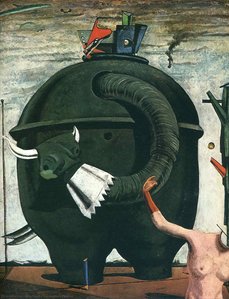
- Der Elefant Celebes
- Place Of Birth (City And Country): Brühl, Deutschland
Ähnliche Artikel
Max Ernsts Meisterwerke: Die Top 25 Kunstwerke für Ihr Zuhause | ArtsDot
Entdecken Sie die 25 bedeutendsten Kunstwerke von Max Ernst! Tauchen Sie ein in die Welt des Surrealismus, Dada und abstrakter Malerei. Hochwertige Kunstreproduktionen & Inspiration für Ihr Zuhause bei ArtsDot.com.

Boote in der Kunst: Die 10 schönsten Meisterwerke & ihre Geschichten | ArtsDot
Entdecken Sie die 10 schönsten Bootsgemälde der Kunstgeschichte! Von Monet bis Van Gogh – erfahren Sie die Geschichten hinter ikonischen Werken, Techniken & Marinemalerei. Hochwertige Reproduktionen auf ArtsDot.com.

Crimson Threads of Narrative: Exploring Symbolism & Representation in Artworks Featuring the Red Dress
Explore the rich symbolism of the red dress in art history! From ancient power displays to iconic portraits like Cézanne’s 'Madame Cezanne', discover the cultural and artistic significance behind this captivating color. Expert analysis & insights.

René Magritte: Die 25 Meisterwerke des Surrealismus für Ihr Zuhause | ArtsDot
Entdecken Sie die 25 ikonischsten Gemälde von René Magritte! Tauchen Sie ein in die surreale Welt des belgischen Künstlers – von 'Der verlorene Jockey' bis 'Golconda'. Hochwertige Reproduktionen & Kunst für Ihr Zuhause auf ArtsDot.com.
Dreamscapes & Disrupted Realities: Exploring Surrealism's Enduring Influence
Explore the fascinating world of Surrealism! Discover its origins, key artists like Dalí & Magritte, and enduring influence on art & culture. Expert insights & high-quality reproductions at ArtsDot.