


 In echtem Maßstab anzeigen
 Versenden als Grußkarte
 Teilen
 Details anzeigen
 Leitfaden öffnen

 Herunterladen
 Ähnliche Objekte
 Röntgenaufnahme
 Diashow
 Besucherstatistiken
Paysage avec lune


 Mehr anzeigen
Die auf dieser Seite dargestellten Kunstwerke sind urheberrechtlich geschützt, was bedeutet, dass wir keine identische Reproduktion rechtmäßig erstellen oder verkaufen dürfen. Dieser Schutz wird durch internationale Abkommen wie die Berner Übereinkunft und durch nationale Gesetze, einschließlich derer, die von den ... festgelegt wurden US-Urheberrecht – Titel 17.
Diese Methode entspricht vollumfänglich den Urheberrechtsbestimmungen, da sie keine Kopie oder Vervielfältigung des geschützten Kunstwerks darstellt. Stattdessen handelt es sich um eine kreative Neuinterpretation – ein neues Gemälde, das vom Original inspiriert, aber nicht identisch mit ihm ist.
Giclée / Kunstdruck
Giclée- oder Leinwanddruck in Museumsqualität mit schneller Produktion und flexiblen Veredelungsoptionen. ( Handgemalte Reproduktion kaufen Zum digitalen Bild wechseln)




P118B €10

P118H €10

P118W €10

P438Z €10

P508JH €12

P508YH €12

P805H €10

P805Z €10

P919BZ €10

P919G €10

P919XJ €10

P959ZH €10

P968JZ €12

W106C €8

W218G €10

W218JH €8

W218Y €10

W307PJ €10

W316G €10

W316PJ €8

W316Y €10

W398PJ €8

W4111J €10

W500HY €15

W500JH €15

W692G €12

W849H €8

W940BG €15

W953PJ €8




Wählen Sie aus unseren vordefinierten Formaten, die den ursprünglichen Proportionen des Kunstwerks entsprechen.

Geben Sie die Breite und die Höhe an, die Sie benötigen, damit der Druck perfekt in Ihren Rahmen oder an Ihre Wand passt. Ein Druck kann nur beschnitten werden und niemals größer als das Originalbild gemacht werden; daher verliert ein Format mit einer anderen Proportion einen Teil des Bildes. Wir senden Ihnen ein digitales Mockup zur Freigabe, bevor wir den Druck ausführen. Das auf dieser Seite gezeigte Bild zeigt nicht den tatsächlichen Beschnitt – dies ist nur im Mockup ersichtlich.
Weltweiter Versand () innerhalb von 2 Wochen statt der üblichen 4/5 Wochen. (24 Oktober)

Kostenloser weltweiter Expressversand

Hochwertige Leinenleinwand

Vollständiger Versicherungsschutz beim Versand

Zollgebühren-Rückerstattungsgarantie

Garantie für exakte Farbtreue

100-tägiges Rückgaberecht (nur bei Mängeln)

100% Geld-zurück-Garantie

Angebot für Mengenrabatt
 Die Glasoption ist nur für Größen unter 110 cm verfügbar.

Paysage avec lune
Giclée / Kunstdruck
Format der Reproduktion
-


Gesamtpreis
€ 54
A Lunar Reverie: Max Ernst's *Paysage avec lune*
Max Ernst’s *Paysage avec lune* (Landscape with Moon) is more than just a depiction of a celestial body; it’s an immersion into the subconscious, a testament to the artist’s lifelong fascination with dreams, mythology, and the unsettling beauty of the surreal. Painted during a period of intense experimentation and intellectual exploration, this work embodies Ernst's core artistic philosophy – a deliberate rejection of representational accuracy in favor of evoking emotional responses and challenging conventional perceptions.
- Subject Matter: The painting centers around a dramatically rendered moon dominating the composition. Its large size immediately commands attention, drawing the viewer into its luminous presence. Surrounding it are subtle details – smaller forms in the sky that could be interpreted as distant landscapes or simply symbolic elements, adding to the work’s enigmatic quality.
- Style and Technique: Ernst's technique is characterized by a deliberate layering of textures and colors, achieved through a combination of oil paint and possibly collage elements (a common practice within his oeuvre). The application of paint is loose and expressive, prioritizing atmosphere and mood over precise detail. This approach aligns with the burgeoning Surrealist movement’s rejection of academic realism.
Echoes of the Surreal: Historical Context
Created by Max Ernst between 1924 and 1930, *Paysage avec lune* emerged from a pivotal moment in art history – the rise of Surrealism. Following World War I, artists like Ernst were profoundly affected by the trauma and disillusionment of the era. They sought to bypass rational thought and tap into the realm of dreams, the unconscious, and the irrational as a means of expressing profound anxieties and exploring alternative realities. Ernst’s exploration of automatism – a technique involving spontaneous creation without conscious control – was central to his process, allowing him to access deeper layers of meaning within his work.
- Influence of Mythology: The moon itself holds significant symbolic weight across cultures and throughout history. Often associated with femininity, intuition, and the cyclical nature of time, its presence in Ernst’s painting suggests a connection to primal forces and archetypal narratives.
- Connection to Dadaism: Ernst's early work was deeply influenced by Dadaism, characterized by its anti-rational stance and embrace of absurdity. This influence is evident in the painting’s unsettling atmosphere and rejection of traditional artistic conventions.
Decoding the Symbolism
*Paysage avec lune* resists straightforward interpretation, inviting viewers to engage with its ambiguities and explore their own subconscious associations. The moon's glow can be seen as a beacon of hope or a symbol of isolation, depending on one’s perspective. The smaller forms in the sky may represent fragmented memories, distorted landscapes, or even glimpses into other dimensions. Ernst deliberately avoided providing definitive answers, believing that art should provoke thought and emotion rather than offer concrete explanations.
- Color Palette: The dominant use of yellow – a color often associated with light, optimism, and the sun – contrasts sharply with the darkness of the night sky, creating a dynamic tension within the composition.
- Compositional Balance: Despite its dreamlike quality, the painting maintains a sense of balance, with the moon positioned centrally to draw the viewer’s eye while the surrounding elements contribute to the overall harmony.
Emotional Impact and Artistic Value
*Paysage avec lune* possesses a captivating power that transcends its simple subject matter. It evokes a profound sense of mystery, solitude, and wonder – qualities that have resonated with viewers for decades. As a work by Max Ernst, a key figure in the development of 20th-century art, this painting represents a significant contribution to the Surrealist movement and offers a unique window into the artist’s complex inner world. A hand-painted reproduction allows you to bring this evocative piece into your own space, transforming it into a focal point for contemplation and artistic appreciation.
Fragen & Antworten
Welche Technik wurde für "Paysage avec lune" von Max Ernst verwendet?
Das Medium von "Paysage avec lune" von Max Ernst ist Acrylic On Canvas. Die Reproduktionen zielen darauf ab, das Erscheinungsbild dieser Technik wiederzugeben.
Wie schafft "Paysage avec lune" das Gleichgewicht zwischen Hell und Dunkel?
Die aufgezeichneten Werte für "Paysage avec lune" von Max Ernst sind: bright Helligkeit, Gentle Luminance Luminanz.
Welchem Künstler wird "Paysage avec lune" zugeschrieben?
Der Künstler hinter „Paysage avec lune“ ist Max Ernst. Das Werk ist unter dem Namen von Max Ernst katalogisiert.


Biografie des Künstlers
Max Ernst: Ein Leben im Surrealismus
Frühes Leben und Ausbildung
- Geboren: 1. April 1891 in Brühl, Deutschland.
- Ernsts Vater, Philipp Ernst, war Lehrer für Gehörlose und Amateurmaler, der Maxes frühes Interesse an Kunst förderte.
- Von 1909 studierte er Philosophie, Kunstgeschichte, Literatur, Psychologie und Psychiatrie an der Universität Bonn.
- Dieser vielfältige akademische Hintergrund beeinflusste seine späteren künstlerischen Erkundungen maßgeblich.
Künstlerische Entwicklung & Einflüsse
- Ein einschneidendes Ereignis war die Sonderbund-Ausstellung in Köln (1912), wo er Werke von Pablo Picasso, Vincent van Gogh, und Paul Gauguin entdeckte.
- Im Jahr 1914 lernte er Hans Arp kennen, der eine lebenslange Freundschaft schloss, die seine künstlerische Reise maßgeblich prägte.
- Der Erste Weltkrieg hatte einen tiefgreifenden Einfluss auf Ernst; seine Erfahrungen als Soldat führten zu Enttäuschung und einer kritischen Sicht auf die Gesellschaft.
- Er ließ sich von den Schriften Sigmund Freuds beeinflussen und erkundete Themen des Unterbewusstseins in seiner Kunst.
Dada & Surrealismus
- Nach dem Ersten Weltkrieg wurde Ernst eine Schlüsselfigur der Kölner Dada-Gruppe, die sich gegen traditionelle künstlerische Konventionen aussprach.
- Er entwickelte innovative Techniken wie Frottage (Erhitzen von Bleistift auf texturierte Oberflächen) und Grattage (Abkratzen von Farbe, um darunterliegende Schichten freizulegen).
- In den 1920er Jahren trat er der Surrealistischen Bewegung in Paris bei und arbeitete mit Künstlern wie Paul Éluard zusammen.
- Seine Werke dieser Zeit erforschten traumhafte Bilder und psychologische Themen.
Wichtige Werke & Techniken
- Frottage: Eine Technik zur Erzeugung von Texturen und unerwarteten Bildern, die in vielen seiner Werke zu sehen ist.
- Collage: Ernst verwendete häufig Collage, um disparate Elemente zu kombinieren und surreale Kompositionen zu schaffen.
- Bekannte Werke:
- Die gesamte Stadt
- Euclides
- Von diesem sollen nichts wissen
- Wald und Taube
- Seine Gemälde zeigen oft symbolische Bilder, darunter Vögel (insbesondere seinen Pseudonym Loplop), Landschaften und verstörende Gegenüberstellungen.
Spätes Leben & Vermächtnis
- Ernst zog während des Zweiten Weltkriegs in die Vereinigten Staaten, wo er weiter malte und mit neuen Techniken experimentierte.
- Nach dem Krieg kehrte er nach Frankreich zurück und blieb bis zu seinem Tod am 1. April 1976 in Paris aktiv.
- Historische Bedeutung: Max Ernsts Beiträge zu Dada und Surrealismus waren bahnbrechend. Er stellte künstlerische Normen in Frage, erforschte das Unterbewusstsein und entwickelte innovative Techniken, die Künstler bis heute inspirieren.
- Er gilt als eine der wichtigsten und einflussreichsten Figuren der Kunst des 20. Jahrhunderts.

Max Ernst
1891 - 1976 , Deutschland
Eckdaten zum Künstler
- Artistic Movement Or Style: Dadaismus & Surrealismus
- Artists Who Influenced This Artist:
- Pablo Picasso
- Vincent van Gogh
- Paul Gauguin
- Sigmund Freud
- Date Of Birth: 1. April 1891
- Date Of Death: 1. April 1976
- Full Name: Max Ernst
- Nationality: Deutsch
- Notable Artworks:
- Die gesamte Stadt
- Euclides
- Wald und Taube
- Der Elefant Celebes
- Place Of Birth (City And Country): Brühl, Deutschland
Verwandte Artikel
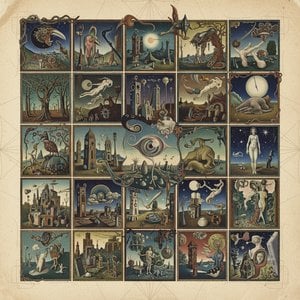
Max Ernsts Meisterwerke: Die Top 25 Kunstwerke für Ihr Zuhause | ArtsDot
Entdecken Sie die 25 bedeutendsten Kunstwerke von Max Ernst! Tauchen Sie ein in die Welt des Surrealismus, Dada und abstrakter Malerei. Hochwertige Kunstreproduktionen & Inspiration für Ihr Zuhause bei ArtsDot.com.

John Constable: Die 25 Meisterwerke des englischen Landschaftsgenies – ArtsDot
Entdecken Sie die 25 Meisterwerke von John Constable! Erleben Sie englische Landschaftsmalerei vom Hay Wain bis zur Stour Valley. Hochwertige Reproduktionen & Kunst für Ihr Zuhause auf ArtsDot.com.

Katsushika Hokusai: Die 25 Meisterwerke des Ukiyo-e – Kunst für Ihr Zuhause | ArtsDot
Entdecken Sie die 25 Meisterwerke von Katsushika Hokusai! Tauchen Sie ein in die Welt des Ukiyo-e, berühmte Holzschnitte wie 'Die große Welle' & Fuji-Ansichten. Hochwertige Kunstdrucke für Ihr Zuhause – jetzt auf ArtsDot.com!
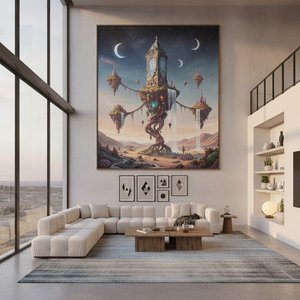
Dreamscapes Unveiled: A Curated Guide to Integrating Surrealist Landscape Art into Modern Interiors
Discover how to transform your home with the captivating mystery of Surrealist landscape art. Our expert guide explores iconic dreamscapes, offering professional tips on curating, styling, and commissioning bespoke surrealist masterpieces for a sophisticated, soulful interior.

Romantische Landschaften: Die 10 Meisterwerke, die eine Epoche prägten | ArtsDot
Entdecken Sie die 10 Meisterwerke der Romantischen Landschaftsmalerei! Von Caspar David Friedrich bis Turner – erleben Sie die Kunst, Emotion & Natur. Hochwertige Reproduktionen auf ArtsDot.com


