


 Vorschau anzeigen
 Versenden
 Teilen
 Details anzeigen

 Herunterladen
 Ähnliche Objekte
 Röntgenaufnahme
 Diashow
 Statistiken
Landscape with Wheatgerm


 Weiterlesen
Giclée / Kunstdruck
Giclée- oder Leinwanddruck in Museumsqualität mit schneller Produktion und flexiblen Veredelungsoptionen. ( Handgemalte Reproduktion bestellen Zum digitalen Bild wechseln)




P118B $10

P118H $10

P118W $10

P438Z $10

P508JH $12

P508YH $12

P805H $10

P805Z $10

P919BZ $10

P919G $10

P919XJ $10

P959ZH $10

P968JZ $12

W106C $8

W218G $10

W218JH $8

W218Y $10

W307PJ $10

W316G $10

W316PJ $8

W316Y $10

W398PJ $8

W4111J $10

W500HY $15

W500JH $15

W692G $12

W849H $8

W940BG $15

W953PJ $8




Wählen Sie aus unseren vordefinierten Formaten, die den ursprünglichen Proportionen des Kunstwerks entsprechen.

Sie können Ihre eigenen Maße eingeben, um ein bestimmtes Format oder einen speziellen Platz einzupassen. Wenn das von Ihnen gewählte Format nicht den Proportionen des Originalbildes entspricht, werden wir das Kunstwerk entweder beschneiden oder das Bild mit einem gespiegelten oder einfarbigen Rand erweitern. Ein digitaler Entwurf wird Ihnen zur Genehmigung zugesandt, bevor die Produktion beginnt.
Bitte beachten Sie, dass die Vorschau auf dem Bildschirm nicht den tatsächlichen Zuschnitt oder die Erweiterung widerspiegelt. Nur der Entwurf zeigt die endgültige Komposition präzise an.
Obwohl Sondermaße verfügbar sind, empfehlen wir die Auswahl eines Maßes aus der vordefinierten Liste, um die ursprünglichen Proportionen zu bewahren.
Weltweiter Versand () innerhalb von 2 Wochen statt der üblichen 4/5 Wochen. (11 September)

Kostenloser weltweiter Expressversand

Hochwertige Leinenleinwand

Umfassender Versicherungsschutz beim Versand

Zollgebühren-Rückerstattungsgarantie

Garantie für exakte Farbtreue

100-Tage-Rückgaberecht (nur bei Mängeln)

100% Geld-zurück-Garantie

Mengenrabatt verfügbar
 Die Glasoption ist nur für Größen unter 110 cm verfügbar.

Landscape with Wheatgerm
Giclée / Kunstdruck
Format der Reproduktion
-


Gesamtpreis
$ 62
A Dreamscape Forged in Rebellion
In the vast, labyrinthine corridors of Surrealism, few works capture the unsettling beauty of the subconscious quite like Max Ernst’s Landscape with Wheatgerm. Created in 1936, this oil on canvas masterpiece serves as a profound window into the human psyche, where the boundaries between the rational world and the dream state dissolve into a singular, haunting vision. To gaze upon this landscape is to abandon the safety of logic and surrender to an imagery that is simultaneously mesmerizing and deeply disquieting. Ernst does not merely depict a scene; he engineers a psychological experience, inviting the viewer to navigate a terrain where the familiar becomes strange and the inanimate breathes with a life of its almost spectral intensity.
The painting’s origins are rooted in the rebellious spirit of the Dada movement, a period of profound disillusionment following the devastation of World War I. Having embraced the Dadaist rejection of reason and tradition, Ernst transitioned into Surrealism by seeking to liberate art from the constraints of representation. In Landscape with Wheatgerm, we see this evolution perfected. The composition is a deliberate disruption of the pastoral ideal, replacing the comfort of a recognizable horizon with a desolate, muted landscape that feels as though it has been excavated directly from a fever dream.
The Language of Symbols and Shadows
Every element within Ernst’s composition is laden with a heavy, symbolic significance that demands contemplation. The artist employs a disconcerting blend of organic and inorganic forms—a technique that creates a sense of profound ontological instability. We encounter dogs positioned with a primal vulnerability, alongside seemingly random objects such as chairs, bottles, and vases scattered across the terrain. These disparate components coalesce into an evocative scene that transcends literal depiction. The presence of the bird, perched amidst the ruggedness, introduces a note of fragile aspiration, yet it remains framed against an oppressive, mountainous backdrop that suggests the weight of existence.
At the very heart of this visual narrative lies the wheatgerm itself—a potent symbol of embryonic potential, rebirth, and the promise of future harvests. Yet, Ernst masterfully complicates this optimism by juxtaposing it with elements of decay and uncertainty. This tension between fertility and fragility is what gives the work its enduring emotional resonance. For the collector or the observer, the painting offers a complex dialogue between growth and dissolution, making it a piece that does not merely sit upon a wall but actively engages the intellect and stirs the soul.
A Masterclass in Texture and Technique
For the interior designer or art enthusiast, the technical brilliance of Landscape with Wheatgerm offers unparalleled opportunities for visual storytelling. Ernst was a pioneer of revolutionary techniques, including frottage (rubbing) and grattage (scraping), which he used to bypass the conscious mind and tap into the irrational. In this work, his masterful use of mixed media—combining traditional oil paints with elements reminiscent of collage—creates a textured surface that feels tactile and sculptural. The way light and shadow dance across the layered botanical fragments and rocky outcrops provides a rich, multidimensional quality.
This intricate layering of memory and matter allows the painting to possess a commanding presence in any sophisticated space. Whether anchored in a minimalist gallery setting or serving as a profound focal point in a curated residential collection, the artwork’s muted tones and complex textures provide a sense of depth that pulls the viewer into its enigmatic world. Owning a high-quality reproduction of such a cornerstone of Surrealism is more than an acquisition of decor; it is an invitation to inhabit a landscape of infinite imagination.
Ähnliche Kunstwerke


Über den Künstler
Max Ernst: Ein Leben im Surrealismus
Frühes Leben und Ausbildung
- Geboren: 1. April 1891 in Brühl, Deutschland.
- Ernsts Vater, Philipp Ernst, war Lehrer für Gehörlose und Amateurmaler, der Maxes frühes Interesse an Kunst förderte.
- Von 1909 studierte er Philosophie, Kunstgeschichte, Literatur, Psychologie und Psychiatrie an der Universität Bonn.
- Dieser vielfältige akademische Hintergrund beeinflusste seine späteren künstlerischen Erkundungen maßgeblich.
Künstlerische Entwicklung & Einflüsse
- Ein einschneidendes Ereignis war die Sonderbund-Ausstellung in Köln (1912), wo er Werke von Pablo Picasso, Vincent van Gogh, und Paul Gauguin entdeckte.
- Im Jahr 1914 lernte er Hans Arp kennen, der eine lebenslange Freundschaft schloss, die seine künstlerische Reise maßgeblich prägte.
- Der Erste Weltkrieg hatte einen tiefgreifenden Einfluss auf Ernst; seine Erfahrungen als Soldat führten zu Enttäuschung und einer kritischen Sicht auf die Gesellschaft.
- Er ließ sich von den Schriften Sigmund Freuds beeinflussen und erkundete Themen des Unterbewusstseins in seiner Kunst.
Dada & Surrealismus
- Nach dem Ersten Weltkrieg wurde Ernst eine Schlüsselfigur der Kölner Dada-Gruppe, die sich gegen traditionelle künstlerische Konventionen aussprach.
- Er entwickelte innovative Techniken wie Frottage (Erhitzen von Bleistift auf texturierte Oberflächen) und Grattage (Abkratzen von Farbe, um darunterliegende Schichten freizulegen).
- In den 1920er Jahren trat er der Surrealistischen Bewegung in Paris bei und arbeitete mit Künstlern wie Paul Éluard zusammen.
- Seine Werke dieser Zeit erforschten traumhafte Bilder und psychologische Themen.
Wichtige Werke & Techniken
- Frottage: Eine Technik zur Erzeugung von Texturen und unerwarteten Bildern, die in vielen seiner Werke zu sehen ist.
- Collage: Ernst verwendete häufig Collage, um disparate Elemente zu kombinieren und surreale Kompositionen zu schaffen.
- Bekannte Werke:
- Die gesamte Stadt
- Euclides
- Von diesem sollen nichts wissen
- Wald und Taube
- Seine Gemälde zeigen oft symbolische Bilder, darunter Vögel (insbesondere seinen Pseudonym Loplop), Landschaften und verstörende Gegenüberstellungen.
Spätes Leben & Vermächtnis
- Ernst zog während des Zweiten Weltkriegs in die Vereinigten Staaten, wo er weiter malte und mit neuen Techniken experimentierte.
- Nach dem Krieg kehrte er nach Frankreich zurück und blieb bis zu seinem Tod am 1. April 1976 in Paris aktiv.
- Historische Bedeutung: Max Ernsts Beiträge zu Dada und Surrealismus waren bahnbrechend. Er stellte künstlerische Normen in Frage, erforschte das Unterbewusstsein und entwickelte innovative Techniken, die Künstler bis heute inspirieren.
- Er gilt als eine der wichtigsten und einflussreichsten Figuren der Kunst des 20. Jahrhunderts.

Max Ernst
1891 - 1976 , Deutschland
Kurzinfos
- Artistic Movement Or Style: Dadaismus & Surrealismus
- Artists Who Influenced This Artist:
- Pablo Picasso
- Vincent van Gogh
- Paul Gauguin
- Sigmund Freud
- Date Of Birth: 1. April 1891
- Date Of Death: 1. April 1976
- Full Name: Max Ernst
- Nationality: Deutsch
- Notable Artworks:
- Die gesamte Stadt
- Euclides
- Wald und Taube
- Der Elefant Celebes
- Place Of Birth (City And Country): Brühl, Deutschland
Ähnliche Artikel

Romantische Landschaften: Die 10 Meisterwerke, die eine Epoche prägten | ArtsDot
Entdecken Sie die 10 Meisterwerke der Romantischen Landschaftsmalerei! Von Caspar David Friedrich bis Turner – erleben Sie die Kunst, Emotion & Natur. Hochwertige Reproduktionen auf ArtsDot.com

Evocations of Place: A Historical Journey Through Landscape Art
Explore the rich history of landscape art with ArtsDot. Discover renowned artists, movements like Impressionism & tonalism, and expert guidance for collecting timeless pieces. Find your perfect serene escape today!
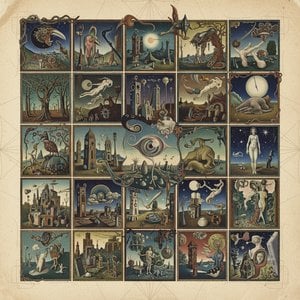
Max Ernsts Meisterwerke: Die Top 25 Kunstwerke für Ihr Zuhause | ArtsDot
Entdecken Sie die 25 bedeutendsten Kunstwerke von Max Ernst! Tauchen Sie ein in die Welt des Surrealismus, Dada und abstrakter Malerei. Hochwertige Kunstreproduktionen & Inspiration für Ihr Zuhause bei ArtsDot.com.

John Constable: Die 25 Meisterwerke des englischen Landschaftsgenies – ArtsDot
Entdecken Sie die 25 Meisterwerke von John Constable! Erleben Sie englische Landschaftsmalerei vom Hay Wain bis zur Stour Valley. Hochwertige Reproduktionen & Kunst für Ihr Zuhause auf ArtsDot.com.

Evocations of Place: A Historical Journey Through Landscape Art
Explore the rich history of landscape art with ArtsDot. Discover renowned artists, movements like Impressionism & Romanticism, and expert guidance for collecting timeless pieces. Find your perfect serene escape today!


