


 In echtem Maßstab anzeigen
 Versenden als Grußkarte
 Teilen
 Details anzeigen
 Leitfaden öffnen

 Herunterladen
 Ähnliche Objekte
 Röntgenaufnahme
 Diashow
 Besucherstatistiken
Konfiguration Nr. 6


 Mehr anzeigen
Die auf dieser Seite dargestellten Kunstwerke sind urheberrechtlich geschützt, was bedeutet, dass wir keine identische Reproduktion rechtmäßig erstellen oder verkaufen dürfen. Dieser Schutz wird durch internationale Abkommen wie die Berner Übereinkunft und durch nationale Gesetze, einschließlich derer, die von den ... festgelegt wurden US-Urheberrecht – Titel 17.
Diese Methode entspricht vollumfänglich den Urheberrechtsbestimmungen, da sie keine Kopie oder Vervielfältigung des geschützten Kunstwerks darstellt. Stattdessen handelt es sich um eine kreative Neuinterpretation – ein neues Gemälde, das vom Original inspiriert, aber nicht identisch mit ihm ist.
Giclée / Kunstdruck
Giclée- oder Leinwanddruck in Museumsqualität mit schneller Produktion und flexiblen Veredelungsoptionen. ( Handgemalte Reproduktion kaufen Zum digitalen Bild wechseln)




P118B €10

P118H €10

P118W €10

P438Z €10

P508JH €12

P508YH €12

P805H €10

P805Z €10

P919BZ €10

P919G €10

P919XJ €10

P959ZH €10

P968JZ €12

W106C €8

W218G €10

W218JH €8

W218Y €10

W307PJ €10

W316G €10

W316PJ €8

W316Y €10

W398PJ €8

W4111J €10

W500HY €15

W500JH €15

W692G €12

W849H €8

W940BG €15

W953PJ €8




Wählen Sie aus unseren vordefinierten Formaten, die den ursprünglichen Proportionen des Kunstwerks entsprechen.

Geben Sie die Breite und die Höhe an, die Sie benötigen, damit der Druck perfekt in Ihren Rahmen oder an Ihre Wand passt. Ein Druck kann nur beschnitten werden und niemals größer als das Originalbild gemacht werden; daher verliert ein Format mit einer anderen Proportion einen Teil des Bildes. Wir senden Ihnen ein digitales Mockup zur Freigabe, bevor wir den Druck ausführen. Das auf dieser Seite gezeigte Bild zeigt nicht den tatsächlichen Beschnitt – dies ist nur im Mockup ersichtlich.
Weltweiter Versand () innerhalb von 2 Wochen statt der üblichen 4/5 Wochen. (20 Oktober)

Kostenloser weltweiter Expressversand

Hochwertige Leinenleinwand

Vollständiger Versicherungsschutz beim Versand

Zollgebühren-Rückerstattungsgarantie

Garantie für exakte Farbtreue

100-tägiges Rückgaberecht (nur bei Mängeln)

100% Geld-zurück-Garantie

Angebot für Mengenrabatt
 Die Glasoption ist nur für Größen unter 110 cm verfügbar.

Konfiguration Nr. 6
Giclée / Kunstdruck
Format der Reproduktion
-


Gesamtpreis
€ 54
Max Ernst’s “Configuration No.6”: A Dreamscape of Circular Echoes
Max Ernst’s “Configuration No.6,” painted in 1974, isn't merely a landscape; it’s an immersion into the subconscious, a visual poem crafted with deliberate ambiguity and a profound understanding of color and texture. The painting immediately draws the eye with its dominant circular forms – vast, dark circles interspersed with smaller, lighter ones – reminiscent of celestial bodies or perhaps the depths of subterranean pools. These aren't static shapes; they swirl and overlap, creating an illusion of constant movement, as if the very fabric of the cosmos is in perpetual flux. The muted palette—earthy greens, blues, and whites—evokes a sense of timelessness and quiet contemplation, lending the work a dreamlike quality that transcends simple representation.
Ernst’s technique is both meticulous and intuitively expressive. He masterfully employed watercolor staining – a process where diluted pigments are allowed to bleed and blend organically on the paper – creating layers of translucent color that build up a rich, textured surface. This layering isn't haphazard; it’s carefully considered, adding depth and complexity to the composition. Hints of acrylic paint suggest further manipulation, subtly reinforcing the sense of layered memory and shifting perception. The deliberate lack of sharp lines or precise details contributes significantly to the painting’s ethereal atmosphere, inviting viewers to lose themselves within its intricate patterns.
Roots in Surrealism and Ernst's Inner World
“Configuration No.6” firmly situates itself within the broader context of Surrealist art, a movement that sought to unlock the creative potential of the unconscious mind. Influenced by artists like Joan Miró and André Breton, Ernst explored themes of dreams, mythology, and automatism – techniques designed to bypass rational thought and tap into primal instincts. This painting is a testament to his exploration of these ideas; it’s not an attempt to depict reality but rather to evoke the feeling of a dream state, where logic dissolves and symbolism reigns supreme.
However, “Configuration No.6” goes beyond simple Surrealist tropes. Ernst was deeply interested in psychology and philosophy, particularly the work of Sigmund Freud. He believed that art could be a powerful tool for self-discovery and emotional exploration. The painting’s circular forms can be interpreted as symbols of wholeness, cycles, and the interconnectedness of all things – echoing concepts central to his intellectual pursuits. The deliberate blurring of boundaries between earth and sky, light and shadow, suggests a questioning of established perceptions and a yearning for something beyond the rational.
Symbolism and the Language of Circles
The recurring motif of circles is particularly potent in “Configuration No.6.” In ancient symbolism, circles represent unity, eternity, and the divine. They can also signify cycles – birth, death, and rebirth – reflecting Ernst’s fascination with the cyclical nature of time and existence. The larger, darker circles might represent hidden depths or unconscious forces, while the smaller, lighter ones could symbolize fleeting moments of clarity or insight.
Furthermore, the painting's composition subtly references astronomical imagery. The circular forms evoke planets, moons, and constellations, suggesting a connection between the earthly realm and the vastness of space. This isn’t a literal depiction of the cosmos but rather an evocation of its underlying patterns and rhythms – a visual meditation on our place within the universe. The subtle suggestion of an eye within one of the larger circles adds another layer of interpretation, hinting at introspection and self-awareness.
A Timeless Masterpiece for Reflection and Interior Design
“Configuration No.6” is more than just a beautiful painting; it’s a profound work of art that invites contemplation and offers a glimpse into the mind of one of the 20th century's most innovative artists. Its dreamlike quality, rich textures, and evocative symbolism make it a captivating addition to any collection. Reproductions of this piece are particularly well-suited for spaces where tranquility and intellectual stimulation are valued – creating an atmosphere of serene contemplation and artistic inspiration. The painting’s timeless appeal ensures that it will continue to resonate with viewers for generations to come.
Fragen & Antworten
Welche Stellung nimmt „Konfiguration Nr. 6“ unter den wiederkehrenden Motiven von Max Ernst ein?
Unter den dokumentierten Themen von Max Ernst – surrealist dreamscape, ernst’s psychological themes, exploration of the subconscious, symbolic, layered imagery, part of a larger body – legt „Konfiguration Nr. 6“ einen ganz eigenen Fokus auf surrealism, circles, abstract, landscape, colors, dreamlike, organic, texture.
Woraus besteht "Konfiguration Nr. 6"?
"Konfiguration Nr. 6" wurde in Acryl auf Leinwand ausgeführt.
Welche Platzierung passt zum Format von "Konfiguration Nr. 6" von Max Ernst?
Mit seiner Querformat-Form wird eine Reproduktion von „Konfiguration Nr. 6“ für ein Wohnbereich empfohlen.
Ähnliche Kunstwerke


Biografie des Künstlers
Max Ernst: Ein Leben im Surrealismus
Frühes Leben und Ausbildung
- Geboren: 1. April 1891 in Brühl, Deutschland.
- Ernsts Vater, Philipp Ernst, war Lehrer für Gehörlose und Amateurmaler, der Maxes frühes Interesse an Kunst förderte.
- Von 1909 studierte er Philosophie, Kunstgeschichte, Literatur, Psychologie und Psychiatrie an der Universität Bonn.
- Dieser vielfältige akademische Hintergrund beeinflusste seine späteren künstlerischen Erkundungen maßgeblich.
Künstlerische Entwicklung & Einflüsse
- Ein einschneidendes Ereignis war die Sonderbund-Ausstellung in Köln (1912), wo er Werke von Pablo Picasso, Vincent van Gogh, und Paul Gauguin entdeckte.
- Im Jahr 1914 lernte er Hans Arp kennen, der eine lebenslange Freundschaft schloss, die seine künstlerische Reise maßgeblich prägte.
- Der Erste Weltkrieg hatte einen tiefgreifenden Einfluss auf Ernst; seine Erfahrungen als Soldat führten zu Enttäuschung und einer kritischen Sicht auf die Gesellschaft.
- Er ließ sich von den Schriften Sigmund Freuds beeinflussen und erkundete Themen des Unterbewusstseins in seiner Kunst.
Dada & Surrealismus
- Nach dem Ersten Weltkrieg wurde Ernst eine Schlüsselfigur der Kölner Dada-Gruppe, die sich gegen traditionelle künstlerische Konventionen aussprach.
- Er entwickelte innovative Techniken wie Frottage (Erhitzen von Bleistift auf texturierte Oberflächen) und Grattage (Abkratzen von Farbe, um darunterliegende Schichten freizulegen).
- In den 1920er Jahren trat er der Surrealistischen Bewegung in Paris bei und arbeitete mit Künstlern wie Paul Éluard zusammen.
- Seine Werke dieser Zeit erforschten traumhafte Bilder und psychologische Themen.
Wichtige Werke & Techniken
- Frottage: Eine Technik zur Erzeugung von Texturen und unerwarteten Bildern, die in vielen seiner Werke zu sehen ist.
- Collage: Ernst verwendete häufig Collage, um disparate Elemente zu kombinieren und surreale Kompositionen zu schaffen.
- Bekannte Werke:
- Die gesamte Stadt
- Euclides
- Von diesem sollen nichts wissen
- Wald und Taube
- Seine Gemälde zeigen oft symbolische Bilder, darunter Vögel (insbesondere seinen Pseudonym Loplop), Landschaften und verstörende Gegenüberstellungen.
Spätes Leben & Vermächtnis
- Ernst zog während des Zweiten Weltkriegs in die Vereinigten Staaten, wo er weiter malte und mit neuen Techniken experimentierte.
- Nach dem Krieg kehrte er nach Frankreich zurück und blieb bis zu seinem Tod am 1. April 1976 in Paris aktiv.
- Historische Bedeutung: Max Ernsts Beiträge zu Dada und Surrealismus waren bahnbrechend. Er stellte künstlerische Normen in Frage, erforschte das Unterbewusstsein und entwickelte innovative Techniken, die Künstler bis heute inspirieren.
- Er gilt als eine der wichtigsten und einflussreichsten Figuren der Kunst des 20. Jahrhunderts.

Max Ernst
1891 - 1976 , Deutschland
Eckdaten zum Künstler
- Artistic Movement Or Style: Dadaismus & Surrealismus
- Artists Who Influenced This Artist:
- Pablo Picasso
- Vincent van Gogh
- Paul Gauguin
- Sigmund Freud
- Date Of Birth: 1. April 1891
- Date Of Death: 1. April 1976
- Full Name: Max Ernst
- Nationality: Deutsch
- Notable Artworks:
- Die gesamte Stadt
- Euclides
- Wald und Taube
- Der Elefant Celebes
- Place Of Birth (City And Country): Brühl, Deutschland
Verwandte Artikel

Flüchtige Visionen: Die Geschichte und emotionale Resonanz der Aquarellmalerei
Entdecken Sie die faszinierende Welt der Aquarellmalerei! Von historischen Ursprüngen bis zu modernen Techniken – wir bieten Expertenwissen, Inspiration und Tipps für Anfänger & Fortgeschrittene.
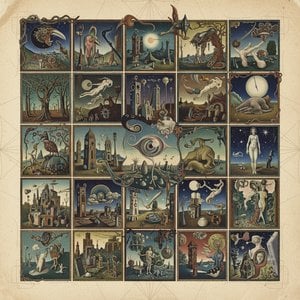
Max Ernsts Meisterwerke: Die Top 25 Kunstwerke für Ihr Zuhause | ArtsDot
Entdecken Sie die 25 bedeutendsten Kunstwerke von Max Ernst! Tauchen Sie ein in die Welt des Surrealismus, Dada und abstrakter Malerei. Hochwertige Kunstreproduktionen & Inspiration für Ihr Zuhause bei ArtsDot.com.
Ephemeral Visions: Exploring the Artistic Legacy & Nuances of Watercolor Painting
Explore the captivating world of watercolor painting! Discover its rich history, essential techniques, influential artists & collecting tips from art experts. A comprehensive guide for enthusiasts.

Die 10 legendärsten Aquarellwerke der Kunstgeschichte – Meisterwerke für Ihr Zuhause
Entdecken Sie die 10 legendärsten Aquarellwerke der Kunstgeschichte! Von Turner bis Monet – erleben Sie die Geschichten, Techniken & Farben dieser Meisterwerke. Finden Sie hochwertige Kunstdrucke auf ArtsDot.com und gestalten Sie Ihr Zuhause mit zeitloser Eleganz.

Ephemeral Visions: Exploring the Artistic Legacy & Contemporary Practice of Watercolor Painting
Explore the captivating world of watercolor painting! Discover its rich history, essential techniques, influential artists & collecting tips. A comprehensive guide for art enthusiasts from ArtsDot.


