

 Vorschau anzeigen
 Versenden
 Teilen
 Details anzeigen
 Leitfaden

 Herunterladen
 Ähnliche Objekte
 Röntgenaufnahme
 Diashow
 Q&A
Q&A Statistiken
Seascape with poplars


 Weiterlesen
Giclée / Kunstdruck
Giclée- oder Leinwanddruck in Museumsqualität mit schneller Produktion und flexiblen Veredelungsoptionen. ( Handgemalte Reproduktion bestellen Zum digitalen Bild wechseln)




P118B €10

P118H €10

P118W €10

P438Z €10

P508JH €12

P508YH €12

P805H €10

P805Z €10

P919BZ €10

P919G €10

P919XJ €10

P959ZH €10

P968JZ €12

W106C €8

W218G €10

W218JH €8

W218Y €10

W307PJ €10

W316G €10

W316PJ €8

W316Y €10

W398PJ €8

W4111J €10

W500HY €15

W500JH €15

W692G €12

W849H €8

W940BG €15

W953PJ €8




Wählen Sie aus unseren vordefinierten Formaten, die den ursprünglichen Proportionen des Kunstwerks entsprechen.

Geben Sie die benötigte Breite und Höhe an, damit der Druck perfekt in Ihren Rahmen oder an Ihre Wand passt. Ein Druck kann nur beschnitten, aber niemals größer als das Originalbild angefertigt werden; daher verliert ein Format mit anderen Proportionen einen Teil des Bildes. Wir senden Ihnen ein digitales Mockup zur Freigabe, bevor wir den Druck ausführen. Das auf dieser Seite gezeigte Bild zeigt nicht den tatsächlichen Beschnitt – dies ist nur im Mockup ersichtlich.
Weltweiter Versand () innerhalb von 2 Wochen statt der üblichen 4/5 Wochen. (2 November)

Kostenloser weltweiter Expressversand

Hochwertige Leinenleinwand

Umfassender Versicherungsschutz beim Versand

Zollgebühren-Rückerstattungsgarantie

Garantie für exakte Farbtreue

100 Tage Rückgaberecht (nur bei Mängeln)

100% Geld-zurück-Garantie

Mengenrabatt verfügbar
 Die Glasoption ist nur für Größen unter 110 cm verfügbar.

Seascape with poplars
Giclée / Kunstdruck
Format der Reproduktion
-


Endpreis
€ 55
Max Beckmann's 'Seascape with Poplars': A Meditation on Melancholy
Max Beckmann’s ‘Seascape with Poplars,’ painted in 1924, is more than just a depiction of a coastal scene; it’s a profound exploration of human emotion rendered through the lens of Expressionism. This work, characterized by its muted palette and deliberately flattened perspective, invites viewers into a contemplative space where quiet melancholy reigns supreme. The painting immediately draws the eye to the stark contrast between the vertical thrust of the poplars lining the shore and the horizontal expanse of the sea, creating a visual tension that mirrors the underlying emotional complexity.
The scene unfolds with a restrained elegance – figures engaged in leisure activities near the water’s edge, boats gently bobbing on the waves, all bathed in diffused light. Beckmann's technique is meticulously crafted; layers of oil paint are applied in relatively flat planes, avoiding the blending and subtle gradations favored by some contemporary artists. This deliberate approach contributes to the painting’s almost sculptural quality, emphasizing form over photographic realism. The thick lines and simplified shapes – a hallmark of Expressionism – further amplify this effect, creating a sense of solidity and permanence.
A Window into the Artist's Soul
Born in Leipzig in 1884, Max Beckmann’s artistic trajectory was profoundly shaped by his experiences during World War I. His early work demonstrated academic precision, but the horrors he witnessed as a medical orderly ignited a radical shift in his vision. This transformation is powerfully evident in ‘Seascape with Poplars,’ where distorted figures and spaces reflect a deeply troubled psyche. Beckmann’s artistic vocabulary was remarkably diverse, drawing inspiration from a wide range of sources – medieval stained glass, Cézanne's geometric forms, Van Gogh’s emotive brushwork, and the symbolic narratives of Blake and Rembrandt.
The influence of Northern European artists, particularly Bosch and Grünewald, is palpable in the painting’s unsettling atmosphere. These masters were known for their ability to imbue religious scenes with a sense of foreboding and psychological depth, qualities that Beckmann skillfully translates into his seascape. The composition subtly evokes a feeling of isolation and vulnerability, mirroring the artist's own struggles with disillusionment and uncertainty.
Symbolism and Emotional Resonance
Beyond its formal elements, ‘Seascape with Poplars’ is rich in symbolic meaning. The poplars themselves – often associated with stability and resilience – stand as silent witnesses to the scene’s underlying melancholy. The boats, representing journeys and transitions, suggest a yearning for escape or perhaps a confrontation with one's own mortality. Beckmann masterfully uses color—greens, browns, and grays—to evoke a sense of quietude and somber reflection. The ambiguous perspective further enhances this effect, blurring the boundaries between reality and imagination.
The painting’s emotional impact is undeniable. It's not a joyous celebration of nature; rather, it’s a poignant meditation on human existence – a reminder of our vulnerability, our isolation, and the inevitability of change. ‘Seascape with Poplars’ remains a powerful testament to Beckmann’s artistic genius and his ability to translate complex emotions into a visually arresting work of art.
Fragen & Antworten
Kann ich "Seascape with poplars" von Max Beckmann unter verschiedenen Lichtverhältnissen sehen?
Die Röntgenansicht von "Seascape with poplars" von Max Beckmann finden Sie auf der Röntgenblick-Seite des Kunstwerks: eine interaktive Untersuchung des Bildes durch elf optische Schichten.
Ist "Seascape with poplars" von Max Beckmann ein helles oder ein dunkles Kunstwerk?
Die wahrgenommene Helligkeit von "Seascape with poplars" von Max Beckmann beträgt bright. Sie lässt sich optimal an das Licht des vorgesehenen Raumes anpassen.
In welcher Phase der Karriere von Max Beckmann lässt sich „Seascape with poplars“ angesichts seines Entstehungsdatums einordnen?
Angesichts seiner Datierung auf 1924 fällt "Seascape with poplars" in die Post WWI von Max Beckmann.
Ähnliche Kunstwerke


Künstlerbiografie
Frühes Leben und künstlerische Entwicklung
Max Beckmann, ein renommierter deutscher Maler, Zeichner, Grafiker, Bildhauer und Schriftsteller, wurde am 12. Februar 1884 in Leipzig, Sachsen, geboren. Seine künstlerische Reise begann mit akademisch korrekten Darstellungen, die sich später in verzerrte Figuren und Räume verwandelten, was seine veränderte Vision der Menschheit widerspiegelte, nachdem er im Ersten Weltkrieg als Sanitäter gedient hatte.Künstlerischer Stil und Einflüsse
Beckmanns Stil, der in der Bildsprache mittelalterlicher Glasfenster wurzelt, wurde von verschiedenen Künstlern beeinflusst, darunter Cézanne, Van Gogh, Blake, Rembrandt und Rubens. Er ließ sich auch von nordeuropäischen Künstlern der Spätzeit des Mittelalters und der frühen Renaissance wie Bosch, Bruegel und Matthias Grünewald inspirieren.Wichtige Werke und Ausstellungen
- Der Rind (erworben von der Nationalgalerie in Berlin)
- Selbstbildnis im Smoking (gekauft 1928)
- Retrospektiven in der Städtischen Kunsthalle Mannheim (1928) und in Basel und Zürich (1930)
Späteres Leben und Exil
Beckmanns Schicksal änderte sich mit dem Aufstieg Adolf Hitlers, was zu seiner Entlassung aus der Kunstschule in Frankfurt und der Beschlagnahmung von über 500 seiner Werke führte. Er lebte zehn Jahre lang im selbstgewählten Exil in Amsterdam, ohne ein Visum für die Vereinigten Staaten zu erhalten.Vermächtnis
- Lehrte an den Kunstschulen der Washington University in St. Louis und dem Brooklyn Museum
- Die erste Retrospektive in den Vereinigten Staaten fand 1948 im City Art Museum, Saint Louis, statt
- Die Max-Slevogt-Galerie in Deutschland beherbergt eine Sammlung seiner Werke
- Geboren: 12. Februar 1884
- Gestorben: 27. Dezember 1950

Max Beckmann
1884 - 1950 , Deutschland
Kurzinfos
- Bemerkenswerte Werke:
- Die Eisenbrücke
- Die Nacht
- Columbine
- Große Szene des Leidens
- Die Schauspieler
- Einflüsse:
- Cézanne
- Van Gogh
- Blake
- Rembrandt
- Rubens
- Bosch
- Bruegel
- Grünewald
- Geburtsdatum: 12. Februar 1884
- Geburtsort: Leipzig, Deutschland
- Künstlerische Richtung: Expressionismus, Neue Sachlichkeit
- Nationalität: Deutsch
- Todatum: 27. Dezember 1950
- Vollständiger Name: Max Beckmann
Ähnliche Artikel

Die 25 besten Meisterwerke von Katsushika Hokusai: Zeitlose Ikonen der japanischen Kunst
Entdecken Sie die 25 besten Ukiyo-e Meisterwerke von Hokusai. Erleben Sie japanische Kunst auf ArtsDot.com.

Evocations of Place: A Historical Journey Through Landscape Art
Explore the rich history of landscape art with ArtsDot. Discover renowned artists, movements like Impressionism & Romanticism, and expert guidance for collecting timeless pieces. Find your perfect serene escape today!

Giclée-Prints: Hochwertige Kunstreproduktionen mit Archivqualität für Ihr Zuhause
Erfahren Sie alles über die Archivqualität und Technik echter Giclée-Drucke. Jetzt Expertenwissen für Ihre Kunstsammlung entdecken!

Romantische Landschaften: Die 10 Meisterwerke, die eine Epoche prägten | ArtsDot
Entdecken Sie die 10 Meisterwerke der Romantischen Landschaftsmalerei! Von Caspar David Friedrich bis Turner – erleben Sie die Kunst, Emotion & Natur. Hochwertige Reproduktionen auf ArtsDot.com
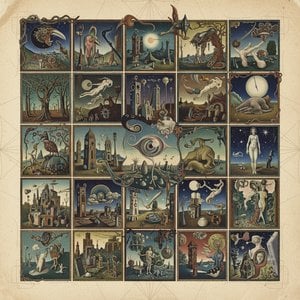
Die 25 besten Meisterwerke von Max Ernst: Eine Reise durch den Surrealismus
Entdecken Sie die 25 besten Werke von Max Ernst und den Surrealismus. Erleben Sie Meisterwerke auf ArtsDot.com.


