


 Vorschau anzeigen
 Versenden
 Teilen
 Details anzeigen

 Herunterladen
 Ähnliche Objekte
 Röntgenaufnahme
 Diashow
Untitled 68


 Weiterlesen
Handgefertigte Ölreproduktion
Handgemaltes Ölgemälde auf Leinwand in Ihrer Wunschgröße und mit Rahmen, auf Bestellung von unseren Künstlern angefertigt. ( Druck bestellen Bild kaufen)




P118B $10

P118H $10

P118W $10

P438Z $10

P508JH $12

P508YH $12

P805H $10

P805Z $10

P919BZ $10

P919G $10

P919XJ $10

P959ZH $10

P968JZ $12

W106C $8

W218G $10

W218JH $8

W218Y $10

W307PJ $10

W316G $10

W316PJ $8

W316Y $10

W398PJ $8

W4111J $10

W500HY $15

W500JH $15

W692G $12

W849H $8

W940BG $15

W953PJ $8




Wählen Sie aus unseren vordefinierten Formaten, die den ursprünglichen Proportionen des Kunstwerks entsprechen.

Sie können Ihre eigenen Maße eingeben, um einen bestimmten Rahmen oder Platz auszufüllen. Wenn die gewählte Größe nicht den Proportionen des Originalbildes entspricht, werden wir das Kunstwerk entweder beschneiden oder das Gemälde durch zusätzliche, handgemalte Elemente erweitern. Ein digitales Mockup wird Ihnen zur Genehmigung zugesandt, bevor die Produktion beginnt.
Bitte beachten Sie, dass die Bildschirmvorschau nicht die tatsächliche Beschneidung oder Erweiterung widerspiegelt. Nur das Mockup zeigt die endgültige Komposition exakt an.
Obwohl Sondermaße verfügbar sind, empfehlen wir, eine Größe aus der vordefinierten Liste zu wählen, um die ursprünglichen Proportionen beizubehalten.
Nach der Bestellung wird das ArtsDot.com-Team dem Kunden Anweisungen per E-Mail zusenden und eine Mockup-Vorschau bereitstellen.
Weltweiter Versand () in nur 3 bis 4 Wochen statt der üblichen 5 Wochen. (3 September). Keine Kompromisse bei der Qualität.

Kostenloser weltweiter Expressversand

Hochwertige Leinenleinwand

Umfassender Versicherungsschutz beim Versand

Zollgebühren-Rückerstattungsgarantie

Garantie für exakte Farbtreue

60 Tage Rückgaberecht (nur bei Mängeln)

100% Geld-zurück-Garantie

Mengenrabatt verfügbar
 Die Glasoption ist nur für Größen unter 110 cm verfügbar.

Untitled 68
Art der Reproduktion
Format der Reproduktion
-


Gesamtpreis
$ 263
Mark Rothko’s ‘Untitled 68’: A Descent into Color and Void
Mark Rothko's 'Untitled 68' is not merely a painting; it’s an immersion, a carefully orchestrated descent into the depths of human emotion. Born in 1903 in Daugavpils, Latvia – a city steeped in history and shadowed by displacement – Rothko’s artistic trajectory was inextricably linked to his personal experiences. This particular work, executed with his signature layering technique, embodies the core tenets of Abstract Expressionism, yet possesses a uniquely introspective quality that transcends simple categorization. The canvas itself is dominated by a profound blue background, a color often associated with melancholy and spirituality, immediately establishing a contemplative mood. Within this oceanic expanse, a central circle – a void, an absence – commands attention, pulling the viewer into its enigmatic depths.
- Composition & Technique: Rothko’s method involved applying thin washes of color in horizontal layers, building up the image gradually. This technique, known as ‘marbling,’ creates a luminous effect and allows the colors to bleed subtly into one another, contributing to the painting's ethereal quality. The red stripes are not merely decorative; they act as disruptive elements, intensifying the emotional impact and preventing the eye from settling solely on the central void.
- Historical Context: Created during the height of Rothko’s career (1968), ‘Untitled 68’ reflects a period of intense artistic experimentation within Abstract Expressionism. Following the dominance of earlier figures like Jackson Pollock, Rothko sought to evoke profound emotional responses through simplified forms and saturated color fields – a reaction against the perceived superficiality of representational art.
Decoding the Symbolism: Void, Color, and the Human Condition
The central circle in ‘Untitled 68’ is arguably the most potent element of the work. Often interpreted as a void, an abyss, or even a representation of the eye itself, it invites contemplation on themes of mortality, loss, and the unknowable. Rothko himself resisted definitive interpretations, preferring to allow viewers to project their own emotions onto the canvas. The blue background further amplifies this sense of introspection, suggesting vastness, loneliness, and perhaps even spiritual yearning. The red stripes introduce a jarring counterpoint – a visceral reminder of human passion, pain, or struggle. Rothko’s intention was not to depict a specific scene or narrative but to tap into universal human experiences through the raw power of color and form.
- Color Psychology: Rothko's masterful use of color is central to the painting's emotional impact. Blue, as previously mentioned, evokes feelings of sadness, contemplation, and spirituality. Red, a traditionally passionate color, introduces an element of urgency and perhaps even danger, creating a dynamic tension within the composition.
- The Void as Metaphor: The void is not simply an absence; it’s a space for reflection, a reminder of our own impermanence, and a potential gateway to deeper understanding. It mirrors the existential anxieties that preoccupied Rothko throughout his life.
Rothko's Legacy & the Emotional Resonance of ‘Untitled 68’
‘Untitled 68’ stands as a testament to Mark Rothko’s profound ability to translate personal anguish and philosophical inquiry into universally resonant art. His work continues to captivate viewers with its raw emotional power, prompting introspection and challenging conventional notions of representation. The painting's enduring appeal lies in its ambiguity – it doesn’t offer easy answers but instead invites the viewer to engage in a deeply personal dialogue. This piece exemplifies Rothko's belief that art should not merely be observed but felt, experienced on an emotional level.
- Art Decoration & Interior Design: The bold color palette and evocative composition of ‘Untitled 68’ make it a striking addition to any interior space. Its ability to evoke contemplation and create a sense of calm makes it particularly well-suited for meditation rooms, libraries, or other areas where quiet reflection is desired.
- Collecting Rothko: Owning a reproduction of 'Untitled 68' offers more than just an aesthetic addition; it’s an opportunity to connect with one of the most significant figures in 20th-century art and appreciate the enduring power of his vision.


Über den Künstler
frühes Leben und Einflüsse
Mark Rothko (Marcus Rothkowitz), ein renommierter amerikanischer Künstler, wurde am 25. September 1903 in Dwinisk, Lettland, geboren. Seine Familie immigrierte als Kind, gerade zehn Jahre alt, in die Vereinigten Staaten. Diese kulturelle Veränderung beeinflusste später seinen künstlerischen Stil.künstlerische Entwicklung
Rothkos frühe Werke waren durch den **abstrakten Expressionismus** geprägt, einen Stil, der die Prozesshaftigkeit der Kunstschaffung betonte und nicht das Endprodukt. Seine Gemälde, wie No. 18 (1948) und Untitled (1948), zeigten seinen einzigartigen Ansatz für Farbe und Form.- **Farbfeld:** Rothkos Verwendung von kräftigen, rechteckigen Farbflächen, oft in scharfem Kontrast zueinander, erzeugte ein Gefühl von Tiefe und Emotion.
- **Organische Struktur:** Seine Gemälde wirkten lebendig, als wären die Farben lebendige Wesen.
Bemerkenswerte Werke und Ausstellungen
- No. 10 (1950), ein Gemälde, das einen bedeutenden Wandel in Rothkos Stil markierte, befindet sich heute im Besitz der Museum of Modern Arts.
- Die Seagram-Muralen, eine Reihe von Gemälden, die für das Restaurant Four Seasons angefertigt wurden, zeigten Rothkos Fähigkeit, seinen Stil an verschiedene Umgebungen anzupassen.
- No. 3 (1950), ein Gemälde, das Rothkos Verwendung von kräftigen, rechteckigen Farbflächen veranschaulicht.
Spätes Leben und Vermächtnis
Rothkos Leben war von Kämpfen mit psychischen Problemen und einer turbulenten Ehe geprägt. Er starb am 25. Februar 1970 im Alter von 66 Jahren. Trotz seiner Herausforderungen hinterließ Rothko einen unauslöschlichen Eindruck in der Kunstwelt. Ochre and Red on Red (Farbfeld), ein Gemälde, das Rothkos einzigartigen Ansatz für Farbe zeigt, befindet sich in der Sammlung von ArtsDot.com. Mark Rothkos Wikipedia-Seite bietet weitere Einblicke in sein Leben und seinen künstlerischen Stil.
Mark Rothko
1903 - 1970 , Lettland
Kurzinfos
- Beeinflusste Künstler: ['Minimalistische Kunst']
- Bemerkenswerte Werke:
- Nr. 18 (1948)
- Nr. 10 (1950)
- Seagram-Wandbilder
- Nr. 3 (1950)
- Einflüsse:
- Surrealismus
- Marxistische Philosophie
- Geburtsdatum: 25. September 1903
- Geburtsort: Daugavpils, Lettland
- Künstlerische Bewegung: Abstrakter Expressionismus
- Nationalität: Amerikanisch
- Todatum: 25. Februar 1970
- Vollständiger Name: Mark Rothko / Marcus Rothkowitz
Ähnliche Artikel
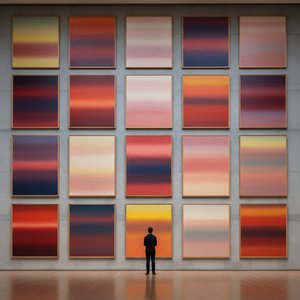
Mark Rothkos Meisterwerke: Die Top 25 für Kunstliebhaber | ArtsDot
Entdecken Sie die 25 Meisterwerke von Mark Rothko! Tauchen Sie ein in die Welt der abstrakten Kunst, des Expressionismus und der Farbfeldmalerei. Hochwertige Kunstdrucke & Reproduktionen auf ArtsDot.com – für Ihre Wohnräume.

Die Top 10 Gemälde in Schattierungen von 'Slate Blue': Kunst für Ihr Zuhause
Entdecken Sie die Top 10 Gemälde in faszinierenden 'Slate Blue' Tönen! Von Monet bis Manet – erleben Sie Kunstgeschichte und lassen Sie sich von Meisterwerken inspirieren. Hochwertige Kunstdrucke auf

Kandinsky: Die 25 Meisterwerke des Abstrakten – Kunst für Ihr Zuhause | ArtsDot
Entdecken Sie die 25 bedeutendsten Gemälde von Wassily Kandinsky! Tauchen Sie ein in die Welt der abstrakten Kunst, des Expressionismus und der Farbkomposition. Hochwertige Kunstdrucke & Inspiration für Ihr Zuhause auf ArtsDot.com.

Abstrakter Expressionismus: Die 10 Meisterwerke, die eine Kunstbewegung prägten |
Entdecken Sie die 10 Meisterwerke des Abstrakten Expressionismus! Von Jackson Pollock bis Mark Rothko – erfahren Sie die Geschichten hinter ikonischen Gemälde und finden Sie hochwertige Reproduktionen für Ihr Zuhause. Jetzt bei entdecken!

Serene Blue Backgrounds: Discover Soulful Art to Transform Your Space with Timeless Elegance
Transform your home with soulful blue art. From serene Monet impressions to modern textured sculptures, discover curated masterpieces designed to inspire calm. Explore expert art consultations and bespoke hand-painted reproductions to create your personal sanctuary.



