


 Vorschau anzeigen
 Versenden
 Teilen
 Details anzeigen

 Herunterladen
 Ähnliche Objekte
 Röntgenaufnahme
 Diashow
Coffee mill


 Weiterlesen
Giclée / Kunstdruck
Giclée- oder Leinwanddruck in Museumsqualität mit schneller Produktion und flexiblen Veredelungsoptionen. ( Handgemalte Reproduktion bestellen Bild kaufen)




P118B $10

P118H $10

P118W $10

P438Z $10

P508JH $12

P508YH $12

P805H $10

P805Z $10

P919BZ $10

P919G $10

P919XJ $10

P959ZH $10

P968JZ $12

W106C $8

W218G $10

W218JH $8

W218Y $10

W307PJ $10

W316G $10

W316PJ $8

W316Y $10

W398PJ $8

W4111J $10

W500HY $15

W500JH $15

W692G $12

W849H $8

W940BG $15

W953PJ $8




Wählen Sie aus unseren vordefinierten Formaten, die den ursprünglichen Proportionen des Kunstwerks entsprechen.

Sie können Ihre eigenen Maße eingeben, um ein bestimmtes Format oder einen speziellen Platz einzupassen. Wenn das von Ihnen gewählte Format nicht den Proportionen des Originalbildes entspricht, werden wir das Kunstwerk entweder beschneiden oder das Bild mit einem gespiegelten oder einfarbigen Rand erweitern. Ein digitaler Entwurf wird Ihnen zur Genehmigung zugesandt, bevor die Produktion beginnt.
Bitte beachten Sie, dass die Vorschau auf dem Bildschirm nicht den tatsächlichen Zuschnitt oder die Erweiterung widerspiegelt. Nur der Entwurf zeigt die endgültige Komposition präzise an.
Obwohl Sondermaße verfügbar sind, empfehlen wir die Auswahl eines Maßes aus der vordefinierten Liste, um die ursprünglichen Proportionen zu bewahren.
Weltweiter Versand () innerhalb von 2 Wochen statt der üblichen 4/5 Wochen. (17 August)

Kostenloser weltweiter Expressversand

Hochwertige Leinenleinwand

Umfassender Versicherungsschutz beim Versand

Zollgebühren-Rückerstattungsgarantie

Garantie für exakte Farbtreue

60 Tage Rückgaberecht (nur bei Mängeln)

100% Geld-zurück-Garantie

Mengenrabatt verfügbar
 Die Glasoption ist nur für Größen unter 110 cm verfügbar.

Coffee mill
Giclée / Kunstdruck
Format der Reproduktion
-


Gesamtpreis
$ 62
Sammlerstück-Beschreibung
A Clockwork Critique: Marcel Duchamp’s ‘Coffee Mill’
Marcel Duchamp's “Coffee Mill,” created in 1911, stands as a cornerstone of Dadaism and a profound disruption of artistic conventions. More than just an image of a mundane object—a simple coffee grinder—it embodies Duchamp’s radical questioning of what constitutes art itself. This painting isn’t about capturing beauty or portraying reality; it's about provoking thought and dismantling established hierarchies within the visual arts. The artwork resides in the Tate Britain collection, offering visitors a tangible connection to this pivotal moment in artistic history.The Dadaist Paradox: Objecthood and Conceptual Art
Duchamp’s approach was deliberately antithetical to the prevailing artistic trends of his time—primarily Cubism—which sought to represent objects from multiple perspectives simultaneously. Instead, he championed “readymades”—ordinary manufactured items presented as artworks—a concept that fundamentally challenged the notion of artistic skill and originality. "Coffee Mill" exemplifies this ethos perfectly. The grinder itself is juxtaposed with a large clock face dominating the left side of the canvas. This deliberate pairing isn’t accidental; it underscores Duchamp's preoccupation with time, repetition, and the mechanization of daily life—themes central to Dadaist ideology.Technical Considerations: Graphite and Board
Executed in graphite on board, “Coffee Mill” demonstrates a masterful control of tonal gradation and texture. Duchamp employed meticulous layering techniques to achieve a subtle yet impactful visual effect. The graphite pencil strokes create a velvety surface that contrasts beautifully with the stark white of the board, emphasizing the object’s materiality without resorting to illusionistic representation. This understated approach aligns seamlessly with Dada's rejection of decorative embellishment and its focus on intellectual engagement rather than sensory pleasure.Symbolism Beyond Appearance
The clock faces surrounding the grinder carry significant symbolic weight. They represent not just time passing but also control, order, and the relentless march of progress—forces that Duchamp viewed as oppressive and dehumanizing. The repetition of clock faces reinforces this idea, suggesting a cyclical pattern of activity and highlighting the absurdity of attempting to impose rational structures onto chaotic existence. This visual metaphor powerfully communicates Duchamp’s philosophical stance: art should question assumptions and expose contradictions.Emotional Resonance: A Silent Challenge
Despite its lack of overt emotional expression, “Coffee Mill” possesses an undeniable impact on the viewer. Its stillness invites contemplation—a deliberate refusal to offer easy answers or comforting illusions. The painting compels us to confront our own perceptions of beauty and value, prompting a critical examination of artistic traditions. Like all great art, it lingers in the mind long after viewing, sparking dialogue about its meaning and significance. It’s a testament to Duchamp's genius—a deceptively simple image that encapsulates a complex philosophical argument.Ähnliche Kunstwerke


Über den Künstler
frühes Leben und künstlerische Anfänge
Marcel Duchamp, ein französischer-amerikanischer Maler, Bildhauer, Schachspieler und Schriftsteller, wurde am 28. Juli 1887 in Blainville-Crevon, Normandie, Frankreich, geboren. Seine Familie, die für ihre kulturellen Neigungen bekannt war, förderte sein frühes Interesse an der Kunst. Duchamps künstlerischer Weg begann mit postimpressionistischen Stilen und experimentierte er mit klassischen Techniken und Themen.Künstlerische Entwicklung und bedeutende Werke
- Duchamps Werk ist mit Kubismus, Konzeptkunst und Dada verbunden, obwohl er vorsichtig mit dem Begriff „Dada“ umging.
- Eines seiner bekanntesten Werke, Fountain (1917), ein Urinal mit der Unterschrift „r. mutt“, ist ein Beispiel für seine Readymades und stellt die Vorstellung in Frage, was Kunst ausmacht.
- Portrait of Chess Players (1911), ein kubistisches Werk, zeigt sein Interesse am Spiel und seinen strategischen Aspekten.
- To Be Looked At (From the Other Side of the Glass) With One Eye, Close To, For Almost an Hour (1945) ist ein weiteres bemerkenswertes Werk, das seine dadaistischen Neigungen widerspiegelt.
Einfluss und Vermächtnis
Duchamps Einfluss auf die Kunst des 20. Jahrhunderts ist immens. Zusammen mit Pablo Picasso und Henri Matisse definierten er die bildenden Künste im frühen 20. Jahrhundert. Sein konzeptueller Ansatz zur Kunst hat Generationen von Künstlern beeinflusst.- Entdecken Sie mehr von Duchamps Werken auf ArtsDot: Marcel Duchamp | Werke
- Besuchen Sie das Ohara Museum of Art in Japan, das westliche Kunstsammlungen umfasst, darunter einige, die vom Stil von Duchamp beeinflusst sind: Ohara Museum of Art, Japan
- Erfahren Sie mehr über Lettrismus, eine Bewegung, die von Dada und Surrealismus beeinflusst wurde, der Duchamp angehörte: Lettrismus Kunstbewegung
Fazit
Marcel Duchamps rätselhafter Ansatz zur Kunst, der konzeptuelle und dadaistische Elemente verbindet, hat einen unauslöschlichen Eindruck in der Kunstwelt hinterlassen. Sein Vermächtnis inspiriert weiterhin Künstler und beeinflusst die Entwicklung moderner und zeitgenössischer Kunst. Franck Scurti, ein französischer Künstler, der für seine Konzeptkunst bekannt ist, geht in den Fußstapfen von Duchamp und trägt so zum Vermächtnis dieses Pioniers weiter.
Marcel Duchamp
1887 - 1968 , Frankreich
Kurzinfos
- Bemerkenswerte Werke:
- Fountain
- Porträt der Schachspieler
- Das große Glas
- L.H.O.O.Q.
- Boîte-en-valise
- Geburtsdatum: 28. Juli 1887
- Geburtsort: Blainville-sur-Mer, Frankreich
- Künstler Oder Bewegungen, Von Denen Dieser Künstler Beeinflusst Wurde: ['Franck Scurti']
- Künstlerische Bewegung:
- Kubismus
- Dadaismus
- Konzeptkunst
- Nationalität: Französisch-Amerikanisch
- Todatum: 1968
- Vollständiger Name: Marcel Duchamp
Ähnliche Artikel

Giclée Prints: Archival Quality & Aesthetic Nuances for the Discerning Collector
Explore the world of giclée prints with ArtsDot. Learn about archival quality, aesthetic nuances & investment potential. Expert guidance for discerning art collectors seeking museum-quality reproductions and lasting value.

The Enduring Legacy of Fine Art Prints: Technique, History & Aesthetic Impact
Explore the rich history & techniques of fine art prints. Discover investment potential, assess authenticity, and learn how to preserve your collection with expert guidance. Trusted insights for discerning collectors.

Echoes of Time: Exploring the Enduring Appeal & Historical Context of Vintage Art Prints
Explore the captivating world of vintage art prints! Discover their history, collecting tips & enduring appeal. Expert insights on chromolithography and building a legacy collection with ArtsDot.
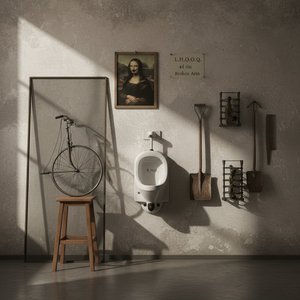
Marcel Duchamp: Konventionen herausfordern und die Kunst des 20. Jahrhunderts neu definieren
Entdecken Sie das revolutionäre Werk von Marcel Duchamp und seine Bedeutung für die moderne Kunst. Erfahren Sie mehr über Dadaismus, Readymades und den Einfluss auf die Konzeptkunst – fundiert analysiert & verständlich erklärt.
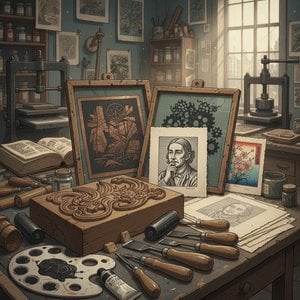
The Enduring Legacy of Printmaking: Techniques, Themes & Artistic Innovation Across Centuries
Explore the rich history of printmaking with ArtsDot. Discover techniques from intaglio to lithography, learn about collecting valuable prints & find museum-quality reproductions. Expert insights for art enthusiasts and collectors.



