


 In echtem Maßstab anzeigen
 Versenden als Grußkarte
 Teilen
 Details anzeigen
 Leitfaden

 Herunterladen
 Ähnliche Objekte
 Röntgenaufnahme
 Diashow
 Besucherstatistiken
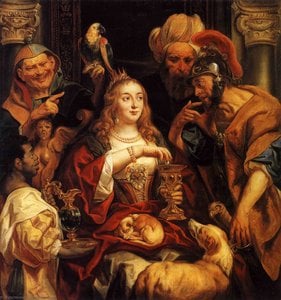
Wahrsagerin mit einem Narren
 Öl auf Leinwand
- Wandkunst
- Nordische Renaissance
 1508
1508 24.0 x 30.0 cm
 Louvre
 Mehr anzeigen
Handgefertigte Ölreproduktion
Handgemaltes Ölgemälde auf Leinwand in Ihrer Wunschgröße und mit Rahmen, auf Bestellung von unseren Künstlern angefertigt. ( Zum Druck wechseln Zum digitalen Bild wechseln)




P118B $10

P118H $10

P118W $10

P438Z $10

P508JH $12

P508YH $12

P805H $10

P805Z $10

P919BZ $10

P919G $10

P919XJ $10

P959ZH $10

P968JZ $12

W106C $8

W218G $10

W218JH $8

W218Y $10

W307PJ $10

W316G $10

W316PJ $8

W316Y $10

W398PJ $8

W4111J $10

W500HY $15

W500JH $15

W692G $12

W849H $8

W940BG $15

W953PJ $8




Wählen Sie aus unseren vordefinierten Formaten, die den ursprünglichen Proportionen des Kunstwerks entsprechen.

Sie können Ihre eigenen Maße eingeben, um einen bestimmten Rahmen oder Platz auszufüllen. Wenn die gewählte Größe nicht den Proportionen des Originalbildes entspricht, werden wir das Kunstwerk entweder beschneiden oder das Gemälde durch zusätzliche, handgemalte Elemente erweitern. Ein digitales Mockup wird Ihnen zur Genehmigung zugesandt, bevor die Produktion beginnt.
Bitte beachten Sie, dass die Bildschirmvorschau nicht die tatsächliche Beschneidung oder Erweiterung widerspiegelt. Nur das Mockup zeigt die endgültige Komposition exakt an.
Obwohl Sondermaße verfügbar sind, empfehlen wir, eine Größe aus der vordefinierten Liste zu wählen, um die ursprünglichen Proportionen beizubehalten.
Nach der Bestellung wird das ArtsDot.com-Team dem Kunden Anweisungen per E-Mail zusenden und eine Mockup-Vorschau bereitstellen.
Weltweiter Versand () in nur 3 bis 4 Wochen statt der üblichen 5 Wochen. (21 September). Keine Kompromisse bei der Qualität.

Kostenloser weltweiter Expressversand

Hochwertige Leinenleinwand

Vollständiger Versicherungsschutz beim Versand

Zollgebühren-Rückerstattungsgarantie

Garantie für exakte Farbtreue

100-tägiges Rückgaberecht (nur bei Mängeln)

100% Geld-zurück-Garantie

Angebot für Mengenrabatt
 Die Glasoption ist nur für Größen unter 110 cm verfügbar.

Wahrsagerin mit einem Narren
Reproduktionsmedium
Format der Reproduktion
-


Gesamtpreis
$ 263
The Enigmatic Fortune Teller: A Window into Renaissance Intrigue
Lucas van Leyden’s “Fortune-Teller with a Fool,” painted in 1508, is more than just a portrait; it's a meticulously crafted tableau of social observation and subtle psychological drama. Born in Leiden during a period of burgeoning artistic innovation, Lucas was already demonstrating an exceptional talent for capturing the nuances of human interaction – a skill he honed under his father’s guidance before joining the workshop of Cornelis Engelbrechtsz. This particular painting, executed in oil on panel, exemplifies his early mastery of half-length figures and his growing interest in genre scenes, offering a rare glimpse into the social dynamics of 16th-century Netherlands. The scene unfolds within a dimly lit interior, dominated by a woman – likely Margarethe of Austria and Savoy, a figure steeped in political intrigue and royal lineage – seated on the ground amidst a gathering of onlookers. Her posture, turned slightly to the side, conveys an air of quiet contemplation, while her attire suggests both wealth and a certain detachment from the proceedings around her. The inclusion of a fool, positioned prominently near her feet, immediately introduces an element of playful disruption, hinting at the complexities of power, perception, and perhaps even deception.A Symphony of Detail: Technique and Artistic Influences
Van Leyden’s technical prowess is immediately apparent in the painting's remarkable detail. The artist masterfully renders textures – from the folds of the woman’s veil to the rough fabric of the fool’s clothing – creating a palpable sense of realism. His use of light and shadow, particularly evident in the faces of the onlookers, adds depth and drama to the composition. Notably, the painting showcases elements influenced by both Italian Renaissance art and Flemish traditions. The influence of Italian masters like Raphael is visible in the careful attention to anatomy and the idealized beauty of Margarethe’s face. Simultaneously, Van Leyden retains a distinctly Northern European sensibility, evident in his meticulous rendering of textures and his focus on capturing the subtle expressions of his subjects. The painting's composition—a carefully arranged group of figures within a confined space—reflects the artistic trends of the time, where artists sought to create scenes that were both visually engaging and psychologically insightful. The use of perspective, though not entirely rigorous by Renaissance standards, contributes to the overall sense of realism and depth.Symbolism and Intrigue: Unraveling the Narrative
The “Fortune-Teller with a Fool” is rich in symbolic meaning, inviting multiple interpretations. The woman herself represents power – specifically, the considerable influence wielded by Margarethe of Austria and Savoy, a politically astute figure who navigated the treacherous currents of European diplomacy. Her presence alongside the fool suggests a critical examination of societal roles and expectations. The fool, traditionally associated with wisdom and insight, here serves as a counterpoint to the woman’s authority, perhaps hinting at the limitations of power or the potential for deception. The various figures surrounding her – some closer, others further away – represent different perspectives on her situation, creating a dynamic interplay of social relationships. The cat nestled at the woman's feet is another intriguing element, often associated with intuition and prophecy in Renaissance symbolism. It could be interpreted as a symbol of wisdom or simply as an element of domesticity within this otherwise formal scene. The painting’s very title—"Fortune-Teller"—suggests a preoccupation with fate, destiny, and the uncertainties of life.A Legacy of Innovation: Van Leyden's Place in Art History
Lucas van Leyden stands as a pivotal figure in the development of Northern Renaissance art. His early work, characterized by half-length figures and innovative use of perspective, laid the groundwork for subsequent generations of artists. He was among the first Dutch exponents of genre painting, capturing everyday life with remarkable realism and psychological insight. His pioneering skills in engraving—demonstrated in works like “Mohammed and the Murdered Monk”—established him as a leading printmaker of his time. The "Fortune-Teller with a Fool" is a testament to his artistic versatility and his ability to seamlessly blend technical skill with expressive storytelling. It’s a painting that continues to fascinate art historians and collectors alike, offering a compelling glimpse into the social and cultural landscape of 16th-century Netherlands—a world brimming with intrigue, power, and the enduring human fascination with fate.Ähnliche Kunstwerke



Biografie des Künstlers
early life and training
Lucas van Leyden (real name Lucas Hugensz or Jacobsz.), Netherlandish engraver and painter, born and mainly active in Leiden, who was among the first Dutch exponents of genre painting and is generally regarded as one of the finest engravers in the history of art. He was the pupil of his father, Huygh Jacobszoon; later, he entered the workshop of Cornelis Engelbrechtsz(oon), a painter of Leiden. His paintings, as well as his prints, reveal his unique approach to subject matter and style, though Lucas is more highly regarded today as a printmaker than as a painter. He was extraordinarily precocious. Even such early prints as *Muhammed and the Murdered Monk* (1508) are compositionally clear and direct and show great technical skill. Such engravings as *Susanna and the Elders* (1508), *St. George Liberating the Princess* (*c.* 1508–09), and his famous series *The Circular Passion* (1510) are notable for their accurate rendering of space and subtly composed landscapes. In 1514 he became a member of the Leiden painters' guild. He seems to have travelled a certain amount, and on a visit to Antwerp in 1521 he met Dürer, who drew his portrait (Mus.\n\nB.-A., Lille). An unbroken series of dated engravings makes it possible to follow his career as a printmaker and to date many of his paintings, but no clear pattern of stylistic development emerges. Dürer was the single greatest influence on him, but Lucas was less intellectual in his approach, tending to concentrate on the anecdotal features of the subject and to take delight in caricatures and genre motifs. Van Mander characterizes him as a pleasure-loving dilettante, who sometimes worked in bed, but he left a large œuvre, in spite of his fairly short life, and must have been a prodigious worker. Lucas had a great reputation in his day (Vasari even rated him above Dürer in certain respects) and he is universally regarded as one of the greatest figures in the history of graphic art (he made etchings and woodcuts as well as engravings and was a superb draughtsman). His status as a painter is less elevated, but he was nevertheless one of the outstanding Netherlandish painters of his period. He was a pioneer of the Netherlandish genre tradition, as witness his *Chess Players* (c.1508, Gemäldegalerie, Berlin)—which actually represents a variant game called ‘courier’—and his *Card Players* (c.1517, Wilton House, Wiltshire), while his celebrated *Last Judgement triptych* (1526–7, Lakenhal Mus., Leiden) shows the heights to which he could rise as a religious painter. It eloquently displays his vivid imaginative powers, his superb skill as a colourist, and his deft and fluid brushwork. Lucas left no pupils or direct followers, but his work was a stimulus to an even greater Leiden-born artist, Rembrandt.artistic development
Lucas van Leyden was among the first Dutch exponents of genre painting and a highly accomplished engraver. His early work, characterized by half-length figures (c. 1506-1512), showcases his precocious originality. As he matured, his landscapes developed, and he became skilled in engraving at a remarkably young age. The earliest known print by him, *Mohammed and the Murdered Monk* (1508), demonstrates his mastery of the medium. It reveals no trace of immaturity in inspiration or technique. Dürer was the single greatest influence on him, but Lucas was less intellectual in his approach, tending to concentrate on the anecdotal features of the subject and to take delight in caricatures and genre motifs.notable works and style
Seventeen paintings surely attributed to lucas van leyden survive, including:- The Healing of the Blind Man of Jericho, a masterpiece showcasing multiple figures against wooded landscapes.
- Saint Paul, attr. leyden, exemplifying his engraving prowess.
- The Milkmaid (engraving, 1510), highlighting his early skill in the medium.
museum collections and online presence
Lucas van Leyden's works can be found in various museums, including the Van Gogh Museum (Netherlands), which houses an extensive collection of his engravings and paintings. Online platforms like ArtsDot.com offer a comprehensive selection of his works, allowing art enthusiasts to explore his oeuvre in detail.
Lucas van Leyden
1494 - 1533 , Niederlande
Eckdaten zum Künstler
- Artistic Movement Or Style: Frühniederländische Renaissance
- Artists Or Movements Influenced By This Artist: ['Deutsche Renaissance']
- Artists Who Influenced This Artist: ['Albrecht Dürer']
- Date Of Birth: Leiden, Niederlande (1494)
- Date Of Death: Vor August 8, 1533
- Full Name: Lucas Hugensz van Leyden
- Nationality: Niederländisch
- Notable Artworks:
- Die Heilung des blinden Mannes von Jericho
- St. Paulus
- Place Of Birth: Leiden
Verwandte Artikel

Hugo van der Goes: Andacht, Innovation und die psychologische Tiefe der frühen niederländischen Malerei
Entdecken Sie die revolutionäre Kunst von Hugo van der Goes! Tiefgründige Analyse seiner Werke, bahnbrechende Technik und bleibender Einfluss auf die frühe niederländische Malerei. Für Kunstexperten & Sammler.

Frühniederländische Meisterwerke: 10 Gemälde, die eine Epoche prägten | ArtsDot
Entdecken Sie die 10 prägendsten Meisterwerke der Frühniederländischen Malerei! Von Jan van Eyck bis Rogier van der Weyden – erleben Sie Kunstgeschichte hautnah. Hochwertige Reproduktionen & Inspiration für Ihr Interieur auf ArtsDot.com.

Lucas van Leyden: Innovation & Intimacy in Early Netherlandish Printmaking
Explore the groundbreaking prints of Lucas van Leyden, a Dutch master bridging Gothic detail & Renaissance innovation. Discover his rare works, investment potential, and legacy for discerning collectors.

Frühniederländische Renaissance: 10 Meisterwerke für Ihr Zuhause | ArtsDot
Entdecken Sie die 10 prägendsten Meisterwerke der Frühniederländischen Renaissance! Erfahren Sie mehr über Jan van Eyck, Rogier van der Weyden & Co. und ihre ikonischen Gemälde. Hochwertige Reproduktionen für Ihr Zuhause – jetzt auf ArtsDot.com!

Rembrandts Meisterwerke: Die Top 25 Kunstwerke für Ihr Zuhause | ArtsDot
Entdecken Sie Rembrandts 25 berühmteste Kunstwerke! Tauchen Sie ein in die Welt des Barock, Licht und Schatten & historischer Porträts. Hochwertige Reproduktionen für Ihr Zuhause – jetzt auf ArtsDot.com!


