- Startseite

- Auf Leinwand drucken
- Lovis Corinth
- Homeric Laughter, First Version
 Gemälde kaufen Bild kaufen
 Versenden
 Teilen
 Details
 Zu Favoriten hinzufügen

 Herunterladen
 Ähnliche Objekte
 X-Ray
X-Ray
 Diashow anzeigen
Homeric Laughter, First Version
 Oil On Canvas
- WallArt
- Expressionism
 1909
1909- 19th Century
 98.0 x 120.0 cm
 Bayerische Staatsgemaldesammlungen
 Weiterlesen
Giclée / Kunstdruck
Giclée- oder Leinwanddruck in Museumsqualität mit schneller Produktion und flexiblen Veredelungsoptionen.




P118B $10

P118H $10

P118W $10

P438Z $10

P508JH $12

P508YH $12

P805H $10

P805Z $10

P919BZ $10

P919G $10

P919XJ $10

P959ZH $10

P968JZ $12

W106C $8

W218G $10

W218JH $8

W218Y $10

W307PJ $10

W316G $10

W316PJ $8

W316Y $10

W398PJ $8

W4111J $10

W500HY $15

W500JH $15

W692G $12

W849H $8

W940BG $15

W953PJ $8




Wählen Sie aus unseren vordefinierten Größen, die den ursprünglichen Proportionen des Kunstwerks entsprechen.

Sie können Ihre eigenen Maße eingeben, um ein bestimmtes Format oder einen speziellen Platz einzupassen. Wenn das von Ihnen gewählte Format nicht den Proportionen des Originalbildes entspricht, werden wir das Kunstwerk entweder beschneiden oder das Bild mit einem gespiegelten oder einfarbigen Rand erweitern. Ein digitaler Entwurf wird Ihnen zur Genehmigung zugesandt, bevor die Produktion beginnt.
Bitte beachten Sie, dass die Vorschau auf dem Bildschirm nicht den tatsächlichen Zuschnitt oder die Erweiterung widerspiegelt. Nur der Entwurf zeigt die endgültige Komposition präzise an.
Obwohl Sondermaße verfügbar sind, empfehlen wir die Auswahl eines Maßes aus der vordefinierten Liste, um die ursprünglichen Proportionen zu bewahren.
Weltweiter Versand () innerhalb von 2 Wochen statt der üblichen 4/5 Wochen. (2 Juli)

Kostenloser weltweiter Expressversand

Hochwertige Leinenleinwand

Umfassender Versicherungsschutz beim Versand

Zollsteuer-Rückerstattungsgarantie

Garantie für echte Farbtreue

60-Tage-Rückgaberecht (nur bei Mängeln)

100% Geld-zurück-Garantie

Mengenrabatt verfügbar
 Die Glasoption ist nur in Größen unter 110 cm verfügbar.

Homeric Laughter, First Version
Giclée / Kunstdruck
Größe der Reproduktion
-


Endpreis aller Optionen
-
Beschreibung des Sammlerstücks
A Moment of Shared Revelry: Unpacking “Homeric Laughter”
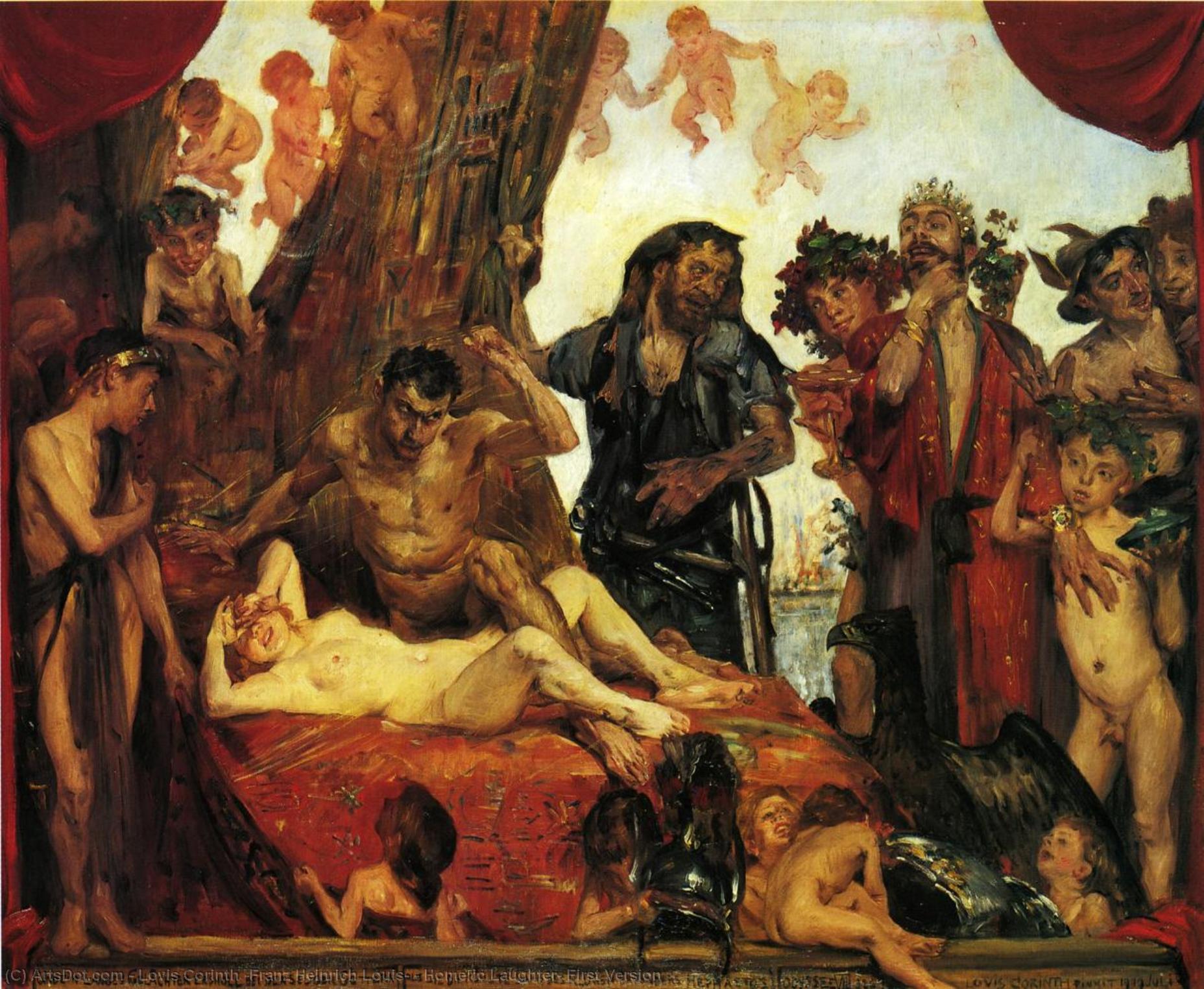
Lovis Corinth’s “Homeric Laughter,” painted in 1909, isn't merely a depiction of a gathering; it’s an invitation into a vibrant tableau of human connection and the intoxicating pleasure of shared experience. The painting immediately draws the eye with its scale – a generous 98 x 120 cm canvas – allowing for a complete immersion in the scene. Corinth masterfully captures a group of individuals, numbering at least thirteen, engaged in what appears to be an animated conversation or perhaps a lighthearted celebration. The central figure, a woman reclining on a bed, is undeniably the focal point, her exposed form not presented with overt sexuality but rather as a symbol of vulnerability and openness within this intimate setting. The surrounding figures – men and women alike, some standing, others seated or kneeling – contribute to a sense of communal warmth and relaxed conviviality.

The Expressionist Palette and Corinth’s Unique Style
Painted during a pivotal period in Corinth's artistic evolution, “Homeric Laughter” exemplifies his distinctive style – a potent blend of Impressionism and burgeoning Expressionism. He abandons the meticulous detail favored by earlier academic training, opting instead for bold brushstrokes, vibrant colors, and a deliberately loose application of paint. Notice how he uses color not to represent reality but to evoke feeling; the reds and oranges dominate, radiating warmth and suggesting an atmosphere of joyous abandon. Corinth’s technique is characterized by a dynamic layering of pigments, creating a sense of movement and immediacy. The figures aren't sharply defined; they are rendered with a slightly blurred quality, contributing to the painting’s overall dreamlike atmosphere. This approach was influenced by his travels through Paris and Antwerp, where he encountered artists like Rubens and Impressionists who challenged traditional artistic conventions.
Echoes of Homer and the Celebration of Human Connection
The title itself, “Homeric Laughter,” immediately connects the painting to the works of ancient Greek poet Homer. Homer’s epics are filled with scenes of feasting, drinking, and boisterous gatherings – celebrations of life, friendship, and human connection. Corinth's painting captures this spirit, suggesting a modern-day reimagining of these timeless themes. The objects scattered around the group—a bowl and a cup—further reinforce the idea of shared indulgence and communal enjoyment. The woman on the bed isn’t simply exposed; she embodies a state of relaxed vulnerability, inviting the viewer to contemplate the dynamics of intimacy and social interaction within this circle.
A Window into Corinth's Life and Artistic Journey
Lovis Corinth’s life was marked by both artistic triumph and personal hardship. Following a debilitating stroke in 1911, he adapted his technique, favoring his right hand and exploring themes of domesticity and family. “Homeric Laughter” can be viewed as a reflection of this evolving perspective – a celebration of the simple pleasures of life and the importance of human relationships. Corinth’s work is deeply personal, imbued with emotion and a profound understanding of the human condition. Reproductions of “Homeric Laughter” offer a captivating glimpse into his world, inviting viewers to share in his vision of joy, connection, and the enduring power of art.
Ähnliche Kunstwerke




Biografie des Künstlers
Frühes Leben und Ausbildung
Lovis Corinth, geboren Franz Heinrich Louis am 21. Juli 1858 in Tapiau, Preußen, war ein deutscher Künstler und Schriftsteller, dessen reifes Werk als Maler und Grafiker eine Synthese aus Impressionismus und Expressionismus realisierte. Corinthians frühes Leben war geprägt von seinem Talent zum Zeichnen, das ihn dazu veranlasste, ab 1876 an der Akademie Königsbergs Malerei zu studieren.Künstlerische Entwicklung
Corinthians künstlerische Entwicklung wurde von mehreren Schlüsselfiguren und Bewegungen beeinflusst:- Lovis Corinth's frühe Arbeit war naturalistisch geprägt, was durch seinen Lehrer Otto Günther gefördert wurde.
- Er studierte unter Ludwig von Löfftz an der Akademie der Bildenden Künste München, die eine sorgfältige Beobachtung von Farben und Werten betonte.
- Corinth wurde auch von Courbet und der Barbizon-Schule sowie von den Werken Rubes während seiner Zeit in Antwerpen beeinflusst.
Wichtige Werke und Stil
Zu Corinthians bemerkenswertesten Werken gehören:- In der Schlachthof-Szene (78 x 89 cm, Staatsgalerie Stuttgart, Deutschland), das seine Verwendung von Öl auf Leinwand zeigt.
- Selbstbildnis (47 x 53 cm, Kunsthalle Bremen, Deutschland), das sein Können im Zeichnen demonstriert.
- weibliche Halbnackte mit Hut (283 x 383 cm, Kunstpalast Düsseldorf, Deutschland), das seine Verwendung von Bleistift hervorhebt.
Späteres Leben und Vermächtnis
Corinthians späteres Leben war geprägt von seiner Präsidentschaft der Berliner Sezession von 1915 bis 1925. Er veröffentlichte auch zahlreiche Essays über Kunstgeschichte, darunter "Das Erlernen der Malerei" im Jahr 1908. Corinth starb am 17. Juli 1925 nach einem Schlaganfall im Jahr 1911, der ihn teilweise gelähmt hatte. Wichtige Links:- Besuchen Sie die Künstlerseite von Lovis Corinth auf ArtsDot
- Lesen Sie mehr über Lovis Corinth auf Wikipedia
- Sehen Sie "In der Schlachthof-Szene" von Lovis Corinth auf ArtsDot
Bedeutung und Einfluss
Corinth gilt als einer der wichtigsten Künstler des deutschen Modernismus. Seine Werke verbinden impressionistische Elemente mit expressionistischen Tendenzen, was ihm eine einzigartige Position in der Kunstgeschichte einbrachte. Er beeinflusste nachfolgende Generationen von Künstlern und trug maßgeblich zur Entwicklung der modernen Kunst in Deutschland bei. Sein Einfluss ist bis heute spürbar.
Lovis Corinth
1858 - 1925 , Niederlande
Kurzinfos
- Beeinflusste Künstler:
- Kirchner
- Beckmann
- Baselitz
- Bemerkenswerte Werke:
- In der Schlachthof-Szene
- Selbstbildnis
- Female Semi-Nude with Hat
- Einflüsse:
- Courbet
- Barbizon Schule
- Rubens
- Geburtsdatum: 21. Juli 1858
- Geburtsort: Tauwade, Niederlande
- Künstlerische Richtung: Impressionismus & Expressionismus
- Nationalität: Deutsch
- Sterbedatum: 17. Juli 1925
- Vollständiger Name: Lovis Corinth (Franz Heinrich Louis)
Ähnliche Artikel

Lovis Corinth: Brückenbauer zwischen Impressionismus und Expressionismus – Eine künstlerische Entwicklung
Entdecken Sie Lovis Corinths faszinierende künstlerische Entwicklung! Von Realismus über Impressionismus bis Expressionismus – eine detaillierte Analyse seiner Werke, seines Einflusses und der Berliner Secession. Jetzt lesen!

Die Psychologie des spielerischen Bildes: Eine Untersuchung humorvoller und skurriler Malerei als Katalysator für emotionales Wohlbefinden und soziale Verbindung
Entdecken Sie die Psychologie hinter humorvoller & skurriler Malerei! Expertenwissen zu Surrealismus, Kunsttherapie und emotionalem Wohlbefinden. Finden Sie Ihr perfektes Gemälde bei ArtsDot.

Akryl auf Leinwand: Die 10 Meisterwerke, die Kunst für immer veränderten |
Entdecken Sie die 10 legendärsten Akrylmalereien, die Kunstgeschichte schrieben! Von Jackson Pollock bis Gerhard Richter – erfahren Sie die Geschichten hinter den Meisterwerken und finden Sie hochwertige Reproduktionen für Ihr Zuhause. Jetzt bei entdecken!
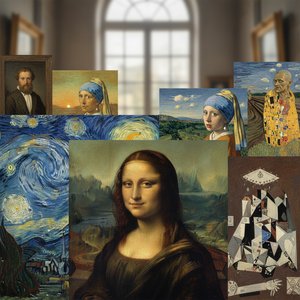
Die 10 legendärsten Ölgemälde: Meisterwerke, die Kunstgeschichte schrieben |
Entdecken Sie die 10 legendärsten Ölgemälde der Kunstgeschichte! Von Van Gogh bis Da Vinci – erfahren Sie die Geschichten hinter Meisterwerken wie Mona Lisa & Die Sternennacht. Hochwertige Reproduktionen auf .

From Snapshot to Legacy: The Art of Commissioning a Hand-Painted Reproduction from Photography – Preserving Memories Through Oil Painting Techniques
Transform cherished photos into timeless oil paintings with skilled artists. Trusted for bespoke portraits & heirloom art. Discover the process, styles & lasting value – a legacy preserved.