

- 115.0 x 101.0 cm


The picture follows your choices: , .
Beschreibung des Sammlerstücks
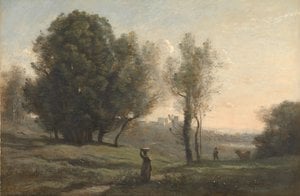
Admire 'Mushroom Picking' by Józef Rapacki (1910). A serene watercolor landscape featuring peasant women & a birch tree in autumn hues. Inspired by Barbizon School, this piece evokes tranquility and Polish rural life.
 Weiterlesen
Künstlerbiografie
Entdecken Sie Józef Rapacki (1871-1929), einen polnischen Maler, bekannt für nostalgische Landschaften & Masowische Szenen. Erforschen Sie seinen realistischen Stil und finden Sie Werke in Museen weltweit.
Handgefertigte Ölreproduktion
Handgemaltes Ölgemälde auf Leinwand in Ihrer Wunschgröße und mit Rahmen, auf Bestellung von unseren Künstlern angefertigt. ( Zum Druck wechseln Zum digitalen Bild wechseln)
More about this painting
 Vorschau anzeigen
 Versenden
 Teilen
 Details anzeigen
 Leitfaden

 Herunterladen
 Ähnliche Objekte
 Röntgenaufnahme
 Diashow
 Q&A
Q&A Statistiken
Order your painting in four simple steps
Take your time. You can change any answer; the price in your order card follows each choice.
1 Step one of four
Which size would you like?
These sizes keep the proportions of the original painting. The drawing shows your choice on a wall, above a two-metre sofa.
Or give your own measurements
Wählen Sie aus unseren vordefinierten Formaten, die den ursprünglichen Proportionen des Kunstwerks entsprechen.

Geben Sie die Breite und die Höhe an, die Sie für Ihren Rahmen oder Ihre Wand benötigen. Da dieses Werk handgemalt ist, kann der Künstler bei einer anderen Form etwas mehr um das Bild herum malen oder etwas abschneiden – Sie entscheiden. Wir senden Ihnen ein digitales Mockup zur Freigabe, bevor mit dem Malen begonnen wird. Das auf dieser Seite gezeigte Bild stellt nicht das tatsächliche Ergebnis dar – dies tut nur das Mockup.
2 Step two of four
How should it be prepared: rolled, stretched or framed?
The prices below are for the size you chose in step one.
Choose the edges of the stretched canvas
Choose your frame

White €1

Blurside €1

Extended €1

P118B €10

P118H €10

P118W €10

P438Z €10

P508JH €12

P508YH €12

P805H €10

P805Z €10

P919BZ €10

P919G €10

P919XJ €10

P959ZH €10

P968JZ €12

W106C €8

W218G €10

W218JH €8

W218Y €10

W307PJ €10

W316G €10

W316PJ €8

W316Y €10

W398PJ €8

W4111J €10

W500HY €15

W500JH €15

W692G €12

W849H €8

W940BG €15

W953PJ €8

H24-GOLD €30

H24-SILVER €30

H36-GOLD €45

H36-SILVER €45
Gerahmt
Moulding: . Overall size with the frame: .
3 Step three of four
Would you like anything changed in the painting?
Most people answer no. Because each painting is made by hand, our artist can also adapt it for you.
After order, ArtsDot.com team will email client for instructions and provide a mockup preview
4 Step four of four
A few finishing options
All of them are optional. The answers already selected cost nothing extra.
Who paints it?
Weltweiter Versand () in nur 3 bis 4 Wochen statt der üblichen 5 Wochen. (2 November). Keine Kompromisse bei der Qualität.
A nameplate, as in a museum?
Details der gravierten Bronzetafel
This elegant plaque features the artist's name and the title of the artwork, finely engraved for a timeless presentation.
It is made from bronze with a refined, elegant finish. The text is precisely laser-engraved for a sharp and permanent result. Measuring 9x2 cm, the plaque is compact yet easy to read. It's built to be durable and scratch-resistant, offering a professional, museum-quality look. Mounting is simple thanks to the included adhesive backing.
Details zur Acrylglas-Plakette (transparent)
The plaque includes essential engraved details such as the artist's name, the title of the artwork, the date it was created, the type of media used-like oil on canvas or watercolor-a brief description of the piece, and a QR code that links to the complete artwork information.
It is crafted from clear acrylic, offering a sleek, modern appearance. The text is UV-engraved in black to ensure strong visual contrast. With a size of 10x15 cm, it ensures optimal readability. It comes equipped with two metal hooks for secure wall mounting. The plaque is designed to be weather-resistant, making it suitable for various environments, and it includes interactive features that work seamlessly with smartphone scanning.
Details zur schwarzen Acryltafel
This elegant plaque includes engraved information such as the artist's name, the title of the artwork, the date it was created, the type of media used (like oil on canvas or watercolor), a short description of the artwork, and a QR code for quick access to more information.
The plaque itself is made from refined black acrylic with a premium finish. The text is laser-engraved in white for high contrast and readability. Its size is 10x15 cm, designed to be easy to read. It comes with two metal hooks for professional mounting. The design is sleek and fits any interior style. It is also weather-resistant and durable, with built-in digital integration for mobile compatibility.
A protective varnish?
When do you need it?
✓ Check and order
Your painting, as you ordered it

Mushroom Picking
Art der Reproduktion
Format der Reproduktion
-

Erstklassige Meisterkünstler
Mehr Detailtiefe, Raffinesse und zusätzliche Produktionszeit
-

Rahmen für Reproduktionen
-
-
Bei Kunstwerken oder Reproduktionen, die an einer Seite größer als 105 cm (ca. 41 Zoll) sind, wird der Rahmen zerlegt als Bausatz geliefert. Diese Methode gewährleistet eine sichere Zustellung und verhindert Schäden während des Transports.
Professionelle Montage erforderlich – dies ist kein DIY-Produkt.
Der Bausatz muss von einem erfahrenen professionellen Rahmenmacher zusammengebaut und die Leinwand gespannt werden. Hierfür werden Holzleim (nicht im Lieferumfang enthalten), eine Leinwandspannzange sowie Klemmen benötigt, um die Keilleisten während des Trocknungsvorgangs rechtwinklig zu halten. Eine unsachgemäße Montage oder eine ungleichmäßige Spannung der Leinwand kann das Kunstwerk dauerhaft beschädigen und ist nicht durch unsere Garantie abgedeckt.
 Bei Kunstwerken oder Reproduktionen, die an einer Seite größer als 105 cm (ca. 41 Zoll) sind, wird der Rahmen zerlegt als Bausatz geliefert. Diese Methode gewährleistet eine sichere Zustellung und verhindert Schäden während des Transports.
Alle Vollholzkomponenten sind enthalten, präzise auf Maß zugeschnitten.
Der Zusammenbau erfolgt mit den mitgelieferten Schrauben sowie Holzkleber für die Eckverbindungen, der nicht im Lieferumfang enthalten ist und vom Rahmenbauer selbst beschafft werden muss.
Professionelles Werkzeug ist erforderlich und nicht im Lieferumfang enthalten: eine Keilrahmenzange (Spannwerkzeug) sowie Klammern, um die Leisten während der Trocknungszeit des Klebers rechtwinklig zu fixieren.
Wichtiger Hinweis:
Für die Eckverbindungen wird Holzleim benötigt, die Leisten müssen mit Zwingen fixiert werden, bis der Leim vollständig getrocknet ist, und das Spannen der Leinwand auf dem fertigen Rahmen erfordert eine Keilrahmen-Zange. Keines dieser Utensilien ist im Set enthalten. Bitte stellen Sie sicher, dass ein erfahrener Rahmenmacher zur Verfügung steht, bevor Sie diese Größe bestellen.

Beschriftung
-
-

Schutzlackierung
Glanzlack (verstärkt die Farben, schützt vor Licht und Feuchtigkeit)
-

Mein Kunstwerk personalisieren
Beispiele für Anpassungsmöglichkeiten: Gesicht durch Kundenfoto ersetzen; Haustier hinzufügen (z. B. Katze durch Hund ersetzen); Versteckte Nachricht im Hintergrund einfügen; Hintergrundlandschaft oder -elemente ändern.
-

Eilt sehr
Weltweiter Versand () in nur 3 bis 4 Wochen statt der üblichen 5 Wochen. (2 November). Keine Kompromisse bei der Qualität.
-
Expressversand
Weltweiter Versand () innerhalb von 5 Wochen. (9 November).
Inklusive Versand
Endpreis
€ 256
Die Glasoption ist nur für Größen unter 110 cm verfügbar.
Included with every order
- Kostenloser weltweiter Expressversand
- Hochwertige Leinenleinwand
- Umfassender Versicherungsschutz beim Versand
- Zollgebühren-Rückerstattungsgarantie
- Garantie für exakte Farbtreue
- 100 Tage Rückgaberecht (nur bei Mängeln)
- 100% Geld-zurück-Garantie
- Mengenrabatt verfügbar


A Woodland Reverie: Józef Rapacki’s “Mushroom Picking”
“Mushroom Picking,” painted in 1910 by the Polish landscape artist Józef Rapacki, isn't merely a depiction of a rural scene; it’s a carefully constructed evocation of a specific time and place – the heartland of Poland, steeped in nostalgia and a profound connection to the natural world. The painting captures a fleeting moment within a late autumn forest, a tableau of peasant women diligently gathering mushrooms amidst a landscape that breathes with both quiet beauty and subtle melancholy. Rapacki’s work stands as a testament to the Barbizon School's influence, blending elements of French realism with a distinctly Polish sensibility, creating an atmosphere that is both familiar and profoundly evocative.
The Scene Unfolds: Composition and Detail
At the painting’s core resides a venerable birch tree, its branches reaching skyward like supplicating arms. Positioned in the foreground, it anchors the composition while simultaneously drawing the viewer into the scene. Flanking this central figure are two women, their forms rendered with a veristic approach – a deliberate choice that emphasizes their humanity and connection to the land. They aren’t idealized figures; instead, they possess a grounded presence, actively engaged in their task, their clothing suggesting a life lived close to the rhythms of nature. Behind them, a wall of young forest—a grove of pines—provides depth and a sense of enclosure, while rolling hills fade into a hazy, clouded sky, hinting at an approaching winter. The careful placement of each element – the scattered mushrooms, the worn path, the distant trees – contributes to a meticulously crafted landscape that feels both intimate and expansive.
Brushstrokes and Palette: Technique and Style
Rapacki’s technique is characterized by a masterful use of watercolor—a medium perfectly suited to capturing the diffused light and atmospheric qualities of the Polish countryside. The brushwork is loose and expressive, prioritizing mood over precise detail. Layers of translucent washes build up color gradually, creating a sense of depth and luminosity. The dominant palette consists of rusty browns – ochres, umbers, and siennas – that imbue the scene with a warm, autumnal glow. These earthy tones are skillfully contrasted with the greens of the foliage and the muted blues of the sky, further enhancing the painting’s visual richness. The artist's attention to texture is remarkable; one can almost feel the dampness of the meadow grass beneath their feet and the rough bark of the birch tree.
Symbolism and Context: A Polish Pastoral
“Mushroom Picking” transcends a simple landscape depiction, carrying layers of symbolic meaning. The act of mushroom gathering itself represents a connection to tradition, sustenance, and the cyclical rhythms of nature. The presence of the peasant women speaks to the enduring role of rural communities in Polish society. Furthermore, the painting’s stylistic choices—the Barbizon School influence, the veristic approach—reflect a broader movement within Polish art that sought to celebrate the nation's cultural heritage and landscape. Rapacki’s work can be viewed as a nostalgic yearning for a simpler time, a romanticized vision of rural Poland rooted in folklore and tradition. The painting was created during a period of significant social and political change in Poland, and it offers a poignant glimpse into a world on the cusp of modernity.
Emotional Resonance: A Quiet Moment of Reflection
Ultimately, “Mushroom Picking” is a profoundly moving work that invites contemplation. It’s not a dramatic or overtly emotional scene; rather, it possesses a quiet dignity and a sense of serene beauty. The painting evokes feelings of tranquility, solitude, and a deep appreciation for the natural world. It's a reminder to slow down, observe, and find solace in the simple pleasures of life—a timeless message rendered with exquisite skill and sensitivity by Józef Rapacki.
Fragen & Antworten
Welcher künstlerischen Strömung ist "Mushroom Picking" von Józef Rapacki zuzuordnen?
Die mit "Mushroom Picking" von Józef Rapacki verbundene Stilrichtung ist Barbizon School. Diese Klassifizierung ordnet das Werk in den Kontext verwandter Künstler und Kunstwerke ein.
Welche Grundfarbe prägt "Mushroom Picking" von Józef Rapacki?
Ein Ochre to Sepia Farbton durchzieht "Mushroom Picking" von Józef Rapacki.
Wie sehen die Reproduktionsrechte für „Mushroom Picking“ im Parlament von Polen aus?
"Mushroom Picking" von Józef Rapacki, aufbewahrt im Parlament von Polen, ist gemeinfrei – das Urheberrecht ist abgelaufen. Dieser Status bestimmt, ob Reproduktionen des Bildes angefertigt werden dürfen.
Ähnliche Kunstwerke




Józef Rapacki
1871 - 1929, Polen
Künstlerbiografie
Eine nostalgische Vision Polens: Das Leben und die Kunst von Józef Rapacki
Józef Rapacki, geboren 1871 in Warschau, war ein Maler, der tief mit der Seele der polnischen Landschaft verbunden war. Sein Leben entfaltete sich vor dem Hintergrund wechselnder politischer Landschaften und aufstrebender künstlerischer Bewegungen, doch sein Werk blieb unerschütterlich in einer nostalgischen Darstellung Masowiens verwurzelt – jener historischen Region, die sowohl seine Muse als auch sein bleibendes Vermächtnis wurde. Aus einer Theaterfamilie stammend – sein Vater war Schauspieler, Schriftsteller und Übersetzer, und auch seine Geschwister folget ähnlichen Pfaden – schien Rapacki zunächst für die Bühne bestimmt zu sein. Doch im Alter von vierzehn Jahren entdeckte er seine wahre Berufung in den Linien und Lavierungen der Zeichnung, indem er Unterricht bei Wojciech Gerson nahm, einer bedeutenden Figur des polnischen Realismus. Diese frühe Mentorenschaft vermittelte ihm nicht nur technisches Geschick, sondern auch eine tiefe Wertschätzung für die Beobachtung und Interpretation der natürlichen Welt. Seine späteren Studien an der Krakau Kunstakademie unter Izydor Jabłoński, Florian Cynk und Feliks Szynalewski verfeinerten seine Fähigkeiten weiter und bereiteten ihn auf eine Reise vor, die letztlich seine künstlerische Identität definieren sollte.Von München nach Masowien: Künstlerische Entwicklung und Einflüsse
Rapackis künstlerische Entwicklung wurde maßgeblich durch seine Zeit in München geprägt, wo er ab 1889 bei Conrad Fehr studierte. Der Kontakt mit der „Münchner Schule“ erweiterte seinen Horizont und beeinflusste seinen Umgang mit Komposition und Farbe. Es war jedoch eine Studienreise nach Italien um 1898, die seine Leidenschaft für die Landschaftsmalerei wahrhaft entfachte. Er kehrte nach Polen zurück, erfüllt von dem Wunsch, die einzigartige Schönheit seiner Heimat einzufangen. Zunächst arbeitete er in Landschaften, Stadtansichten und Genreszenen, doch Rapacki konzentrierte sich allmählich auf die masowische Provinz, angezogen von ihren weiten Ebenen, verstreuten Wäldern und dem einfachen ländlichen Leben. Seine Arbeiten erschienen in bedeutenden Warschauer Periodika wie dem Tygodnik Ilustrowany, und er illustrierte Werke von Ignacy Krasicki, was seine Vielseitigkeit als Künstler unter Beweis stellte. Er stellte auf der Exposition Universelle 1900 aus und erlangte internationale Anerkennung für sein Talent. In dieser Zeit nahm er Einflüsse aus verschiedenen Quellen auf, filterte sie jedoch stets durch ein zutiefst polnisches Empfinden. Die Betonung der direkten Beobachtung und des natürlichen Lichts, wie sie die Barbizon-Schule pflegte, sollte sich später besonders deutlich in seinem Werk widerspiegeln.Landschaften des Herzens: Stil und Sujet
Józef Rapackis Gemälde zeichnen sich durch ihren stillen Realismus, eine leuchtende Atmosphäre und ein tiefes Gefühl der Ruhe aus. Er meisterhaft einfing die subtilen Nuancen von Licht und Schatten und verlieh seinen Landschaften eine fast ätherische Qualität. Seine Palette bevorzugte gedämpfte Töne – sanftes Grün, Braun, Grau und Ocker – welche die natürlichen Farben der masowischen Landschaft widerspiegelten. Obwohl er gelegentlich Figuren in seine Szenen einbaute – etwa Bäuerinnen beim Pilzesammeln oder bei der Arbeit auf den Feldern –, waren sie selten der Mittelpunkt; stattdessen dienten sie dazu, das Gefühl des Ortes zu verstärken und eine Harmonie zwischen Mensch und Natur heraufzubeschwören. Er wurde als „der Maler der Birken und des fliederfarbenen Heidekrauts“ bekannt, Motive, die in seinem gesamten Werk immer wieder auftauchten. Seine Kompositionen zeichnen sich oft durch weite Ausblicke aus, die den Betrachter in die Tiefe der Landschaft ziehen und ein Gefühl von Weite erzeugen. Buttercups (Hahnenfuß), gemalt im Jahr 1927, ist beispielhaft für diesen Stil – eine lebendige Sumpfszene, mit feiner Pinselführung gestaltet und in goldenes Licht getaucht. Ähnlich zeigt Mushroom Picking (Pilzesammeln) aus dem Jahr 1910 seine Fähigkeit, die Gelassenheit des Landlebens einzufangen, inspiriert vom Ansatz der Barbizon-Schule, alltägliche Szenen darzustellen.Kriegserinnerungen und bleibendes Vermächtnis
Rapackis Leben war von persönlichem Leid geprägt; eine schwere Lungenerkrankung zwang ihn dazu, von Warschau nach Krakau und schließlich nach Olszanka umzusiedeln, wo er Trost in den Landschaften fand, die sein Markenzeichen werden sollten. Der Ausbruch des Ersten Weltkriegs brachte neue Herausforderungen und Verantwortungen mit sich. Er steuerte zahlreiche Zeichnungen für die Warschauer Presse bei, darunter die eindringliche Serie Prusak w Polsce („Preuße in Polen“), die während der Schlesischen Aufstände als Propaganda diente. Dieses Werk zeigt Rapackis Bereitschaft, seine Kunst für einen politischen Zweck einzusetzen, was seinen tiefen Patriotismus und seine Sorge um das Schicksal Polens widerspiegelt. Er verstarb 1929 in Olszanka und hinterließ ein reiches künstlerisches Erbe, das bis heute beim Publikum nachhallt. Seine Gemälde sind in bedeutenden Museen wie dem Muzeum w Warszawie und dem Museum Pomorskie (Danzig) zu finden, was seinen Platz im Kanon der polnischen Kunstgeschichte sichert. Das Werk von Józef Rapacki bietet mehr als nur malerische Szenen; es gewährt einen ergreifende Einblick in eine schwindende Lebensweise, ist ein nostalgischer Tribut an die Schönheit und den Geist Masowiens und ein Zeugnis für die beständige Kraft der Landschaftsmalerei.

Ähnliche Artikel

Ephemeral Echoes: Exploring the Aesthetic & Historical Significance of Vintage Watercolor Painting
Explore the captivating world of vintage watercolor painting! Discover its rich history, techniques, influential artists & collecting tips. Expert insights for enthusiasts and collectors at ArtsDot.
Ephemeral Visions: Exploring the Artistic Legacy & Nuances of Watercolor Painting
Explore the captivating world of watercolor painting! Discover its rich history, essential techniques, influential artists & collecting tips from art experts. A comprehensive guide for enthusiasts.

Ephemeral Visions: Exploring the Artistic Legacy & Contemporary Practice of Watercolor Painting
Explore the captivating world of watercolor painting! Discover its rich history, essential techniques, influential artists & collecting tips. A comprehensive guide for art enthusiasts from ArtsDot.