Vorschau anzeigen
 Versenden
 Teilen
 Details anzeigen

 Herunterladen
 Ähnliche Objekte
 Röntgenaufnahme
 Diashow
St Eulalia


 Weiterlesen
Giclée / Kunstdruck
Giclée- oder Leinwanddruck in Museumsqualität mit schneller Produktion und flexiblen Veredelungsoptionen. ( Zur handgemalten Reproduktion wechseln Zum Bild wechseln)




P118B $10

P118H $10

P118W $10

P438Z $10

P508JH $12

P508YH $12

P805H $10

P805Z $10

P919BZ $10

P919G $10

P919XJ $10

P959ZH $10

P968JZ $12

W106C $8

W218G $10

W218JH $8

W218Y $10

W307PJ $10

W316G $10

W316PJ $8

W316Y $10

W398PJ $8

W4111J $10

W500HY $15

W500JH $15

W692G $12

W849H $8

W940BG $15

W953PJ $8




Wählen Sie aus unseren vordefinierten Formaten, die den ursprünglichen Proportionen des Kunstwerks entsprechen.

Sie können Ihre eigenen Maße eingeben, um ein bestimmtes Format oder einen speziellen Platz einzupassen. Wenn das von Ihnen gewählte Format nicht den Proportionen des Originalbildes entspricht, werden wir das Kunstwerk entweder beschneiden oder das Bild mit einem gespiegelten oder einfarbigen Rand erweitern. Ein digitaler Entwurf wird Ihnen zur Genehmigung zugesandt, bevor die Produktion beginnt.
Bitte beachten Sie, dass die Vorschau auf dem Bildschirm nicht den tatsächlichen Zuschnitt oder die Erweiterung widerspiegelt. Nur der Entwurf zeigt die endgültige Komposition präzise an.
Obwohl Sondermaße verfügbar sind, empfehlen wir die Auswahl eines Maßes aus der vordefinierten Liste, um die ursprünglichen Proportionen zu bewahren.
Weltweiter Versand () innerhalb von 2 Wochen statt der üblichen 4/5 Wochen. (8 August)

Kostenloser weltweiter Expressversand

Hochwertige Leinenleinwand

Umfassender Versicherungsschutz beim Versand

Zollgebühren-Rückerstattungsgarantie

Garantie für exakte Farbtreue

60 Tage Rückgaberecht (nur bei Mängeln)

100% Geld-zurück-Garantie

Mengenrabatt verfügbar
 Die Glasoption ist nur für Größen unter 110 cm verfügbar.

St Eulalia
Giclée / Kunstdruck
Format der Reproduktion
-


Gesamtpreis
$ 62
Sammlerstück-Beschreibung
A Vision of Martyrdom and Grace
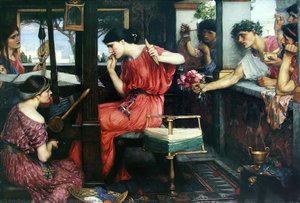
In the hauntingly beautiful St Eulalia, John William Waterhouse invites the viewer into a moment of profound spiritual drama and classical tragedy. Painted in 1887, this masterpiece captures the poignant instant of martyrdom within the bustling streets of ancient Rome. The scene is not merely a historical reconstruction but an emotional landscape where the divine intersects with the earthly. As the saint faces her fate, Waterhouse utilizes a masterful composition to guide the eye through a crowded Roman forum, where onlookers stand in varying degrees of proximity, creating a breathtaking sense of depth and perspective. The presence of birds, scattered throughout the canvas as they fly or perch amidst the chaos, breathes a restless, living energy into the scene, suggesting that even in the stillness of death, nature remains an active witness to the sacred.
The artistry of Waterhouse, a luminary of the Pre-Raphaelite tradition, is on full display through his delicate handling of light and muted color palettes. The painting evokes a sense of somber reverence, utilizing tones that reflect the gravity of the subject matter while maintaining the romantic allure characteristic of his style. His technique allows for a seamless blend of textures—from the heavy drapery of the Roman garments to the ephemeral quality of the atmosphere. For the discerning collector or interior designer, this piece offers a sophisticated focal point; its ability to command attention through subtle complexity makes it an ideal centerpiece for spaces that value historical depth and classical elegance.
Symbolism and the Echoes of Antiquity
Beyond its visual splendor, St Eulalia is steeped in rich, symbolic narrative. Waterhouse draws inspiration from the writings of Prudentius, weaving the miraculous elements of the saint's legend into the very fabric of the painting. The historical context of the Roman martyrdom serves as a backdrop for a deeper exploration of faith and endurance. There is a palpable tension between the violent reality of the execution and the serene, almost ethereal presence of the saint herself. This duality creates an emotional resonance that transcends the canvas, evoking feelings of sorrow, awe, and spiritual triumph.
For those seeking to adorn a home or gallery with art that tells a story, this reproduction offers more than mere decoration; it provides a window into the soul of the 19th-century Romantic movement. The painting’s ability to balance the chaotic energy of a public street with the quiet dignity of a martyr makes it a versatile and intellectually stimulating acquisition. Whether placed in a sunlit study or a grand salon, the work serves as a testament to the enduring power of classical mythology and the timeless beauty of the human spirit in the face of adversity.
Ähnliche Kunstwerke


Über den Künstler
Frühes Leben und Einflüsse
John William Waterhouse, ein bedeutender englischer Maler, wurde 1849 in Rom zu englischen Eltern geboren. Sein frühes Leben in Italien beeinflusste sein späteres Werk maßgeblich, das oft Szenen aus dem antiken Rom oder der römischen Mythologie darstellte. Im Jahr 1854 kehrten die Waterhouses nach England zurück und ließen sich in South Kensington, London, in der Nähe des neu gegründeten Victoria and Albert Museums nieder.Aufstieg zur Prominenz
Waterhouses künstlerische Reise begann mit klassischen Themen, die an Alma-Tadema und Frederick Leighton erinnerten. Seine frühen Werke wurden in der Dudley Gallery und der Society of British Artists ausgestellt, wobei seine 1874 entstandene Darstellung von Schlaf und seinem Halbbruder Tod auf der Sommerausstellung der Royal Academy gezeigt wurde. Dies markierte den Beginn seiner erfolgreichen Karriere, wobei seine Gemälde bis 1916 häufig in den jährlichen Ausstellungen vertreten waren.Präraffaelitische Wiederbelebung und bemerkenswerte Werke
Waterhouses spätere Arbeit war durch die Annahme des präraffaelitischen Stils gekennzeichnet, wie man in seinen Darstellungen von Frauen aus der griechischen Mythologie und der Artus-Sage erkennen kann. Zu seinen bemerkenswertesten Werken gehören:- The Lady of Shalott, eine Studie von Elaine von Astolat, die er in drei verschiedenen Versionen (1888, 1894 und 1916) malte.
- Ophelia, wobei die bekannteste Version sie kurz vor ihrem Tod zeigt, wie sie Blumen in ihr Haar flechtet, während sie auf einem Baumstamm über einem See sitzt.
- After the Dance (1876), das in der Sommerausstellung dieses Jahres eine herausragende Position einnahm.
Leben und Vermächtnis
Waterhouse heiratete 1883 Esther Kenworthy, die Tochter eines Kunstlehrers. Er wurde 1895 zum ordentlichen Akademiker gewählt und unterrichtete an der St. John's Wood Art School. Waterhouse verstarb am 10. Februar 1917. Sehen Sie mehr von John William Waterhouses Werken auf ArtsDot: [https://ArtsDot.com/@/john william waterhouse](https://ArtsDot.com/@/john-william-waterhouse) | /de/art/show/art-d3c5zp-de/ (Top 5 berühmter Pop Art Gemälde aller Zeiten) [https://ArtsDot.com/@@/9geqys-john-william-waterhouse-thisbe](https://ArtsDot.com/@@/9geqys-john-william-waterhouse-thisbe) (Gemälde von John William Waterhouse: Thisbe) Erkunden Sie mehr auf Wikipedia: [https://en.wikipedia.org/wiki/john_william_waterhouse](https://en.wikipedia.org/wiki/john_william_waterhouse) [https://en.wikipedia.org/wiki/art_of_the_united_kingdom](https://en.wikipedia.org/wiki/art_of_the_united_kingdom) [https://en.wikipedia.org/wiki/victorian_painting](https://en.wikipedia.org/wiki/victorian_painting)
John William Waterhouse
1849 - 1917 , Italien
Kurzinfos
- Beeinflusste Künstler:
- Alma-Tadema
- Frederic Leighton
- Bemerkenswerte Werke:
- The Lady of Shalott
- Ophelia
- After the Dance
- Ariadne
- Thisbe
- Geburtsdatum: 1849
- Geburtsort: Rom, Italien
- Künstlerische Bewegung: Präraffaeliten
- Nationalität: Englisch
- Sterbedatum: 1917
- Vollständiger Name: John William Waterhouse
Ähnliche Artikel

Dante Gabriel Rossetti: Die 25 Meisterwerke des Präraffelitismus | ArtsDot
Entdecken Sie die 25 schönsten Gemälde von Dante Gabriel Rossetti! Tauchen Sie ein in die Welt der Präraffeliten, symbolistischer Kunst & viktorianischer Romantik. Hochwertige Reproduktionen für Ihr Zuhause – jetzt bei ArtsDot.com!

John Singer Sargent: Die 25 Meisterwerke des Porträts – Kunst für Ihr Zuhause | ArtsDot
Entdecken Sie die 25 Meisterwerke von John Singer Sargent! Tauchen Sie ein in die Welt der Porträtmalerei, des Impressionismus & der Belle Époque. Hochwertige Kunstdrucke & Reproduktionen für Ihr Zuhause – jetzt auf ArtsDot.com!

John Constable: Die 25 Meisterwerke des englischen Landschaftsgenies – ArtsDot
Entdecken Sie die 25 Meisterwerke von John Constable! Erleben Sie englische Landschaftsmalerei vom Hay Wain bis zur Stour Valley. Hochwertige Reproduktionen & Kunst für Ihr Zuhause auf ArtsDot.com.

Sir John Everett Millais: Präraffaelitische Revolution und viktorianische Erzählkunst
Entdecken Sie das Leben und Werk von Sir John Everett Millais, einem Pionier der Präraffaeliten! Detaillierte Analysen seiner Gemälde, Einblicke in die viktorianische Kunstszene und seine bleibende Bedeutung. Jetzt lesen!

The Pre-Raphaelite Brotherhood: Rebellion, Romance & Medieval Revival
Explore the captivating world of the Pre-Raphaelite Brotherhood! Discover their rebellious spirit, iconic masterpieces & lasting influence on art history. Learn about Rossetti, Millais & more.