


 Vorschau anzeigen
 Versenden
 Teilen
 Details anzeigen

 Herunterladen
 Ähnliche Objekte
 Röntgenaufnahme
 Diashow
Pintura

 Weiterlesen
Handgefertigte Ölreproduktion
Handgemaltes Ölgemälde auf Leinwand in Ihrer Wunschgröße und mit Rahmen, auf Bestellung von unseren Künstlern angefertigt. ( Druck bestellen Bild kaufen)




P118B $10

P118H $10

P118W $10

P438Z $10

P508JH $12

P508YH $12

P805H $10

P805Z $10

P919BZ $10

P919G $10

P919XJ $10

P959ZH $10

P968JZ $12

W106C $8

W218G $10

W218JH $8

W218Y $10

W307PJ $10

W316G $10

W316PJ $8

W316Y $10

W398PJ $8

W4111J $10

W500HY $15

W500JH $15

W692G $12

W849H $8

W940BG $15

W953PJ $8




Wählen Sie aus unseren vordefinierten Formaten, die den ursprünglichen Proportionen des Kunstwerks entsprechen.

Sie können Ihre eigenen Maße eingeben, um einen bestimmten Rahmen oder Platz auszufüllen. Wenn die gewählte Größe nicht den Proportionen des Originalbildes entspricht, werden wir das Kunstwerk entweder beschneiden oder das Gemälde durch zusätzliche, handgemalte Elemente erweitern. Ein digitales Mockup wird Ihnen zur Genehmigung zugesandt, bevor die Produktion beginnt.
Bitte beachten Sie, dass die Bildschirmvorschau nicht die tatsächliche Beschneidung oder Erweiterung widerspiegelt. Nur das Mockup zeigt die endgültige Komposition exakt an.
Obwohl Sondermaße verfügbar sind, empfehlen wir, eine Größe aus der vordefinierten Liste zu wählen, um die ursprünglichen Proportionen beizubehalten.
Nach der Bestellung wird das ArtsDot.com-Team dem Kunden Anweisungen per E-Mail zusenden und eine Mockup-Vorschau bereitstellen.
Weltweiter Versand () in nur 3 bis 4 Wochen statt der üblichen 5 Wochen. (6 September). Keine Kompromisse bei der Qualität.

Kostenloser weltweiter Expressversand

Hochwertige Leinenleinwand

Umfassender Versicherungsschutz beim Versand

Zollgebühren-Rückerstattungsgarantie

Garantie für exakte Farbtreue

100 Tage Rückgaberecht (nur bei Mängeln)

100% Geld-zurück-Garantie

Mengenrabatt verfügbar
 Die Glasoption ist nur für Größen unter 110 cm verfügbar.

Pintura
Art der Reproduktion
Format der Reproduktion
-


Gesamtpreis
$ 263
A Surreal Symphony of Catalan Identity
The painting “Pintura” by Joan Miró, an enigmatic artwork born from the crucible of Barcelona’s artistic spirit and imbued with a profound exploration of subconscious imagery, captivates viewers with its arresting visual paradox. Created sometime in the mid-20th century—precise dating remains elusive—the piece embodies Miró's signature style: Surrealism blended seamlessly with Catalan folklore and personal symbolism. It’s not merely a depiction; it’s an invitation into a realm where logic yields to dreamlike fluidity, inviting contemplation on themes of vulnerability, resilience, and the enduring power of memory.- Subject Matter & Composition: At its core lies a striking juxtaposition – a bird seemingly grappling with a human figure adorned in a top hat. This unconventional pairing immediately establishes an unsettling yet curiously harmonious dynamic. The presence of additional birds circling the scene reinforces the notion of cyclical patterns and adds to the overall sense of disorientation, characteristic of Surrealist aesthetics.
- Style & Technique: Miró’s technique is instantly recognizable as a masterful fusion of abstraction and organic forms. Bold lines delineate shapes that resemble fantastical creatures—birds, insects, amorphous blobs—creating an otherworldly landscape. The artist employs vibrant hues – predominantly browns punctuated by splashes of red – contributing to the painting's dramatic impact. Texture plays a crucial role; Miró achieved this through layering paint and incorporating collage elements, resulting in a surface rich with tactile qualities.
Historical Context: Gaudí’s Influence & The Catalan Avant-garde
Joan Miró's artistic development was inextricably linked to the burgeoning Catalan avant-garde movement of the time. Inspired by Antoni Gaudí’s architectural explorations—particularly Sagrada Familia—Miró embraced organic forms and asymmetrical compositions, mirroring Gaudí’s belief in harmonizing nature with human creativity. This stylistic kinship reflects a broader cultural preoccupation with Catalan identity and folklore, themes frequently revisited throughout Miró's oeuvre. The painting speaks to the anxieties and aspirations of a generation grappling with the aftermath of World War II and seeking new modes of expression.- Symbolism: The bird’s grip on the man’s head is laden with symbolic significance. It represents both vulnerability and dominance, mirroring the complexities inherent in human relationships. The red nose serves as a visual marker of emotion—passion, perhaps even pain—further enriching the painting's emotional resonance. Furthermore, the clock symbolizes time passing and the inevitable confrontation with mortality, prompting viewers to consider the ephemeral nature of existence.
- Emotional Impact: “Pintura” transcends mere representation; it evokes a feeling of unease mingled with wonder. The unsettling imagery compels us to confront our subconscious fears while simultaneously celebrating the beauty of imagination. It’s a painting that lingers in the mind long after viewing, prompting reflection on themes of resilience and the transformative power of dreams.
Interior Design Considerations: Bringing Miró's Vision Home
For interior designers seeking to infuse their spaces with artistic inspiration, “Pintura” offers a compelling proposition. Its bold colors and textural surface lend themselves beautifully to contemporary palettes—particularly earthy tones accented by pops of crimson. The painting’s dreamlike quality complements minimalist interiors, creating an atmosphere of contemplative serenity. Reproductions crafted from archival pigment prints ensure that the artwork's vibrancy and detail are faithfully preserved, allowing collectors and enthusiasts alike to experience Miró’s visionary aesthetic firsthand.Ähnliche Kunstwerke


Über den Künstler
**frühes Leben und Karriere**
joan miró, ein renommierter spanischer Maler, Bildhauer und Keramiker, wurde am 20. April 1893 in Barcelona, Spanien, geboren. Seine Familie, von jüdischen (Marrano oder Konverso) Wurzeln, hatte einen bedeutenden Einfluss auf sein frühes Leben. Mirós Vater, Miquel Miró Adzerias, war Goldschmied und Uhrmacher, was möglicherweise der Künstlersein Interesse an komplizierten Details inspirierte.**Künstlerische Entwicklung**
Miró begann mit sieben Jahren mit Zeichenunterricht in einer privaten Schule in Barcelona. Später nahm er am Kunstakademie La Llotja auf, trotz Ablehnung durch seinen Vater. Dies markierte den Beginn von Mirós künstlerischer Reise, die schließlich zu seiner Pionierarbeit im Surrealismus und abstrakter Kunst führte.**Bekannte Werke und Kooperationen**
* The Farm (1922), ein Gemälde, das Mirós Übergang zu einem individuelleren Stil zeigt, mit nationalistischen Zügen. * Zusammenarbeit mit Max Ernst bei der Gestaltung von Sergei Diaghilews Ballett 1926, die die Technik des Grattage begründete. * The Dutch Interiors (1928), eine Reihe von Gemälden, inspiriert von Hendrik Martenszoon Sorth und Jan Steen, die Mirós einzigartigen Stil zeigt.**Museen und Vermächtnis**
* Die Fundació Joan Miró in Barcelona, gegründet 1975, die Mirós Werke präsentiert. * Die Fundació Pilar i Joan Miró in Palma de Mallorca, gegründet 1981, festigte Mirós Vermächtnis weiter.**Wichtige Werke und ihre Bedeutung**
- Painting (1933), ein abstraktes Ölgemälde, das Mirós surrealistische Vision veranschaulicht.
- Pintura 11, ein weiteres bemerkenswertes abstraktes Werk, das Mirós einzigartigen Stil zeigt.
- The Ear of Corn (37 x 46 cm), ein surrealistisches Werk, das komplizierte Details zeigt.
- The Birth of Day, ein abstraktes Kunstwerk, das Mirós Beiträge zur abstrakten Kunst weiter festigt.
**Fazit**
Mirós Vermächtnis als Pionier des Surrealismus und der abstrakten Kunst ist unbestreitbar. Seine Werke, die in verschiedenen Museen ausgestellt werden, darunter die Fundació Joan Miró, inspirieren weiterhin Künstler und Kunstliebhaber gleichermaßen. Für weitere Informationen über Mirós Werke besuchen Sie [https://ArtsDot.com/@/joan-miro](https://ArtsDot.com/@/joan-miro) oder erkunden Sie seine bemerkenswerten Werke unter [https://ArtsDot.com/@@/8ewky5-joan-miro-painting](https://ArtsDot.com/@@/8ewky5-joan-miro-painting).- Mehr Kunstwerke von Joan Miró auf ArtsDot.com
- Entdecken Sie das Museum Fundació Joan Miró in Barcelona, Spanien
- Erkunden Sie die Biografie und bemerkenswerten Werke des Künstlers unter [https://en.wikipedia.org/wiki/joan_mir%c3%b3](https://en.wikipedia.org/wiki/joan_mir%c3%b3)

Joan Miró
1893 - 1983 , Spanien
Kurzinfos
- Beeinflusste Künstler:
- Vincent van Gogh
- Paul Cézanne
- Bemerkenswerte Werke:
- Die Farm (1922)
- Dutch Interiors (1928)
- Gemälde (1933)
- Geburtsdatum: 20. April 1893
- Geburtsort: Barcelona, Spanien
- Künstlerischer Stil: Surrealismus, abstrakte Kunst
- Nationalität: Spanisch
- Todatum: 1983
- Vollständiger Name: Joan Miró i Ferrà
Ähnliche Artikel

Joan Mirós Meisterwerke: Die Top 25 für Kunstliebhaber & stilvolles Wohnen
Entdecken Sie die Top 25 Gemälde von Joan Miró! Tauchen Sie ein in die Welt des Surrealismus, abstrakter Kunst & katalanischer Farben. Hochwertige Kunstdrucke & Reproduktionen für Ihr Zuhause – jetzt auf ArtsDot.com!

Kandinsky: Die 25 Meisterwerke des Abstrakten – Kunst für Ihr Zuhause | ArtsDot
Entdecken Sie die 25 bedeutendsten Gemälde von Wassily Kandinsky! Tauchen Sie ein in die Welt der abstrakten Kunst, des Expressionismus und der Farbkomposition. Hochwertige Kunstdrucke & Inspiration für Ihr Zuhause auf ArtsDot.com.
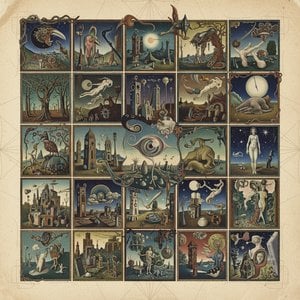
Max Ernsts Meisterwerke: Die Top 25 Kunstwerke für Ihr Zuhause | ArtsDot
Entdecken Sie die 25 bedeutendsten Kunstwerke von Max Ernst! Tauchen Sie ein in die Welt des Surrealismus, Dada und abstrakter Malerei. Hochwertige Kunstreproduktionen & Inspiration für Ihr Zuhause bei ArtsDot.com.

Abstrakter Expressionismus: Die 10 Meisterwerke, die eine Kunstbewegung prägten |
Entdecken Sie die 10 Meisterwerke des Abstrakten Expressionismus! Von Jackson Pollock bis Mark Rothko – erfahren Sie die Geschichten hinter ikonischen Gemälde und finden Sie hochwertige Reproduktionen für Ihr Zuhause. Jetzt bei entdecken!

Geometrische Abstraktion: Die 10 Meisterwerke, die Kunstgeschichte prägten | ArtsDot.com
Entdecken Sie die 10 Meisterwerke der geometrischen Abstraktion! Von Kandinsky bis Mondrian – erleben Sie die Geschichte, Farben & Formen dieser revolutionären Kunstrichtung. Hochwertige Kunstreproduktionen auf ArtsDot.com


