
 Oil On Canvas
- WallArt
- Dutch Baroque
 1693
1693- Early Modern
 191.0 x 166.0 cm
 Akademie der bildenden Künste Wien

The picture follows your choices: , .
Beschreibung des Sammlerstücks
Admire Jan Weenix's masterful depiction of 'The White Peacock,' a stunning oil painting showcasing a majestic peacock amidst serene nature, capturing beauty and symbolism in exquisite detail.
 Weiterlesen
Künstlerbiografie
Jan Weenix (1641-1719): Niederländischer Barockmeister der reichhaltig detaillierten Jagdszenenstillleben, Wildschilder und Landschaften. Bewundert für Realismus und lebendige Farben.
Handgefertigte Ölreproduktion
Handgemaltes Ölgemälde auf Leinwand in Ihrer Wunschgröße und mit Rahmen, auf Bestellung von unseren Künstlern angefertigt. ( Zum Druck wechseln Zum digitalen Bild wechseln)
More about this painting
 Vorschau anzeigen
 Versenden
 Teilen
 Details anzeigen
 Leitfaden

 Herunterladen
 Ähnliche Objekte
 Röntgenaufnahme
 Diashow
 Q&A
Q&A Statistiken
Order your painting in four simple steps
Take your time. You can change any answer; the price in your order card follows each choice.
1 Step one of four
Which size would you like?
These sizes keep the proportions of the original painting. The drawing shows your choice on a wall, above a two-metre sofa.
Or give your own measurements
Wählen Sie aus unseren vordefinierten Formaten, die den ursprünglichen Proportionen des Kunstwerks entsprechen.

Geben Sie die Breite und die Höhe an, die Sie für Ihren Rahmen oder Ihre Wand benötigen. Da dieses Werk handgemalt ist, kann der Künstler bei einer anderen Form etwas mehr um das Bild herum malen oder etwas abschneiden – Sie entscheiden. Wir senden Ihnen ein digitales Mockup zur Freigabe, bevor mit dem Malen begonnen wird. Das auf dieser Seite gezeigte Bild stellt nicht das tatsächliche Ergebnis dar – dies tut nur das Mockup.
2 Step two of four
How should it be prepared: rolled, stretched or framed?
The prices below are for the size you chose in step one.
Choose the edges of the stretched canvas
Choose your frame

White €1

Blurside €1

Extended €1

P118B €10

P118H €10

P118W €10

P438Z €10

P508JH €12

P508YH €12

P805H €10

P805Z €10

P919BZ €10

P919G €10

P919XJ €10

P959ZH €10

P968JZ €12

W106C €8

W218G €10

W218JH €8

W218Y €10

W307PJ €10

W316G €10

W316PJ €8

W316Y €10

W398PJ €8

W4111J €10

W500HY €15

W500JH €15

W692G €12

W849H €8

W940BG €15

W953PJ €8

H24-GOLD €30

H24-SILVER €30

H36-GOLD €45

H36-SILVER €45
Gerahmt
Moulding: . Overall size with the frame: .
3 Step three of four
Would you like anything changed in the painting?
Most people answer no. Because each painting is made by hand, our artist can also adapt it for you.
After order, ArtsDot.com team will email client for instructions and provide a mockup preview
4 Step four of four
A few finishing options
All of them are optional. The answers already selected cost nothing extra.
Who paints it?
Weltweiter Versand () in nur 3 bis 4 Wochen statt der üblichen 5 Wochen. (30 Oktober). Keine Kompromisse bei der Qualität.
A nameplate, as in a museum?
Details der gravierten Bronzetafel
This elegant plaque features the artist's name and the title of the artwork, finely engraved for a timeless presentation.
It is made from bronze with a refined, elegant finish. The text is precisely laser-engraved for a sharp and permanent result. Measuring 9x2 cm, the plaque is compact yet easy to read. It's built to be durable and scratch-resistant, offering a professional, museum-quality look. Mounting is simple thanks to the included adhesive backing.
Details zur Acrylglas-Plakette (transparent)
The plaque includes essential engraved details such as the artist's name, the title of the artwork, the date it was created, the type of media used-like oil on canvas or watercolor-a brief description of the piece, and a QR code that links to the complete artwork information.
It is crafted from clear acrylic, offering a sleek, modern appearance. The text is UV-engraved in black to ensure strong visual contrast. With a size of 10x15 cm, it ensures optimal readability. It comes equipped with two metal hooks for secure wall mounting. The plaque is designed to be weather-resistant, making it suitable for various environments, and it includes interactive features that work seamlessly with smartphone scanning.
Details zur schwarzen Acryltafel
This elegant plaque includes engraved information such as the artist's name, the title of the artwork, the date it was created, the type of media used (like oil on canvas or watercolor), a short description of the artwork, and a QR code for quick access to more information.
The plaque itself is made from refined black acrylic with a premium finish. The text is laser-engraved in white for high contrast and readability. Its size is 10x15 cm, designed to be easy to read. It comes with two metal hooks for professional mounting. The design is sleek and fits any interior style. It is also weather-resistant and durable, with built-in digital integration for mobile compatibility.
A protective varnish?
When do you need it?
✓ Check and order
Your painting, as you ordered it

The White Peacock
Art der Reproduktion
Format der Reproduktion
-

Erstklassige Meisterkünstler
Mehr Detailtiefe, Raffinesse und zusätzliche Produktionszeit
-

Rahmen für Reproduktionen
-
-
Bei Kunstwerken oder Reproduktionen, die an einer Seite größer als 105 cm (ca. 41 Zoll) sind, wird der Rahmen zerlegt als Bausatz geliefert. Diese Methode gewährleistet eine sichere Zustellung und verhindert Schäden während des Transports.
Professionelle Montage erforderlich – dies ist kein DIY-Produkt.
Der Bausatz muss von einem erfahrenen professionellen Rahmenmacher zusammengebaut und die Leinwand gespannt werden. Hierfür werden Holzleim (nicht im Lieferumfang enthalten), eine Leinwandspannzange sowie Klemmen benötigt, um die Keilleisten während des Trocknungsvorgangs rechtwinklig zu halten. Eine unsachgemäße Montage oder eine ungleichmäßige Spannung der Leinwand kann das Kunstwerk dauerhaft beschädigen und ist nicht durch unsere Garantie abgedeckt.
 Bei Kunstwerken oder Reproduktionen, die an einer Seite größer als 105 cm (ca. 41 Zoll) sind, wird der Rahmen zerlegt als Bausatz geliefert. Diese Methode gewährleistet eine sichere Zustellung und verhindert Schäden während des Transports.
Alle Vollholzkomponenten sind enthalten, präzise auf Maß zugeschnitten.
Der Zusammenbau erfolgt mit den mitgelieferten Schrauben sowie Holzkleber für die Eckverbindungen, der nicht im Lieferumfang enthalten ist und vom Rahmenbauer selbst beschafft werden muss.
Professionelles Werkzeug ist erforderlich und nicht im Lieferumfang enthalten: eine Keilrahmenzange (Spannwerkzeug) sowie Klammern, um die Leisten während der Trocknungszeit des Klebers rechtwinklig zu fixieren.
Wichtiger Hinweis:
Für die Eckverbindungen wird Holzleim benötigt, die Leisten müssen mit Zwingen fixiert werden, bis der Leim vollständig getrocknet ist, und das Spannen der Leinwand auf dem fertigen Rahmen erfordert eine Keilrahmen-Zange. Keines dieser Utensilien ist im Set enthalten. Bitte stellen Sie sicher, dass ein erfahrener Rahmenmacher zur Verfügung steht, bevor Sie diese Größe bestellen.

Beschriftung
-
-

Schutzlackierung
Glanzlack (verstärkt die Farben, schützt vor Licht und Feuchtigkeit)
-

Mein Kunstwerk personalisieren
Beispiele für Anpassungsmöglichkeiten: Gesicht durch Kundenfoto ersetzen; Haustier hinzufügen (z. B. Katze durch Hund ersetzen); Versteckte Nachricht im Hintergrund einfügen; Hintergrundlandschaft oder -elemente ändern.
-

Eilt sehr
Weltweiter Versand () in nur 3 bis 4 Wochen statt der üblichen 5 Wochen. (30 Oktober). Keine Kompromisse bei der Qualität.
-
Expressversand
Weltweiter Versand () innerhalb von 5 Wochen. (6 November).
Inklusive Versand
Endpreis
€ 232
Die Glasoption ist nur für Größen unter 110 cm verfügbar.
Included with every order
- Kostenloser weltweiter Expressversand
- Hochwertige Leinenleinwand
- Umfassender Versicherungsschutz beim Versand
- Zollgebühren-Rückerstattungsgarantie
- Garantie für exakte Farbtreue
- 100 Tage Rückgaberecht (nur bei Mängeln)
- 100% Geld-zurück-Garantie
- Mengenrabatt verfügbar


A Symphony of Light and Decay
In the quiet, shadowed corners of the Dutch Golden Age, Jan Weenix crafted a visual language that spoke far more profoundly than mere imitation. His masterpiece, “The White Peacock,” completed in 1693, stands as a breathtaking testament to the Baroque era’s obsession with the tension between life and death. At first glance, the viewer is arrested by the luminous presence of the central figure: a magnificent white peacock, its plumage spread in an elaborate, ethereal display that seems to catch a light source from beyond the frame. Yet, as the eye wanders from this brilliant centerpiece, the scene reveals a more somber narrative. Perched upon a decaying tree stump and accompanied by a resting brown hare and the stillness of lifeless birds, the painting presents a poignant meditation on the cyclical rhythms of existence—a delicate dance between vibrant beauty and inevitable ruin.
Weenix’s technical mastery is nothing short of extraordinary, utilizing the chiaroscuro technique to sculpt form out of the darkness. Through painstaking detail, he renders the tactile reality of the natural world; one can almost feel the softness of the peacock's feathers, the coarse fur of the hare, and the rough, weathered texture of the decomposing wood. His brushstrokes, though seamlessly blended to create an illusion of profound depth, possess a controlled energy that breathes life into the organic matter. This meticulous realism serves a higher purpose, elevating the work from a simple animal study to a complex psychological landscape. The dramatic contrasts between light and shadow do more than just define shape; they imbue the atmosphere with a palpable sense of drama and mystery, drawing the collector into a world where every shadow holds a secret.
Symbolism and the Baroque Soul
To gaze upon “The White Peacock” is to engage with a rich tapestry of seventeenth-century symbolism. In the lexicon of the era, the peacock was often a symbol of nobility, pride, and even immortality due to its perceived ability to renew itself. However, by placing this regal creature amidst symbols of mortality—the dead birds and the decaying stump—Weenix creates a powerful vanitas motif. This juxtaposition reminds the viewer of the fleeting nature of earthly glory and the inescapable reality of decay. For the modern connoisseur or interior designer, this duality offers an incredible emotional depth; the painting does not merely decorate a space, it anchors it with intellectual weight and a sense of timeless contemplation.
The historical context of Amsterdam during this period adds another layer of intrigue to the work. As a period of intense artistic experimentation, the Dutch Baroque sought to explore themes that resonated with the cultural anxieties of an era grappling with change. Weenix, trained in the tradition of his father Jan Baptist Weenix, brought a refined sensitivity to these themes, blending the grandeur of the Baroque with a quiet, observational intimacy. For those seeking to incorporate a high-quality reproduction into a curated collection, this piece offers more than aesthetic pleasure; it provides a window into a vanished world of philosophical inquiry and unparalleled artistic devotion.
Fragen & Antworten
Welcher Phase der Karriere von Jan Weenix lässt sich das Entstehungsjahr 1693 von „The White Peacock“ zuordnen?
"The White Peacock", entstanden im Jahr 1693, stammt aus der Mature Baroque von Jan Weenix.
Welche Form und welche Maße hat "The White Peacock" von Jan Weenix?
Das Format von „The White Peacock“ ist Portrait und das Original hat die Maße 191 x 166 cm. Beides ist bei der Planung einer Reproduktion hilfreich.
Welche Größe und Ausrichtung werden für einen Druck von "The White Peacock" von Jan Weenix empfohlen?
Für „The White Peacock“ wird ein Druckformat von Large in der Ausrichtung Portrait empfohlen.
Ähnliche Kunstwerke


Jan Weenix
1641 - 1719, Netherlands
Künstlerbiografie
Jan Weenix: Leben und Erbe
Jan Weenix (1641-1719) war ein bedeutender niederländischer Maler des Barock, der für seine reichhaltig detaillierten Darstellungen von Jagdstillebensszenen, Wildpartys und Landschaften bekannt ist. Sein Werk verkörperte den künstlerischen Geist der Goldenen Ära und zeigte sowohl technische Meisterschaft als auch eine scharfe Beobachtung der natürlichen Welt.
Frühes Leben und künstlerische Entwicklung
Geboren in Amsterdam, Niederlande, im Jahr 1641, folgte Jan Weenix dem Fußabdruck seines Vaters als Künstler. Sein Vater, Jan Baptist Weenix, war ebenfalls ein angesehener Maler, der sich auf ähnliche Themen spezialisierte. Dieser familiäre Einfluss erwies sich als entscheidend für die frühe künstlerische Entwicklung von Jan. Er arbeitete zunächst unter der Anleitung seines Vaters und lernte die Techniken der Stilllebenmalerei und der Tierdarstellung.
Einflüsse und künstlerischer Stil
Jan Weenix’s Stil spiegelt die Einflüsse mehrerer wichtiger Künstler seiner Zeit wider. Sein Vater vermittelte ihm eine Liebe für detaillierte Realismus und lebendige Farbpaletten. Er war auch von Malern wie Hendrick Cornelisz Vroom, bekannt für Seemaler, und möglicherweise anderen, die sich auf Tierdarstellungen spezialisiert hatten, wie Melchior de Hondecoeter und Gillis Claesz d'Hondecoeter, beeinflusst.
Weenix’s künstlerischer Stil ist durch folgende Merkmale gekennzeichnet:
- Präzise Darstellung von Texturen – Fell, Federn und Blätter werden mit bemerkenswerter Genauigkeit dargestellt.
- Dramatische Verwendung von Licht und Schatten (Chiaroscuro) zur Schaffung von Tiefe und visuellen Interesse.
- Eine lebendige Farbpalette, die seine Motive zum Leben erweckt.
- Kompositionsgeschick bei der Anordnung von Elementen im Bilderraum.
Wichtige Werke und Leistungen
Während seiner Karriere produzierte Jan Weenix einen beträchtlichen Bestand an Werken. Einige seiner bekanntesten Gemälde sind:
- Jagd und Obst-Stillleben neben einem Gartenvasen (1714) – Eine komplexe Komposition, die Wild, Früchte und architektonische Elemente zeigt.
- Stillleben mit Hase und anderem Wild (1697) – Demonstriert seine Meisterschaft bei der Darstellung der Tieranatomie und -textur.
- Ein sitzender Affe (vor 1685) – Zeigt seine Fähigkeit, Persönlichkeit in Tierporträts einzufangen.
- Der weiße Pfau – Eine beeindruckende Darstellung eines majestätischen Vogels, die Weenixs Geschick mit Farbe und Detail hervorhebt.
Er erhielt auch Aufträge von angesehenen Mäzenen, darunter eine Einladung in den Hof des Johann Wilhelm, Kurfürsten von Pfalz, wo er neben anderen renommierten Künstlern arbeitete.
Historische Bedeutung
Jan Weenix spielte eine bedeutende Rolle bei der Popularisierung von Jagdstillebensszenen und Wildpartymalereien während der Barockzeit. Seine Werke wurden von Sammlern sehr begehrt und trugen zur Entwicklung niederländischer künstlerischer Traditionen bei. Er half, diese Genres über bloße Dekoration hinaus zu heben und ihnen ein Gefühl von Realismus, Drama und ästhetischer Schönheit verlieh.
Seine Tochter, Maria Weenix, setzte die Familientradition als geschickte Blumenmalerin fort und festigte damit den Namen Weenix in den Annalen der niederländischen Kunstgeschichte. Jan Weenix’s Erbe inspiriert weiterhin Künstler und fesselt das Publikum mit seinen meisterhaften Darstellungen der natürlichen Welt.


Ähnliche Artikel
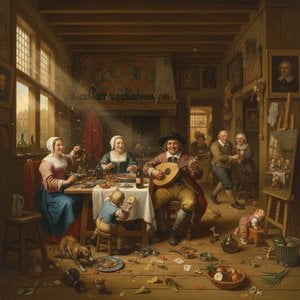
Jan Steen: Meister der niederländischen Genremalerei und Spiegelbild des Goldenen Zeitalters
Entdecken Sie Jan Steen, den Meister der niederländischen Genremalerei! Erfahren Sie mehr über sein Leben, seine Werke und den historischen Kontext des Goldenen Zeitalters. Kunstexperten-Analyse & hochwertige Reproduktionen.

Öl auf Leinwand: Eine historische und technische Erkundung eines zeitlosen künstlerischen Mediums
Entdecken Sie die faszinierende Welt der Ölmalerei! Von historischen Techniken bis zur modernen Anwendung – wir bieten Expertenwissen, Restaurierungstipps und hochwertige Reproduktionen. Jetzt informieren!

Die 10 Meisterwerke der niederländischen Barockmalerei – Kunst für Ihr Zuhause | ArtsDot
Entdecken Sie die 10 prägendsten Meisterwerke der niederländischen Barockmalerei! Von Rembrandt bis Vermeer – erleben Sie Kunstgeschichte, Techniken & Emotionen. Hochwertige Reproduktionen für Ihr Zuhause auf ArtsDot.com.