

 Vorschau anzeigen
 Versenden
 Teilen
 Details anzeigen
 Leitfaden

 Herunterladen
 Ähnliche Objekte
 Röntgenaufnahme
 Diashow
 Fragen & Antworten
 Statistiken
Skarga`s Sermon

- 224.0 x 397.0 cm


 Weiterlesen
Giclée / Kunstdruck
Giclée- oder Leinwanddruck in Museumsqualität mit schneller Produktion und flexiblen Veredelungsoptionen. ( Handgemalte Reproduktion bestellen Zum digitalen Bild wechseln)




P118B €10

P118H €10

P118W €10

P438Z €10

P508JH €12

P508YH €12

P805H €10

P805Z €10

P919BZ €10

P919G €10

P919XJ €10

P959ZH €10

P968JZ €12

W106C €8

W218G €10

W218JH €8

W218Y €10

W307PJ €10

W316G €10

W316PJ €8

W316Y €10

W398PJ €8

W4111J €10

W500HY €15

W500JH €15

W692G €12

W849H €8

W940BG €15

W953PJ €8




Wählen Sie aus unseren vordefinierten Formaten, die den ursprünglichen Proportionen des Kunstwerks entsprechen.

Geben Sie die benötigte Breite und Höhe an, damit der Druck perfekt in Ihren Rahmen oder an Ihre Wand passt. Ein Druck kann nur beschnitten, aber niemals größer als das Originalbild angefertigt werden; daher verliert ein Format mit anderen Proportionen einen Teil des Bildes. Wir senden Ihnen ein digitales Mockup zur Freigabe, bevor wir den Druck ausführen. Das auf dieser Seite gezeigte Bild zeigt nicht den tatsächlichen Beschnitt – dies ist nur im Mockup ersichtlich.
Weltweiter Versand () innerhalb von 2 Wochen statt der üblichen 4/5 Wochen. (4 November)

Kostenloser weltweiter Expressversand

Hochwertige Leinenleinwand

Umfassender Versicherungsschutz beim Versand

Zollgebühren-Rückerstattungsgarantie

Garantie für exakte Farbtreue

100 Tage Rückgaberecht (nur bei Mängeln)

100% Geld-zurück-Garantie

Mengenrabatt verfügbar
 Die Glasoption ist nur für Größen unter 110 cm verfügbar.

Skarga`s Sermon
Giclée / Kunstdruck
Format der Reproduktion
-


Endpreis
€ 56
A Dramatic Encounter in 17th-Century Poland
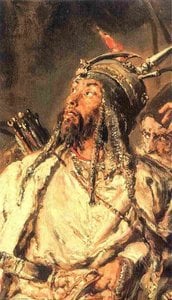
In the grand tapestry of Polish Romanticism, few works command the room with as much gravity and historical weight as Jan Matejko’s masterpiece, Skarga's Sermon. Created in 1864, this monumental oil on canvas serves as a window into a pivotal moment of spiritual and political tension. The scene captures a gathering of souls within a dimly lit room, where the air seems thick with the weight of impending change. At the heart of this composition is the Jesuit priest Piotr Skarga, whose powerful sermon acts as the catalyst for the profound emotions displayed by those gathered around him. Through his commanding presence, Matej and the artist invites us to witness not just a religious service, but a moment of intense national reflection.
The painting is a triumph of narrative depth, where every figure contributes to a larger story of duty and dissent. Dressed in the intricate, old-fashioned attire of the 17th century, the individuals present—some standing in rapt attention, others lost in somber thought—embody the various facets of a society at a crossroads. The artist masterfully utilizes body language and facial expressions to convey the underlying tensions of an era marked by upheaval. It is a scene that transcends mere historical documentation, offering instead a visceral experience of the psychological landscape of Poland during a time of great turmoil.
Mastery of Light, Color, and Texture
Technically, Skarga's Sermon is a testament to Matejko’s extraordinary skill in handling large-scale oil painting. The artist employs a somber and dramatic color palette, dominated by deep browns, heavy blacks, and striking reds. This choice of tones does more than just set the historical stage; it creates a chiaroscuro effect that pulls the viewer into the very center of the congregation. The light seems to struggle against the shadows, highlighting the textures of fine fabrics, the glint of metal, and the weathered skin of the listeners, lending an almost tactile quality to the canvas.
For the discerning collector or interior designer, this work offers an unparalleled sense of prestige and intellectual depth. The composition is dense and layered, rewarding repeated viewings with new discoveries—from the subtle interplay of light on a dining table to the quiet, brooding presence of figures tucked into the periphery. A high-quality reproduction of such a piece brings more than just decoration to a space; it introduces a profound sense of history and a sophisticated, dramatic atmosphere that can serve as the definitive focal point of a curated gallery or an elegant study.
A Legacy of National Identity
Beyond its aesthetic brilliance, Skarga's Sermon carries a heavy symbolic burden. As a work of historical painting, it was designed to stir the soul and remind the viewer of the complexities of the Polish spirit. The sermon itself, delivered by Skarga, is a metaphor for the call to conscience and the necessity of unity in the face of external threats. This emotional resonance is what has allowed the painting to endure as one of Jan Matejko's most celebrated achievements, housed within the prestigious National Museum in Warsaw.
To possess or display a reproduction of this work is to engage with a piece of cultural heritage that speaks of resilience and introspection. It is an ideal choice for those who appreciate art that tells a story, offering a sophisticated blend of historical accuracy and Romantic passion. Whether viewed as a study in light and shadow or as a profound historical narrative, Skarga's Sermon remains an enduring icon of artistic and national importance.
Fragen & Antworten
Welche Druckgröße von "Skarga`s Sermon" von Jan Matejko passt in den empfohlenen Raum?
Die ideale Kombination für "Skarga`s Sermon" von Jan Matejko: ein Druck im Format Large für einen Hotel Lobby.
Wann wurde "Skarga`s Sermon" geschaffen und welcher Stilrichtung lässt es sich zuordnen?
"Skarga`s Sermon" von Jan Matejko datiert aus dem Jahr 1864 und gehört zur Romanticism.
Welche Gemeinsamkeiten weist "Skarga`s Sermon" mit dem restlichen Werk von Jan Matejko auf?
Innerhalb des Gesamtwerks von Jan Matejko steht „Skarga`s Sermon“ im Stil der Romanticism und greift die Themen romanticism influence, polish historical narrative, counter reformation themes, political rebuke of elite, national identity preservation, key early masterpiece auf.
Ähnliche Kunstwerke


![Die Schlacht Bei Grunwald [tannenberg] — Jan Matejko, Romantische Historienmalerei](/media/artworks/images-thumb/76/63/7663bffc0e03f3032abe818c6c091ed6.jpg)


Künstlerbiografie
Frühes Leben und Ausbildung
Jan Alojzy Matejko, ein renommierter polnischer Maler, wurde am 24. Juni 1838 in Krakau, Polen, geboren. Sein Vater, Franciszek Ksawery Matejko, war ein tschechisch-stämmiger Tutor und Musiklehrer. Jans frühes Leben war geprägt von der Krakauer Revolution von 1846 und der Belagerung von Krakau durch die Österreicher im Jahr 1848 – Ereignisse, die später seine künstlerischen Themen beeinflussen sollten. Matejko besuchte das St.-Annen-Gymnasium, verließ es aber 1851 aufgrund schlechter Noten. Er zeigte jedoch schon in jungen Jahren außergewöhnliches Talent für Kunst. Von 1852 bis 1858 studierte er an der Kunstakademie in Krakau und spezialisierte sich unter der Anleitung von Wojciech Korneli Stattler und Władysław Łuszczkiewicz auf historische Malerei.Künstlerische Karriere
Matejkos erstes bedeutendes Werk, Zaren Schujiski vor Zygmunt III, wurde 1853 fertiggestellt. Er begann, seine historischen Gemälde ab 1855 bei der Gesellschaft der Freunde der Künste in Krakau auszustellen. Zu seinen bemerkenswertesten Werken gehören:- Rejtan (1866): Eine großformatige Öl-auf-Leinwand-Malerei, die einen entscheidenden Moment in der polnischen Geschichte darstellt.
- Union von Lublin (1869): Ein bedeutendes Werk, das Matejkos Fähigkeit zeigt, historische Ereignisse einzufangen.
- Schlacht von Grunwald (1878): Ein Meisterwerk, das seine Fähigkeit hervorhebt, die Intensität von Schlachtbildern darzustellen.
Einflüsse und Entwicklung
Matejko wurde stark von der polnischen Geschichte und dem Wunsch beeinflusst, diese für ein breites Publikum zugänglich zu machen. Er studierte sorgfältig historische Dokumente und recherchierte akribisch Details über Kleidung, Waffen und Architektur seiner Zeit. Sein Stil entwickelte sich im Laufe seiner Karriere hin zu einer realistischeren Darstellung, wobei er jedoch immer die dramatische Erzählung und die emotionale Wirkung in den Vordergrund stellte. Die Romantik des 19. Jahrhunderts prägte seine Werke, insbesondere durch die Betonung von Heldentum, Patriotismus und dem Kampf für nationale Unabhängigkeit.Museologische Beiträge und Vermächtnis
Matejko verbrachte den Großteil seines Lebens in Krakau und wurde schließlich Direktor an der Jan Matejko Akademie der Bildenden Künste, ehemals Krakauer Akademie der Bildenden Künste. Zu seinen Schülern gehörten bedeutende Maler wie Maurycy Gottlieb, Jacek Malczewski, Józef Mehoffer und Stanisław Wyspiański. Bemerkenswerte Werke auf ArtsDot:- Jan Matejko: Warna (Romantik)
- Jan Matejko: Stillleben (Romantik)
- Jan Matejko: Die Union von Lublin (298 x 512 cm, Romantik, Öl auf Leinwand)
Referenzen:
Entdeckung der Meisterwerke des Muzeum Narodowe in Krakau, Polen (wikipedia.org)
Jan Matejko
1838 - 1893 , Polen
Kurzinfos
- Andere Namen: Jan Alojzy Matejko
- Beeinflusste Künstler:
- Maurycy Gottlieb
- Jacek Malczewski
- Stanisław Wyspiański
- Bemerkenswerte Werke:
- Rejtan (1866)
- Union of Lublin (1869)
- Schlacht von Grunwald (1878)
- Einflussreiche Künstler:
- Wojciech Korneli Stattler
- Władysław Łuszczkiewicz
- Geburtsdatum: 24. Juni 1838
- Geburtsort: Kraków, Polen
- Künstlerische Bewegung: Romantik
- Nationalität: Polnisch
- Sterbedatum: 1. November 1893
- Vollständiger Name: Jan Matejko
Ähnliche Artikel

The Evocative Brushstroke: Exploring Emotion, Individuality & the Sublime in Romanticism's Artistic Landscape
Explore the passionate world of Romanticism! Discover masterpieces by Friedrich & Goya, delve into the sublime, and understand the movement's lasting impact on art history. Expert analysis & insights at ArtsDot.

Jan Gossaert (Mabuse): Pioneering Renaissance Style & the Birth of Netherlandish Antiquity
Explore the groundbreaking art of Jan Gossaert (Mabuse), a pioneer of Renaissance painting in the Low Countries. Discover his Romanist style, stunning portraits, and influence on Northern European art history.

Jan Matejko: Nationales Narrativ und Identität im polnischen Gemälde des 19. Jahrhunderts
Entdecken Sie Jan Matejkos faszinierende Gemälde und ihren Einfluss auf die polnische nationale Identität im 19. Jahrhundert. Analysen, Schlüsselwerke & historischer Kontext – jetzt lesen!

Romantik in der Kunst: Die 10 Meisterwerke, die eine Epoche prägten |
Entdecken Sie die 10 Meisterwerke der Romantik! Von Caspar David Friedrich bis Delacroix – erleben Sie Gefühl, Landschaft & Historie. Hochwertige Kunst Reproduktionen auf . Jetzt entdecken!

Stanisław Wyspiański: Symbolism, National Identity & the Polish Secession
Explore the life & work of Stanisław Wyspiański, a pivotal figure in Polish Symbolism and the Young Poland movement. Discover his iconic paintings, dramas, and stained glass designs reflecting national identity & artistic innovation.

