

 Vorschau anzeigen
 Versenden
 Teilen
 Details anzeigen
 Leitfaden

 Herunterladen
 Ähnliche Objekte
 Röntgenaufnahme
 Diashow
 Q&A
Q&A Statistiken
Crevettes et coquillages


 Weiterlesen
Giclée / Kunstdruck
Giclée- oder Leinwanddruck in Museumsqualität mit schneller Produktion und flexiblen Veredelungsoptionen. ( Handgemalte Reproduktion bestellen Zum digitalen Bild wechseln)




P118B €10

P118H €10

P118W €10

P438Z €10

P508JH €12

P508YH €12

P805H €10

P805Z €10

P919BZ €10

P919G €10

P919XJ €10

P959ZH €10

P968JZ €12

W106C €8

W218G €10

W218JH €8

W218Y €10

W307PJ €10

W316G €10

W316PJ €8

W316Y €10

W398PJ €8

W4111J €10

W500HY €15

W500JH €15

W692G €12

W849H €8

W940BG €15

W953PJ €8




Wählen Sie aus unseren vordefinierten Formaten, die den ursprünglichen Proportionen des Kunstwerks entsprechen.

Geben Sie die benötigte Breite und Höhe an, damit der Druck perfekt in Ihren Rahmen oder an Ihre Wand passt. Ein Druck kann nur beschnitten, aber niemals größer als das Originalbild angefertigt werden; daher verliert ein Format mit anderen Proportionen einen Teil des Bildes. Wir senden Ihnen ein digitales Mockup zur Freigabe, bevor wir den Druck ausführen. Das auf dieser Seite gezeigte Bild zeigt nicht den tatsächlichen Beschnitt – dies ist nur im Mockup ersichtlich.
Weltweiter Versand () innerhalb von 2 Wochen statt der üblichen 4/5 Wochen. (2 November)

Kostenloser weltweiter Expressversand

Hochwertige Leinenleinwand

Umfassender Versicherungsschutz beim Versand

Zollgebühren-Rückerstattungsgarantie

Garantie für exakte Farbtreue

100 Tage Rückgaberecht (nur bei Mängeln)

100% Geld-zurück-Garantie

Mengenrabatt verfügbar
 Die Glasoption ist nur für Größen unter 110 cm verfügbar.

Crevettes et coquillages
Giclée / Kunstdruck
Format der Reproduktion
-


Endpreis
€ 55
James Ensor's Depiction of Oceanic Abundance: *Crevettes et Coquillages*
James Ensor’s Crevettes et Coquillages, a captivating tableau of marine life, offers a profound glimpse into the artist’s uniquely unsettling vision. Executed around 1898 and closely related to Ensor's celebrated "Still Life with Fish and Shells" held at The Art Institute of Chicago, this work transcends a simple depiction of crustaceans and mollusks; it is a meticulously constructed exploration of anxiety, decay, and the hidden darkness lurking beneath the surface of everyday life. Ensor’s fascination with the macabre – evident in his extensive use of masks and shadows – finds its most potent expression here, transforming a seemingly commonplace subject into a deeply unsettling meditation on mortality and the fragility of existence.
- Subject Matter & Composition: The painting is dominated by a dense arrangement of crabs and shellfish, meticulously rendered with a precise yet slightly distorted realism. The composition deliberately lacks a clear focal point, mirroring the chaotic nature of the underwater world and contributing to the overall sense of unease. The large crab on the left, positioned prominently, acts as an unsettling anchor within this swirling mass, while smaller specimens are scattered throughout, emphasizing the overwhelming abundance – and potential threat – of the marine environment.
- Technique & Style: Ensor’s technique is characterized by a meticulous attention to detail combined with a deliberately jarring use of color. He employs thick impasto in areas, particularly around the shells, creating a tactile surface that draws the viewer closer while simultaneously amplifying the sense of claustrophobia. The palette leans heavily into earthy tones – browns, ochres, and muted greens – punctuated by flashes of crimson and purple, colors often associated with death and decay within Ensor’s oeuvre. This deliberate chromatic discordance further enhances the painting's unsettling effect.
A Window into Ensor's World: Symbolism and Context
Understanding *Crevettes et Coquillages* requires acknowledging James Ensor’s broader artistic concerns. Born in Ostend, Belgium, in 1860, Ensor was profoundly influenced by his upbringing amidst a vibrant coastal resort town filled with carnival imagery and exotic objects – a direct reflection of his father's souvenir shop. This environment fostered an early preoccupation with disguise, illusion, and the unsettling juxtaposition of beauty and horror. The shells themselves, frequently associated with death and burial rituals, carry significant symbolic weight within Ensor’s work, representing not just marine life but also the transient nature of human existence.
- Symbolic Resonance: The abundance of shellfish can be interpreted as a metaphor for the overwhelming forces of nature – both beautiful and destructive. The crabs, with their sideways movement and predatory instincts, represent hidden dangers lurking beneath the surface.
- Historical Context: Ensor’s work emerged during a period of significant social and artistic change in Europe. The late 19th century witnessed growing anxieties about industrialization, urbanization, and the decline of traditional values – themes that resonate powerfully within Ensor's unsettling imagery.
Emotional Impact & Artistic Legacy
Crevettes et Coquillages is not a painting to be admired for its beauty alone; it demands engagement on an emotional level. Ensor’s masterful manipulation of color, composition, and subject matter creates a profoundly unsettling experience, forcing the viewer to confront uncomfortable truths about mortality, decay, and the hidden darkness within human nature. This work exemplifies Ensor's unique contribution to modern art – his ability to transform everyday objects into powerful symbols of psychological unease. Its influence can be seen in subsequent generations of artists who sought to challenge conventional notions of beauty and explore the darker aspects of the human condition.
A hand-painted reproduction of *Crevettes et Coquillages* offers a remarkable opportunity to bring this iconic work into your home or office, allowing you to experience its profound emotional impact firsthand. Each reproduction is meticulously crafted by skilled artisans, ensuring an authentic representation of Ensor’s original vision and preserving the painting's enduring power for generations to come.
Fragen & Antworten
Welches Gefühl wird mit "Crevettes et coquillages" assoziiert?
"Crevettes et coquillages" von James Ensor vermittelt eine Melancholic emotionale Stimmung.
Welche Stimmung und welche Emotion vermittelt "Crevettes et coquillages" von James Ensor?
Die festgehaltene Stimmung von "Crevettes et coquillages" von James Ensor ist Dramatic, und ihr emotionaler Tonfall ist Melancholic.
Aus welchen Materialien besteht "Crevettes et coquillages" und in welchem Stil ist es gehalten?
In "Crevettes et coquillages" trifft die Acrylic On Canvas-Technik auf die Symbolism-Strömung.
Ähnliche Kunstwerke


Künstlerbiografie
frühes Leben und künstlerische Reise
James Sidney Edward, Baron Ensor, ein prominenter belgischer Maler und Grafiker, wurde am 13. April 1860 in Ostend, Belgien, geboren. Sein frühes Leben war von einem vielfältigen kulturellen Hintergrund geprägt, mit einem englischen Vater, James Frederic Ensor, und einer belgischen Mutter, Maria Catherina Haegheman. Ensor zeigte wenig Interesse an traditionellen akademischen Studien und verließ die Schule mit fünfzehn Jahren, um sich der Kunst zu widmen, zunächst bei lokalen Malern und später am Académie Royale des Beaux-Arts in Brüssel.Künstlerischer Stil und Themen
Ensor's künstlerischer Stil war durch seine Auseinandersetzung mit dem Unterbewusstsein und traumhaften Bildern gekennzeichnet, der die Expressionismus und Surrealismus maßgeblich beeinflusste. Seine Gemälde zeigten oft bizarre Motive, darunter Karnevale, Masken, Puppenspiel, Skelette und fantastische Allegorien. Bekannte Werke sind Die Schändlichen Masken (1883) und Skelette kämpfen um eine gehängte Person (1891), die seine einzigartige Mischung aus Groteskem und Fantasievollem zeigen.Anerkennung und Vermächtnis
Trotz anfänglicher Ablehnung gewann Ensor's Werk allmählich Anerkennung und Anklang. Bis 1920 war er das Thema bedeutender Ausstellungen; im Jahr 1929 wurde er zum Baron durch König Albert ernannt, und 1933 erhielt er die Légion d’honneur. Sein Vermächtnis als Pionier der modernen Kunst ist in seinem Einfluss auf nachfolgende künstlerische Bewegungen, einschließlich Expressionismus und Surrealismus, erkennbar.Wichtige Werke und Ausstellungen
* Die Intrige (90 x 150 cm, Koninklijk Museum voor Schone Kunsten, Antwerpen, Belgien) * Die Qualen des Heiligen Antonius (1887, heute im Besitz der Sammlung des Museum of Modern Art, New York)- Erfahren Sie mehr über das Leben und Werk von James Ensor auf ArtsDot: James Ensor
- Entdecken Sie das Museum Mu.Zee in Ostend, Belgien, das eine Sammlung belgischer Kunst von 1830 bis heute beherbergt auf ArtsDot: Entdecken Sie das Museum Mu.Zee in Ostend, Belgien
- Erfahren Sie mehr über Malerei des Symbolismus und seinen Einfluss auf Expressionismus und Surrealismus auf Wikipedia: Symbolistische Malerei

James Ensor
1860 - 1949 , Belgien
Kurzinfos
- Beeinflusste Künstler:
- Pieter Bruegel der Ältere
- Francisco Goya
- Bemerkenswerte Werke:
- Die Schmählichen Masken
- Christus in Brüssel
- Tribulationen des Heiligen Antonius
- Geburtsdatum: 1860-04-13
- Geburtsort: Ostende, Belgien
- Künstlerische Richtung: Expressionismus, Symbolismus
- Nationalität: Belgisch
- Todatum: 1949-11-19
- Vollständiger Name: James Ensor
- Von Künstlern Beeinflusst: ['']
Ähnliche Artikel

Echoes of Time: Exploring the Enduring Appeal & Historical Context of Vintage Art Prints
Explore the captivating world of vintage art prints! Discover their history, collecting tips & enduring appeal. Expert insights on chromolithography and building a legacy collection with ArtsDot.

The Enduring Legacy of Fine Art Prints: Technique, History & Aesthetic Impact
Explore the rich history & techniques of fine art prints. Discover investment potential, assess authenticity, and learn how to preserve your collection with expert guidance. Trusted insights for discerning collectors.
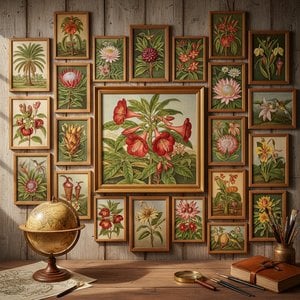
Marianne North: Die 25 schönsten Blumenmalereien der viktorianischen Reisenden | ArtsDot
Entdecken Sie die 25 schönsten Werke der viktorianischen Blumenmalerin Marianne North! Erleben Sie ihre exotischen Reisebilder & botanischen Illustrationen. Hochwertige Kunst Reproduktionen für Ihr Zuhause auf ArtsDot.com.

Meisterwerke in Grau: Die 10 berühmtesten Gemälde mit dunklen Farbtönen |
Entdecken Sie die 10 berühmtesten Gemälde, dominiert von dunklen Grautönen! Von expressionistischen Ikonen bis zu modernen Meisterwerken – erfahren Sie die Geschichten hinter den Künstlern und Techniken. Hochwertige Reproduktionen auf

Giclée-Prints: Hochwertige Kunstreproduktionen mit Archivqualität für Ihr Zuhause
Erfahren Sie alles über die Archivqualität und Technik echter Giclée-Drucke. Jetzt Expertenwissen für Ihre Kunstsammlung entdecken!


