

 Vorschau anzeigen
 Versenden
 Teilen
 Details anzeigen
 Leitfaden

 Herunterladen
 Ähnliche Objekte
 Röntgenaufnahme
 Diashow
 Fragen & Antworten
 Statistiken
Untitled (Silkscreen I)


 Weiterlesen
Giclée / Kunstdruck
Giclée- oder Leinwanddruck in Museumsqualität mit schneller Produktion und flexiblen Veredelungsoptionen. ( Handgemalte Reproduktion bestellen Zum digitalen Bild wechseln)




P118B €10

P118H €10

P118W €10

P438Z €10

P508JH €12

P508YH €12

P805H €10

P805Z €10

P919BZ €10

P919G €10

P919XJ €10

P959ZH €10

P968JZ €12

W106C €8

W218G €10

W218JH €8

W218Y €10

W307PJ €10

W316G €10

W316PJ €8

W316Y €10

W398PJ €8

W4111J €10

W500HY €15

W500JH €15

W692G €12

W849H €8

W940BG €15

W953PJ €8




Wählen Sie aus unseren vordefinierten Formaten, die den ursprünglichen Proportionen des Kunstwerks entsprechen.

Geben Sie die benötigte Breite und Höhe an, damit der Druck perfekt in Ihren Rahmen oder an Ihre Wand passt. Ein Druck kann nur beschnitten, aber niemals größer als das Originalbild angefertigt werden; daher verliert ein Format mit anderen Proportionen einen Teil des Bildes. Wir senden Ihnen ein digitales Mockup zur Freigabe, bevor wir den Druck ausführen. Das auf dieser Seite gezeigte Bild zeigt nicht den tatsächlichen Beschnitt – dies ist nur im Mockup ersichtlich.
Weltweiter Versand () innerhalb von 2 Wochen statt der üblichen 4/5 Wochen. (11 November)

Kostenloser weltweiter Expressversand

Hochwertige Leinenleinwand

Umfassender Versicherungsschutz beim Versand

Zollgebühren-Rückerstattungsgarantie

Garantie für exakte Farbtreue

100 Tage Rückgaberecht (nur bei Mängeln)

100% Geld-zurück-Garantie

Mengenrabatt verfügbar
 Die Glasoption ist nur für Größen unter 110 cm verfügbar.

Untitled (Silkscreen I)
Giclée / Kunstdruck
Format der Reproduktion
-


Endpreis
€ 56
Ein viszeraler Tanz des Chaos
Im Reich des Abstrakten Expressionismus fangen nur wenige Werke die rohe, ungezügelte Spannung des menschlichen Kampfes so eindringlich ein wie Paul Jackson Pollocks „Untitled (Silkscreen I)“. Diese eindrucksvolle Schwarz-Weiß-Lithografie dient als tiefgründiges Fenster in die Psyche der Mitte der 1950er Jahre und präsentiert eine Szene, die sich weniger wie ein statisches Bild und mehr wie ein eingefrorener Moment gewaltsamer Umwälzungen anfühlt. Die Komposition ist dicht gedrängt und zieht den Betrachter in eine klaustrophobische Arena, in der mehrere Figuren in einer verzweifelten, fragmentierten Begegnung gefangen zu sein scheinen. Es gibt hier keine Ruhepause für das Auge; stattdessen findet man sich in einem Labyrinth aus überlappenden Formen und verzerrten menschlichen Gestalten wieder, die ein tiefes Gefühl von Unbehagen und psychischem Stress hervorrufen.
Die Kraft dieses Werkes liegt in seiner Fähigkeit, innere Angst in eine äußere Form zu übersetzen. Durch den Einsatz aggressiver, eckiger Linien, die das Papier förmlich sezieren, erschafft Pollock eine visuelle Sprache der Erschütterung. Das Fehlen einer traditionellen Perspektive flacht den Raum ab, wodurch der Kampf an die unmittelbare Oberfläche des Werkes gedrängt wird und das Gefühl, in dem Konflikt gefangen zu sein, verstärkt wird. Es ist ein evokatives Meisterwerk für jeden Sammler oder Designer, der eine dramatische Intensität und intellektuelle Tiefe in einen kuratierten Raum bringen möchte.
Die Meisterschaft der lithografischen Textur
Obwohl Pollock weltberühmt für seine revolutionäre Drip-Technik ist, zeigt „Untitled (Silkscreen I)“ seine Fähigkeit, Energie durch das akribische Medium der Lithografie zu übertragen. Dieser Prozess ermöglichte eine bemerkenswerte Bandbreite an Tonvariationen, bei denen das Zusammenspiel zwischen tiefem, obsidianartigem Schwarz und hartem, durchdringendem Weiß einen dramatischen Chiaroscuro-Effekt erzeugt. Die Textur des Drucks ist greifbar; die variierenden Dichten der Tinte deuten auf einen rhythmischen, fast perkussiven Auftrag des Materials hin, der das physische Engagement des Künstlers mit seinem Handwerk widerspiegelt.
Die hier angewandte Technik schlägt die Brücke zwischen spontaner Aktion und kontrollierter Druckgrafik. Jede geätzte Linie und jede schattierte Fläche trägt zu einem Gefühl der Bewegung bei, als ob sich die Tinte gerade erst auf dem Papier absetzen würde. Für diejenigen, die ein anspruchsvolles Interieur schmücken möchten, bietet diese Reproduktion ein raffiniertes Spiel von Licht und Schatten und schafft einen Fokuspunkt, der sowohl visuell fesselnd als auch texturell reichhaltig ist. Es ist ein Zeugnis dafür, wie viel Emotion durch die disziplinierte Manipulation einer einzigen Farbpalette vermittelt werden kann.
Symbolik und emotionale Resonanz
Jenseits ihrer formalen Qualitäten fungiert „Untitled (Silkscreen I)“ als eine tiefgreifende symbolische Untersuchung von Konflikt und Leid. Die verzerrten Gesichter und fragmentierten Gliedmaßen sind nicht bloß abstrakte Formen; sie sind Embleme einer zerbrochenen Existenz. Beeinflusst von der schweren emotionalen Last expressionistischer Meister wie Edvard Munch, nutzt Pollock dieses Werk, um Themen der Verletzlichkeit und der chaotischen Natur menschlicher Interaktion zu erforschen. Das Werk versucht nicht, eine wörtliche Geschichte zu erzählen, sondern vielmehr ein viszerales Gefühl zu evozieren – eine Resonanz, die noch lange nach der ersten Betrachtung nachhallt.
Für den anspruchsvollen Kunstliebhaber bietet dieses Kunstwerk mehr als nur bloße Dekoration; es bietet eine Erfahrung. Es lädt zur Kontemplation über die Natur des Umbruchs und die Widerstandsfähigkeit des menschlichen Geistes inmitten der Unordnung ein. Ob in einem modernen Galerie-Setting oder als kühnes Statement-Piece in einem zeitgenössischen Wohnraum platziert – „Untitled (Silkscreen I)“ bringt eine unbestreitbare Schwere und eine zeitlose, eindringliche Schönheit mit sich, die weiterhin fasziniert und provoziert.
Fragen & Antworten
Welches Motiv und welche Atmosphäre vereint "Untitled (Silkscreen I)" von Jackson Pollock?
"Untitled (Silkscreen I)" zeigt chaos, violence, conflict, abstraction, dynamic composition, emotional intensity, lithograph printing, und die eingefangene Stimmung ist Dramatisch.
Für welchen Raum wird "Untitled (Silkscreen I)" von Jackson Pollock empfohlen?
Der empfohlene Raum für "Untitled (Silkscreen I)" von Jackson Pollock ist ein Wohnbereich. Dieser Vorschlag kann natürlich an Ihr Interieur angepasst werden.
Wirken die Farben von "Untitled (Silkscreen I)" eher kräftig oder sanft?
Die Farbsättigung von „Untitled (Silkscreen I)“ ist Monochrom. Die Intensität beschreibt, wie kräftig die Farben wirken.
Ähnliche Kunstwerke


Künstlerbiografie
Frühes Leben, Familie und Ausbildung
Die Geschichte von Paul Jackson Pollock beginnt in der rauen Landschaft von Cody, Wyoming, wo er am 28. Januar 1912 geboren wurde. Er war der jüngste von fünf Brüdern, geboren von Stella May McClure und LeRoy Pollock. Sein Vater arbeitete als Landvermesser, ein Beruf, der ständige Bewegung durch den weiten amerikanischen Westen erforderte. Diese nomadische Existenz bedeutete, dass die frühen Jahre des jungen Jungen von häufigen Ortswechseln geprägt waren – eine Rastlosigkeit, die die sich ständig verändernden Horizonte der Arbeit seines Vaters widerzuspiegeln schien. Diese frühen Reisen durch den Westen ermöglichten ihm eine direkte, unmittelbare Begegnung mit der Natur und der spirituellen Resonanz der Kunst der amerikanischen Ureinwohner; Eindrücke, die sich schon lange bevor er jemals einen Pinsel in der Hand hielt, still in sein Unterbewusstsein einbrannten.
Mit zunehmendem Alter führte ihn die Suche nach einem Ort der Zugehörigkeit zur urbanen Energie der Küste. Er schrieb sich an der Manual Arts High School in Los Angeles ein, um seinen aufkeimenden Impulsen eine formale Struktur zu geben. Die wahre Formung seines künstlerischen Ausdrucks vollzog sich jedoch erst viel später, als er nach New York City zog. Dort, an der Art Students League, begann eine lange und transformative Studienzeit. Von 1929 bis 1942 arbeitete er unter der Anleitung von Thomas Hart Benton. Während Benton den Schwerpunkt auf rhythmische Kompositionen und das narrative Gewicht des amerikanischen Lebens legte, begann der junge Schüler bereits, sich seinen eigenen, abstrakteren, inneren Wahrheiten zuzuwenden.
Die Entwicklung einer einzigartigen Technik
Bis zum Jahr 1947 hatte sich eine tiefgreifende Veränderung in der Art und Weise vollzogen, wie er sich der Leinwand näherte. Er wandte sich von der traditionellen Staffelei ab und entschied sich stattdessen dafür, seine Leinwände direkt auf den Boden zu legen. Dieser Wandel ermöglichte es ihm, über seinem Werk zu stehen und so ein integraler Bestandteil des schöpferischen Aktes selbst zu werden. Er trug die Farbe nicht einfach nur auf; er ließ sie von oben herabtropfen, spritzte und schleuderte sie, wobei die Flüssigkeit in unvorhersehbaren Mustern fiel. Diese Methode verwandelte den Akt des Malens in eine physische Performance, bei der die Schwerkraft und die Geste die endgültige Form diktierten.
Seine Werkzeuge waren ebenso unkonventionell wie seine Methoden. Er griff zu Stöcken, Messern und sogar Spritzen, um das flüssige Medium zu manipulieren. Manchmal verwendete er Spachtel oder flüssige Farbe, um spezifische Texturen zu erzielen. Oft kratzte er in die Oberfläche oder nutzte fremdartige Objekte, um eine dicke Farbschicht aufzubauen, was dem Werk eine taktile, skulpturale Qualität verlieh. Bei diesem Prozess ging es weniger um kontrollierte Pinselführung als vielmehr um eine rhythmische, fast urwüchsige Entladung von Energie auf die Oberfläche.
Hauptwerke und künstlerische Ausdrucksformen
Als er sich von den Fesseln der Staffelei löste, begannen seine Leinwände, eine weitaus viszeralere Auseinandersetzung mit dem Medium widerzuspiegeln. Im Jahr 1943 schuf er Mural, ein monumentales Werk mit den Maßen 2,4 mal 6,1 m, das seine Fähigkeit demonstrierte, eine gewaltige Fläche zu beherrschen. In dieser Zeit führten seine Erkundungen des Unterbewusstseins und der Akt des Malens selbst zu Werken wie Eyes in the Heat, die um 1946 entstanden. Diese Stücke waren nicht bloß Bilder, sondern Zeugnisse einer physischen Präsenz, in denen die Bewegung seines gesamten Körpers die Platzierung jedes Farbspritzers und jedes Farbfleckens diktierte.
Die folgenden Jahre waren geprägt von der Perfektionierung jener rhythmischen All-over-Kompositionen, die seinen Ruf begründen sollten. Er suchte danach, ein Gefühl von grenzenlosem Raum zu erschaffen, in dem kein einzelner Punkt die Oberhand über das Ganze behielt. Dieser Ansatz zeigt sich deutlich in Number 1, 1949, einem Werk, das einen rohen Ausbruch von Energie einfängt, sowie in Lavender Mist, Number 1, 1950, das ein bedeutendes Werk seines Schaffens bleibt. In diesen Arbeiten erzeugt das Zusammenspiel von Kontrolle und Zufall ein delikates Gleichgewicht, als ob die Farbe eher entfesselt als aufgetragen worden wäre.
Seine späteren Experimente verschoben kontinuierlich die Grenzen dessen, wie Farbe auf einer horizontalen Fläche manipuliert werden kann. Er nutzte oft Stöcke, Messer oder sogar die Farbdosen selbst, um Pigmente zu schleudern, was zu komplexen Netzwerken aus Linien führte. Diese Methode wird in Blue Poles, Number 11, 1952 und in dem energetischen Werk Convergence deutlich sichtbar. Durch diese Arbeiten erreichte er einen Zustand, in dem das Gemälde ein Eigenleben zu besitzen schien, hervorgegangen aus einem tiefen Eintauchen in seine eigene Vorstellungskraft.
Mäzene, Atelier und Aufträge
Der Weg seiner Karriere wurde sowohl durch gesellschaftliche Notwendigkeiten als auch durch die Großzügigkeit einiger lebenswichtiger Unterstützer geformt. Zwischen 1938 und 1942 fand er eine stetige Beschäftigung als Maler für das WPA Federal Art Project, eine Zeit, die seiner sich entwickelnden Praxis einen notwendigen Rhythmus verlieh. Diese Stabilität wich einer persönlicheren und transformativen Allianz, als Peggy Guggenheim ihm im Juli 1943 einen Galerievertrag anbot. Ihre Unterstützung erwies sich als weit mehr als nur professioneller Natur; im Jahr 1945 leistete sie eine Anzahlung von 2.000 Dollar, um ihm den Erwerb eines Eigenheims zu ermöglichen – eine Geste, die sein Privatleben untrennbar mit seinem künstlerischen Überleben verwebte.
Sein kreatives Leben fand schließlich sein Zentrum in East Hampton, New York. Dort, im Pollock-Krasner House and Studio, lebte und arbeitete er an der Seite seiner Frau, Lee Krasner. Das Atelier war ein Ort intensiver körperlicher Bewegung, an dem die Grenzen zwischen dem Künstler und der Leinwand verschwammen. Er wandte sich oft von der traditionellen Staffelei ab und zog es vor, seine Leinwände auf den Boden zu legen, um sich der Farbe von allen Seiten entgegenzusetzen. Dieser Arbeitsplatz war nicht bloß ein Raum der Produktion, sondern ein Ort von tiefer, rastloser Energie, an dem seine radikalsten Experimente stattfanden.
Späte Jahre und Tod
Das Privatleben des Künstlers war untrennbar mit seinen kreativen Kämpfen verwoben. Im Jahr 1945 heiratete er die Künstlerin Lee Krasner, eine Verbindung, die in seinen transformativsten Jahren eine prägende Rolle in seinem Leben spielte. Doch unter der Oberfläche seines beruflichen Aufstiegs blieb ein beständiger Schatten zurück. Er kämpfte zeit seines Lebens mit einer Alkoholsucht – ein Kampf, der seine Existenz oft erschwerte und seine Fähigkeit beeinträchtigte, mit dem enormen Druck seines wachsenden Ruhms umzugehen.
Diese inneren und äußeren Turbulenzen fanden in East Hampton, New York, USA, ein tragisches Ende. Am 11. August 1956 wurde sein Leben im Alter von 44 Jahren durch einen plötzlichen, gewaltsamen Unfall jäh unterbrochen. Beim Autofahren kam er durch Alkoholeinfluss in einen Unfall mit einem einzelnen Fahrzeug. Der Crash erwies sich als tödlich und hinterließ ein Vermächtnis, das ebenso tumultuös war wie die Farbe, die er über seine Leinwände schleuderte.
Vermächtnis und Einfluss auf die moderne Kunst
Die Wellenbewegungen seiner radikalen Methoden reichten weit über die Atelierwände von East Hampton hinaus. Indem er die traditionelle Verbindung zwischen Pinsel und Staffelei aufbrach, wurde er zu einer zentralen Figur der Abstrakten Expressionismus-Bewegung – ein Wandel, der die Flugbahn der amerikanischen Kreativität grundlegend veränderte. Seine Präsenz trug dazu bei, die Position von New York City als globales Zentrum der modernen Kunst zu festigen, wodurch das Herz der Avantgarde von der europäischen Dominanz weggerückt wurde. Er gehörte zu den ersten amerikanischen Malern, die als ebenbürtig zu den großen europäischen Meistern des 20. Jahrhunderts anerkannt wurden, und bewies damit, dass eine neue, viszerale Sprache aus dem Boden der Vereinigten Staaten hervorgehen konnte.
Sein Einfluss wirkte wie ein Katalysator für viele nachfolgende Kunstbewegungen, die in seinen Fußstapfen traten. Die Art und Weise, wie er sich mit der Leinwand auseinandersetzte – indem er sie als Arena für physische Aktion betrachtete und nicht bloß als Oberfläche für eine Darstellung – öffnete Türen für viele, die danach strebten, das Unterbewusste durch die Geste auszudrücken. Diese Betonung des Schöpfungsprozesses selbst hinterließ eine bleibende Spur in der Geschichte der modernen Kunst und stellte sicher, dass das Spontane und das Ungeplante für immer einen festen Platz im Werkzeugkasten des Künstlers behalten würden.
- Number 1, 1949
- Blue Poles: Number 11, 1952
- Convergence
- Autumn Rhythm. Number 30, 1950
Wo man seine Werke heute erleben kann
Um die physischen Spuren seiner Bewegung Zeuge zu werden, muss man die großen Institutionen aufsuchen, die seine radikale Energie bewahrt haben. In New York City beherbergt das Museum of Modern Art mehrere seiner Leinwände und ermöglicht es den Betrachtern, vor jenen weitläufigen, unzentrierten Kompositionen zu stehen, die seine Ära definierten. Auch die National Gallery of Art in Washington D.C. bewahrt seine Werke und bietet einen Raum, um die komplexen Netzwerke aus Farbe zu beobachten, die er durch seine einzigartigen Methoden erschuf. Über den Atlantik hinweg hält die Tate Gallery in London seine Präsenz in ihren Sammlungen lebendig und stellt sicher, dass sein Einfluss weit über die amerikanischen Ufer hinausreicht.
Für jene, die eine intimere Verbindung zu seinem Schaffen suchen, bietet das Pollock-Krasner House and Studio in East Hampton ein tiefes Gefühl des Ortes. Dieser Ort, ein National Historic Landmark, war der Raum, in dem er und seine Frau Lee Krasner lebten und arbeiteten. Das Anwesen bleibt ein lebenswichtiges Bindeglied zu seinem Leben und bewahrt die Umgebung, die seinen Übergang von traditionellen Formen zu den spontanen, auf dem Boden ausgeführten Methoden ermöglichte, welche den Kurs der modernen Malerei veränderten. Ein Spaziergang durch diese Räumlichkeiten vermittelt ein Gefühl für das Ausmaß und die physische Realität seines kreativen Kampfes.
- Number 1, 1949
- Blue Poles: Number 11, 1952
- Mural (1943)
- Convergence

Jackson Pollock
1912 - 1956 , Vereinigte Staaten von Amerika
Kurzinfos
- Artistic Movement Or Style: Abstrakter Expressionismus
- Artists Or Movements Influenced By This Artist:
- Farbfeldmalerei
- Abstrakter Expressionismus
- Artists Who Influenced This Artist:
- Thomas Hart Benton
- José Clemente Orozco
- David Alfaro Siqueiros
- Date Of Birth: 1912
- Date Of Death: 1956
- Full Name: Paul Jackson Pollock
- Nationality: Amerikaner
- Notable Artworks:
- Number 1, 1950 (Lavender Mist)
- One: Number 31, 1950
- Blue Poles: Number 11, 1952
- Convergence
- Place Of Birth: Cody, Vereinigte Staaten von Amerika
Ähnliche Artikel

Die Top 10 berühmter Gemälde im Reich der dunklen Töne |
Entdecken Sie die Top 10 berühmter Gemälde, beherrscht von dunklen Tönen! Von Caravaggio bis Manet – erfahren Sie die Geschichten hinter Meisterwerken der Kunstgeschichte. Finden Sie Ihre perfekte Reproduktion auf .
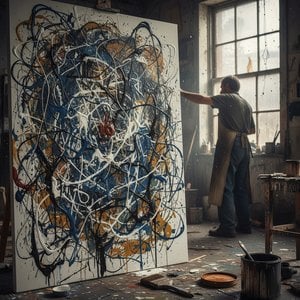
Jackson Pollock: Ein radikaler Aufbruch und das Erbe des Abstrakten Expressionismus
Entdecken Sie Jackson Pollocks revolutionäres Werk und das Erbe des Abstrakten Expressionismus. Expertenanalyse, Hintergrundinformationen & Investitionstipps für Kunstsammler.

Weiße Meisterwerke: Die Top 10 berühmtesten Gemälde und ihre zeitlose Eleganz
Entdecken Sie die Top 10 berühmter Gemälde, dominiert von Weiß! Von Malewitsch bis Rothko – erfahren Sie Geschichten hinter ikonischen Kunstwerke und lassen Sie sich für Ihre Wohnraumgestaltung inspirieren. Kunstreproduktionen in Museumsqualiät auf

Wassily Kandinsky: Die 25 bedeutendsten Kunstwerke des Abstraktions-Pioniers
Entdecken Sie die 25 Meisterwerke von Wassily Kandinsky. Von Expressionismus bis Abstraktion: Jetzt die Kollektion auf ArtsDot.com erleben!

Abstrakter Expressionismus: Die 10 Meisterwerke, die eine Kunstbewegung prägten |
Entdecken Sie die 10 Meisterwerke des Abstrakten Expressionismus! Von Jackson Pollock bis Mark Rothko – erfahren Sie die Geschichten hinter ikonischen Gemälde und finden Sie hochwertige Reproduktionen für Ihr Zuhause. Jetzt bei entdecken!


