


Das Bild passt sich Ihren Auswahlmöglichkeiten an: , .
Beschreibung des Sammlerstücks
Ein ikonisches Gemälde von Jackson Pollock, das die Technik des Dripping perfektioniert und eine tiefgründige Analyse abstrakter Expressionismus bietet.
 Weiterlesen
Künstlerbiografie
Ein Pionier des Abstrakten Expressionismus, bekannt für seine Drip-Technik. Entdecken Sie heute die rohe Energie seiner ikonischen Leinwände.
Bestellen Sie Ihr in vier einfachen Schritten
Lassen Sie sich Zeit. Sie können jede Antwort jederzeit ändern; der Preis in Ihrem Warenkorb passt sich jeder Auswahl automatisch an.
1 Schritt eins von vier
Welche Größe möchten Sie wählen?
Diese Formate bewahren die Proportionen des Originalgemäldes. Die Zeichnung zeigt Ihre Auswahl an einer Wand, oberhalb eines zwei Meter breiten Sofas.
Oder geben Sie Ihre eigenen Maße an
Wählen Sie aus unseren vordefinierten Formaten, die den ursprünglichen Proportionen des Kunstwerks entsprechen.

Geben Sie die Breite und die Höhe an, die Sie für Ihren Rahmen oder Ihre Wand benötigen. Da dieses Werk handgemalt ist, kann der Künstler bei einer anderen Form etwas mehr um das Bild herum malen oder etwas abschneiden – Sie entscheiden. Wir senden Ihnen ein digitales Mockup zur Freigabe, bevor mit dem Malen begonnen wird. Das auf dieser Seite gezeigte Bild stellt nicht das tatsächliche Ergebnis dar – dies tut nur das Mockup.
2 Schritt zwei von vier
Wie soll es vorbereitet werden: gerollt, auf Keilrahmen gespannt oder gerahmt?
Die unten aufgeführten Preise beziehen sich auf die in Schritt eins gewählte Größe.
Wählen Sie die Kanten der Leinwand aus
Wählen Sie Ihren Rahmen

Weißer Rand €1

verlaufende Kanten €1

Umrandung €1

P118B €10

P118H €10

P118W €10

P438Z €10

P508JH €12

P508YH €12

P805H €10

P805Z €10

P919BZ €10

P919G €10

P919XJ €10

P959ZH €10

P968JZ €12

W106C €8

W218G €10

W218JH €8

W218Y €10

W307PJ €10

W316G €10

W316PJ €8

W316Y €10

W398PJ €8

W4111J €10

W500HY €15

W500JH €15

W692G €12

W849H €8

W940BG €15

W953PJ €8

H24-GOLD €30

H24-SILVER €30

H36-GOLD €45

H36-SILVER €45
Gerahmt
Profil: . Gesamtgröße mit Rahmen: .
3 Schritt drei von vier
Möchten Sie am Gemälde noch etwas ändern?
Die meisten Menschen antworten mit Nein. Da jedes Gemälde von Hand gefertigt wird, kann unser Künstler es jedoch auch individuell für Sie anpassen.
Nach der Bestellung wird das Team von ArtsDot.com den Kunden per E-Mail kontaktieren, um Anweisungen einzuholen und eine Vorschau des Entwurfs bereitzustellen
4 Schritt vier von vier
Einige Veredelungsmöglichkeiten
Alle Angaben sind optional. Für bereits ausgewählte Antworten entstehen keine zusätzlichen Kosten.
Wer hat es gemalt?
Weltweiter Versand () in nur 3 bis 4 Wochen statt der üblichen 5 Wochen. (20 November). Keine Kompromisse bei der Qualität.
Ein Namensschild, wie im Museum?
Details der gravierten Bronzetafel
This elegant plaque features the artist's name and the title of the artwork, finely engraved for a timeless presentation.
It is made from bronze with a refined, elegant finish. The text is precisely laser-engraved for a sharp and permanent result. Measuring 9x2 cm, the plaque is compact yet easy to read. It's built to be durable and scratch-resistant, offering a professional, museum-quality look. Mounting is simple thanks to the included adhesive backing.
Details zur Acrylglas-Plakette (transparent)
The plaque includes essential engraved details such as the artist's name, the title of the artwork, the date it was created, the type of media used-like oil on canvas or watercolor-a brief description of the piece, and a QR code that links to the complete artwork information.
It is crafted from clear acrylic, offering a sleek, modern appearance. The text is UV-engraved in black to ensure strong visual contrast. With a size of 10x15 cm, it ensures optimal readability. It comes equipped with two metal hooks for secure wall mounting. The plaque is designed to be weather-resistant, making it suitable for various environments, and it includes interactive features that work seamlessly with smartphone scanning.
Details zur schwarzen Acryltafel
This elegant plaque includes engraved information such as the artist's name, the title of the artwork, the date it was created, the type of media used (like oil on canvas or watercolor), a short description of the artwork, and a QR code for quick access to more information.
The plaque itself is made from refined black acrylic with a premium finish. The text is laser-engraved in white for high contrast and readability. Its size is 10x15 cm, designed to be easy to read. It comes with two metal hooks for professional mounting. The design is sleek and fits any interior style. It is also weather-resistant and durable, with built-in digital integration for mobile compatibility.
Ein Schutzlack?
Bis wann benötigen Sie es?
✓ Prüfen und bestellen
Ihr Gemälde, wie von Ihnen bestellt

Orange Head
Art der Reproduktion
Format der Reproduktion
-

Erstklassige Meisterkünstler
Mehr Detailtiefe, Raffinesse und zusätzliche Produktionszeit
-

Rahmen für Reproduktionen
-
-
Bei Kunstwerken oder Reproduktionen, die an einer Seite größer als 105 cm (ca. 41 Zoll) sind, wird der Rahmen zerlegt als Bausatz geliefert. Diese Methode gewährleistet eine sichere Zustellung und verhindert Schäden während des Transports.
Professionelle Montage erforderlich – dies ist kein DIY-Produkt.
Der Bausatz muss von einem erfahrenen professionellen Rahmenmacher zusammengebaut und die Leinwand gespannt werden. Hierfür werden Holzleim (nicht im Lieferumfang enthalten), eine Leinwandspannzange sowie Klemmen benötigt, um die Keilleisten während des Trocknungsvorgangs rechtwinklig zu halten. Eine unsachgemäße Montage oder eine ungleichmäßige Spannung der Leinwand kann das Kunstwerk dauerhaft beschädigen und ist nicht durch unsere Garantie abgedeckt.
 Bei Kunstwerken oder Reproduktionen, die an einer Seite größer als 105 cm (ca. 41 Zoll) sind, wird der Rahmen zerlegt als Bausatz geliefert. Diese Methode gewährleistet eine sichere Zustellung und verhindert Schäden während des Transports.
Alle Vollholzkomponenten sind enthalten, präzise auf Maß zugeschnitten.
Der Zusammenbau erfolgt mit den mitgelieferten Schrauben sowie Holzkleber für die Eckverbindungen, der nicht im Lieferumfang enthalten ist und vom Rahmenbauer selbst beschafft werden muss.
Professionelles Werkzeug ist erforderlich und nicht im Lieferumfang enthalten: eine Keilrahmenzange (Spannwerkzeug) sowie Klammern, um die Leisten während der Trocknungszeit des Klebers rechtwinklig zu fixieren.
Wichtiger Hinweis:
Für die Eckverbindungen wird Holzleim benötigt, die Leisten müssen mit Zwingen fixiert werden, bis der Leim vollständig getrocknet ist, und das Spannen der Leinwand auf dem fertigen Rahmen erfordert eine Keilrahmen-Zange. Keines dieser Utensilien ist im Set enthalten. Bitte stellen Sie sicher, dass ein erfahrener Rahmenmacher zur Verfügung steht, bevor Sie diese Größe bestellen.

Beschriftung
-
-

Schutzlackierung
Glanzlack (verstärkt die Farben, schützt vor Licht und Feuchtigkeit)
-

Mein Kunstwerk personalisieren
Beispiele für Anpassungsmöglichkeiten: Gesicht durch Kundenfoto ersetzen; Haustier hinzufügen (z. B. Katze durch Hund ersetzen); Versteckte Nachricht im Hintergrund einfügen; Hintergrundlandschaft oder -elemente ändern.
-

Eilt sehr
Weltweiter Versand () in nur 3 bis 4 Wochen statt der üblichen 5 Wochen. (20 November). Keine Kompromisse bei der Qualität.
-
Expressversand
Weltweiter Versand () innerhalb von 5 Wochen. (27 November).
Inklusive Versand
Endpreis
€ 234
Die Glasoption ist nur für Größen unter 110 cm verfügbar.
In jeder Bestellung enthalten
- Kostenloser weltweiter Expressversand
- Hochwertige Leinenleinwand
- Umfassender Versicherungsschutz beim Versand
- Zollgebühren-Rückerstattungsgarantie
- Garantie für exakte Farbtreue
- 100 Tage Rückgaberecht (nur bei Mängeln)
- 100% Geld-zurück-Garantie
- Mengenrabatt verfügbar


Introduction to Abstract Expressionism
Abstract Expressionism is a genre of art that emerged in the mid-20th century, characterized by intense subjectivity and rough handling of materials. This movement produced some of the most influential artists of the time, including Jackson Pollock. Known for his unique style of drip painting, Pollock was a major figure in the Abstract Expressionist movement.'Orange Head': A Study in Abstraction
Orange Head is an iconic example of Pollock’s drip painting technique, which involves pouring or splattering paint onto a canvas laid on the floor. This method allowed Pollock to create dynamic compositions that captured the essence of movement and energy. In Orange Head, Pollock used vibrant colors, including various shades of orange, yellow, black, and white, to create an abstract yet captivating image.The Legacy of Jackson Pollock's 'Orange Head'
Orange Head is a testament to Pollock’s innovative approach to art-making and his significant contribution to the Abstract Expressionist movement. The painting showcases Pollock's mastery of color, composition, and texture, making it an essential piece in understanding the evolution of abstract art. To learn more about Jackson Pollock and other influential Abstract Expressionists, visit the extensive collection of fine art available at https://ArtsDot.com.- Abstract Expressionism: Learn more about the Abstract Expressionist movement and its key artists.
- Art Styles: Discover various art styles, movements, groups, and schools represented in our collection, including works by Clyfford Still and Yoo Youngkuk.
- Explore the Museum of Modern Art and its collection of modern and contemporary art.
The unique style of Jackson Pollock has made him one of the most famous artists of the 20th century. His innovative approach to art-making has inspired generations of artists and continues to influence contemporary art. To explore more works by Jackson Pollock and other influential Abstract Expressionists, visit https://ArtsDot.com.
In conclusion, Orange Head is a remarkable example of Jackson Pollock's unique style and contribution to the Abstract Expressionist movement. Its vibrant colors and dynamic composition make it an essential piece in understanding the evolution of abstract art. Photo Description: The image is a painting of a face with a mouth open, painted in reds and oranges. The face appears to be distorted and has a strange expression on it. There are two eyes visible, one near the top left corner and another towards the center-left of the painting. The mouth is located at the bottom center of the image. The painting is an abstract expressionist piece by Jackson Pollock, which can be identified by its bold colors and unusual composition. It appears to be a close-up view of the face, capturing the viewer's attention with its vibrant hues and intriguing facial features. Size: Unknown Date: Unknown
Fragen & Antworten
Wie intensiv sind die Farben von "Orange Head"?
Die Farbsättigung von "Orange Head" beträgt Mäßig sanfte Sättigung bei einer Intensität von Ausgewogen.
Welche Farbe dominiert in "Orange Head" von Jackson Pollock?
Ein Ocker bis Sepia Farbton durchzieht "Orange Head" von Jackson Pollock.
Wie spiegeln sich Stilrichtung und Epoche in "Orange Head" von Jackson Pollock wider?
In "Orange Head" von Jackson Pollock trifft die Abstract Expressionism-Strömung auf die Ära der Moderne.
Mehr über dieses Gemälde
 Vorschau anzeigen
 Zum Druck wechseln
 Versenden
 Teilen
 Details anzeigen
 Leitfaden

 Herunterladen
 Ähnliche Objekte
 Röntgenaufnahme
 Diashow
 Fragen & Antworten
 Statistiken
Ähnliche Kunstwerke


Jackson Pollock
1912 - 1956, Vereinigte Staaten
Künstlerbiografie
Frühes Leben, Familie und Ausbildung
Die Geschichte von Paul Jackson Pollock beginnt in der rauen Landschaft von Cody, Wyoming, wo er am 28. Januar 1912 geboren wurde. Er war der jüngste von fünf Brüdern, geboren von Stella May McClure und LeRoy Pollock. Sein Vater arbeitete als Landvermesser, ein Beruf, der ständige Bewegung durch den weiten amerikanischen Westen erforderte. Diese nomadische Existenz bedeutete, dass die frühen Jahre des jungen Jungen von häufigen Ortswechseln geprägt waren – eine Rastlosigkeit, die die sich ständig verändernden Horizonte der Arbeit seines Vaters widerzuspiegeln schien. Diese frühen Reisen durch den Westen ermöglichten ihm eine direkte, unmittelbare Begegnung mit der Natur und der spirituellen Resonanz der Kunst der amerikanischen Ureinwohner; Eindrücke, die sich schon lange bevor er jemals einen Pinsel in der Hand hielt, still in sein Unterbewusstsein einbrannten.
Mit zunehmendem Alter führte ihn die Suche nach einem Ort der Zugehörigkeit zur urbanen Energie der Küste. Er schrieb sich an der Manual Arts High School in Los Angeles ein, um seinen aufkeimenden Impulsen eine formale Struktur zu geben. Die wahre Formung seines künstlerischen Ausdrucks vollzog sich jedoch erst viel später, als er nach New York City zog. Dort, an der Art Students League, begann eine lange und transformative Studienzeit. Von 1929 bis 1942 arbeitete er unter der Anleitung von Thomas Hart Benton. Während Benton den Schwerpunkt auf rhythmische Kompositionen und das narrative Gewicht des amerikanischen Lebens legte, begann der junge Schüler bereits, sich seinen eigenen, abstrakteren, inneren Wahrheiten zuzuwenden.
Die Entwicklung einer einzigartigen Technik
Bis zum Jahr 1947 hatte sich eine tiefgreifende Veränderung in der Art und Weise vollzogen, wie er sich der Leinwand näherte. Er wandte sich von der traditionellen Staffelei ab und entschied sich stattdessen dafür, seine Leinwände direkt auf den Boden zu legen. Dieser Wandel ermöglichte es ihm, über seinem Werk zu stehen und so ein integraler Bestandteil des schöpferischen Aktes selbst zu werden. Er trug die Farbe nicht einfach nur auf; er ließ sie von oben herabtropfen, spritzte und schleuderte sie, wobei die Flüssigkeit in unvorhersehbaren Mustern fiel. Diese Methode verwandelte den Akt des Malens in eine physische Performance, bei der die Schwerkraft und die Geste die endgültige Form diktierten.
Seine Werkzeuge waren ebenso unkonventionell wie seine Methoden. Er griff zu Stöcken, Messern und sogar Spritzen, um das flüssige Medium zu manipulieren. Manchmal verwendete er Spachtel oder flüssige Farbe, um spezifische Texturen zu erzielen. Oft kratzte er in die Oberfläche oder nutzte fremdartige Objekte, um eine dicke Farbschicht aufzubauen, was dem Werk eine taktile, skulpturale Qualität verlieh. Bei diesem Prozess ging es weniger um kontrollierte Pinselführung als vielmehr um eine rhythmische, fast urwüchsige Entladung von Energie auf die Oberfläche.
Hauptwerke und künstlerische Ausdrucksformen
Als er sich von den Fesseln der Staffelei löste, begannen seine Leinwände, eine weitaus viszeralere Auseinandersetzung mit dem Medium widerzuspiegeln. Im Jahr 1943 schuf er Mural, ein monumentales Werk mit den Maßen 2,4 mal 6,1 m, das seine Fähigkeit demonstrierte, eine gewaltige Fläche zu beherrschen. In dieser Zeit führten seine Erkundungen des Unterbewusstseins und der Akt des Malens selbst zu Werken wie Eyes in the Heat, die um 1946 entstanden. Diese Stücke waren nicht bloß Bilder, sondern Zeugnisse einer physischen Präsenz, in denen die Bewegung seines gesamten Körpers die Platzierung jedes Farbspritzers und jedes Farbfleckens diktierte.
Die folgenden Jahre waren geprägt von der Perfektionierung jener rhythmischen All-over-Kompositionen, die seinen Ruf begründen sollten. Er suchte danach, ein Gefühl von grenzenlosem Raum zu erschaffen, in dem kein einzelner Punkt die Oberhand über das Ganze behielt. Dieser Ansatz zeigt sich deutlich in Number 1, 1949, einem Werk, das einen rohen Ausbruch von Energie einfängt, sowie in Lavender Mist, Number 1, 1950, das ein bedeutendes Werk seines Schaffens bleibt. In diesen Arbeiten erzeugt das Zusammenspiel von Kontrolle und Zufall ein delikates Gleichgewicht, als ob die Farbe eher entfesselt als aufgetragen worden wäre.
Seine späteren Experimente verschoben kontinuierlich die Grenzen dessen, wie Farbe auf einer horizontalen Fläche manipuliert werden kann. Er nutzte oft Stöcke, Messer oder sogar die Farbdosen selbst, um Pigmente zu schleudern, was zu komplexen Netzwerken aus Linien führte. Diese Methode wird in Blue Poles, Number 11, 1952 und in dem energetischen Werk Convergence deutlich sichtbar. Durch diese Arbeiten erreichte er einen Zustand, in dem das Gemälde ein Eigenleben zu besitzen schien, hervorgegangen aus einem tiefen Eintauchen in seine eigene Vorstellungskraft.
Mäzene, Atelier und Aufträge
Der Weg seiner Karriere wurde sowohl durch gesellschaftliche Notwendigkeiten als auch durch die Großzügigkeit einiger lebenswichtiger Unterstützer geformt. Zwischen 1938 und 1942 fand er eine stetige Beschäftigung als Maler für das WPA Federal Art Project, eine Zeit, die seiner sich entwickelnden Praxis einen notwendigen Rhythmus verlieh. Diese Stabilität wich einer persönlicheren und transformativen Allianz, als Peggy Guggenheim ihm im Juli 1943 einen Galerievertrag anbot. Ihre Unterstützung erwies sich als weit mehr als nur professioneller Natur; im Jahr 1945 leistete sie eine Anzahlung von 2.000 Dollar, um ihm den Erwerb eines Eigenheims zu ermöglichen – eine Geste, die sein Privatleben untrennbar mit seinem künstlerischen Überleben verwebte.
Sein kreatives Leben fand schließlich sein Zentrum in East Hampton, New York. Dort, im Pollock-Krasner House and Studio, lebte und arbeitete er an der Seite seiner Frau, Lee Krasner. Das Atelier war ein Ort intensiver körperlicher Bewegung, an dem die Grenzen zwischen dem Künstler und der Leinwand verschwammen. Er wandte sich oft von der traditionellen Staffelei ab und zog es vor, seine Leinwände auf den Boden zu legen, um sich der Farbe von allen Seiten entgegenzusetzen. Dieser Arbeitsplatz war nicht bloß ein Raum der Produktion, sondern ein Ort von tiefer, rastloser Energie, an dem seine radikalsten Experimente stattfanden.
Späte Jahre und Tod
Das Privatleben des Künstlers war untrennbar mit seinen kreativen Kämpfen verwoben. Im Jahr 1945 heiratete er die Künstlerin Lee Krasner, eine Verbindung, die in seinen transformativsten Jahren eine prägende Rolle in seinem Leben spielte. Doch unter der Oberfläche seines beruflichen Aufstiegs blieb ein beständiger Schatten zurück. Er kämpfte zeit seines Lebens mit einer Alkoholsucht – ein Kampf, der seine Existenz oft erschwerte und seine Fähigkeit beeinträchtigte, mit dem enormen Druck seines wachsenden Ruhms umzugehen.
Diese inneren und äußeren Turbulenzen fanden in East Hampton, New York, USA, ein tragisches Ende. Am 11. August 1956 wurde sein Leben im Alter von 44 Jahren durch einen plötzlichen, gewaltsamen Unfall jäh unterbrochen. Beim Autofahren kam er durch Alkoholeinfluss in einen Unfall mit einem einzelnen Fahrzeug. Der Crash erwies sich als tödlich und hinterließ ein Vermächtnis, das ebenso tumultuös war wie die Farbe, die er über seine Leinwände schleuderte.
Vermächtnis und Einfluss auf die moderne Kunst
Die Wellenbewegungen seiner radikalen Methoden reichten weit über die Atelierwände von East Hampton hinaus. Indem er die traditionelle Verbindung zwischen Pinsel und Staffelei aufbrach, wurde er zu einer zentralen Figur der Abstrakten Expressionismus-Bewegung – ein Wandel, der die Flugbahn der amerikanischen Kreativität grundlegend veränderte. Seine Präsenz trug dazu bei, die Position von New York City als globales Zentrum der modernen Kunst zu festigen, wodurch das Herz der Avantgarde von der europäischen Dominanz weggerückt wurde. Er gehörte zu den ersten amerikanischen Malern, die als ebenbürtig zu den großen europäischen Meistern des 20. Jahrhunderts anerkannt wurden, und bewies damit, dass eine neue, viszerale Sprache aus dem Boden der Vereinigten Staaten hervorgehen konnte.
Sein Einfluss wirkte wie ein Katalysator für viele nachfolgende Kunstbewegungen, die in seinen Fußstapfen traten. Die Art und Weise, wie er sich mit der Leinwand auseinandersetzte – indem er sie als Arena für physische Aktion betrachtete und nicht bloß als Oberfläche für eine Darstellung – öffnete Türen für viele, die danach strebten, das Unterbewusste durch die Geste auszudrücken. Diese Betonung des Schöpfungsprozesses selbst hinterließ eine bleibende Spur in der Geschichte der modernen Kunst und stellte sicher, dass das Spontane und das Ungeplante für immer einen festen Platz im Werkzeugkasten des Künstlers behalten würden.
- Number 1, 1949
- Blue Poles: Number 11, 1952
- Convergence
- Autumn Rhythm. Number 30, 1950
Wo man seine Werke heute erleben kann
Um die physischen Spuren seiner Bewegung Zeuge zu werden, muss man die großen Institutionen aufsuchen, die seine radikale Energie bewahrt haben. In New York City beherbergt das Museum of Modern Art mehrere seiner Leinwände und ermöglicht es den Betrachtern, vor jenen weitläufigen, unzentrierten Kompositionen zu stehen, die seine Ära definierten. Auch die National Gallery of Art in Washington D.C. bewahrt seine Werke und bietet einen Raum, um die komplexen Netzwerke aus Farbe zu beobachten, die er durch seine einzigartigen Methoden erschuf. Über den Atlantik hinweg hält die Tate Gallery in London seine Präsenz in ihren Sammlungen lebendig und stellt sicher, dass sein Einfluss weit über die amerikanischen Ufer hinausreicht.
Für jene, die eine intimere Verbindung zu seinem Schaffen suchen, bietet das Pollock-Krasner House and Studio in East Hampton ein tiefes Gefühl des Ortes. Dieser Ort, ein National Historic Landmark, war der Raum, in dem er und seine Frau Lee Krasner lebten und arbeiteten. Das Anwesen bleibt ein lebenswichtiges Bindeglied zu seinem Leben und bewahrt die Umgebung, die seinen Übergang von traditionellen Formen zu den spontanen, auf dem Boden ausgeführten Methoden ermöglichte, welche den Kurs der modernen Malerei veränderten. Ein Spaziergang durch diese Räumlichkeiten vermittelt ein Gefühl für das Ausmaß und die physische Realität seines kreativen Kampfes.
- Number 1, 1949
- Blue Poles: Number 11, 1952
- Mural (1943)
- Convergence


Ähnliche Artikel
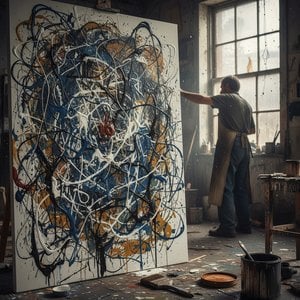
Jackson Pollock: Ein radikaler Aufbruch und das Erbe des Abstrakten Expressionismus
Entdecken Sie Jackson Pollocks revolutionäres Werk und das Erbe des Abstrakten Expressionismus. Expertenanalyse, Hintergrundinformationen & Investitionstipps für Kunstsammler.

Paul Jenkins: Abstraktion, Farbe und die Suche nach lyrischem Ausdruck
Entdecken Sie das Werk von Paul Jenkins – einem Meister der abstrakten Malerei und Farbfeldmalerei. Erfahren Sie mehr über seinen Stil, seine Technik und den Einfluss auf die moderne Kunst. Für Kenner und Sammler.

Paul Sérusier: Pionier des Synthetismus und die symbolische Revolution der Nabis
Entdecken Sie Paul Sérusier, den Pionier des Synthetismus und Schlüsselfigur der Nabis-Bewegung! Erfahren Sie mehr über seinen Cloisonnism-Stil, Einflüsse & sein Vermächtnis in der Kunstgeschichte. Jetzt lesen!