
- Startseite

- Auf Leinwand drucken
- Jackson Pollock
- Grayed Rainbow - Der Graue Regenbogen

 Gemälde kaufen Bild kaufen
 Versenden
 Teilen
 Details anzeigen
 Zu Favoriten hinzufügen

 Herunterladen
 Ähnliche Objekte
 Röntgenaufnahme
 Diashow anzeigen
Grayed Rainbow - Der Graue Regenbogen


 Weiterlesen
Giclée / Kunstdruck
Giclée- oder Leinwanddruck in Museumsqualität mit schneller Produktion und flexiblen Veredelungsoptionen.




P118B $10

P118H $10

P118W $10

P438Z $10

P508JH $12

P508YH $12

P805H $10

P805Z $10

P919BZ $10

P919G $10

P919XJ $10

P959ZH $10

P968JZ $12

W106C $8

W218G $10

W218JH $8

W218Y $10

W307PJ $10

W316G $10

W316PJ $8

W316Y $10

W398PJ $8

W4111J $10

W500HY $15

W500JH $15

W692G $12

W849H $8

W940BG $15

W953PJ $8




Wählen Sie aus unseren vordefinierten Größen, die den ursprünglichen Proportionen des Kunstwerks entsprechen.

Sie können Ihre eigenen Maße eingeben, um ein bestimmtes Format oder einen speziellen Platz einzupassen. Wenn das von Ihnen gewählte Format nicht den Proportionen des Originalbildes entspricht, werden wir das Kunstwerk entweder beschneiden oder das Bild mit einem gespiegelten oder einfarbigen Rand erweitern. Ein digitaler Entwurf wird Ihnen zur Genehmigung zugesandt, bevor die Produktion beginnt.
Bitte beachten Sie, dass die Vorschau auf dem Bildschirm nicht den tatsächlichen Zuschnitt oder die Erweiterung widerspiegelt. Nur der Entwurf zeigt die endgültige Komposition präzise an.
Obwohl Sondermaße verfügbar sind, empfehlen wir die Auswahl eines Maßes aus der vordefinierten Liste, um die ursprünglichen Proportionen zu bewahren.
Weltweiter Versand () innerhalb von 2 Wochen statt der üblichen 4/5 Wochen. (22 Juli)

Kostenloser weltweiter Expressversand

Hochwertige Leinenleinwand

Umfassender Versicherungsschutz beim Versand

Zollsteuer-Rückerstattungsgarantie

Garantie für echte Farbtreue

60-Tage-Rückgaberecht (nur bei Mängeln)

100% Geld-zurück-Garantie

Mengenrabatt verfügbar
 Die Glasoption ist nur in Größen unter 110 cm verfügbar.

Grayed Rainbow - Der Graue Regenbogen
Giclée / Kunstdruck
Größe der Reproduktion
-


Endpreis aller Optionen
-
Beschreibung des Sammlerstücks
Grayed Rainbow: A Symphony of Color and Gesture
Jackson Pollock’s *Grayed Rainbow*, painted in 1953, stands as an emblem of Abstract Expressionism—a movement that irrevocably altered the landscape of twentieth-century art. More than just pigment on canvas; it embodies a radical reimagining of artistic process and perception. Born Paul Jackson Pollock in Cody, Wyoming, in 1912, he embarked on a journey to redefine painting itself, rejecting traditional representation for an exploration of pure emotion and spontaneous action. His formative years instilled within him a restless spirit—a fascination with Native American art and the influence of Surrealism—which would propel him toward groundbreaking innovations.- Early Influences: Pollock’s initial artistic explorations mirrored those of regionalist painters like Thomas Hart Benton, who championed earthy landscapes and narrative storytelling. However, he swiftly moved beyond these conventions, captivated by the dynamism of Surrealist imagery and seeking to capture subconscious impulses.
- The Birth of Drip Painting: The pivotal moment arrived in 1936 when Pollock encountered David Alfaro Siqueiros’s mural *The Epic of American Civilization*, sparking an epiphany regarding paint application. He began experimenting with pouring and dripping pigment onto canvases laid horizontally on the floor, liberating himself from easel constraints and embracing a wholly new method—a technique that would become synonymous with his name: drip painting or action painting.
Technique and Materiality: A Dance of Color and Chance
Pollock’s *Grayed Rainbow* exemplifies this revolutionary approach. He meticulously layered paint onto the canvas, utilizing a variety of tools—sticks, trowels, and palette knives—to achieve an astonishing range of textures and effects. The dominant color scheme is dominated by shades of gray, punctuated by subtle hints of orange, yellow, green, blue, violet, and black – colors deliberately concealed beneath thin layers of paint. This layering process wasn’t merely decorative; it was integral to Pollock's artistic vision—a deliberate embrace of chance and spontaneity. The artist actively engaged with the material itself, responding to its viscosity and flow in real time, creating a visual record of his creative impulses.Symbolism and Emotional Resonance
Beyond its technical brilliance, *Grayed Rainbow* resonates deeply with themes of transformation and revelation. The title itself—"Grayed Rainbow"—suggests a muted yet profound beauty—a recognition that even amidst darkness and uncertainty, color retains its power to inspire awe and wonder. Pollock’s deliberate use of hidden colors speaks to the subconscious mind's capacity for unexpected brilliance, mirroring Jungian concepts of archetypes and inner landscapes. The painting invites viewers to contemplate not just what is seen but what is felt—to engage in a dialogue with the artwork that transcends mere visual perception.Legacy and Recognition
*Grayed Rainbow* secured Pollock’s place as one of the foremost figures of Abstract Expressionism, cementing his reputation as an innovator who challenged artistic conventions and championed expressive freedom. It resides prominently within The Butler Institute of American Art in Youngstown, Ohio—a testament to its enduring significance in art history. Furthermore, it serves as a cornerstone for understanding the broader movement’s preoccupation with gesture, emotion, and the exploration of inner psychological states. Its influence continues to inspire artists today who strive to capture the essence of experience through unconventional mediums and techniques.Discover More About Jackson Pollock
To delve deeper into the life and work of Jackson Pollock—a visionary artist whose legacy persists—visit ArtsDot.com for comprehensive biographical information and detailed analyses of his oeuvre. Explore his artistic journey, from early influences to groundbreaking innovations, and appreciate the profound impact he had on the trajectory of modern art.Ähnliche Kunstwerke


Biografie des Künstlers
Paul Jackson Pollock (1912–1956): Pioneer of Action Painting
Paul Jackson Pollock stands as a monumental figure in the annals of 20th-century art, irrevocably altering perceptions of artistic creation and establishing New York City as a dominant force within the global art landscape. Born January 28, 1912, in Cody, Wyoming—the youngest of five children—Pollock’s formative years were characterized by constant relocation as his father pursued work as a land surveyor across the expansive American West. This itinerant upbringing instilled in him an indelible connection to the natural world and exposed him to diverse cultural traditions – impressions that would subtly shape his artistic sensibilities throughout his life.
His formal artistic education commenced at Dawson Public School in Vancouver, British Columbia, followed by studies at the Art Students League of New York under the guidance of Thomas Hart Benton. Benton’s emphasis on rhythmic composition and narrative themes rooted in American experience profoundly influenced Pollock's early stylistic explorations. Recognizing Benton’s contribution to regionalist art, Pollock embraced his mentor’s vision for artistic expression.
However, it was during the mid-1930s that Pollock embarked upon a transformative journey toward artistic innovation. Rejecting conventional brushwork and seeking alternative methods of pigment application, he experimented with various techniques—including encaustic painting—before arriving at what would become his signature approach: drip painting.
Around 1947, Pollock revolutionized the art world by abandoning the easel altogether. He laid canvases directly on the floor and initiated a process that defied traditional artistic conventions. Instead of applying paint with brushes, he dripped, splashed, and flung pigment onto the surface from above—a technique dubbed “all-over painting” – capturing the spontaneity and physicality of his creative impulses.
This groundbreaking method wasn’t merely about applying color; it was about embodying the act of artistic creation itself. Pollock's canvases became arenas for physical expression, mirroring his movements and emotions as he worked. The resulting paintings are characterized by their expansive compositions—a deliberate rejection of centralized focal points—inviting viewers to engage with the entire surface as a unified field of energy.
Influenced by Surrealist artists like André Masson and Max Ernst, Pollock explored psychological symbolism and subconscious imagery in his work. He sought to tap into universal archetypes and primal energies, mirroring the broader cultural shift away from rationalism toward embracing intuition and emotion.
Pollock’s most iconic creations—such as Number 1, 1950 (Lavender Mist), One: Number 31, 1950, Blue Poles: Number 11, 1952, and Convergence—remain unparalleled testaments to his revolutionary technique. These canvases exemplify the essence of Action Painting, capturing the immediacy of Pollock’s gestures and emotions on canvas.
Despite initial skepticism from some critics who questioned the aesthetic merit of his method, Pollock's reputation soared after his untimely death August 11, 1956, in an alcohol-related automobile accident. His legacy endured through a monumental retrospective exhibition at MoMA in 1956 and subsequently honored with large-scale retrospectives at Tate Britain in London in 1998 and 1999—confirming his status as one of the most influential artists of the century.

Jackson Pollock
1912 - 1956 , Vereinigte Staaten von Amerika
Kurzinfos
- Artistic Movement Or Style: Abstrakt Expressionismus
- Artists Who Influenced This Artist:
- José Clemente Orozco
- Thomas Hart Benton
- Date Of Birth: Januar 28, 1912
- Date Of Death: August 11, 1956
- Full Name: Paul Jackson Pollock
- Nationality: Amerikanisch
- Notable Artworks:
- Number 1, 1950 (Lavender Mist)
- One: Number 31, 1950
- Blue Poles: Number 11, 1952
- Convergence
- Place Of Birth: Cody, USA
Ähnliche Artikel
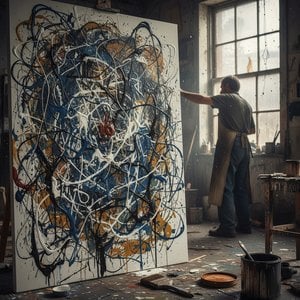
Jackson Pollock: Ein radikaler Aufbruch und das Erbe des Abstrakten Expressionismus
Entdecken Sie Jackson Pollocks revolutionäres Werk und das Erbe des Abstrakten Expressionismus. Expertenanalyse, Hintergrundinformationen & Investitionstipps für Kunstsammler.

Gene Davis: Chromatische Erkundungen der Color Field Malerei und der Washingtoner Farbschule
Entdecken Sie die faszinierende Welt der Washingtoner Farbschule! Analysen zu Gene Davis, Morris Louis und Kenneth Noland – Expertenwissen über Color Field Malerei & abstrakte Kunst auf ArtsDot.
Beatrice Parsons: A Study in Abstract Expressionism & the Poetics of Color Field Painting
Explore the captivating world of Beatrice Parsons, a pioneering British abstract expressionist. Discover her journey from garden watercolors to evocative color field paintings and learn about her place within art history.

Carl Newman: Exploring Abstraction's Spiritual Resonance Through Color Field Painting
Explore the profound spiritual resonance of Color Field Painting with insights into Rothko, Newman & Still. Discover the techniques & legacy of this influential abstract art movement.

Paul Jenkins: Abstraktion, Farbe und die Suche nach lyrischem Ausdruck
Entdecken Sie das Werk von Paul Jenkins – einem Meister der abstrakten Malerei und Farbfeldmalerei. Erfahren Sie mehr über seinen Stil, seine Technik und den Einfluss auf die moderne Kunst. Für Kenner und Sammler.



