


 In echtem Maßstab anzeigen
 Versenden als Grußkarte
 Teilen
 Details anzeigen
 Leitfaden öffnen

 Herunterladen
 Ähnliche Objekte
 Röntgenaufnahme
 Diashow
 Besucherstatistiken
Broken Spaces 5
 1974
1974 44.0 x 51.0 cm
 Mehr anzeigen
Erwerben Sie ein hochauflösendes, optimiertes digitales Bild, das der Online-Vorschau weit überlegen ist.
Jede Datei wird von unseren hauseigenen Spezialisten mit modernsten Werkzeugen und fachmännischer manueller Retusche sorgfältig vorbereitet. Wir stellen sicher, dass jedes Bild eine außergewöhnliche Klarheit, präzise Farbgenauigkeit und feinste Details aufweist.
Die endgültige Datei wird innerhalb von 72 Stunden per E-Mail zugestellt und ist für den sofortigen Einsatz in professionellen, redaktionellen und Druckumgebungen optimiert. Es handelt sich um dieselbe Qualität, der führende Designstudios, Verlage und Galerien vertrauen.
Digitales Bild
Laden Sie eine hochauflösende Datei für die persönliche Präsentation, den Druck und kreative Projekte herunter. ( Zum Druck wechseln Handgemalte Reproduktion kaufen)
In jeder Bestellung digitaler Bilder enthalten
Professionelle digitale Bereitstellung, garantiert
Wenn Sie sich für ArtsDot.com entscheiden, erhalten Sie nicht nur ein Bild – Sie erhalten ein professionell aufbereitetes digitales Kunstwerk, das mit höchster Präzision erstellt und durch eine Zufriedenheitsgarantie abgesichert wird. Hier ist alles, was automatisch mit Ihrer Bestellung geliefert wird:

Schnelle E-Mail-Zustellung
Ihre hochauflösende digitale Bilddatei wird Ihnen innerhalb von 72 Stunden nach der Bestellung per E-Mail zugestellt – bereit zur sofortigen Verwendung.

KI-optimierte digitale Datei
Ihre Kunstwerke werden professionell mithilfe fortschrittlicher KI-Tools und manueller Bearbeitung optimiert, um maximale Detailtreue, Klarheit und Farbgenauigkeit zu gewährleisten.

Kostenloser lebenslanger Neudruckservice
Datei versehentlich gelöscht oder verloren? Keine Sorge – wir senden sie Ihnen jederzeit kostenlos erneut zu.

Keine Einfuhrgebühren – jemals
Genießen Sie Ihr Kunstwerk sofort ohne Zollgebühren, Einfuhrabgaben oder Versandkosten – digitale Downloads sind immer steuerfrei.

Garantierte Farbtreue
Wir garantieren, dass Ihr digitales Bild mithilfe professioneller Werkzeuge und Farbmanagement die Originalfarben so präzise wie möglich wiedergibt.

100-Tage-Zufriedenheitsgarantie
Sollten Sie mit Ihrem digitalen Bild nicht zufrieden sein, werden wir es überarbeiten oder 100% innerhalb von 100 Tagen erstatten – ohne Wenn und Aber.

100% Geld-zurück-Garantie
Nicht zufrieden? Erhalten Sie innerhalb von 100 Tagen nach Erhalt Ihrer digitalen Datei eine vollständige Rückerstattung – ohne Wenn und Aber.

Rabatte bei Großbestellungen
3 Bilder kaufen, 10% sparen – 5 Bilder kaufen, 15% sparen – Ab 10 Bildern 20% sparen. Ideal für kreative Projekte, Galerien und Agenturen.
Ähnliche Kunstwerke


Künstlerbiografie
Jack Whitten: Eine revolutionäre Stimme der abstrakten Kunst
Jack Whitten (1939-2018) gilt als eine monumentale Gestalt der amerikanischen abstrakten Kunst – ein Künstler, dessen unermüdliches Experimentieren und tiefgreifende Auseinandersetzung mit der Geschichte, insbesondere mit dem Erbe der Sklaverei und der Bürgerrechtsbewegung, die konventionellen Vorstellungen von Malerei und Skulptur transformierte. Weit über die bloße Schaffung visuell fesselnder Werke hinaus erfand Whitten Techniken, welche die Möglichkeiten des künstlerischen Ausdrucks grundlegend veränderten und ihm Anerkennung als wahrer Innovator sowie als eine vitale Stimme der zweiten Hälfte des 20. Jahrhunderts einbrachten. Seine sechs Jahrzehnte währende Karriere war geprägt von ständiger Evolution, einer Weigerung, sich kategorisieren zu lassen, und einem unerschütterlichen Engagement für die Erforschung der komplexen Beziehung zwischen Kunst, Kultur und sozialer Gerechtigkeit.
Geboren in Bessemer, Alabama – einer Stadt, die tief in den Realitäten der Jim-Crow-Segregation verwurzelt war –, prägte die frühe Kindheit von Whitten seine künstlerische Vision zutiefst. Der Tod seines Vaters, als er erst acht Jahre alt war, verlieh ihm ein Gefühl von Resilienz und Unabhängigkeit, während der private Kindergarten seiner Mutter ihn erste Berührungen mit dem kreativen Prozess ermöglichte. Entscheidend war das Erbe seines Onkels, eines Werbeschildermalers, das ihm Werkzeuge an die Hand gab, die später zum Kern seiner bahnbrechenden Techniken werden sollten. Diese frühe Verbindung zur visuellen Kommunikation – der Akt des Erschaffens von Schildern, Slogans und Bildern für die Öffentlichkeit – legte den Grundstein für seine späteren Untersuchungen über Repräsentation und deren Grenzen.
Whittens künstlerischer Weg begann am Tuskegee Institute, wo er zunächst ein Medizinstudium anstrebte, beeinflusst von dem Ehrgeiz seines Bruders, Militärarzt zu werden. Doch das unmittelbare Miterleben der Ungerechtigkeiten der Segregation entfachte in ihm eine tiefe Entschlossenheit für sozialen Wandel. Er trat dem ROTC bei und finanzierte sein Studium durch das Bemalen von Ladenbeschriftungen, während er gleichzeitig an Demonstrationen der Bürgerrechtsbewegung teilnahm, darunter ein entscheidender Marsch in Baton Rouge, bei dem er die Organisation von Protestschildern unterstützte. Diese Erfahrung festigte seinen Glauben an den gewaltfreien Widerstand und beeinflusste maßgeblich die Themen, die sein gesamtes Werk durchdringen sollten.
Mit seinem Umzug nach New York City im Jahr 1960 schrieb sich Whitten an der Cooper Union ein und tauchte in die pulsierende Kunstszene der aufstrebenden Metropole ein. Dort begegnete ihm eine vielfältige Bandbreite an Einflüssen – von den Abstrakten Expressionisten wie Willem de Kooning und Jackson Pollock bis hin zu schwarzen Abstraktionisten wie Romare Bearden und Jacob Lawrence. Diese Begegnungen entfachten eine Periode intensiver Experimentierfreudigkeit, die ihn zur Entwicklung seiner Signaturtechniken führte: das Schichten von Acrylfarbe mit Nylon-Gewebe, um weiche, strukturierte Oberflächen zu erzeugen; die Nutzung eines „Developers“ – eines T-förmigen Werkzeugs –, um die Farbe in einzelnen, entschlossenen Strichen über die Leinwand zu ziehen; und später der Einsatz elektrostatischer Druckverfahren, um Werke zu schaffen, welche die Grenzen zwischen Malerei und Fotografie verwischten. Seine frühen Arbeiten, insbesondere die „Heads“-Serie (1964), zeigten seine Faszination für das Zusammenspiel von Form und Wahrnehmung, indem er transluzentes weißes Pigment gegen Schwarz einsetzte, um ambivalente, fast geisterhafte Figuren zu erschaffen.
Die „Black Monolith“-Serie und ein Vermächtnis des Protests
Vielleicht ist Whittens beständigster Beitrag zur Kunstgeschichte die „Black Monolith“-Serie (1970-1976), ein Werkbestand, der sowohl als persönliches Denkmal als auch als kraftvolles Statement über das Erbe der Sklaverei in Amerika fungiert. Inspiriert vom Tod seines Bruders, schuf Whitten eine Serie von Gemälden – oft von monumentalem Ausmaß –, die jenen gewidmet waren, die ihm am Herzen lagen: Freunden, Familienmitgliedern und bedeutenden Persönlichkeiten, die sein Leben und seine Weltanschauung geprägt hatten. Diese Arbeiten zeichnen sich durch ihre dichte Farbschichtung aus, wobei sie oft Fragmente von Zeitungsausschnitten, Fotografien und anderen Fundstücken integrierten, um texturierte Oberflächen zu schaffen, welche das Gewicht von Geschichte und Erinnerung heraufbeschwören.
Die „Black Monolith“-Serie ist nicht bloß eine Sammlung von Porträts; sie ist eine Erkundung von Trauma, Verlust und Widerstandskraft. Whitten setzte bewusst Techniken ein – wie das Auftragen von Farbe mit einem Rakel –, um ein Gefühl von Bewegung und Erschütterung zu vermitteln und die emotionale Intensität seiner Sujets einzufangen. Die Verwendung von Schwarz als dominante Farbe verstärkte diesen Effekt zusätzlich und symbolisierte sowohl Trauer als auch die unvergängliche Präsenz der Vergangenheit. Wie er selbst einmal sagte: „Meine Gemälde sind als Waffen konzipiert“, mit dem Ziel, „die westliche Ästhetik zu durchdringen und zu zerstören“ und letztlich als Werkzeuge für sozialen und politischen Wandel zu dienen.
Technik und Innovation: Ein fortwährendes Experiment
Was Jack Whitten von vielen seiner Zeitgenossen unterschied, war nicht ein fester Stil, sondern eine unerschütterliche Hingabe zum Experiment. Im Laufe seiner Karriere verschob er ständig die Grenzen der Maltechnik und entwickelte neue Methoden und Materialien, die sich konventionellen künstlerischen Praktiken entzogen. Seine frühen Arbeiten mit Nylon-Gewebe erzeugten einen einzigartigen texturellen Effekt, während die Nutzung des „Developer“-Werkzeugs – eines einfachen T-förmigen Instruments – es ihm ermöglichte, Farbe auf eine Weise zu manipulieren, die zuvor unvorstellbar war.
Whittens Atelier wurde zu einem Laboratorium, in dem er die Eigenschaften verschiedenster Materialien und Techniken akribisch prüfte. Berühmt wurde er für Experimente, bei denen er Acrylfarbe einfroren, erhitzten, mit einem Hammer zerschlugen und mittels elektrostatischer Druckverfahren direkt auf Papier aufbrachten. Dieses unermüdliche Streben nach Innovation führte zu einem bemerkenswert vielfältigen Werk – das von zarten, federleichten Texturen bis hin zu dichten, geschichteten Kompositionen reicht, die mit Textfragmenten und Bildmotiven gefüllt sind. Seine Bereitschaft, das Zufällige und Spontane anzunehmen, trug weiter zum einzigartigen Charakter seiner Kunst bei.
Anerkennung und historische Bedeutung
Trotz der erheblichen Herausforderungen, denen er als schwarzer Künstler in einer überwiegend weißen Kunstwelt gegenüberstand, erlangte das Werk von Jack Whitten in den 1970er und 80er Jahren schrittweise Anerkennung. Er erhielt zahlreiche Auszeichnungen, darunter eine Einzelausstellung im Whitney Museum of American Art im Jahr 1974 und die National Medal of Arts im Jahr 2016 – ein Zeugnis für seinen tiefgreifenden Einfluss auf die zeitgenössische Kunst. Seine Werke befinden sich heute in bedeutenden Museen weltweit, darunter das Museum of Modern Art (MoMA) und das Metropolitan Museum of Art.
Mehr als nur ein Künstler war Jack Whitten ein Kulturkommentator, der seine Kunst nutzte, um Fragen von Rasse, Identität und sozialer Gerechtigkeit zu thematisieren. Seine „Black Monolith“-Serie bleibt ein kraftvolles Symbol des Gedenkens und der Resilienz, während seine innovativen Techniken Künstler bis heute inspirieren. Das Vermächtnis von Whitten liegt nicht nur in der Schönheit seiner Gemälde, sondern auch in seinem unerschütterlichen Einsatz, Konventionen herauszufordern und die Kunst als ein Mittel zur Auseinandersetzung mit den Komplexitäten der amerikanischen Geschichte zu nutzen.
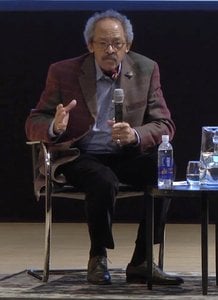
Jack Whitten
1939 - , USA
Kurzprofil
- Artistic Movement Or Style: Abstrakte Malerei/Skulptur
- Artists Or Movements Influenced By This Artist:
- Jacob Lawrence
- Norman Lewis
- Artists Who Influenced This Artist:
- Willem de Kooning
- Robert Blackburn
- Romare Bearden
- Date Of Birth: 1939
- Date Of Death: 20. Januar 2018
- Full Name: Jack Whitten
- Nationality: Amerikanisch
- Notable Artworks:
- Black Monolith Serie
- Heads Serie
- Birmingham 1964
- Place Of Birth: Bessemer, Alabama