


 In echtem Maßstab anzeigen
 Versenden als Grußkarte
 Teilen
 Details anzeigen
 Leitfaden öffnen

 Herunterladen
 Ähnliche Objekte
 Röntgenaufnahme
 Diashow
 Besucherstatistiken
Skaters
 Oil On Canvas
- WallArt
- Dutch Golden Age
 24.0 x 38.0 cm
 Pushkin-Museum
 Mehr anzeigen
Handgefertigte Ölreproduktion
Handgemaltes Ölgemälde auf Leinwand in Ihrer Wunschgröße und mit Rahmen, auf Bestellung von unseren Künstlern angefertigt. ( Zum Druck wechseln Zum digitalen Bild wechseln)




P118B €10

P118H €10

P118W €10

P438Z €10

P508JH €12

P508YH €12

P805H €10

P805Z €10

P919BZ €10

P919G €10

P919XJ €10

P959ZH €10

P968JZ €12

W106C €8

W218G €10

W218JH €8

W218Y €10

W307PJ €10

W316G €10

W316PJ €8

W316Y €10

W398PJ €8

W4111J €10

W500HY €15

W500JH €15

W692G €12

W849H €8

W940BG €15

W953PJ €8




Wählen Sie aus unseren vordefinierten Formaten, die den ursprünglichen Proportionen des Kunstwerks entsprechen.

Geben Sie die Breite und die Höhe an, die Sie für Ihren Rahmen oder Ihre Wand benötigen. Da dieses Werk handgemalt ist, kann der Künstler bei einer anderen Form etwas mehr um das Bild herum malen oder etwas abschneiden – Sie entscheiden. Wir senden Ihnen ein digitales Mockup zur Freigabe, bevor mit dem Malen begonnen wird. Das auf dieser Seite gezeigte Bild stellt nicht das tatsächliche Ergebnis dar – dies tut nur das Mockup.
Nach der Bestellung wird das ArtsDot.com-Team dem Kunden Anweisungen per E-Mail zusenden und eine Mockup-Vorschau bereitstellen.
Weltweiter Versand () in nur 3 bis 4 Wochen statt der üblichen 5 Wochen. (24 Oktober). Keine Kompromisse bei der Qualität.

Kostenloser weltweiter Expressversand

Hochwertige Leinenleinwand

Vollständiger Versicherungsschutz beim Versand

Zollgebühren-Rückerstattungsgarantie

Garantie für exakte Farbtreue

100-tägiges Rückgaberecht (nur bei Mängeln)

100% Geld-zurück-Garantie

Angebot für Mengenrabatt
 Die Glasoption ist nur für Größen unter 110 cm verfügbar.

Skaters
Reproduktionsmedium
Format der Reproduktion
-


Gesamtpreis
€ 231
A Frozen Moment in Time: Hendrick Avercamp’s “Skaters”
Hendrick Avercamp's "Skaters," painted around 1608-9, isn’t merely a winter landscape; it’s a vibrant snapshot of Dutch life frozen in time. More than just depicting a group enjoying an ice day, the painting offers a profound glimpse into the social fabric and cultural attitudes of the early 17th century, a period defined by both artistic flourishing and the harsh realities of the Little Ice Age. Avercamp, a mute figure from Kampen, possessed an extraordinary ability to translate the nuances of his environment onto canvas – a skill honed perhaps through keen observation and a unique perspective on the world.
The scene unfolds upon a seemingly endless expanse of ice, a frozen river or lake reflecting the overcast sky above. The composition is remarkably dynamic, drawing the eye across a bustling tableau populated by an astonishing number of figures. These aren’t idealized portraits; they are everyday people – farmers, merchants, children, and women – engaged in a multitude of activities: skating with varying degrees of skill, walking alongside the ice, tending to animals, and even engaging in what appears to be a lively courtship scene tucked away amongst the activity. Avercamp masterfully captures the energy and spontaneity of this communal event, imbuing it with a palpable sense of joy and camaraderie.
The Art of Observation: Technique and Style
Avercamp’s style is deeply rooted in the traditions of Flemish painting, particularly evident in his meticulous attention to detail and use of aerial perspective. The artist employs a technique reminiscent of Pieter Bruegel the Elder, known for his detailed depictions of peasant life. However, Avercamp elevates this approach with an unparalleled sense of realism and immediacy. Notice the subtle variations in clothing, the individual expressions on faces, and the way light plays across the ice – all rendered with remarkable precision.
The painting’s color palette is dominated by earthy tones—ochres, browns, and grays—reflecting the muted hues of a winter landscape. Yet, these somber colors are punctuated by flashes of brighter shades: the crimson of a castle in the distance, the vibrant blue of clothing, and the rosy cheeks of children. This skillful use of color creates a captivating visual rhythm, guiding the viewer’s eye through the crowded scene. Avercamp's brushstrokes are visible, adding texture and depth to the painting – a testament to his direct approach and commitment to capturing the essence of the moment.
A Window into 17th-Century Dutch Life
“Skaters” offers invaluable insights into the social customs and daily routines of 17th-century Holland. The presence of a castle, likely an imaginary one, suggests a desire to elevate the scene beyond mere practicality, hinting at aspirations for grandeur and prosperity. The inclusion of animals – dogs, horses, and even a dead carcass – speaks to the importance of agriculture and livestock in the region’s economy. The painting also subtly reveals aspects of social interaction—a glimpse into courtship rituals, family gatherings, and community celebrations.
Furthermore, the painting provides a poignant reminder of the challenges posed by the Little Ice Age. The frigid temperatures and extended periods of frost undoubtedly shaped the lives of ordinary people, influencing their activities and shaping their worldview. Avercamp’s depiction of these conditions serves as a powerful visual testament to the resilience and adaptability of the Dutch population.
Symbolism and Emotional Resonance
Beyond its documentary value, “Skaters” is rich in symbolism. The act of skating itself represents freedom, recreation, and a connection with nature—a vital escape from the demands of daily life. The bustling activity suggests a sense of community and shared experience. The inclusion of the dead animal, often interpreted as a symbol of mortality, adds a layer of complexity to the scene, reminding us of the fragility of life amidst the joys of winter.
Ultimately, “Skaters” evokes a powerful emotional response—a sense of nostalgia for a bygone era, a fascination with human behavior, and an appreciation for the beauty of the natural world. It’s a painting that invites viewers to step back in time and immerse themselves in the vibrant heart of 17th-century Dutch society. Reproductions capture this essence beautifully, offering a timeless reminder of a frozen moment in history.
Fragen & Antworten
Welche Farbintensität weist "Skaters" von Hendrick Avercamp auf?
Die Farbsättigung von „Skaters“ ist Vivid. Die Intensität beschreibt, wie kräftig die Farben wirken.
Sind die Farben von "Skaters" von Hendrick Avercamp leuchtend oder gedämpft?
Die Farben von "Skaters" von Hendrick Avercamp weisen eine Balanced Soft Sättigung mit einer Vivid Intensität auf.
Welches Gefühl wird mit "Skaters" assoziiert?
Die für "Skaters" von Hendrick Avercamp festgelegte emotionale Stimmung ist Nostalgic. Sie fasst das Gefühl zusammen, das das Werk ausdrückt.
Ähnliche Kunstwerke


Biografie des Künstlers
Hendrick Avercamp (1585–1634): A Pioneer of Dutch Winter Landscape
Hendrick Avercamp, born in Amsterdam in a house next to the Nieuwe Kerk („Neue Kirche“) on January 27, 1585, stands as one of the earliest landscape painters of the 17th-century Dutch school. His life story is interwoven with artistic innovation and personal resilience—a tale that reveals not only his mastery of technique but also a profound engagement with the spirit of his time. From an early age, Avercamp experienced the world differently than many others; he was mute and likely deaf, earning him the affectionate yet defining moniker “de Stomme van Kampen” – the Mute of Kampen. This perceived limitation didn’t stifle his creative impulse but perhaps sharpened his observational acuity, allowing him to translate the subtle nuances of Dutch winter onto canvas with unparalleled precision and vibrancy. He began his artistic journey under the tutelage of Pieter Isaacsz, a celebrated portrait painter in Amsterdam, and possibly benefited from guidance from David Vinckboons, whose stylistic influence can be discerned in Avercamp’s formative works.Early Influences and Artistic Training
Avercamp’s formative years were marked by exposure to Flemish artistic traditions—particularly those championed by Pieter Bruegel the Elder. Around 1565, Bruegel had already established a distinctive style characterized by detailed depictions of rural life and dramatic atmospheric effects. Avercamp absorbed these influences deeply, mirroring Bruegel’s penchant for portraying scenes brimming with human activity against a backdrop of wintry landscapes. This stylistic kinship is evident in Avercamp’s early paintings—particularly *Winter Landscape with Skaters*, where the bustling figures engaged in skating activities embody the spirit of Dutch winter culture. His apprenticeship with Isaacsz provided him with foundational skills in portraiture, complementing his burgeoning talent for landscape painting and fostering a balanced artistic vision.The Winter Landscape Genre: Innovation and Technique
Avercamp’s singular contribution to art history lies in his pioneering role as one of the first Dutch artists to dedicate himself exclusively to winter landscapes—a genre that had hitherto been largely neglected by painters. Unlike many contemporaries who sought to convey the grandeur or solemnity of winter, Avercamp focused on capturing its lively essence—the joyous activities of skaters, sledders, and villagers alike. He achieved this remarkable feat through masterful technique—primarily employing aerial perspective, a method pioneered by Bruegel himself. This technique subtly alters colors and tonal values across the canvas to simulate depth, drawing viewers into immersive winter scenes that pulsate with life. Avercamp’s palette was rich and vibrant, reflecting the luminosity of winter light and capturing the subtle hues of snow and ice. Furthermore, he skillfully utilized *repoussoir*, placing figures in the foreground on a slight elevation to heighten the illusion of three-dimensionality—a technique that underscores his meticulous attention to detail and artistic craftsmanship.Notable Works and Artistic Legacy
Hendrick Avercamp’s oeuvre comprises approximately 100 paintings, predominantly winter landscapes executed with remarkable precision and expressive power. Among his most celebrated masterpieces are *Winter Landscape with Skaters*, which exemplifies his mastery of capturing the atmosphere of a Dutch winter day; *Street in Delfi*, offering a rare glimpse into urban life during the frozen months; and *Enjoying the Ice near a Town*, showcasing Avercamp’s ability to create dynamic compositions filled with numerous figures engaged in festive activities. These paintings stand as testaments to his artistic vision—a fusion of observation, technique, and humanist sensibility that continues to inspire admiration centuries later. His work resides primarily in museums across Europe, including the Rijksmuseum in Amsterdam and the Mauritshuis in The Hague, where it remains a cornerstone of Dutch Golden Age art history. Avercamp’s legacy extends beyond his artistic achievements; he embodies the triumph of creativity amidst adversity—a symbol of unwavering dedication to craft and an enduring fascination with the beauty of the natural world frozen in time.
Hendrick Avercamp
1585 - 1634 , Niederlande
Eckdaten zum Künstler
- Artistic Movement Or Style: Dutch Golden Age Malerei
- Artists Who Influenced This Artist:
- Pieter Isaacsz
- David Vinckboons
- Date Of Birth: Januar 27, 1585
- Date Of Death: Mai 15, 1634
- Full Name: Hendrick Avercamp
- Nationality: Niederländisch
- Notable Artworks:
- Winter Landschaft mit Schlittschuern
- Straß in Delfi
- Place Of Birth: Amsterdam, Niederlande
Verwandte Artikel
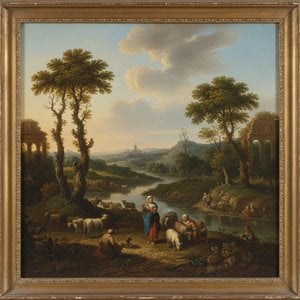
Nicolaes Berchem und das Goldene Zeitalter: Pastoralismus, Idealisierung & Künstlerische Innovation
Entdecken Sie die faszinierende Welt von Nicolaes Berchem und das Goldene Zeitalter der niederländischen Landschaftsmalerei. Expertenanalyse, Hintergrundinformationen & künstlerische Innovationen.

Die 10 Meisterwerke des Goldenen Zeitalters der niederländischen Malerei |
Entdecken Sie die 10 Meisterwerke des Niederländischen Goldenen Zeitalters! Von Rembrandt bis Vermeer – erleben Sie Kunstgeschichte, Techniken & Emotionen. Hochwertige Gemäldereproduktionen für Ihr Zuhause auf .

Golden Light & Dutch Skies: Bringing the Magic of Dutch Golden Age Landscapes into Your Home
Transform your home with the breathtaking light of Dutch Golden Age landscapes. Discover how hand-painted oil reproductions of masterworks like Ruisdael and Vermeer bring timeless elegance, atmosphere, and soulful texture to modern interiors. Elevate your space with museum-quality art.

Golden Age Reflections: Dutch Baroque Painting & Cultural Innovation
Explore the Dutch Golden Age of painting! Discover key artists like Vermeer & ter Borch, their innovative techniques, and the rich cultural context behind these Baroque masterpieces. Learn about collecting & appreciating this iconic art period.

Charles Leickert: Capturing the Dutch Golden Age Light – A Comprehensive Study of Technique, Context, and Legacy
Explore the captivating winter landscapes of Charles Leickert, a master of Dutch Golden Age light & atmosphere. Discover his techniques, symbolism, and lasting legacy – a comprehensive study for art enthusiasts and collectors.


