
- Startseite

- Auf Leinwand drucken
- Gustave Moreau
- prometheus
 Gemälde kaufen Bild kaufen
 Versenden
 Teilen
 Details anzeigen
 Zu Favoriten hinzufügen

 Herunterladen
 Ähnliche Objekte
 Röntgenaufnahme
 Diashow anzeigen
prometheus


 Weiterlesen
Giclée / Kunstdruck
Giclée- oder Leinwanddruck in Museumsqualität mit schneller Produktion und flexiblen Veredelungsoptionen.




P118B $10

P118H $10

P118W $10

P438Z $10

P508JH $12

P508YH $12

P805H $10

P805Z $10

P919BZ $10

P919G $10

P919XJ $10

P959ZH $10

P968JZ $12

W106C $8

W218G $10

W218JH $8

W218Y $10

W307PJ $10

W316G $10

W316PJ $8

W316Y $10

W398PJ $8

W4111J $10

W500HY $15

W500JH $15

W692G $12

W849H $8

W940BG $15

W953PJ $8




Wählen Sie aus unseren vordefinierten Größen, die den ursprünglichen Proportionen des Kunstwerks entsprechen.

Sie können Ihre eigenen Maße eingeben, um ein bestimmtes Format oder einen speziellen Platz einzupassen. Wenn das von Ihnen gewählte Format nicht den Proportionen des Originalbildes entspricht, werden wir das Kunstwerk entweder beschneiden oder das Bild mit einem gespiegelten oder einfarbigen Rand erweitern. Ein digitaler Entwurf wird Ihnen zur Genehmigung zugesandt, bevor die Produktion beginnt.
Bitte beachten Sie, dass die Vorschau auf dem Bildschirm nicht den tatsächlichen Zuschnitt oder die Erweiterung widerspiegelt. Nur der Entwurf zeigt die endgültige Komposition präzise an.
Obwohl Sondermaße verfügbar sind, empfehlen wir die Auswahl eines Maßes aus der vordefinierten Liste, um die ursprünglichen Proportionen zu bewahren.
Weltweiter Versand () innerhalb von 2 Wochen statt der üblichen 4/5 Wochen. (18 Juli)

Kostenloser weltweiter Expressversand

Hochwertige Leinenleinwand

Umfassender Versicherungsschutz beim Versand

Zollsteuer-Rückerstattungsgarantie

Garantie für echte Farbtreue

60-Tage-Rückgaberecht (nur bei Mängeln)

100% Geld-zurück-Garantie

Mengenrabatt verfügbar
 Die Glasoption ist nur in Größen unter 110 cm verfügbar.

prometheus
Giclée / Kunstdruck
Größe der Reproduktion
-


Endpreis aller Optionen
-
Beschreibung des Sammlerstücks
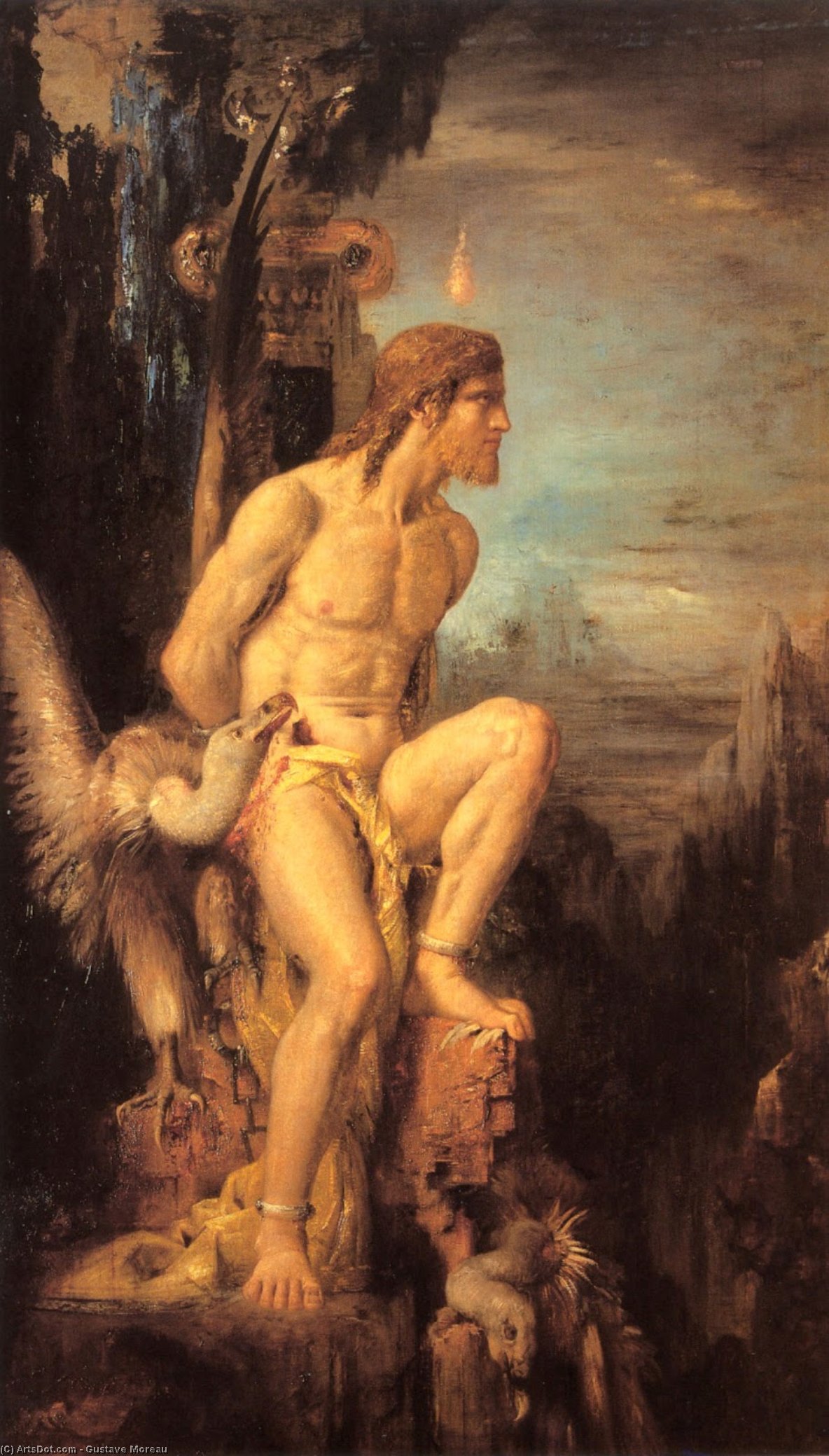
A Vision of Mythic Resistance: Exploring Gustave Moreau’s “Prometheus”
Gustave Moreau's "Prometheus," a captivating image of a nude figure seated upon a weathered rock, immediately draws the viewer into a realm of potent symbolism and profound emotional resonance. Painted in 1883, this work exemplifies Moreau’s pivotal role as a leading figure within the Symbolist movement – a reaction against the perceived materialism and superficiality of academic art. More than simply depicting a mythological subject, Moreau sought to evoke spiritual truths through carefully constructed imagery, inviting contemplation on themes of rebellion, sacrifice, and the enduring human spirit.
- Subject Matter: The painting centers around the figure of Prometheus, the Titan from Greek mythology who defied the gods by stealing fire and gifting it to humanity. This act represents a fundamental struggle against oppressive authority and a courageous assertion of knowledge and progress.
- Composition & Technique: Moreau’s meticulous brushwork and rich color palette contribute significantly to the painting's dramatic effect. The figure is rendered with an almost sculptural quality, reminiscent of classical statuary but imbued with a distinctly Symbolist sensibility. Note the use of muted tones – ochres, browns, and blues – creating a sense of timelessness and solemnity.
The Language of Symbolism: Decoding Moreau’s Visual Vocabulary
Moreau's artistic choices are laden with symbolic meaning. The nakedness of Prometheus is not merely anatomical; it represents vulnerability, defiance, and the stripping away of societal constraints. The birds surrounding him – one perched on his shoulder, another nearby – further amplify this symbolism. Birds have long been associated with messengers, spirits, and divine intervention in Western art and mythology. Their presence suggests a connection to higher powers, perhaps acknowledging Prometheus’s transgression or offering a silent witness to his plight. The rock itself, worn smooth by time, symbolizes the weight of history and the enduring nature of human struggle.
- Color Palette: Moreau's deliberate use of earthy tones – browns, ochres, blues – evokes a sense of antiquity and reinforces the painting’s mythological context.
- Lighting & Shadow: The dramatic lighting, with strong contrasts between light and shadow, heightens the emotional intensity of the scene and emphasizes Prometheus’s solitary figure.
Historical Context and Moreau's Artistic Vision
Created during a period of significant social and intellectual upheaval in Europe – marked by advancements in science, industrialization, and burgeoning philosophical movements – “Prometheus” reflects a deep dissatisfaction with the prevailing rationalist worldview. Moreau, along with other Symbolists, sought to reclaim spirituality and meaning through art, exploring the realms of dreams, myths, and the subconscious. His work aligns with the broader Symbolist interest in subjective experience and the power of suggestion, rejecting the objective representation favored by earlier artistic movements. Moreau’s training at the École des Beaux-Arts provided him with a solid foundation in traditional techniques, but his refusal to conform to academic conventions ultimately led him to forge a unique and influential artistic path.
Emotional Impact and Artistic Legacy
"Prometheus" continues to resonate with viewers today due to its powerful emotional impact. The painting’s inherent tension – between defiance and vulnerability, knowledge and consequence – invites introspection and contemplation on fundamental human questions. Moreau's masterful execution, combined with the enduring power of the mythological narrative, ensures that “Prometheus” remains a cornerstone of Symbolist art and a testament to the artist’s visionary genius. This reproduction offers an exceptional opportunity to experience this iconic work firsthand, bringing its beauty and depth into your home or studio.
Ähnliche Kunstwerke


Biografie des Künstlers
**frühes Leben und Ausbildung**
Gustav Moreau, ein französischer Künstler, wurde am 6. April 1826 in Paris geboren. Er erhielt eine traditionelle akademische Ausbildung in der Malerei an der École des Beaux-Arts und zeigte von frühester Kindheit eine Begabung für Zeichnen.**Die Symbolismusbewegung**
Moreaus Werk, das durch allegorische und mythologische Themen geprägt ist, machte ihn zu einem führenden Symbolistenmaler, insbesondere in den 1890er Jahren. Seine Kunst (und der Symbolismus im Allgemeinen) verlor an Beliebtheit, wurde aber seit den 1960er Jahren neu bewertet und Moreau gilt heute als einer der wichtigsten Symbolistenmaler.**Bekannte Werke und Ausstellungen**
* Salomé im Gefängnis (Gemälde von 'Gustav Moreau') ist ein bemerkenswertes Beispiel für seine Arbeit und zeigt seine Meisterschaft im Symbolismus. * Das Selbstporträt (Gemälde von 'Gustav Moreau') ist eine weitere kraftvolle Darstellung des Künstlers selbst.**Musée Gustave Moreau**
Das Nationalmuseum Gustave Moreau (Musée Gustave Moreau Paris, Frankreich) in Paris ist dem Werk Moreaus gewidmet und beherbergt über 1.200 Gemälde, Aquarelle und Zeichnungen. Das Museum ist ein Zeugnis seines künstlerischen Erbes.**Vermächtnis und Einfluss**
Moreaus Einfluss auf die Symbolismusbewegung ist unbestreitbar. Er lehrte an der École des Beaux-Arts und beeinflusste namhafte Künstler wie Henri Matisse und Georges Rouault. Seine zurückgezogene Art hat seinen Einfluss auf die Kunstwelt nicht gemindert.- Entdecken Sie mehr über das Leben und Werk von Gustav Moreau auf ArtsDot.com
- Erkunden Sie das Nationalmuseum Gustave Moreau und seine beeindruckende Sammlung von Kunstwerken auf Musée Gustave Moreau Paris, Frankreich
- Erfahren Sie mehr über die Symbolismusbewegung und ihre Bedeutung für die Kunstgeschichte auf die Symbolismus-Kunstbewegung

Gustave Moreau
1826 - 1898 , Frankreich
Kurzinfos
- Beeinflusste Künstler:
- Henri Matisse
- Georges Rouault
- Bemerkenswerte Werke:
- Salomé im Gefängnis
- Selbstporträt
- Jupiter und Semele
- Orpheus
- Die Erscheinung
- Geburtsdatum: 6. April 1826
- Geburtsort: Paris, Frankreich
- Künstlerische Einflüsse:
- Eugène Delacroix
- Michelangelo
- Leonardo da Vinci
- Künstlerischer Stil: Symbolismus
- Nationalität: Französisch
- Sterbedatum: 1898
- Vollständiger Name: Gustave Moreau
Ähnliche Artikel
Top 10 Kunstwerke für tiefe Ruhe: Meisterwerke & Inspirationen |
Entdecken Sie die Top 10 Kunstwerke für tiefe Ruhe & Entspannung! Von Monet bis Van Gogh – Meisterwerke der Impressionisten, japanische Druckkunst und mehr. Finden Sie Ihre perfekte Leinwand auf
Max Ernsts Meisterwerke: Die Top 25 Kunstwerke für Ihr Zuhause | ArtsDot
Entdecken Sie die 25 bedeutendsten Kunstwerke von Max Ernst! Tauchen Sie ein in die Welt des Surrealismus, Dada und abstrakter Malerei. Hochwertige Kunstreproduktionen & Inspiration für Ihr Zuhause bei ArtsDot.com.

Die Top 10 berühmter Gemälde in Grautönen – Kunst für Ihr Zuhause |
Entdecken Sie die Top 10 berühmter Gemälde in faszinierenden Grautönen! Von Van Gogh bis Monet – erfahren Sie die Geschichten hinter den Meisterwerken und lassen Sie sich von für Ihr Zuhause inspirieren. Jetzt Kunst online entdecken!

Gustave Moreau: Der Enigmatische Visionär des Symbolismus und Wegbereiter moderner Fantasy-Kunst
Entdecken Sie das faszinierende Werk Gustave Moreaus, des wichtigsten Vertreters des Symbolismus! Analysen, Biografien und Einblicke in seine mythologischen Gemälde. Jetzt lesen!

Die Top 10 berühmter Gemälde für ein stilvolles Wohnzimmer |
Entdecken Sie die Top 10 berühmter Gemälde für Ihr Wohnzimmer! Von Van Gogh bis Monet – erfahren Sie die Geschichten hinter Meisterwerken & finden Sie Kunstreproduktionen in Museumsqualiät auf .



