


 In echtem Maßstab anzeigen
 Versenden als Grußkarte
 Teilen
 Details anzeigen
 Leitfaden

 Herunterladen
 Ähnliche Objekte
 Röntgenaufnahme
 Diashow
 Besucherstatistiken
Le Juif Errant


 Mehr anzeigen
Handgefertigte Ölreproduktion
Handgemaltes Ölgemälde auf Leinwand in Ihrer Wunschgröße und mit Rahmen, auf Bestellung von unseren Künstlern angefertigt. ( Zum Druck wechseln Zum digitalen Bild wechseln)




P118B $10

P118H $10

P118W $10

P438Z $10

P508JH $12

P508YH $12

P805H $10

P805Z $10

P919BZ $10

P919G $10

P919XJ $10

P959ZH $10

P968JZ $12

W106C $8

W218G $10

W218JH $8

W218Y $10

W307PJ $10

W316G $10

W316PJ $8

W316Y $10

W398PJ $8

W4111J $10

W500HY $15

W500JH $15

W692G $12

W849H $8

W940BG $15

W953PJ $8




Wählen Sie aus unseren vordefinierten Formaten, die den ursprünglichen Proportionen des Kunstwerks entsprechen.

Sie können Ihre eigenen Maße eingeben, um einen bestimmten Rahmen oder Platz auszufüllen. Wenn die gewählte Größe nicht den Proportionen des Originalbildes entspricht, werden wir das Kunstwerk entweder beschneiden oder das Gemälde durch zusätzliche, handgemalte Elemente erweitern. Ein digitales Mockup wird Ihnen zur Genehmigung zugesandt, bevor die Produktion beginnt.
Bitte beachten Sie, dass die Bildschirmvorschau nicht die tatsächliche Beschneidung oder Erweiterung widerspiegelt. Nur das Mockup zeigt die endgültige Komposition exakt an.
Obwohl Sondermaße verfügbar sind, empfehlen wir, eine Größe aus der vordefinierten Liste zu wählen, um die ursprünglichen Proportionen beizubehalten.
Nach der Bestellung wird das ArtsDot.com-Team dem Kunden Anweisungen per E-Mail zusenden und eine Mockup-Vorschau bereitstellen.
Weltweiter Versand () in nur 3 bis 4 Wochen statt der üblichen 5 Wochen. (24 September). Keine Kompromisse bei der Qualität.

Kostenloser weltweiter Expressversand

Hochwertige Leinenleinwand

Vollständiger Versicherungsschutz beim Versand

Zollgebühren-Rückerstattungsgarantie

Garantie für exakte Farbtreue

100-tägiges Rückgaberecht (nur bei Mängeln)

100% Geld-zurück-Garantie

Angebot für Mengenrabatt
 Die Glasoption ist nur für Größen unter 110 cm verfügbar.

Le Juif Errant
Reproduktionsmedium
Format der Reproduktion
-


Gesamtpreis
$ 263
A Portrait of Mystery: Exploring Gustave Moreau’s *Le Juif Errant*
Gustave Moreau's *Le Juif Errant* (The Wandering Jew) is not merely a depiction of a biblical scene; it’s an immersion into the richly layered, emotionally charged world of Symbolist art. Painted in 1883, this work exemplifies Moreau’s profound engagement with mythology, religion, and the darker recesses of the human psyche – themes that would define his career and cement his place as one of the movement's most significant figures. The painting immediately arrests the viewer with its unsettling beauty, a hallmark of Moreau’s style, where meticulous detail is deployed not to represent reality but to evoke profound feeling.
Subject and Composition – A Fragmented Narrative
The central figure, identified as “the Wandering Jew” from the biblical tale, stands before a stark cross, his hands resting upon it in an ambiguous gesture. This posture immediately invites questions: is he penitent? Is he a judge? Or perhaps simply a solitary figure lost in contemplation? The inclusion of two shadowy figures in the background – one on the left and another on the right – adds to the painting’s sense of unease and isolation. These secondary characters, rendered with Moreau's signature attention to detail, are deliberately obscured, contributing to the overall atmosphere of mystery and suggesting a narrative that is fragmented and open to interpretation. A small bird perched near the top-left corner introduces an element of unsettling beauty, further disrupting any potential sense of order.
Symbolism – Layers of Meaning
Moreau’s work is saturated with symbolism, drawing heavily from medieval and Renaissance sources. The cross itself represents faith, suffering, and judgment, while the man's posture suggests a confrontation with these concepts. The book or scroll he holds could symbolize knowledge, revelation, or perhaps even heresy – themes frequently explored in Symbolist art. The surrounding trees, rendered with meticulous detail, evoke a sense of ancient wisdom and timelessness. Moreau’s use of color is particularly significant; the muted tones—dominated by browns, blues, and greens—create an atmosphere of melancholy and spiritual contemplation. The overall effect is one of heightened emotional intensity, reflecting the Symbolist preoccupation with subjective experience.
Technique and Historical Context – A Reaction Against Realism
*Le Juif Errant* showcases Moreau’s mastery of meticulous technique, honed through years of academic training. He employed a highly detailed style, often utilizing glazing techniques to build up layers of color and create a luminous effect. This approach contrasts sharply with the prevailing Realist and Impressionist styles of the time, which sought to capture objective reality. Moreau, along with other Symbolists, rejected this pursuit, believing that art should explore the realm of dreams, myths, and emotions—a reaction against the perceived materialism of modern life. The painting’s creation coincided with a period of intense intellectual ferment in Paris, fueled by developments in psychology, philosophy, and literature. Moreau's work reflects these currents, engaging with questions of identity, faith, and the human condition.
Emotional Impact – A Timeless Resonance
Moreau’s *Le Juif Errant* continues to resonate with viewers today because it taps into fundamental human anxieties and aspirations. The painting's unsettling beauty, combined with its ambiguous narrative and rich symbolism, invites contemplation and introspection. It is a work that demands engagement, prompting us to confront our own beliefs, fears, and desires. This enduring power makes it a compelling subject for reproduction, allowing collectors and interior designers alike to bring this evocative masterpiece into their homes.
Ähnliche Kunstwerke


Biografie des Künstlers
**frühes Leben und Ausbildung**
Gustav Moreau, ein französischer Künstler, wurde am 6. April 1826 in Paris geboren. Er erhielt eine traditionelle akademische Ausbildung in der Malerei an der École des Beaux-Arts und zeigte von frühester Kindheit eine Begabung für Zeichnen.**Die Symbolismusbewegung**
Moreaus Werk, das durch allegorische und mythologische Themen geprägt ist, machte ihn zu einem führenden Symbolistenmaler, insbesondere in den 1890er Jahren. Seine Kunst (und der Symbolismus im Allgemeinen) verlor an Beliebtheit, wurde aber seit den 1960er Jahren neu bewertet und Moreau gilt heute als einer der wichtigsten Symbolistenmaler.**Bekannte Werke und Ausstellungen**
* Salomé im Gefängnis (Gemälde von 'Gustav Moreau') ist ein bemerkenswertes Beispiel für seine Arbeit und zeigt seine Meisterschaft im Symbolismus. * Das Selbstporträt (Gemälde von 'Gustav Moreau') ist eine weitere kraftvolle Darstellung des Künstlers selbst.**Musée Gustave Moreau**
Das Nationalmuseum Gustave Moreau (Musée Gustave Moreau Paris, Frankreich) in Paris ist dem Werk Moreaus gewidmet und beherbergt über 1.200 Gemälde, Aquarelle und Zeichnungen. Das Museum ist ein Zeugnis seines künstlerischen Erbes.**Vermächtnis und Einfluss**
Moreaus Einfluss auf die Symbolismusbewegung ist unbestreitbar. Er lehrte an der École des Beaux-Arts und beeinflusste namhafte Künstler wie Henri Matisse und Georges Rouault. Seine zurückgezogene Art hat seinen Einfluss auf die Kunstwelt nicht gemindert.- Entdecken Sie mehr über das Leben und Werk von Gustav Moreau auf ArtsDot.com
- Erkunden Sie das Nationalmuseum Gustave Moreau und seine beeindruckende Sammlung von Kunstwerken auf Musée Gustave Moreau Paris, Frankreich
- Erfahren Sie mehr über die Symbolismusbewegung und ihre Bedeutung für die Kunstgeschichte auf die Symbolismus-Kunstbewegung

Gustave Moreau
1826 - 1898 , Frankreich
Eckdaten zum Künstler
- Beeinflusste Künstler:
- Henri Matisse
- Georges Rouault
- Bemerkenswerte Werke:
- Salomé im Gefängnis
- Selbstporträt
- Jupiter und Semele
- Orpheus
- Die Erscheinung
- Geburtsdatum: 6. April 1826
- Geburtsort: Paris, Frankreich
- Künstlerische Einflüsse:
- Eugène Delacroix
- Michelangelo
- Leonardo da Vinci
- Künstlerischer Stil: Symbolismus
- Nationalität: Französisch
- Sterbedatum: 1898
- Vollständiger Name: Gustave Moreau
Verwandte Artikel
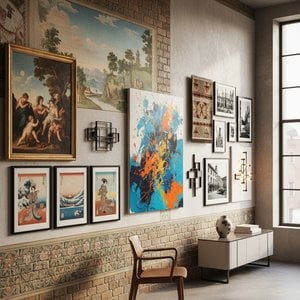
Transforming Spaces: A Comprehensive Exploration of Wall Decor Through Art History & Contemporary Practice
Explore the art of transforming spaces with our comprehensive guide to wall decor. From historical movements to contemporary trends, discover how to curate impactful interiors and commission bespoke artwork for a truly personalized aesthetic.

Echoes of Time: Exploring the Enduring Appeal & Historical Context of Vintage Art Prints
Explore the captivating world of vintage art prints! Discover their history, collecting tips & enduring appeal. Expert insights on chromolithography and building a legacy collection with ArtsDot.

Giclée Prints: Archival Quality & Aesthetic Nuances for the Discerning Collector
Explore the world of giclée prints with ArtsDot. Learn about archival quality, aesthetic nuances & investment potential. Expert guidance for discerning art collectors seeking museum-quality reproductions and lasting value.

The Enduring Legacy of Fine Art Prints: Technique, History & Aesthetic Impact
Explore the rich history & techniques of fine art prints. Discover investment potential, assess authenticity, and learn how to preserve your collection with expert guidance. Trusted insights for discerning collectors.

Die Rückkehr des Freskos: Wandgemälde als Luxusstatement für exklusive Innenräume
Entdecken Sie die Welt der Wandgemälde! Exklusive Designs für Hotels & Wohnräume. Expertenberatung, hochwertige Materialien & individuelle Kunstprojekte – Ihr Partner für einzigartige Raumgestaltung.


