


Das Bild passt sich Ihren Auswahlmöglichkeiten an: , .
Beschreibung des Sammlerstücks
Judith II von Gustav Klimt: Ein Meisterwerk des Jugendstil! Entdeckt die sinnliche Schönheit und den komplexen Symbolismus dieses berühmten Gemäldes aus dem Jahr 1909.
 Weiterlesen
Künstlerbiografie
Erkunden Sie Gustav Klimt (1862-1918): Den österreichischen Symbolisten und Ikon der Wiener Secession & Jugendstil! Entdecken Sie seine goldene Phase, sinnliche Porträts und dekorative Meisterwerke wie Der Kuss.
Handgefertigte Ölreproduktion
Handgemaltes Ölgemälde auf Leinwand in Ihrer Wunschgröße und mit Rahmen, auf Bestellung von unseren Künstlern angefertigt. ( Zum Druck wechseln Zum digitalen Bild wechseln)
Mehr über dieses Gemälde
 Vorschau anzeigen
 Versenden
 Teilen
 Details anzeigen
 Leitfaden

 Herunterladen
 Ähnliche Objekte
 Röntgenaufnahme
 Diashow
 Fragen & Antworten
 Statistiken
Bestellen Sie Ihr Gemälde in vier einfachen Schritten
Lassen Sie sich Zeit. Sie können jede Antwort jederzeit ändern; der Preis in Ihrem Warenkorb passt sich jeder Auswahl automatisch an.
1 Schritt eins von vier
Welche Größe möchten Sie wählen?
Diese Formate bewahren die Proportionen des Originalgemäldes. Die Zeichnung zeigt Ihre Auswahl an einer Wand, oberhalb eines zwei Meter breiten Sofas.
Oder geben Sie Ihre eigenen Maße an
Wählen Sie aus unseren vordefinierten Formaten, die den ursprünglichen Proportionen des Kunstwerks entsprechen.

Geben Sie die Breite und die Höhe an, die Sie für Ihren Rahmen oder Ihre Wand benötigen. Da dieses Werk handgemalt ist, kann der Künstler bei einer anderen Form etwas mehr um das Bild herum malen oder etwas abschneiden – Sie entscheiden. Wir senden Ihnen ein digitales Mockup zur Freigabe, bevor mit dem Malen begonnen wird. Das auf dieser Seite gezeigte Bild stellt nicht das tatsächliche Ergebnis dar – dies tut nur das Mockup.
2 Schritt zwei von vier
Wie soll es vorbereitet werden: gerollt, auf Keilrahmen gespannt oder gerahmt?
Die unten aufgeführten Preise beziehen sich auf die in Schritt eins gewählte Größe.
Wählen Sie die Kanten der Leinwand aus
Wählen Sie Ihren Rahmen

Weißer Rand €1

verlaufende Kanten €1

Umrandung €1

P118B €10

P118H €10

P118W €10

P438Z €10

P508JH €12

P508YH €12

P805H €10

P805Z €10

P919BZ €10

P919G €10

P919XJ €10

P959ZH €10

P968JZ €12

W106C €8

W218G €10

W218JH €8

W218Y €10

W307PJ €10

W316G €10

W316PJ €8

W316Y €10

W398PJ €8

W4111J €10

W500HY €15

W500JH €15

W692G €12

W849H €8

W940BG €15

W953PJ €8

H24-GOLD €30

H24-SILVER €30

H36-GOLD €45

H36-SILVER €45
Gerahmt
Profil: . Gesamtgröße mit Rahmen: .
3 Schritt drei von vier
Möchten Sie am Gemälde noch etwas ändern?
Die meisten Menschen antworten mit Nein. Da jedes Gemälde von Hand gefertigt wird, kann unser Künstler es jedoch auch individuell für Sie anpassen.
Nach der Bestellung wird das Team von ArtsDot.com den Kunden per E-Mail kontaktieren, um Anweisungen einzuholen und eine Vorschau des Entwurfs bereitzustellen
4 Schritt vier von vier
Einige Veredelungsmöglichkeiten
Alle Angaben sind optional. Für bereits ausgewählte Antworten entstehen keine zusätzlichen Kosten.
Wer hat es gemalt?
Weltweiter Versand () in nur 3 bis 4 Wochen statt der üblichen 5 Wochen. (4 November). Keine Kompromisse bei der Qualität.
Ein Namensschild, wie im Museum?
Details der gravierten Bronzetafel
This elegant plaque features the artist's name and the title of the artwork, finely engraved for a timeless presentation.
It is made from bronze with a refined, elegant finish. The text is precisely laser-engraved for a sharp and permanent result. Measuring 9x2 cm, the plaque is compact yet easy to read. It's built to be durable and scratch-resistant, offering a professional, museum-quality look. Mounting is simple thanks to the included adhesive backing.
Details zur Acrylglas-Plakette (transparent)
The plaque includes essential engraved details such as the artist's name, the title of the artwork, the date it was created, the type of media used-like oil on canvas or watercolor-a brief description of the piece, and a QR code that links to the complete artwork information.
It is crafted from clear acrylic, offering a sleek, modern appearance. The text is UV-engraved in black to ensure strong visual contrast. With a size of 10x15 cm, it ensures optimal readability. It comes equipped with two metal hooks for secure wall mounting. The plaque is designed to be weather-resistant, making it suitable for various environments, and it includes interactive features that work seamlessly with smartphone scanning.
Details zur schwarzen Acryltafel
This elegant plaque includes engraved information such as the artist's name, the title of the artwork, the date it was created, the type of media used (like oil on canvas or watercolor), a short description of the artwork, and a QR code for quick access to more information.
The plaque itself is made from refined black acrylic with a premium finish. The text is laser-engraved in white for high contrast and readability. Its size is 10x15 cm, designed to be easy to read. It comes with two metal hooks for professional mounting. The design is sleek and fits any interior style. It is also weather-resistant and durable, with built-in digital integration for mobile compatibility.
Ein Schutzlack?
Bis wann benötigen Sie es?
✓ Prüfen und bestellen
Ihr Gemälde, wie von Ihnen bestellt

Judith02
Art der Reproduktion
Format der Reproduktion
-

Erstklassige Meisterkünstler
Mehr Detailtiefe, Raffinesse und zusätzliche Produktionszeit
-

Rahmen für Reproduktionen
-
-
Bei Kunstwerken oder Reproduktionen, die an einer Seite größer als 105 cm (ca. 41 Zoll) sind, wird der Rahmen zerlegt als Bausatz geliefert. Diese Methode gewährleistet eine sichere Zustellung und verhindert Schäden während des Transports.
Professionelle Montage erforderlich – dies ist kein DIY-Produkt.
Der Bausatz muss von einem erfahrenen professionellen Rahmenmacher zusammengebaut und die Leinwand gespannt werden. Hierfür werden Holzleim (nicht im Lieferumfang enthalten), eine Leinwandspannzange sowie Klemmen benötigt, um die Keilleisten während des Trocknungsvorgangs rechtwinklig zu halten. Eine unsachgemäße Montage oder eine ungleichmäßige Spannung der Leinwand kann das Kunstwerk dauerhaft beschädigen und ist nicht durch unsere Garantie abgedeckt.
 Bei Kunstwerken oder Reproduktionen, die an einer Seite größer als 105 cm (ca. 41 Zoll) sind, wird der Rahmen zerlegt als Bausatz geliefert. Diese Methode gewährleistet eine sichere Zustellung und verhindert Schäden während des Transports.
Alle Vollholzkomponenten sind enthalten, präzise auf Maß zugeschnitten.
Der Zusammenbau erfolgt mit den mitgelieferten Schrauben sowie Holzkleber für die Eckverbindungen, der nicht im Lieferumfang enthalten ist und vom Rahmenbauer selbst beschafft werden muss.
Professionelles Werkzeug ist erforderlich und nicht im Lieferumfang enthalten: eine Keilrahmenzange (Spannwerkzeug) sowie Klammern, um die Leisten während der Trocknungszeit des Klebers rechtwinklig zu fixieren.
Wichtiger Hinweis:
Für die Eckverbindungen wird Holzleim benötigt, die Leisten müssen mit Zwingen fixiert werden, bis der Leim vollständig getrocknet ist, und das Spannen der Leinwand auf dem fertigen Rahmen erfordert eine Keilrahmen-Zange. Keines dieser Utensilien ist im Set enthalten. Bitte stellen Sie sicher, dass ein erfahrener Rahmenmacher zur Verfügung steht, bevor Sie diese Größe bestellen.

Beschriftung
-
-

Schutzlackierung
Glanzlack (verstärkt die Farben, schützt vor Licht und Feuchtigkeit)
-

Mein Kunstwerk personalisieren
Beispiele für Anpassungsmöglichkeiten: Gesicht durch Kundenfoto ersetzen; Haustier hinzufügen (z. B. Katze durch Hund ersetzen); Versteckte Nachricht im Hintergrund einfügen; Hintergrundlandschaft oder -elemente ändern.
-

Eilt sehr
Weltweiter Versand () in nur 3 bis 4 Wochen statt der üblichen 5 Wochen. (4 November). Keine Kompromisse bei der Qualität.
-
Expressversand
Weltweiter Versand () innerhalb von 5 Wochen. (11 November).
Inklusive Versand
Endpreis
€ 235
Die Glasoption ist nur für Größen unter 110 cm verfügbar.
In jeder Bestellung enthalten
- Kostenloser weltweiter Expressversand
- Hochwertige Leinenleinwand
- Umfassender Versicherungsschutz beim Versand
- Zollgebühren-Rückerstattungsgarantie
- Garantie für exakte Farbtreue
- 100 Tage Rückgaberecht (nur bei Mängeln)
- 100% Geld-zurück-Garantie
- Mengenrabatt verfügbar


Judith II (Salome), 1909 - Gustav Klimt - WikiArt.org
“Judith II (Salome)” was created in 1909 by Gustav Klimt in Art Nouveau (Modern) style. Find more prominent pieces of literary painting at Wikiart.org – best visual art database.
WikiArt explores the world’s treasures and celebrates artistic excellence. Discover captivating stories, detailed analyses, and stunning visuals to enrich your understanding of art history and contemporary creativity.
The Artist: Gustav Klimt
Gustav Klimt (14 July 1862 – 6 February 1918) was an Austrian symbolist painter and a founding member of the Vienna Secession movement. His work helped define the Art Nouveau style in Europe. Klimt is known for his paintings, murals, sketches, and other objets d'art.
Early in his career, he was a successful painter of architectural decorations in a conventional manner. As he began to develop a more personal style, his work was the subject of controversy that culminated when the paintings he completed around 1900 for the ceiling of the Great Hall of the University of Vienna were criticised as pornographic.
He subsequently accepted no more public commissions, but achieved a new success with the paintings of his “golden phase”, many of which include gold leaf. Klimt's primary subject was the female body, and his works are marked by a frank eroticism.
The Painting: Judith II
“Judith II” is a striking example of Klimt’s artistic vision—a masterful blend of symbolism, decorative patterns, and opulent gold leaf application. Created in 1909, this oil painting delves into the biblical tale of Salome and Holofernes, portraying Judith with an arresting gaze and conveying a palpable sense of drama.
The composition is dominated by Judith’s figure—positioned centrally within the frame—and bathed in a fiery orange-red hue that amplifies the painting's emotional intensity. Klimt skillfully guides the viewer’s eye downward from her expressive face to her exposed breasts, emphasizing the sensual allure inherent in the artwork.
The artist employs a meticulous approach to detail, incorporating geometric shapes and vibrant floral motifs into Judith’s dress—a testament to Klimt's dedication to Art Nouveau principles. Furthermore, the shimmering gold leaf adds an ethereal quality to the canvas, elevating it beyond mere representation and transforming it into a symbol of beauty and transcendence.
The painting’s narrative echoes the biblical story of Salome—where Judith dances for Herod—and Holofernes—who grants her wish—to decapitate John the Baptist. Klimt captures this dramatic moment with remarkable precision, conveying the tension and anticipation that characterize the scene.
Symbolism and Technique
Klimt’s technique is characterized by a deliberate flattening of perspective—a hallmark of Art Nouveau—which prioritizes decorative effect over realistic depiction. The artist utilizes bold color palettes—particularly orange-red—and intricate patterns—including geometric shapes and floral motifs—to create a visually arresting experience.
The use of gold leaf—a technique pioneered by Klimt—is central to the painting’s aesthetic impact, lending it an aura of grandeur and transforming it into a luminous masterpiece. This masterful application of gold elevates the artwork beyond mere visual stimulation, imbuing it with spiritual significance and reinforcing its status as one of Klimt's most iconic creations.
“Judith II” stands as a testament to Klimt’s artistic genius—a captivating exploration of beauty, eroticism, and biblical narrative that continues to inspire admiration and intrigue audiences worldwide.
Fragen & Antworten
Wie verbinden sich Kontrast und Harmonie in "Judith02"?
In "Judith02" trifft ein Kräftig Kontrast auf eine Harmonische Farbpalette Harmonie.
Welche Farbpalette wird in "Judith02" von Gustav Klimt verwendet?
Die Farben von "Judith02" bilden eine Dunkle Farbtöne-Palette. Diese Klassifizierung beschreibt die dominierenden Farbfamilien.
Welcher Strömung und welcher Epoche ist "Judith02" von Gustav Klimt zuzuordnen?
"Judith02" von Gustav Klimt lässt sich der Strömung des Art Nouveau innerhalb der – 19. Jahrhundert-Ära seines Schöpfers zuordnen.
Ähnliche Kunstwerke


Gustav Klimt
1862 - 1918, Österreich
Künstlerbiografie
Gustav Klimt: Leben, Kunst und Vermächtnis
Frühes Leben und Ausbildung (1862-1883)
- Geboren am 14. Juli 1862 in Baumgarten, nahe Wien, Österreich.
- Sohn von Ernst Klimt, einem Goldschmied, und Anna Finster. Die Familie sah sich mit finanziellen Schwierigkeiten konfrontiert, was zu häufigen Umzügen innerhalb Wiens führte.
- Früben Talent: Zeigte schon früh zeichnerische Fähigkeiten, die durch den Beruf seines Vaters und familiäre künstlerische Neigungen gefördert wurden.
- Er studierte 1876 an der Wiener Kunstgewerbeschule (Schule für Angewandte Künste) Architekturmalerei bei Ferdinand Laufberger. Dies bot eine solide technische Ausbildung, aber auch die Exposition gegenüber traditionellen akademischen Stilen.
- Im Jahr 1877 gründete er mit seinem Bruder Ernst und Franz von Matsch die „Gesellschaft der Künstler“ und sichere Aufträge für dekorative Wandmalereien und Decken.
Die Gesellschaft der Künstler und Früher Erfolg (1883-1900)
- Arbeitete weiterhin mit der „Gesellschaft der Künstler“ nach dem Verlassen der Kunstgewerbeschule und erhielt Anerkennung für dekorative Projekte wie Wandmalereien im Theater von Karlsbad und Treppenhäuser im Burgtheater in Wien.
- Tragte zur Dekoration des Kunsthistorischen Museums in Wien bei, demonstrierte technische Fertigkeit, deutete aber auch auf ein Verlangen hin, künstlerische Zwänge zu brechen.
Die Decke der Universität Wien und Kontroversen (1900)
- Erfuhr um 1900 eine prestigeträchtige Beauftragung, Deckenmalereien für den Großen Saal der Universität Wien zu malen, die Philosophie, Jurisprudenz und Theologie darstellten.
- Kontroverse Werke: Die Wandmalereien, insbesondere *Philosophie*, wurden von Kritikern als provokativ und sogar pornografisch angesehen, was zu öffentlicher Empörung führte.
- Klimt lehnte nach der Kontroverse weitere öffentliche Aufträge ab und markierte damit einen Wendepunkt in seiner Karriere.
Die „Goldene Phase“ und künstlerische Reife (1901-1918)
- Betrat seine „goldene Phase“, die durch den luxuriösen Einsatz von Blattgold inspiriert vom byzantinischen Mosaik und mittelalterlichen illuminierten Handschriften gekennzeichnet war.
- Wichtige Werke: *Der Kuss* (1907-1908) veranschaulicht den opulenten Stil und die symbolische Fülle dieser Ära.
- *Porträts:* Porträts wie *Portrait of Adele Bloch-Bauer I* (1907) wurden sehr begehrt und zeigten seine Fähigkeit, sowohl physische Erscheinung als auch psychologische Tiefe einzufangen.
- Integriert zunehmend dekorative Elemente in Kompositionen und verwischte die Grenzen zwischen Malerei und Ornamentik.
Einflüsse und künstlerischer Stil
- Hans Makart: Frühe Bewunderung für den führenden Historienmaler Wiens beeinflusste seine anfängliche akademische Ausbildung.
- Japanische Kunst (Japonismus): Wurde tief von japanischen Holzschnitten beeinflusst, insbesondere durch ihre flache Perspektive, dekorative Muster und Betonung der Linie.
- Byzantinische Kunst: Der Einsatz von Blattgold und reicher Ornamentik in byzantinischen Mosaiken hatte einen tiefgreifenden Einfluss auf seine „goldene Phase.”
- Stilmerkmale: Ein einzigartiges Zusammenspiel von Symbolismus, Jugendstil und dekorativen Elementen; kräftige Farben, komplizierte Muster und sinnliche Darstellungen der weiblichen Form.
Späte Jahre und Vermächtnis (1918)
- Malte weiterhin produktiv bis zu seinem Tod am 6. Februar 1918 durch einen Schlaganfall.
- Seine späteren Werke erforschten abstraktere Formen und Landschaften und zeigten eine kontinuierliche künstlerische Entwicklung.
- Historische Bedeutung: Wird als eine der wichtigsten Figuren in der österreichischen Kunstgeschichte und als einer führenden Vertreter des Wiener Secessions anerkannt. Seine Gemälde erzielen hohe Preise auf Auktionen, und sein Einfluss ist in der zeitgenössischen Kunst und im Design zu sehen.
- Das Kunsthistorische Museum Wien beherbergt eine bedeutende Sammlung seiner Werke und sichert so das Vermächtnis, das weiterhin inspiriert.


Ähnliche Artikel

Symbolismus in der Kunst: Die 10 Meisterwerke, die eine Ära prägten | ArtsDot
Entdecken Sie die 10 Meisterwerke des Symbolismus! Von Klimt bis Munch – erfahren Sie die Geschichten hinter ikonischen Gemälden, ihre Techniken & Bedeutung. Finden Sie Ihre perfekte Reproduktion auf ArtsDot.com.
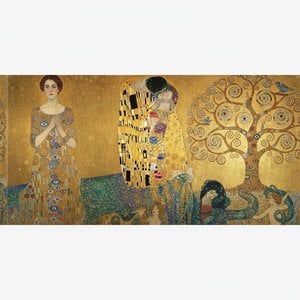
Goldene Meisterwerke: Die 25 besten Kunstwerke von Gustav Klimt
Erleben Sie Klimts goldene Meisterwerke der Wiener Secession. Entdecken Sie alle Highlights auf ArtsDot.com.

Art Nouveau Meisterwerke: Die 10 prägendsten Kunstwerke für Ihr Zuhause |
Entdecken Sie die 10 prägendsten Art Nouveau Meisterwerke! Von Mucha bis Klimt – erfahren Sie die Geschichten hinter ikonischen Gemälde & dekorativer Kunst. Hochwertige Kunstdrucke online kaufen auf