
- Startseite

- Auf Leinwand drucken
- Giorgio Vasari
- Interor view

 Gemälde kaufen Bild kaufen
 Versenden
 Teilen
 Details
 Zu Favoriten hinzufügen

 Herunterladen
 Ähnliche Objekte
 X-Ray
X-Ray
 Diashow anzeigen
Interor view


 Weiterlesen
Giclée / Kunstdruck
Giclée- oder Leinwanddruck in Museumsqualität mit schneller Produktion und flexiblen Veredelungsoptionen.




P118B $10

P118H $10

P118W $10

P438Z $10

P508JH $12

P508YH $12

P805H $10

P805Z $10

P919BZ $10

P919G $10

P919XJ $10

P959ZH $10

P968JZ $12

W106C $8

W218G $10

W218JH $8

W218Y $10

W307PJ $10

W316G $10

W316PJ $8

W316Y $10

W398PJ $8

W4111J $10

W500HY $15

W500JH $15

W692G $12

W849H $8

W940BG $15

W953PJ $8




Wählen Sie aus unseren vordefinierten Größen, die den ursprünglichen Proportionen des Kunstwerks entsprechen.

Sie können Ihre eigenen Maße eingeben, um ein bestimmtes Format oder einen speziellen Platz einzupassen. Wenn das von Ihnen gewählte Format nicht den Proportionen des Originalbildes entspricht, werden wir das Kunstwerk entweder beschneiden oder das Bild mit einem gespiegelten oder einfarbigen Rand erweitern. Ein digitaler Entwurf wird Ihnen zur Genehmigung zugesandt, bevor die Produktion beginnt.
Bitte beachten Sie, dass die Vorschau auf dem Bildschirm nicht den tatsächlichen Zuschnitt oder die Erweiterung widerspiegelt. Nur der Entwurf zeigt die endgültige Komposition präzise an.
Obwohl Sondermaße verfügbar sind, empfehlen wir die Auswahl eines Maßes aus der vordefinierten Liste, um die ursprünglichen Proportionen zu bewahren.
Weltweiter Versand () innerhalb von 2 Wochen statt der üblichen 4/5 Wochen. (2 Juli)

Kostenloser weltweiter Expressversand

Hochwertige Leinenleinwand

Umfassender Versicherungsschutz beim Versand

Zollsteuer-Rückerstattungsgarantie

Garantie für echte Farbtreue

60-Tage-Rückgaberecht (nur bei Mängeln)

100% Geld-zurück-Garantie

Mengenrabatt verfügbar
 Die Glasoption ist nur in Größen unter 110 cm verfügbar.

Interor view
Giclée / Kunstdruck
Größe der Reproduktion
-


Endpreis aller Optionen
-
Beschreibung des Sammlerstücks
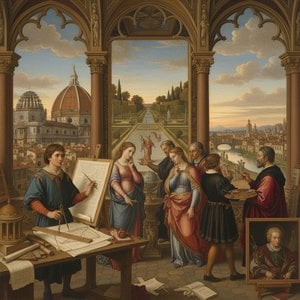
A Glimpse into Florentine Grandeur: The Interor View by Giorgio Vasari
Within the imposing walls of the Palazzo Vecchio in Florence resides a breathtaking fresco, “Interor View” by Giorgio Vasari – a masterpiece that transcends mere decoration and offers a profound window into the artistic and cultural heart of the Renaissance. Completed around 1555, this monumental work isn’t simply a depiction of a room; it's an immersive experience, a carefully constructed illusion designed to evoke a sense of timeless elegance and civic pride. Vasari, already a celebrated artist and historian, was commissioned by the Medici family to embellish the palace, solidifying his position as a key figure in shaping Florentine art and its legacy.
The painting itself is a testament to Vasari’s mastery of *trompe-l'oeil*, or “fooling the eye.” He employs frescoes – a technique favored during this era for its ability to create vibrant, enduring surfaces – to meticulously recreate an interior space. The scene unfolds within a grand chamber, dominated by a towering ceiling adorned with intricate coffers and classical motifs. Below, a substantial wooden table anchors the room, suggesting a setting for important meetings or formal gatherings. Antique busts of Greek philosophers flank the table, subtly reinforcing the intellectual atmosphere, while two chairs invite contemplation. Vasari’s skill isn't merely in replicating form; he captures light, shadow, and texture with remarkable precision, creating an illusion of depth that draws the viewer directly into the scene.
The Language of Renaissance Symbolism
Beyond its technical brilliance, “Interor View” is rich in symbolic meaning. The figures depicted within the fresco are not merely decorative; they represent key values and ideals of the Renaissance. Classical allegorical figures engage in activities that speak to virtue, wisdom, and justice – a deliberate nod to the classical heritage that Vasari so admired. The careful arrangement of these figures suggests a harmonious balance between earthly pursuits and divine inspiration. Note the subtle references to Roman mythology woven throughout the composition; these allusions were not merely aesthetic choices but served as potent reminders of the enduring legacy of ancient Rome, which Renaissance thinkers sought to revive.
The use of color is equally deliberate. Vasari masterfully employs a palette of rich reds, blues, and golds – colors associated with power, wealth, and divinity – to heighten the sense of grandeur and importance. The vibrant hues contrast beautifully with the muted tones of the architectural elements, creating a dynamic visual interplay that captivates the eye.
Vasari: A Renaissance Polymath
Understanding “Interor View” requires appreciating Giorgio Vasari himself. He was more than just an artist; he was a prolific writer and historian, best known for his monumental "Lives of the Most Excellent Painters, Sculptors, and Architects." This biographical work not only documented the lives of Renaissance masters but also shaped our understanding of art history itself. Vasari’s own artistic style reflected this multifaceted nature – he seamlessly blended painting, architecture, and historical scholarship. His meticulous attention to detail, combined with his deep knowledge of classical antiquity, made him a truly exceptional figure of the Renaissance.
A Legacy of Artistic Innovation
“Interor View” stands as a remarkable achievement in Renaissance art, showcasing Vasari’s technical skill, artistic vision, and profound understanding of symbolism. It's a testament to the power of illusion and a celebration of Florentine civic pride. Reproductions of this iconic fresco offer a unique opportunity to bring a piece of Renaissance grandeur into any setting – whether as a focal point in a grand salon or a subtle enhancement to a more intimate space. The painting’s enduring appeal lies not only in its beauty but also in its ability to transport the viewer back in time, offering a glimpse into the vibrant world of 16th-century Florence.
Ähnliche Kunstwerke


Biografie des Künstlers
Frühes Leben und Ausbildung
Giorgio Vasari, ein renommierter italienischer Maler, Architekt, Schriftsteller und Historiker, wurde am 30. Juli 1511 in Arezzo, Toskana, geboren. Er begann seine künstlerische Reise als Schüler von Guglielmo da Marsiglia, einem erfahrenen Glasmaler. Im Alter von sechzehn Jahren trat Vasari dem Kreis von Andrea del Sarto und seinen Schülern Rosso Fiorentino und Jacopo Pontormo in Florenz bei.Künstlerische Karriere
Vasaris eigene manieristische Gemälde wurden zu Lebzeiten hoch geschätzt. 1529 besuchte er Rom, wo er die Werke Raffaels und anderer Künstler der römischen Hochrenaissance studierte. Zu seinen bemerkenswertesten Werken gehören:- Das Atelier des Malers (Fresco, 1548), in der Casa Vasari, Arezzo, Italien (siehe auf ArtsDot)
- Das Jüngste Gericht (Fresco, 1572), in der Kuppel des Dom von Florenz
- Die Anbetung der Heiligen Drei Könige (Ölgemälde, 1566), in der Kirche Santa Croce, Florenz (mehr auf ArtsDot)
Architektonische Beiträge
Vasaris architektonische Leistungen umfassen:- Die Loggia des Palazzo degli Uffizi, Florenz, die als öffentliche Piazza dient
- Der Vasari-Gang, der die Uffizien mit dem Palazzo Pitti in Florenz verbindet (entdecken Sie ihn auf ArtsDot)
- Die Renovierung mittelalterlicher Kirchen wie Santa Maria Novella und Santa Croce
Vermächtnis
Vasari wird oft als der "erste Kunsthistoriker" bezeichnet, aufgrund seines Buches Le vite de' più eccellenti pittori, scultori e architettori (Das Leben der vornehmsten Maler, Bildhauer und Architekten), das bis heute ein grundlegendes Werk in der Kunstgeschichte darstellt. Er starb am 27. Juni 1574 in Florenz, Großherzogtum Toskana, im Alter von 62 Jahren. Entdecken Sie mehr über Giorgios Vasaris Leben und Werk auf ArtsDot: Giorgio Vasari | 72 Kunstwerke
Giorgio Vasari
1511 - 1574 , Italien
Kurzinfos
- Beeinflusste Künstler/Bewegungen: ['Nachfolgende Kunsthistoriker']
- Bemerkenswerte Werke:
- Das Studio des Malers
- Das Jüngste Gericht
- Die Anbetung der Könige
- Einflussreiche Künstler:
- Andrea del Sarto
- Raphael
- Michelangelo
- Geburtsdatum: 30. Juli 1511
- Geburtsort: Arezzo, Italien
- Künstlerische Richtung: Manierismus
- Nationalität: Italiener
- Sterbedatum: 27. Juni 1574
- Vollständiger Name: Giorgio Vasari
Ähnliche Artikel

Moderne Deckenfresken: Luxus für Ihr Zuhause – Kunst trifft Innovation
Entdecken Sie die Welt der modernen Deckenfresken! Expertenwissen für exklusives Hoteldesign & individuelle Raumgestaltung. Hochwertige Wandmalerei – Ihr Kunstwerk am Himmel.

The Flourishing of Humanism: A Comprehensive Exploration of the Italian Renaissance Art Movement
Explore the Italian Renaissance! Discover humanist ideals, iconic masterpieces by Leonardo, Michelangelo & Raphael, and lasting artistic innovations. A comprehensive guide for art enthusiasts.

Masaccio: Revolutionierung der Renaissance-Malerei durch Innovation und emotionalen Realismus
Entdecken Sie Masaccios revolutionäre Renaissance-Malerei! Erfahren Sie mehr über seine bahnbrechenden Techniken, emotionalen Realismus und seinen nachhaltigen Einfluss auf die Kunstgeschichte. Jetzt lesen!
The Dawn of a New Vision: Exploring Themes & Innovations in Early Renaissance Art (c. 1400-1500)
Explore the groundbreaking innovations & humanist ideals of Early Renaissance art (c. 1400-1500). Discover masterpieces by Botticelli, Fra Angelico & more. A deep dive for art enthusiasts.

Paolo Uccello: Pionier der Perspektive und die Renaissance-Suche nach visueller Wahrheit
Entdecken Sie Paolo Uccello, einen Pionier der Renaissance und seine revolutionären Perspektivtechniken. Erfahren Sie mehr über sein Leben, ikonische Werke wie die 'Schlacht von San Romano' und seinen Einfluss auf die Kunstgeschichte.



