Vorschau anzeigen
 Versenden
 Teilen
 Details anzeigen

 Herunterladen
 Ähnliche Objekte
 Röntgenaufnahme
 Diashow
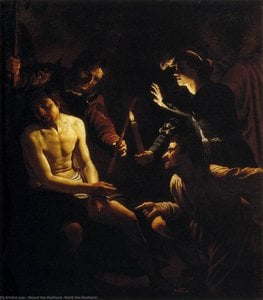
Saint Sebastian
 Acrylic On Canvas
- WallArt
- Baroque
 1623
1623 101.0 x 117.0 cm
 National Gallery
 Weiterlesen
Handgefertigte Ölreproduktion
Handgemaltes Ölgemälde auf Leinwand in Ihrer Wunschgröße und mit Rahmen, auf Bestellung von unseren Künstlern angefertigt. ( Druck bestellen Bild kaufen)




P118B $10

P118H $10

P118W $10

P438Z $10

P508JH $12

P508YH $12

P805H $10

P805Z $10

P919BZ $10

P919G $10

P919XJ $10

P959ZH $10

P968JZ $12

W106C $8

W218G $10

W218JH $8

W218Y $10

W307PJ $10

W316G $10

W316PJ $8

W316Y $10

W398PJ $8

W4111J $10

W500HY $15

W500JH $15

W692G $12

W849H $8

W940BG $15

W953PJ $8




Wählen Sie aus unseren vordefinierten Formaten, die den ursprünglichen Proportionen des Kunstwerks entsprechen.

Sie können Ihre eigenen Maße eingeben, um einen bestimmten Rahmen oder Platz auszufüllen. Wenn die gewählte Größe nicht den Proportionen des Originalbildes entspricht, werden wir das Kunstwerk entweder beschneiden oder das Gemälde durch zusätzliche, handgemalte Elemente erweitern. Ein digitales Mockup wird Ihnen zur Genehmigung zugesandt, bevor die Produktion beginnt.
Bitte beachten Sie, dass die Bildschirmvorschau nicht die tatsächliche Beschneidung oder Erweiterung widerspiegelt. Nur das Mockup zeigt die endgültige Komposition exakt an.
Obwohl Sondermaße verfügbar sind, empfehlen wir, eine Größe aus der vordefinierten Liste zu wählen, um die ursprünglichen Proportionen beizubehalten.
Nach der Bestellung wird das ArtsDot.com-Team dem Kunden Anweisungen per E-Mail zusenden und eine Mockup-Vorschau bereitstellen.
Weltweiter Versand () in nur 3 bis 4 Wochen statt der üblichen 5 Wochen. (22 August). Keine Kompromisse bei der Qualität.

Kostenloser weltweiter Expressversand

Hochwertige Leinenleinwand

Umfassender Versicherungsschutz beim Versand

Zollgebühren-Rückerstattungsgarantie

Garantie für exakte Farbtreue

60 Tage Rückgaberecht (nur bei Mängeln)

100% Geld-zurück-Garantie

Mengenrabatt verfügbar
 Die Glasoption ist nur für Größen unter 110 cm verfügbar.

Saint Sebastian
Art der Reproduktion
Format der Reproduktion
-


Gesamtpreis
$ 263
Beschreibung des Kunstwerks
The Drama of Light and Shadow: Gerard van Honthorst’s Saint Sebastian
Gerard van Honthorst's 1623 depiction of Saint Sebastian is not merely a religious painting; it’s a masterclass in dramatic illumination, a testament to the artist’s profound understanding of light and shadow – a technique he famously adopted from the revolutionary Caravaggio. This arresting image transcends its biblical subject matter, becoming a study in human suffering, resilience, and the potent interplay between darkness and hope. The painting immediately commands attention with its stark contrasts, pulling the viewer into a scene of agonizing beauty, where every arrow wound is rendered with meticulous detail and imbued with an almost palpable sense of pain.
Honthorst’s Utrecht workshop produced numerous works influenced by Caravaggio's *tenebrism*, but this Saint Sebastian stands apart. Unlike earlier depictions that often focused on the saint’s idealized martyrdom, Honthorst presents a profoundly vulnerable figure. The composition is deliberately unbalanced; Sebastian, stripped of his armor and draped in simple robes, lies prone amidst a dark, undefined landscape. His body, pierced by a multitude of arrows – some still protruding, others embedded deep within his flesh – dominates the foreground, drawing our eye to the raw physicality of his ordeal. The artist doesn’t shy away from depicting the gruesome reality of Sebastian's suffering; the wounds are not softened or romanticized, but presented with unflinching honesty.
A Roman Masterpiece Rooted in Caravaggio’s Legacy
Honthorst’s journey to Rome in his youth proved transformative. He was deeply moved by Caravaggio’s radical approach to painting – the dramatic use of light and shadow, the intense realism, and the emotional depth conveyed through seemingly simple scenes. This encounter fundamentally shaped Honthorst's artistic style, leading him to prioritize creating a sense of theatricality and psychological intensity in his work. The influence is immediately apparent here; the deep shadows enveloping much of the scene create an atmosphere of suspense and foreboding, while strategically placed highlights accentuate Sebastian’s wounds and draw attention to his agonizing expression.
The painting's historical context is equally important. Sebastian was a Roman centurion martyred for his Christian faith during the reign of Diocletian. The story resonated deeply with the populace, particularly during periods of plague and unrest, and became associated with protection against disease. Honthorst’s depiction aligns perfectly with this contemporary belief; Sebastian's suffering becomes a symbol of endurance in the face of adversity, offering solace and hope to those enduring hardship. The presence of Irene, depicted tending to his wounds in later versions of the story (though not explicitly present here), further reinforces this theme of healing and divine intervention.
Symbolism and Emotional Resonance
Beyond its narrative content, Saint Sebastian is rich in symbolic meaning. The arrows themselves represent the physical and spiritual wounds inflicted upon the faithful by persecution. The stark contrast between light and shadow symbolizes the struggle between good and evil, hope and despair. Sebastian’s posture – his arms outstretched, his head bowed – conveys a profound sense of vulnerability and resignation, yet also hints at an underlying strength and unwavering faith. The artist masterfully captures the complex interplay of emotions—pain, suffering, acceptance, and ultimately, spiritual fortitude.
The painting's enduring power lies in its ability to evoke a visceral emotional response. It’s not simply a depiction of a historical event; it’s an exploration of human experience – the pain of loss, the resilience of the spirit, and the eternal struggle between darkness and light. Gerard van Honthorst’s Saint Sebastian remains a compelling testament to the artist's skill and his profound understanding of the human condition, offering viewers a timeless meditation on faith, suffering, and redemption.
Ähnliche Kunstwerke


Über den Künstler
Frühes Leben und Ausbildung
Gerard van Honthorst, ein bedeutender niederländischer Maler des Goldenen Zeitalters, wurde am 4. November 1590 in Utrecht geboren. Er war der Sohn eines dekorativen Malers und erhielt zunächst die Anleitung seines Vaters. Später setzte er seine künstlerische Ausbildung unter Abraham Bloemaert fort.Karriere und Einflüsse
Van Honthorsts frühe Karriere umfasste einen Besuch in Rom, wo er stark von dem Stil Caravaggios beeinflusst wurde. Dieser Einfluss ist besonders in seinen späteren Werken erkennbar, vor allem durch die Verwendung künstlich beleuchteter Szenen, was ihm den Spitznamen "Gherardo delle Notti" oder "Gerard der Nachts" einbrachte. Nach seiner Rückkehr in die Niederlande wurde van Honthorst zu einem führenden Porträtmaler.Wichtige Aufträge und Patrone
Van Honthorsts Arbeit war sehr gefragt, wobei er bedeutende Patrone hatte, darunter Vincenzo Giustiniani, der ihn beauftragte, "Christus vor dem Hohenpriester" zu malen, das sich heute in der National Gallery in London befindet. Er arbeitete auch für Cosimo II de' Medici, den Großherzog von Toskana, und genoss große Beliebtheit sowohl in der Republik als auch im Ausland.Künstlerische Entwicklung und Vermächtnis
Im Jahr 1620 kehrte van Honthorst nach Utrecht zurück, wo er sich einen beträchtlichen Ruf erwarb. Bereits 1623, im Jahr seiner Hochzeit, war er Präsident der Zunft des Heiligen Lukas in Utrecht geworden. Sein Erfolg führte zu Empfehlungen von Sir Dudley Carleton für den Earl of Arundel und Lord Dorchester. Er entwickelte seinen eigenen Stil, der Elemente des Caravaggismo mit niederländischen Traditionen verband. Seine Fähigkeit, dramatische Lichteffekte einzusetzen und lebendige Szenen darzustellen, machte ihn zu einem gefragten Künstler. Van Honthorst starb 1656 in Utrecht und hinterließ ein bedeutendes Werk, das die Kunst des Goldenen Zeitalters bereicherte.Wichtige Werke und Zusammenarbeit
- Die Ölbergszene: Ein frühes Beispiel für van Honthorsts Caravaggismo mit starkem Lichtkontrast.
- Christus vor dem Hohenpriester: Eine Auftragsarbeit von Vincenzo Giustiniani, die seine Fähigkeit zeigt, künstlich beleuchtete Szenen darzustellen.
- Zusammenarbeiten mit anderen Künstlern wie Peter Paul Rubens: Diese Kooperationen zeugen von seinem Einfluss auf den flämischen Barockstil und demonstrieren seinen Stellenwert in der europäischen Kunstszene.
Künstlerische Bewegung und Stil
Van Honthorst war Teil der Utrechter Caravaggisti-Bewegung, die sich durch die Verwendung dramatischer Beleuchtung und intensiver emotionaler Tiefe auszeichnete. Seine Arbeit spiegelt den Einfluss des italienischen Barock wider, während er gleichzeitig zur Entwicklung des niederländischen Goldenen Zeitalters beitrug. Sein Stil zeichnete sich durch eine Kombination aus Caravaggios Licht- und Schattenspiel mit der Klarheit und Detailgenauigkeit der niederländischen Malerei aus.
Gerard van Honthorst
1590 - 1656 , Niederlande
Kurzinfos
- Beeinflusste Künstler:
- Caravaggio
- Abraham Bloemaert
- Bemerkenswerte Werke:
- Christus vor dem Hohenpriester
- Die Abnahme Christi
- Anbetung der Hirten
- Geburtsdatum: 4. November 1590
- Geburtsort: Utrecht, Niederlande
- Künstlerische Bewegung: Utrechter Caravaggisten
- Nationalität: Niederländisch
- Sterbedatum: 27. April 1656
- Vollständiger Name: Gerard van Honthorst
- Von Ihm Beeinflusste Künstler:
- Rembrandt van Rijn
- Georges de la Tour
Ähnliche Artikel
Gerard van Honthorst: Licht und Schatten der niederländischen Goldenen Ära – Caravaggismus und höfische Eleganz
Entdecken Sie das faszinierende Werk von Gerard van Honthorst! Erfahren Sie mehr über den niederländischen Meister des Caravaggismus, seine einzigartigen Lichteffekte und seinen Einfluss auf die Kunstgeschichte. Jetzt lesen!

Rembrandts Meisterwerke: Die Top 25 Kunstwerke für Ihr Zuhause | ArtsDot
Entdecken Sie Rembrandts 25 berühmteste Kunstwerke! Tauchen Sie ein in die Welt des Barock, Licht und Schatten & historischer Porträts. Hochwertige Reproduktionen für Ihr Zuhause – jetzt auf ArtsDot.com!

Barock Meisterwerke: Die 10 prägendsten Kunstwerke für Ihr Zuhause |
Entdecken Sie die 10 prägendsten Meisterwerke des Barock! Caravaggio, Rembrandt & Co. – Erfahren Sie die Geschichten hinter ikonischen Gemälde und finden Sie hochwertige Kunst Reproduktionen für Ihr Zuhause auf .

Sir Anthony van Dyck: Hofmalerei und die Formung barocker Identität
Entdecken Sie das Werk von Sir Anthony van Dyck – Hofmaler Karls I. und Meister der Porträtkunst. Erfahren Sie mehr über seine Einflüsse, Techniken und den Wert seiner Gemälde für Sammler.

The Dramatic Flourish: Exploring the Baroque Movement's Enduring Legacy in Art History
Explore the dramatic world of Baroque art! Discover iconic artists like Caravaggio & Rubens, defining techniques, and its lasting impact on art history. Expert insights for collectors & enthusiasts at ArtsDot.