


 In echtem Maßstab anzeigen
 Versenden als Grußkarte
 Teilen
 Details anzeigen
 Leitfaden öffnen

 Herunterladen
 Ähnliche Objekte
 Röntgenaufnahme
 Diashow
 Besucherstatistiken
Tragical landscape


 Mehr anzeigen
Die auf dieser Seite dargestellten Kunstwerke sind urheberrechtlich geschützt, was bedeutet, dass wir keine identische Reproduktion rechtmäßig erstellen oder verkaufen dürfen. Dieser Schutz wird durch internationale Abkommen wie die Berner Übereinkunft und durch nationale Gesetze, einschließlich derer, die von den ... festgelegt wurden US-Urheberrecht – Titel 17.
Als respektvolle und rechtlich einwandfreie Alternative bieten wir individuelle, handgemalte Kunstwerke an, die vom Original inspiriert sind. Unsere geschickten und professionellen Künstler studieren sorgfältig den Stil, die Stimmung und das künstlerische Wesen des Originals, um ein neues, einzigartiges Werk zu schaffen, das dasselbe Gefühl hervorruft – während es zugleich eine eigenständige Originalschöpfung bleibt.
Diese Methode entspricht vollumfänglich den Urheberrechtsbestimmungen, da sie keine Kopie oder Vervielfältigung des geschützten Kunstwerks darstellt. Stattdessen handelt es sich um eine kreative Neuinterpretation – ein neues Gemälde, das vom Original inspiriert, aber nicht identisch mit ihm ist.
Handgefertigte Ölreproduktion
Handgemaltes Ölgemälde auf Leinwand in Ihrer Wunschgröße und mit Rahmen, auf Bestellung von unseren Künstlern angefertigt. ( Zum Druck wechseln Zum digitalen Bild wechseln)




P118B €10

P118H €10

P118W €10

P438Z €10

P508JH €12

P508YH €12

P805H €10

P805Z €10

P919BZ €10

P919G €10

P919XJ €10

P959ZH €10

P968JZ €12

W106C €8

W218G €10

W218JH €8

W218Y €10

W307PJ €10

W316G €10

W316PJ €8

W316Y €10

W398PJ €8

W4111J €10

W500HY €15

W500JH €15

W692G €12

W849H €8

W940BG €15

W953PJ €8




Wählen Sie aus unseren vordefinierten Formaten, die den ursprünglichen Proportionen des Kunstwerks entsprechen.

Geben Sie die Breite und die Höhe an, die Sie für Ihren Rahmen oder Ihre Wand benötigen. Da dieses Werk handgemalt ist, kann der Künstler bei einer anderen Form etwas mehr um das Bild herum malen oder etwas abschneiden – Sie entscheiden. Wir senden Ihnen ein digitales Mockup zur Freigabe, bevor mit dem Malen begonnen wird. Das auf dieser Seite gezeigte Bild stellt nicht das tatsächliche Ergebnis dar – dies tut nur das Mockup.
Nach der Bestellung wird das ArtsDot.com-Team dem Kunden Anweisungen per E-Mail zusenden und eine Mockup-Vorschau bereitstellen.
Weltweiter Versand () in nur 3 bis 4 Wochen statt der üblichen 5 Wochen. (22 Oktober). Keine Kompromisse bei der Qualität.

Kostenloser weltweiter Expressversand

Hochwertige Leinenleinwand

Vollständiger Versicherungsschutz beim Versand

Zollgebühren-Rückerstattungsgarantie

Garantie für exakte Farbtreue

100-tägiges Rückgaberecht (nur bei Mängeln)

100% Geld-zurück-Garantie

Angebot für Mengenrabatt
 Die Glasoption ist nur für Größen unter 110 cm verfügbar.

Tragical landscape
Reproduktionsmedium
Format der Reproduktion
-


Gesamtpreis
€ 230
Tragical Landscape by Georges Rouault: A Descent into Emotion
Georges Rouault’s “Tragical Landscape” is not merely a depiction of a scene; it's an immersion in profound sorrow and contemplation, a testament to the artist’s deeply rooted empathy for human suffering. Painted around 1936, this work exemplifies Rouault’s distinctive style – a potent blend of Fauvist color theory and Expressionist emotional intensity – offering a glimpse into the soul of a man wrestling with weighty themes. The painting immediately commands attention through its bold, almost jarring, palette: dark, brooding backgrounds punctuated by flashes of red, suggesting both danger and perhaps a desperate yearning for light or redemption. This deliberate contrast is characteristic of Rouault’s approach, designed to evoke a visceral response in the viewer rather than simply offering a realistic representation.
At its heart, the painting centers on a solitary figure – a man wearing a white hat or head covering – positioned within this turbulent landscape. The figure's downturned mouth and thoughtful gaze speak volumes of quiet despair, a sense of isolation amplified by the vastness and darkness surrounding them. Rouault’s masterful use of loose brushstrokes contributes significantly to the painting’s emotional impact; they aren’t meticulously rendered details but rather expressive marks that convey movement, feeling, and an underlying current of unease. The ambiguity of the landscape itself – a metaphorical “tragical landscape” rather than a literal one – adds another layer of interpretation. It could represent the internal turmoil of the individual, or perhaps a broader commentary on human vulnerability and loss.
The Rouault Aesthetic: Lead and Light
Understanding Georges Rouault’s artistic process is key to appreciating “Tragical Landscape.” His early apprenticeship as a glass painter profoundly shaped his style. As detailed in numerous sources, including the Metropolitan Museum of Art's collection notes, this experience instilled within him a fascination with luminous color contained within dark outlines – a technique reminiscent of stained glass. This influence manifests powerfully here; the heavy black contours framing the vibrant color fields create a dramatic tension, drawing the eye to the central figure while simultaneously emphasizing the surrounding darkness. It’s a deliberate strategy that echoes medieval artistry and adds a layer of spiritual depth to the work.
The use of red, particularly in the upper left corner, is not accidental. Rouault frequently employed this color to represent passion, sacrifice, or even blood – potent symbols within his deeply Catholic worldview. The subtle reflection hinted at by the red could be interpreted as a glimmer of hope amidst the gloom, or perhaps simply the harsh glare of an unforgiving light.
Historical Context and Artistic Influences
"Tragical Landscape" was created during a period of significant artistic experimentation in France. Rouault’s work aligns with both Fauvism – known for its unrestrained use of color – and Expressionism, which prioritized emotional expression over objective representation. While he initially embraced the boldness of the Fauves, his later works demonstrate a more profound engagement with the psychological intensity championed by Expressionists like Van Gogh. As documented in Wikipedia, Rouault’s childhood experiences, including witnessing the bombardment of Paris during the Commune, undoubtedly informed his artistic vision and fueled his empathy for the marginalized.
The painting's creation coincided with Rouault's deepening spiritual convictions, further enriching its symbolic resonance. His exploration of themes related to suffering, faith, and human nature cemented his legacy as one of the 20th century’s most poignant and emotionally resonant artists. The Robert Lehman Collection acquisition in 1975 ensures this powerful work continues to captivate audiences today.
A Timeless Exploration of Human Emotion
"Tragical Landscape" is more than just a beautiful painting; it's an invitation to contemplate the complexities of human emotion and experience. Rouault’s masterful use of color, composition, and brushwork creates a truly immersive work that resonates with viewers on a deeply personal level. Whether you are an art collector seeking a significant piece of 20th-century history or an interior designer looking for a statement artwork to evoke contemplation and emotion, this painting offers a unique opportunity to own a piece of artistic genius.
Fragen & Antworten
Für welchen Raum wird "Tragical landscape" von Georges Rouault empfohlen?
Eine Reproduktion von „Tragical landscape“ passt hervorragend in ein Living Room.
Welche Bedeutung kommt "Tragical landscape" von Georges Rouault in der Kunstgeschichte zu?
Historisch gesehen ist „Tragical landscape“ ein Werk der Fauvism-Strömung aus der umfassenderen Ära der 19th Century.
Wie fügt sich „Tragical landscape“ in die Themen und den Stil von Georges Rouault ein?
"Tragical landscape" teilt mit anderen Werken von Georges Rouault den Fauvism-Stil sowie die wiederkehrenden Themen: stained glass influence, catholic faith, marginalized figures, social critique, fauvist color, emotional impact, rouault’s spiritual exploration, symbolism.
Ähnliche Kunstwerke


![Study For A Portrait [looking Left], — Francis Bacon, Expressionistic](/media/artworks/images-thumb/97/4b/974b1bb96876baa8310e66cb870c41f5.jpg)


Biografie des Künstlers
Frühes Leben und Ausbildung
Georges Henri Rouault, ein französischer Maler, Zeichner und Grafiker, wurde am 27. Mai 1871 in Paris aus einer armen Familie geboren. Seine Mutter förderte seine Liebe zur Kunst, und im Alter von 14 Jahren begann er eine Lehrstelle als Glasmaler und Restaurator, die bis 1890 dauerte. Diese frühe Erfahrung beeinflusste wahrscheinlich seinen späteren Malstil, der durch starke schwarze Konturen und leuchtende Farben gekennzeichnet ist, was an Blei-verglaste Scheiben erinnert.Künstlerische Laufbahn
Während seiner Lehrzeit besuchte Rouault Abendschulkurse an der École des Beaux-Arts und trat 1891 in die École des Beaux-Arts ein, wo er unter Gustave Moreau studierte. Rouaults früheste Werke zeigen einen Symbolismus in der Farbgebung, was Moreaus Einfluss widerspiegelt. Nach Moreaus Tod im Jahr 1898 wurde Rouault zum Kurator des Moreau Museums in Paris ernannt.Fauvismus und Expressionismus
Rouault lernte bedeutende Künstler wie Henri Matisse, Albert Marquet, Henri Manguin und Charles Camoin kennen, was ihn zur Fauvismus-Bewegung führte, wobei Matisse als ihr Anführer galt. Rouaults Einsatz von starken Kontrasten und Emotionalität wurde von Vincent van Gogh beeinflusst. Seine Charakterisierungen überbetonter, grotesker Persönlichkeiten inspirierten expressionistische Maler.Wichtige Werke und Ausstellungen
* 1891 malte Rouault „Der Weg nach Kalvarienberg“. * Ab 1895 nahm er an wichtigen öffentlichen Ausstellungen teil, darunter dem Salon d'Automne, den er mitbegründete. * 1907 begann Rouault eine Reihe von Gemälden, die sich den Höfen, Clowns und Prostituierten widmeten, die als moralische und soziale Kritik interpretiert wurden.Vermächtnis und spätes Leben
Ab 1917 widmete sich Rouault der Malerei, wobei sein christlicher Glaube seine Arbeit prägte. Er entwarf 1929 Designs für Diaghilevs Ballett „Der verlorene Sohn“. Ab 1930 begann er in ausländischen Ländern, hauptsächlich in London, New York und Chicago, auszustellen. Rouault starb am 13. Februar 1958 in Paris und hinterließ ein Vermächtnis als einer der leidenschaftlichsten christlichen Künstler des 20. Jahrhunderts. Wichtig: Gegen Ende seines Lebens verbrannte Rouault etwa 300 seiner Bilder, deren Wert auf über fünfhundert Millionen Francs geschätzt wird.
Georges Rouault
1871 - 1958 , Frankreich
Eckdaten zum Künstler
- Beeinflusste Künstler:
- Vincent van Gogh
- Gustave Moreau
- Bemerkenswerte Werke:
- Der Weg nach Kalvarien
- Porträts von Clowns und Huren
- Geburtsdatum: 27. Mai 1871
- Geburtsort: Paris, Frankreich
- Künstlerische Bewegung: Expressionismus, Fauvismus
- Nationalität: Französisch
- Sterbedatum: 13. Februar 1958
- Vollständiger Name: Georges Rouault
- Von Ihm Beeinflusste Künstler: ['Expressionistische Maler']
Verwandte Artikel

Georges Seurat: Die 25 Meisterwerke des Pointillismus für Ihr Zuhause | ArtsDot
Entdecken Sie die 25 ikonischsten Meisterwerke von Georges Seurat! Tauchen Sie ein in die Welt des Pointillismus, der Farbtheorie und des Impressionismus. Hochwertige Kunst reproduzieren für Ihr Zuhause – jetzt auf ArtsDot.com!
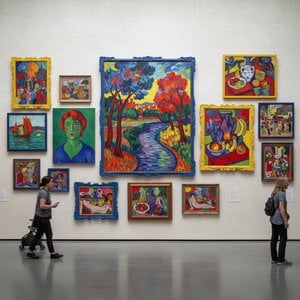
Fauvismus: Die 10 Meisterwerke, die eine Revolution der Farben entfesselten –
Entdecken Sie die 10 Meisterwerke des Fauvismus! Von Matisse bis Derain – erleben Sie die Revolution der Farben und Emotionen in der modernen Kunst. Hochwertige Reproduktionen & Inspiration für Ihr Zuhause auf

Mutige Meisterwerke: Die Top 10 Kunstwerke voller Ausdruckskraft | ArtsDot
Entdecken Sie die Top 10 mutiger Kunstwerke, voller Ausdruckskraft & Emotion! Von Van Gogh bis Picasso – erfahren Sie die Geschichten hinter den Meisterwerken und finden Sie Ihre perfekte Wanddeko auf ArtsDot.com.

Georges Braque: Die 25 Meisterwerke des Kubismus für Ihr Zuhause | ArtsDot
Entdecken Sie die 25 bedeutendsten Kunstwerke von Georges Braque – vom Kubismus bis zum Fauvismus. Erfahren Sie die Geschichten hinter den Meisterwerken und finden Sie hochwertige Reproduktionen für Ihr Zuhause auf ArtsDot.com.

Romantische Landschaften: Die 10 Meisterwerke, die eine Epoche prägten | ArtsDot
Entdecken Sie die 10 Meisterwerke der Romantischen Landschaftsmalerei! Von Caspar David Friedrich bis Turner – erleben Sie die Kunst, Emotion & Natur. Hochwertige Reproduktionen auf ArtsDot.com


