


 Vorschau anzeigen
 Versenden
 Teilen
 Details anzeigen

 Herunterladen
 Ähnliche Objekte
 Röntgenaufnahme
 Diashow
Vanitas


 Weiterlesen
Handgefertigte Ölreproduktion
Handgemaltes Ölgemälde auf Leinwand in Ihrer Wunschgröße und mit Rahmen, auf Bestellung von unseren Künstlern angefertigt. ( Druck bestellen Bild kaufen)




P118B $10

P118H $10

P118W $10

P438Z $10

P508JH $12

P508YH $12

P805H $10

P805Z $10

P919BZ $10

P919G $10

P919XJ $10

P959ZH $10

P968JZ $12

W106C $8

W218G $10

W218JH $8

W218Y $10

W307PJ $10

W316G $10

W316PJ $8

W316Y $10

W398PJ $8

W4111J $10

W500HY $15

W500JH $15

W692G $12

W849H $8

W940BG $15

W953PJ $8




Wählen Sie aus unseren vordefinierten Formaten, die den ursprünglichen Proportionen des Kunstwerks entsprechen.

Sie können Ihre eigenen Maße eingeben, um einen bestimmten Rahmen oder Platz auszufüllen. Wenn die gewählte Größe nicht den Proportionen des Originalbildes entspricht, werden wir das Kunstwerk entweder beschneiden oder das Gemälde durch zusätzliche, handgemalte Elemente erweitern. Ein digitales Mockup wird Ihnen zur Genehmigung zugesandt, bevor die Produktion beginnt.
Bitte beachten Sie, dass die Bildschirmvorschau nicht die tatsächliche Beschneidung oder Erweiterung widerspiegelt. Nur das Mockup zeigt die endgültige Komposition exakt an.
Obwohl Sondermaße verfügbar sind, empfehlen wir, eine Größe aus der vordefinierten Liste zu wählen, um die ursprünglichen Proportionen beizubehalten.
Nach der Bestellung wird das ArtsDot.com-Team dem Kunden Anweisungen per E-Mail zusenden und eine Mockup-Vorschau bereitstellen.
Weltweiter Versand () in nur 3 bis 4 Wochen statt der üblichen 5 Wochen. (27 August). Keine Kompromisse bei der Qualität.

Kostenloser weltweiter Expressversand

Hochwertige Leinenleinwand

Umfassender Versicherungsschutz beim Versand

Zollgebühren-Rückerstattungsgarantie

Garantie für exakte Farbtreue

60 Tage Rückgaberecht (nur bei Mängeln)

100% Geld-zurück-Garantie

Mengenrabatt verfügbar
 Die Glasoption ist nur für Größen unter 110 cm verfügbar.

Vanitas
Art der Reproduktion
Format der Reproduktion
-


Gesamtpreis
$ 263
Beschreibung des Kunstwerks
A Silent Dialogue with Mortality
In the quiet, somber depths of Georges Braque’s 1939 masterpiece, "Vanitas," viewers are invited into a profound meditation on the fleeting nature of existence. Created during a period of immense global tension, this work transcends the boundaries of a traditional still life to become an evocative visual poem. At its heart lies a stark, haunting juxtaposition: a skull resting upon a draped couch, positioned alongside a crucifix. This arrangement serves as a powerful memento mori, a reminder of the inevitability of death that has resonated through art history for centuries. Braque does not merely present objects; he orchestrates a confrontation between the physical world and the spiritual unknown, inviting the observer to contemplate the heavy weight of time.
The composition is far more than a collection of items; it is a carefully curated landscape of symbolism. As one’s gaze wanders through the scene, they encounter a chair representing the stillness of repose, and vases holding withered flowers that whisper of beauty long since faded. A bottle, a bowl, and even books with blank pages act as silent witnesses to the transience of human endeavor—knowledge and wisdom rendered hollow by the march of time. For the discerning collector or interior designer, this painting offers a sophisticated layer of intellectual depth, making it an ideal centerpiece for spaces designed for reflection, study, or quiet contemplation.
The Mastery of Cubist Deconstruction
Technically, "Vanitas" is a triumph of Braque’s mature style, showcasing his ability to blend the structural innovations of Cubism with a deeply emotive sensibility. Rather than relying on traditional, singular perspectives, Braque employs fragmented planes and overlapping forms to dismantle the solidity of the objects. This technique creates a sense of movement within the stillness, as if the very air around the skull is vibrating with the memory of what once was. The artist’s masterful use of a muted, earthy palette—rich browns, warm ochres, and soft creams—avoids dramatic spectacle in favor of a solemn, atmospheric grace.
The tactile quality of the work further enhances its emotional resonance. By skillfully blending oil paint with pastel chalk, Braque achieved a textured surface that invites the eye to linger on every brushstroke and grain. This interplay of media lends a physical presence to the decay depicted, making the withered petals and the weathered bone feel tangibly real. For those seeking a high-quality reproduction, this texture is essential; it captures the soul of the original, bringing the somber beauty of Braque’s vision into the modern home with all its historical gravity and artistic prestige.
An Enduring Legacy for Modern Interiors
Beyond its historical significance, "Vanitas" possesses a timeless aesthetic appeal that transcends the era of its creation. Its subdued tones and complex composition allow it to integrate seamlessly into diverse interior design schemes, from the minimalist modern gallery style to more traditional, classical settings. It serves as an anchor of sophistication, providing a conversation piece that is both intellectually stimulating and visually arresting.
To possess a reproduction of this work is to hold a fragment of the modernist revolution. It is an invitation to pause in a fast-paced world and engage with the profound truths of our shared human experience. Whether adorning a private library or a curated living space, Braque’s "Vanitas" brings with it an aura of wisdom, elegance, and an enduring respect for the beautiful mystery of life and its inevitable conclusion.
Ähnliche Kunstwerke


Über den Künstler
**frühes Leben und Ausbildung**
Georges Braque, ein prominenter französischer Maler, Kollagist, Bleistrichzeichner, Grafiker und Bildhauer, wurde am 13. Mai 1882 in Argenteuil, Val-d'oise, geboren. Er wuchs in Le Havre auf und erhielt zunächst eine Ausbildung als Hausmaler und Dekorateur wie sein Vater und Großvater. Braques künstlerische Neigungen führten ihn jedoch dazu, von 1897 bis 1899 an der École des Beaux-Arts in Le Havre Malerei zu studieren.**Künstlerische Entwicklung und Fauvisme**
Im Jahr 1902, nachdem er seine Lehre bei einem Dekorateur in Paris abgeschlossen hatte, besuchte Braque bis 1904 die Académie Humbert. Dieser Zeitraum markierte seine Einführung ins Fauvismus, einen Stil, der durch lebendige Farben und emotionale Reaktionen gekennzeichnet ist. Beeinflusst von den Werken von Henri Matisse und André Derain, übernahm Braque einen fauvistischen Ansatz, wie in seinem Gemälde The Patience (Fauvismus, Öl auf Leinwand).**Beitrag zum Kubismus**
Braques Zusammenarbeit mit Pablo Picasso von 1908 bis 1912 führte zur Entwicklung des Kubismus. Ihre analytischen kubistischen Werke, wie z.B. Georges Braque: The Patience und Pablo Picasso: Clarinet(analytischer Kubismus, Öl auf Leinwand), gelten heute als Meilensteine der Kunstgeschichte.**Erbe und bemerkenswerte Werke**
* Houses at L'Estaques: Ein Zeugnis für Braques innovatives Einsatz von Geometrie und simultaner Perspektive. * The Patience(Fauvismus, Öl auf Leinwand): Demonstriert Braques fauvistischen Stil. * Clarinet(analytischer Kubismus, Öl auf Leinwand): Eine kollaborative kubistische Arbeit mit Picasso.**Museen und Sammlungen**
* Musée d'Orsay: Bietet eine umfangreiche Sammlung impressionistischer und postimpressionistischer Kunst, darunter Werke von Braque. * Musée de l'Orangerie: Zeigt eine breite Palette von Kunstwerken, darunter Werke von Braque und anderen bedeutenden Künstlern.- Erfahren Sie mehr über Georges Braques Leben und Werk auf ArtsDot.com
- Entdecken Sie die Sammlung des Musée d'Orsay, die Werke von Braque und anderen Künstlern umfasst, unter Musée d'Orsay - Wikipedia
- Erfahren Sie mehr über den Fauvismus und seinen Einfluss auf die Entwicklung des Kubismus mit Fauvismus Kunstbewegung auf ArtsDot.com
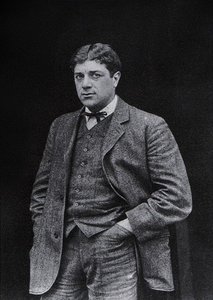
Georges Braque
1882 - 1963 , Frankreich
Kurzinfos
- Beeinflusste Künstler: ['Pablo Picasso']
- Bemerkenswerte Werke:
- Häuser in L'Estaque
- Die Geduld (Fauvismus)
- Stillleben mit Pfeife
- Mandola
- Einflussreiche Künstler:
- Henri Matisse
- André Derain
- Paul Cézanne
- Geburtsdatum: 13. Mai 1882
- Geburtsort: Argenteuil, Frankreich
- Künstlerischer Stil: Kubismus, Fauvismus
- Nationalität: Französisch
- Sterbedatum: 1963
- Vollständiger Name: Georges Braque
Ähnliche Artikel

Georges Braque: Die 25 Meisterwerke des Kubismus für Ihr Zuhause | ArtsDot
Entdecken Sie die 25 bedeutendsten Kunstwerke von Georges Braque – vom Kubismus bis zum Fauvismus. Erfahren Sie die Geschichten hinter den Meisterwerken und finden Sie hochwertige Reproduktionen für Ihr Zuhause auf ArtsDot.com.

Memento Mori: Finding Beauty and Meaning in Art's Timeless Reminders of Mortality
Explore the profound beauty of Memento Mori art. Discover how Baroque masters used symbols of mortality to inspire reflection, and learn to curate meaningful, timeless masterpieces for your home with expert guidance from ArtsDot.
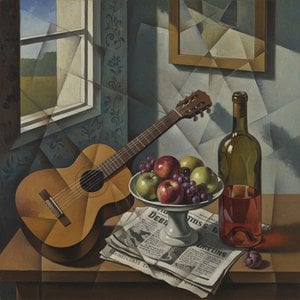
Deconstructing Reality: A Comprehensive Exploration of Cubist Still Life
Explore the revolutionary world of Cubist Still Life with ArtsDot. Discover Picasso & Braque's groundbreaking techniques, its philosophical roots, and lasting impact on modern art. Expert insights for collectors.

Georges Braque: Pionier des Kubismus und die Evolution moderner Formensprache
Entdecken Sie Georges Braques revolutionären Einfluss auf den Kubismus und die moderne Kunstgeschichte. Expertenanalyse seiner Formensprache, Werke & Bedeutung. Jetzt lesen!

Vanitas & Beyond: Exploring Mortality's Artistic Legacy for the Elite Collector
Explore the rich history & symbolism of Vanitas paintings with ArtsDot. Discover masterpieces reflecting mortality, societal values, & collecting insights for discerning art enthusiasts.



