


 Vorschau anzeigen
 Versenden
 Teilen
 Details anzeigen

 Herunterladen
 Ähnliche Objekte
 Röntgenaufnahme
 Diashow
untitled (449)


 Weiterlesen
Giclée / Kunstdruck
Giclée- oder Leinwanddruck in Museumsqualität mit schneller Produktion und flexiblen Veredelungsoptionen. ( Handgemalte Reproduktion bestellen Bild kaufen)




P118B $10

P118H $10

P118W $10

P438Z $10

P508JH $12

P508YH $12

P805H $10

P805Z $10

P919BZ $10

P919G $10

P919XJ $10

P959ZH $10

P968JZ $12

W106C $8

W218G $10

W218JH $8

W218Y $10

W307PJ $10

W316G $10

W316PJ $8

W316Y $10

W398PJ $8

W4111J $10

W500HY $15

W500JH $15

W692G $12

W849H $8

W940BG $15

W953PJ $8




Wählen Sie aus unseren vordefinierten Formaten, die den ursprünglichen Proportionen des Kunstwerks entsprechen.

Sie können Ihre eigenen Maße eingeben, um ein bestimmtes Format oder einen speziellen Platz einzupassen. Wenn das von Ihnen gewählte Format nicht den Proportionen des Originalbildes entspricht, werden wir das Kunstwerk entweder beschneiden oder das Bild mit einem gespiegelten oder einfarbigen Rand erweitern. Ein digitaler Entwurf wird Ihnen zur Genehmigung zugesandt, bevor die Produktion beginnt.
Bitte beachten Sie, dass die Vorschau auf dem Bildschirm nicht den tatsächlichen Zuschnitt oder die Erweiterung widerspiegelt. Nur der Entwurf zeigt die endgültige Komposition präzise an.
Obwohl Sondermaße verfügbar sind, empfehlen wir die Auswahl eines Maßes aus der vordefinierten Liste, um die ursprünglichen Proportionen zu bewahren.
Weltweiter Versand () innerhalb von 2 Wochen statt der üblichen 4/5 Wochen. (7 September)

Kostenloser weltweiter Expressversand

Hochwertige Leinenleinwand

Umfassender Versicherungsschutz beim Versand

Zollgebühren-Rückerstattungsgarantie

Garantie für exakte Farbtreue

100-Tage-Rückgaberecht (nur bei Mängeln)

100% Geld-zurück-Garantie

Mengenrabatt verfügbar
 Die Glasoption ist nur für Größen unter 110 cm verfügbar.

untitled (449)
Giclée / Kunstdruck
Format der Reproduktion
-


Gesamtpreis
$ 62
A Dialogue Between Tool and Expression
In the evocative realm of Georges Braque’s “untitled (449),” viewers are invited into a profound visual conversation that transcends the boundaries of traditional portraiture. The artwork presents a striking, almost surreal juxtaposition of two distinct faces: one rendered in bold, somber black hues reminiscent of a heavy wrench or industrial tool, and the other bathed in vibrant, luminous yellow tones that suggest the soft curve of a mouth. This seemingly incongruous pairing serves as an immediate gateway to contemplation, prompting the observer to explore the delicate tension between the mechanical rigidity of functionality and the fluid vulnerability of human emotion.
Braque’s mastery is on full display through his sophisticated use of Fauvist color palettes and a technique deeply rooted in the evolution of Cubism. While he subtly departs from the more radical, fragmented approach popularized by his contemporary Pablo Picasso, Braque utilizes a deliberate deconstruction of perspective to convey multiple viewpoints simultaneously. The painting rejects naturalistic representation in favor of simplified geometric forms and expressive textures, creating a composition that feels both structurally grounded and emotionally liberated. For the discerning collector or interior designer, this piece offers a sophisticated focal point, bringing a sense of intellectual depth and avant-garde elegance to any curated space.
Symbolism and the Weight of History
The deliberate choice of color in “untitled (449)” is laden with symbolic significance that resonates far beyond its visual surface. The deep blacks within the composition often evoke themes of darkness, silence, and resistance, hinting at a hidden psychological tension lurking beneath the paint. In stark contrast, the radiant yellows evoke warmth, optimism, and the necessity of communication, acting as a vital counterbalance to the darker elements. This interplay suggests a struggle between control—represented by the tool-like face—and the raw, vocal expression embodied by the yellow mouth.
Created in 1968, the work also reflects the broader artistic and societal currents of its era. Following the profound shifts and anxieties that characterized the post-World War II period, Braque’s late-career explorations embody a desire to find psychological depth through formal innovation. The painting does not merely seek to decorate; it seeks to provoke. It generates a palpable sense of unease and curiosity, making it an ideal acquisition for those who appreciate art that stimulates the intellect and invites long periods of quiet, thoughtful engagement.
An Essential Addition to the Modern Collection
For those seeking to infuse their environment with the spirit of the 20th-century avant-garde, a high-quality reproduction of this Braque masterpiece offers unparalleled inspiration. The artwork’s ability to blend heavy, industrial textures with bright, emotive light makes it a versatile choice for modern, minimalist, or eclectic interiors. It serves as a testament to the enduring legacy of Cubism, providing a window into a time when artists dared to dismantle reality to find a more profound truth.
Ähnliche Kunstwerke


Über den Künstler
**frühes Leben und Ausbildung**
Georges Braque, ein prominenter französischer Maler, Kollagist, Bleistrichzeichner, Grafiker und Bildhauer, wurde am 13. Mai 1882 in Argenteuil, Val-d'oise, geboren. Er wuchs in Le Havre auf und erhielt zunächst eine Ausbildung als Hausmaler und Dekorateur wie sein Vater und Großvater. Braques künstlerische Neigungen führten ihn jedoch dazu, von 1897 bis 1899 an der École des Beaux-Arts in Le Havre Malerei zu studieren.**Künstlerische Entwicklung und Fauvisme**
Im Jahr 1902, nachdem er seine Lehre bei einem Dekorateur in Paris abgeschlossen hatte, besuchte Braque bis 1904 die Académie Humbert. Dieser Zeitraum markierte seine Einführung ins Fauvismus, einen Stil, der durch lebendige Farben und emotionale Reaktionen gekennzeichnet ist. Beeinflusst von den Werken von Henri Matisse und André Derain, übernahm Braque einen fauvistischen Ansatz, wie in seinem Gemälde The Patience (Fauvismus, Öl auf Leinwand).**Beitrag zum Kubismus**
Braques Zusammenarbeit mit Pablo Picasso von 1908 bis 1912 führte zur Entwicklung des Kubismus. Ihre analytischen kubistischen Werke, wie z.B. Georges Braque: The Patience und Pablo Picasso: Clarinet(analytischer Kubismus, Öl auf Leinwand), gelten heute als Meilensteine der Kunstgeschichte.**Erbe und bemerkenswerte Werke**
* Houses at L'Estaques: Ein Zeugnis für Braques innovatives Einsatz von Geometrie und simultaner Perspektive. * The Patience(Fauvismus, Öl auf Leinwand): Demonstriert Braques fauvistischen Stil. * Clarinet(analytischer Kubismus, Öl auf Leinwand): Eine kollaborative kubistische Arbeit mit Picasso.**Museen und Sammlungen**
* Musée d'Orsay: Bietet eine umfangreiche Sammlung impressionistischer und postimpressionistischer Kunst, darunter Werke von Braque. * Musée de l'Orangerie: Zeigt eine breite Palette von Kunstwerken, darunter Werke von Braque und anderen bedeutenden Künstlern.- Erfahren Sie mehr über Georges Braques Leben und Werk auf ArtsDot.com
- Entdecken Sie die Sammlung des Musée d'Orsay, die Werke von Braque und anderen Künstlern umfasst, unter Musée d'Orsay - Wikipedia
- Erfahren Sie mehr über den Fauvismus und seinen Einfluss auf die Entwicklung des Kubismus mit Fauvismus Kunstbewegung auf ArtsDot.com
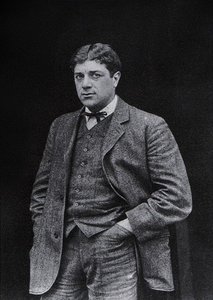
Georges Braque
1882 - 1963 , Frankreich
Kurzinfos
- Beeinflusste Künstler: ['Pablo Picasso']
- Bemerkenswerte Werke:
- Häuser in L'Estaque
- Die Geduld (Fauvismus)
- Stillleben mit Pfeife
- Mandola
- Einflussreiche Künstler:
- Henri Matisse
- André Derain
- Paul Cézanne
- Geburtsdatum: 13. Mai 1882
- Geburtsort: Argenteuil, Frankreich
- Künstlerischer Stil: Kubismus, Fauvismus
- Nationalität: Französisch
- Sterbedatum: 1963
- Vollständiger Name: Georges Braque
Ähnliche Artikel

Geometrische Abstraktion: Die 10 Meisterwerke, die Kunstgeschichte prägten | ArtsDot.com
Entdecken Sie die 10 Meisterwerke der geometrischen Abstraktion! Von Kandinsky bis Mondrian – erleben Sie die Geschichte, Farben & Formen dieser revolutionären Kunstrichtung. Hochwertige Kunstreproduktionen auf ArtsDot.com

Kandinsky: Die 25 Meisterwerke des Abstrakten – Kunst für Ihr Zuhause | ArtsDot
Entdecken Sie die 25 bedeutendsten Gemälde von Wassily Kandinsky! Tauchen Sie ein in die Welt der abstrakten Kunst, des Expressionismus und der Farbkomposition. Hochwertige Kunstdrucke & Inspiration für Ihr Zuhause auf ArtsDot.com.

Beyond Form & Color: Geometric Abstraction's Evolution in 20th/21st Century Art
Explore the evolution of geometric abstraction from Cubism to contemporary art. Discover key artists like Malevich & Mondrian, investment insights, and expert collecting advice at ArtsDot.

Beyond Form & Color: Geometric Abstraction's Enduring Legacy in Art History
Explore the captivating world of geometric abstraction! Discover its origins, key artists like Malevich & Mondrian, and why this movement remains highly valued by art collectors today. Expert insights at ArtsDot.

Kazimir Malevich: Die 25 Meisterwerke des Suprematismus für Ihr Zuhause | ArtsDot
Entdecken Sie die 25 Meisterwerke von Kazimir Malevich! Tauchen Sie ein in die Welt des Suprematismus, abstrakter Kunst & geometrischer Formen. Hochwertige Kunstdrucke und Reproduktionen auf ArtsDot.com – für Ihr Zuhause.


