
- Startseite

- Ölgemälde-Reproduktion
- Georges Braque
- The Yellow Tablecloth

 In echtem Maßstab anzeigen
 Versenden
 Teilen
 Details anzeigen

 Herunterladen
 Ähnliche Objekte
 Röntgenaufnahme
 Diashow starten
The Yellow Tablecloth

 Mehr anzeigen
Handgefertigte Ölreproduktion
Handgemaltes Ölgemälde auf Leinwand in Ihrer Wunschgröße und mit Rahmen, auf Bestellung von unseren Künstlern angefertigt. ( Zum Druck bestellen Zum Bild wechseln)




P118B $10

P118H $10

P118W $10

P438Z $10

P508JH $12

P508YH $12

P805H $10

P805Z $10

P919BZ $10

P919G $10

P919XJ $10

P959ZH $10

P968JZ $12

W106C $8

W218G $10

W218JH $8

W218Y $10

W307PJ $10

W316G $10

W316PJ $8

W316Y $10

W398PJ $8

W4111J $10

W500HY $15

W500JH $15

W692G $12

W849H $8

W940BG $15

W953PJ $8




Wählen Sie aus unseren vordefinierten Formaten, die den ursprünglichen Proportionen des Kunstwerks entsprechen.

Sie können Ihre eigenen Maße eingeben, um einen bestimmten Rahmen oder Platz auszufüllen. Wenn die gewählte Größe nicht den Proportionen des Originalbildes entspricht, werden wir das Kunstwerk entweder beschneiden oder das Gemälde durch zusätzliche, handgemalte Elemente erweitern. Ein digitales Mockup wird Ihnen zur Genehmigung zugesandt, bevor die Produktion beginnt.
Bitte beachten Sie, dass die Bildschirmvorschau nicht die tatsächliche Beschneidung oder Erweiterung widerspiegelt. Nur das Mockup zeigt die endgültige Komposition exakt an.
Obwohl Sondermaße verfügbar sind, empfehlen wir, eine Größe aus der vordefinierten Liste zu wählen, um die ursprünglichen Proportionen beizubehalten.
Nach der Bestellung wird das ArtsDot.com-Team dem Kunden Anweisungen per E-Mail zusenden und eine Mockup-Vorschau bereitstellen.
Weltweiter Versand () in nur 3 bis 4 Wochen statt der üblichen 5 Wochen. (3 August). Keine Kompromisse bei der Qualität.

Kostenloser weltweiter Expressversand

Hochwertige Leinenleinwand

Vollumfänglicher Versicherungsschutz beim Versand

Zollgebühren-Rückerstattungsgarantie

Garantie für exakte Farbtreue

60 Tage Rückgaberecht (nur bei Mängeln)

100% Geld-zurück-Garantie

Angebot für Mengenrabatt
 Die Glasoption ist nur in Größen unter 110 cm verfügbar.

The Yellow Tablecloth
Reproduktionsmedium
Format der Reproduktion
-


Gesamtpreis
$ 263
Werkbeschreibung
Georges Braque’s “The Yellow Tablecloth”: A Study in Simplicity and Cubist Revelation
Georges Braque's "The Yellow Tablecloth," painted around 1956, isn’t merely a still life; it’s a distilled essence of form, color, and the burgeoning revolutionary spirit of Cubism. This deceptively simple composition – an arrangement of ripe fruit against a vibrant yellow backdrop – belies a profound exploration of perception and representation, firmly rooted in Braque's pivotal role alongside Pablo Picasso in dismantling traditional artistic conventions. The painting’s power lies not in dramatic subject matter or elaborate detail, but in its carefully constructed geometry and the deliberate flattening of space, hallmarks of the Cubist movement that was reshaping the very language of art at the time. Notice how the table itself seems to dissolve into a series of interlocking planes, mirroring the fragmentation of objects as seen from multiple viewpoints – a core principle of Braque’s approach. The yellow cloth isn't just a background; it actively participates in the composition, creating a warm, almost luminous atmosphere that subtly alters our perception of the fruits within.The Language of Cubism and its Roots in Everyday Life
Braque’s exploration of geometric abstraction began with his early work alongside Picasso, particularly during their “Blue Period” and subsequent “Rose Period.” However, it was in the 1920s that he truly embraced the tenets of Cubism, developing a distinct style characterized by fractured forms, multiple perspectives, and an emphasis on the underlying structure of objects. "The Yellow Tablecloth" exemplifies this evolution. Unlike the more overtly analytical Cubism of Picasso, Braque’s approach is often described as “synthetic,” favoring a more muted palette and a greater integration of collage elements – though not present in this particular work, the influence is undeniable. The painting reflects a shift towards a more internalized exploration of form, moving away from direct imitation of reality and instead focusing on capturing the *essence* of an object through its constituent shapes and planes. The choice of everyday objects—apples, oranges, bananas – elevates the mundane to the level of artistic contemplation, mirroring a broader trend in modern art that sought to find beauty and significance in the ordinary.Color as a Defining Element: The Significance of Yellow
The dominant presence of yellow is not accidental; it’s a deliberate and carefully considered element within the composition. Yellow, historically associated with optimism, warmth, and even madness, carries a complex symbolic weight. In Braque's work, it acts as both a visual anchor and a subtle emotional cue. It creates a sense of intimacy and comfort, drawing the viewer into the scene while simultaneously suggesting an underlying tension or instability – perhaps reflecting the inherent ambiguity of Cubist representation. The intensity of the yellow also contrasts sharply with the muted tones of the fruit, further emphasizing their fragmented forms and highlighting Braque’s focus on shape over color. Interestingly, this particular use of yellow echoes elements found in earlier works by Braque, suggesting a consistent exploration of its expressive potential.A Legacy of Innovation: Braque's Enduring Influence
Georges Braque’s "The Yellow Tablecloth" stands as a testament to his groundbreaking contributions to modern art. It’s a deceptively simple painting that encapsulates the revolutionary spirit of Cubism and demonstrates Braque’s ability to transform ordinary subjects into profound explorations of form, space, and perception. His work paved the way for subsequent movements like Surrealism and Abstract Expressionism, leaving an indelible mark on the history of art. Reproductions of this piece offer a unique opportunity to experience firsthand the intellectual rigor and artistic vision of one of the 20th century’s most influential figures. Consider how the painting's clarity and geometric precision translate into interior design – its clean lines and bold color scheme can be incorporated into contemporary spaces to create a sense of sophisticated minimalism and understated elegance.Ähnliche Kunstwerke


Künstlerbiografie
**frühes Leben und Ausbildung**
Georges Braque, ein prominenter französischer Maler, Kollagist, Bleistrichzeichner, Grafiker und Bildhauer, wurde am 13. Mai 1882 in Argenteuil, Val-d'oise, geboren. Er wuchs in Le Havre auf und erhielt zunächst eine Ausbildung als Hausmaler und Dekorateur wie sein Vater und Großvater. Braques künstlerische Neigungen führten ihn jedoch dazu, von 1897 bis 1899 an der École des Beaux-Arts in Le Havre Malerei zu studieren.**Künstlerische Entwicklung und Fauvisme**
Im Jahr 1902, nachdem er seine Lehre bei einem Dekorateur in Paris abgeschlossen hatte, besuchte Braque bis 1904 die Académie Humbert. Dieser Zeitraum markierte seine Einführung ins Fauvismus, einen Stil, der durch lebendige Farben und emotionale Reaktionen gekennzeichnet ist. Beeinflusst von den Werken von Henri Matisse und André Derain, übernahm Braque einen fauvistischen Ansatz, wie in seinem Gemälde The Patience (Fauvismus, Öl auf Leinwand).**Beitrag zum Kubismus**
Braques Zusammenarbeit mit Pablo Picasso von 1908 bis 1912 führte zur Entwicklung des Kubismus. Ihre analytischen kubistischen Werke, wie z.B. Georges Braque: The Patience und Pablo Picasso: Clarinet(analytischer Kubismus, Öl auf Leinwand), gelten heute als Meilensteine der Kunstgeschichte.**Erbe und bemerkenswerte Werke**
* Houses at L'Estaques: Ein Zeugnis für Braques innovatives Einsatz von Geometrie und simultaner Perspektive. * The Patience(Fauvismus, Öl auf Leinwand): Demonstriert Braques fauvistischen Stil. * Clarinet(analytischer Kubismus, Öl auf Leinwand): Eine kollaborative kubistische Arbeit mit Picasso.**Museen und Sammlungen**
* Musée d'Orsay: Bietet eine umfangreiche Sammlung impressionistischer und postimpressionistischer Kunst, darunter Werke von Braque. * Musée de l'Orangerie: Zeigt eine breite Palette von Kunstwerken, darunter Werke von Braque und anderen bedeutenden Künstlern.- Erfahren Sie mehr über Georges Braques Leben und Werk auf ArtsDot.com
- Entdecken Sie die Sammlung des Musée d'Orsay, die Werke von Braque und anderen Künstlern umfasst, unter Musée d'Orsay - Wikipedia
- Erfahren Sie mehr über den Fauvismus und seinen Einfluss auf die Entwicklung des Kubismus mit Fauvismus Kunstbewegung auf ArtsDot.com
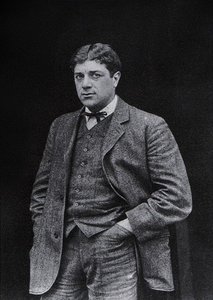
Georges Braque
1882 - 1963 , Frankreich
Eckdaten zum Künstler
- Beeinflusste Künstler: ['Pablo Picasso']
- Bemerkenswerte Werke:
- Häuser in L'Estaque
- Die Geduld (Fauvismus)
- Stillleben mit Pfeife
- Mandola
- Einflussreiche Künstler:
- Henri Matisse
- André Derain
- Paul Cézanne
- Geburtsdatum: 13. Mai 1882
- Geburtsort: Argenteuil, Frankreich
- Künstlerischer Stil: Kubismus, Fauvismus
- Nationalität: Französisch
- Sterbedatum: 1963
- Vollständiger Name: Georges Braque
Verwandte Artikel
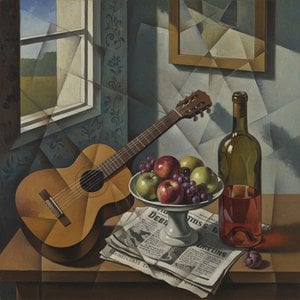
Deconstructing Reality: A Comprehensive Exploration of Cubist Still Life
Explore the revolutionary world of Cubist Still Life with ArtsDot. Discover Picasso & Braque's groundbreaking techniques, its philosophical roots, and lasting impact on modern art. Expert insights for collectors.

The Bountiful Still Life: Symbolism & Artistic Representation of Fruit Across Art History
Explore the rich history of still life painting & the symbolism of fruit across art movements. Discover masterpieces from Caravaggio to Cézanne with ArtsDot – expert guidance & museum-quality reproductions.
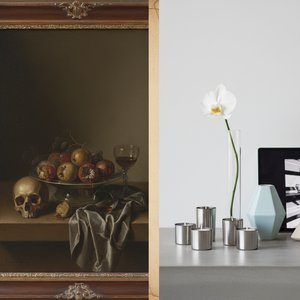
The Enduring Appeal of Still Life: A Historical & Contemporary Exploration
Explore the rich history & symbolism of still life painting with ArtsDot. Discover masterpieces from the Dutch Golden Age, learn about vanitas art, and find expert guidance for collecting timeless artworks.

Severin Roesen: Evoking National Identity Through American Still Life Painting
Explore the captivating world of Severin Roesen, a major American still life painter influenced by Dutch masters. Discover his lush compositions and the symbolism within his art – a window into 19th-century America.

Vom klassischen Stillleben zur zeitgenössischen Abstraktion: Die Veredelung von Villa-Ambientes durch kunstvolle Reproduktionen
Entdecken Sie die faszinierende Welt der Stilllebenmalerei! Von historischen Meisterwerken bis zur zeitgenössischen Abstraktion – wir bieten hochwertige Reproduktionen für luxuriöse Villa-Ambientes. Expertenberatung & Kunstsammlerqualität.



