


 Vorschau anzeigen
 Versenden
 Teilen
 Details anzeigen

 Herunterladen
 Ähnliche Objekte
 Röntgenaufnahme
 Diashow
The two birds

 Weiterlesen
Erwerben Sie ein hochauflösendes, optimiertes digitales Bild, das der Online-Vorschau weit überlegen ist.
Jede Datei wird von unseren hauseigenen Spezialisten mit modernsten Werkzeugen und fachmännischer manueller Retusche sorgfältig vorbereitet. Wir stellen sicher, dass jedes Bild eine außergewöhnliche Klarheit, präzise Farbgenauigkeit und feinste Details aufweist.
Die endgültige Datei wird innerhalb von 72 Stunden per E-Mail zugestellt und ist für den sofortigen Einsatz in professionellen, redaktionellen und Druckumgebungen optimiert. Es handelt sich um dieselbe Qualität, der führende Designstudios, Verlage und Galerien vertrauen.
Digitales Bild
Laden Sie eine hochauflösende Datei für die persönliche Präsentation, den Druck und kreative Projekte herunter. ( Druck bestellen Handgemalte Reproduktion bestellen)
In jeder Bestellung digitaler Bilder enthalten
Professionelle digitale Bereitstellung, garantiert
Wenn Sie sich für ArtsDot.com entscheiden, erhalten Sie nicht nur ein Bild – Sie erhalten ein professionell aufbereitetes digitales Kunstwerk, das mit höchster Präzision erstellt und durch eine Zufriedenheitsgarantie abgesichert wird. Hier ist alles, was automatisch mit Ihrer Bestellung geliefert wird:

Schnelle E-Mail-Zustellung
Ihre hochauflösende digitale Bilddatei wird Ihnen innerhalb von 72 Stunden nach der Bestellung per E-Mail zugestellt – bereit zur sofortigen Verwendung.

KI-optimierte digitale Datei
Ihre Kunstwerke werden professionell mithilfe fortschrittlicher KI-Tools und manueller Bearbeitung optimiert, um maximale Detailtreue, Klarheit und Farbgenauigkeit zu gewährleisten.

Lebenslanger kostenloser Neudruckservice
Datei versehentlich gelöscht oder verloren? Keine Sorge – wir senden sie Ihnen jederzeit kostenlos erneut zu.

Keine Einfuhrgebühren – jemals
Genießen Sie Ihr Kunstwerk sofort ohne Zollgebühren, Einfuhrabgaben oder Versandkosten – digitale Downloads sind immer steuerfrei.

Garantierte Farbtreue
Wir garantieren, dass Ihr digitales Bild mithilfe professioneller Werkzeuge und Farbmanagement die Originalfarben so präzise wie möglich wiedergibt.

60-Tage-Zufriedenheitsgarantie
Sollten Sie mit Ihrem digitalen Bild nicht zufrieden sein, werden wir es überarbeiten oder Ihnen innerhalb von 60 Tagen 100% erstatten – ohne Wenn und Aber.

100% Geld-zurück-Garantie
Nicht zufrieden? Erhalten Sie innerhalb von 60 Tagen nach Erhalt Ihrer digitalen Datei eine vollständige Rückerstattung – ohne Angabe von Gründen.

Rabatte bei Großbestellungen
3 Bilder kaufen, 10% sparen – 5 Bilder kaufen, 15% sparen – Ab 10 Bildern 20% sparen. Ideal für kreative Projekte, Galerien und Agenturen.
Details zum Sammlerstück
The Two Birds: A Study in Cubist Geometry and Silent Dialogue
Georges Braque’s “Two Birds,” painted in 1955, isn't merely a depiction of avian forms; it’s a carefully constructed meditation on movement, relationship, and the inherent ambiguity of visual representation. This monumental work, rendered in a restrained grayscale palette, exemplifies Braque’s mastery of Cubist principles while simultaneously hinting at a profound emotional depth. The painting immediately commands attention with its stark geometry – angular wings, simplified bodies, and fragmented planes that dismantle traditional notions of perspective. It's a deliberate rejection of mimetic realism, opting instead for an exploration of form and structure as the primary subjects.
The composition is strikingly balanced, yet subtly unsettling. Two birds, positioned in a dynamic diagonal relationship, appear to be engaged in some unspoken interaction. Are they pursuing each other? Challenging one another? Or simply sharing a fleeting moment of flight? The ambiguity is key – Braque offers no definitive answer, inviting the viewer to project their own interpretations onto the scene. This deliberate lack of closure contributes significantly to the painting’s enduring power and its ability to resonate with different viewers on multiple levels.
A Legacy Forged in Collaboration
To fully appreciate “Two Birds,” it's essential to understand Braque’s pivotal role within the early development of Cubism. Working closely alongside Pablo Picasso, he essentially co-invented this revolutionary style, pushing beyond the purely analytical approach initially championed by Picasso and introducing a greater emphasis on spatial ambiguity and flattened planes. This collaboration wasn’t simply a matter of shared ideas; it was a deeply intertwined artistic process, with each artist constantly influencing and responding to the other's work. The painting reflects this dynamic – a testament to the creative synergy between two giants of 20th-century art.
Braque’s earlier explorations in Fauvism, characterized by bold colors and expressive brushwork, laid the groundwork for his later Cubist innovations. He moved away from the vibrant hues of the Fauves, embracing a more restrained palette – predominantly grayscale – to focus on the underlying structure and geometry of objects. This shift reflects a growing interest in Cézanne’s emphasis on form and spatial relationships, which profoundly influenced Braque's artistic thinking.
Deconstructing Form: Technique and Process
“Two Birds” is not simply painted; it’s constructed. Braque meticulously employed a technique that combined elements of lithography with oil paint, resulting in a surface texture that is both grainy and subtly luminous. The use of strong black lines delineates the shapes of the birds and the background, creating a sense of depth and volume despite the flattened perspective. The painting’s monochromatic palette amplifies this effect, emphasizing the interplay of light and shadow and highlighting the intricate details of the composition.
Interestingly, archival research reveals that Braque experimented with various models – large canvases covered in preliminary sketches – before committing to the final version. This process underscores his meticulous approach to artmaking and his desire to achieve a perfect balance between structure and dynamism. The painting’s creation was a significant undertaking, reflecting Braque's commitment to pushing the boundaries of artistic expression.
Symbolic Resonance: Flight, Connection, and Contemplation
Beyond its formal qualities, “Two Birds” carries a subtle symbolic weight. Birds have long been associated with freedom, aspiration, and communication – themes that resonate deeply within the painting’s composition. The interaction between the two birds suggests a complex relationship, perhaps representing connection, conflict, or simply the shared experience of flight. The somber grayscale palette contributes to a mood of quiet contemplation, inviting viewers to reflect on the nature of relationships and the beauty of fleeting moments.
Ultimately, “Two Birds” is more than just a depiction of two birds in flight; it’s a profound exploration of form, space, and human connection. It stands as a testament to Georges Braque's genius and his enduring legacy as one of the most influential artists of the 20th century.


Biografie des Künstlers
**frühes Leben und Ausbildung**
Georges Braque, ein prominenter französischer Maler, Kollagist, Bleistrichzeichner, Grafiker und Bildhauer, wurde am 13. Mai 1882 in Argenteuil, Val-d'oise, geboren. Er wuchs in Le Havre auf und erhielt zunächst eine Ausbildung als Hausmaler und Dekorateur wie sein Vater und Großvater. Braques künstlerische Neigungen führten ihn jedoch dazu, von 1897 bis 1899 an der École des Beaux-Arts in Le Havre Malerei zu studieren.**Künstlerische Entwicklung und Fauvisme**
Im Jahr 1902, nachdem er seine Lehre bei einem Dekorateur in Paris abgeschlossen hatte, besuchte Braque bis 1904 die Académie Humbert. Dieser Zeitraum markierte seine Einführung ins Fauvismus, einen Stil, der durch lebendige Farben und emotionale Reaktionen gekennzeichnet ist. Beeinflusst von den Werken von Henri Matisse und André Derain, übernahm Braque einen fauvistischen Ansatz, wie in seinem Gemälde The Patience (Fauvismus, Öl auf Leinwand).**Beitrag zum Kubismus**
Braques Zusammenarbeit mit Pablo Picasso von 1908 bis 1912 führte zur Entwicklung des Kubismus. Ihre analytischen kubistischen Werke, wie z.B. Georges Braque: The Patience und Pablo Picasso: Clarinet(analytischer Kubismus, Öl auf Leinwand), gelten heute als Meilensteine der Kunstgeschichte.**Erbe und bemerkenswerte Werke**
* Houses at L'Estaques: Ein Zeugnis für Braques innovatives Einsatz von Geometrie und simultaner Perspektive. * The Patience(Fauvismus, Öl auf Leinwand): Demonstriert Braques fauvistischen Stil. * Clarinet(analytischer Kubismus, Öl auf Leinwand): Eine kollaborative kubistische Arbeit mit Picasso.**Museen und Sammlungen**
* Musée d'Orsay: Bietet eine umfangreiche Sammlung impressionistischer und postimpressionistischer Kunst, darunter Werke von Braque. * Musée de l'Orangerie: Zeigt eine breite Palette von Kunstwerken, darunter Werke von Braque und anderen bedeutenden Künstlern.- Erfahren Sie mehr über Georges Braques Leben und Werk auf ArtsDot.com
- Entdecken Sie die Sammlung des Musée d'Orsay, die Werke von Braque und anderen Künstlern umfasst, unter Musée d'Orsay - Wikipedia
- Erfahren Sie mehr über den Fauvismus und seinen Einfluss auf die Entwicklung des Kubismus mit Fauvismus Kunstbewegung auf ArtsDot.com
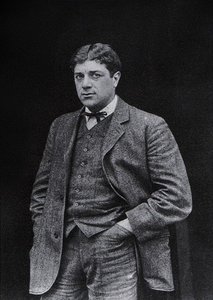
Georges Braque
1882 - 1963 , Frankreich
Kurzinfos
- Beeinflusste Künstler: ['Pablo Picasso']
- Bemerkenswerte Werke:
- Häuser in L'Estaque
- Die Geduld (Fauvismus)
- Stillleben mit Pfeife
- Mandola
- Einflussreiche Künstler:
- Henri Matisse
- André Derain
- Paul Cézanne
- Geburtsdatum: 13. Mai 1882
- Geburtsort: Argenteuil, Frankreich
- Künstlerischer Stil: Kubismus, Fauvismus
- Nationalität: Französisch
- Sterbedatum: 1963
- Vollständiger Name: Georges Braque

