
- Startseite

- Ölgemälde-Reproduktion
- Georges Braque
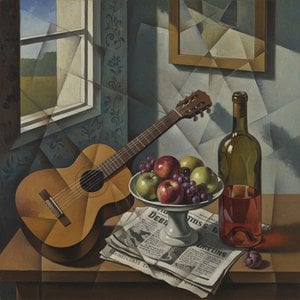
- The Sideboard

 Preview
 Druck bestellen Bild kaufen
 Versenden
 Teilen
 Details anzeigen
 Zu Favoriten hinzufügen

 Herunterladen
 Ähnliche Objekte
 Röntgenaufnahme
 Diashow anzeigen
The Sideboard


 Weiterlesen
Handgefertigte Öl-Reproduktion
Handgemaltes Ölgemälde auf Leinwand in Ihrer Wunschgröße und mit Rahmen, auf Bestellung von unseren Künstlern angefertigt.




P118B $10

P118H $10

P118W $10

P438Z $10

P508JH $12

P508YH $12

P805H $10

P805Z $10

P919BZ $10

P919G $10

P919XJ $10

P959ZH $10

P968JZ $12

W106C $8

W218G $10

W218JH $8

W218Y $10

W307PJ $10

W316G $10

W316PJ $8

W316Y $10

W398PJ $8

W4111J $10

W500HY $15

W500JH $15

W692G $12

W849H $8

W940BG $15

W953PJ $8




Wählen Sie aus unseren vordefinierten Größen, die den ursprünglichen Proportionen des Kunstwerks entsprechen.

Sie können Ihre eigenen Maße eingeben, um einen bestimmten Rahmen oder Platz auszufüllen. Wenn die gewählte Größe nicht den Proportionen des Originalbildes entspricht, werden wir das Kunstwerk entweder beschneiden oder das Gemälde durch zusätzliche, handgemalte Elemente erweitern. Ein digitales Mockup wird Ihnen zur Genehmigung zugesandt, bevor die Produktion beginnt.
Bitte beachten Sie, dass die Bildschirmvorschau nicht die tatsächliche Beschneidung oder Erweiterung widerspiegelt. Nur das Mockup zeigt die endgültige Komposition exakt an.
Obwohl Sondermaße verfügbar sind, empfehlen wir, eine Größe aus der vordefinierten Liste zu wählen, um die ursprünglichen Proportionen beizubehalten.
Nach der Bestellung wird das ArtsDot.com-Team dem Kunden Anweisungen per E-Mail zusenden und eine Mockup-Vorschau bereitstellen.
Weltweiter Versand () in nur 3 bis 4 Wochen statt der üblichen 5 Wochen. (27 Juli). Keine Kompromisse bei der Qualität.

Kostenloser weltweiter Expressversand

Hochwertige Leinenleinwand

Umfassender Versicherungsschutz beim Versand

Zollsteuer-Rückerstattungsgarantie

Garantie für echte Farbtreue

60-Tage-Rückgaberecht (nur bei Mängeln)

100% Geld-zurück-Garantie

Mengenrabatt verfügbar
 Die Glasoption ist nur in Größen unter 110 cm verfügbar.

The Sideboard
Art der Reproduktion
Größe der Reproduktion
-


Endpreis aller Optionen
-
Beschreibung des Kunstwerks
Georges Braque’s “The Sideboard”: A Fragmented Reflection of Artistic Innovation
- Subject Matter and Composition:
- Cubist Style and Technique:
- Historical Context – The Birth of Cubism:
- Symbolic Layers and Interpretations:
- Emotional Resonance and Aesthetic Appeal:
Subject Matter and Composition
Georges Braque’s “The Sideboard,” painted in 1920, presents a deceptively simple subject – a domestic furnishing piece: a sideboard. However, Braque doesn't depict it realistically; instead, he fragments its form into geometric planes that challenge conventional perspective. The inclusion of objects like a guitar, violin, and bowl of fruit isn’t merely decorative; they are deliberately positioned to disrupt the unified visual space. Furthermore, the presence of two books adds intellectual depth, anchoring the composition while simultaneously hinting at contemplation. Finally, a solitary figure stands behind the sideboard, creating an intimate tableau that invites viewers to consider the relationship between human presence and inanimate objects. This careful arrangement underscores Braque’s desire to explore how perception itself is constructed.Cubist Style and Technique
Braque's masterful execution exemplifies the core tenets of Cubism, pioneered alongside Pablo Picasso. He employs a technique characterized by simultaneous viewpoints—a revolutionary departure from Renaissance conventions—allowing him to represent multiple perspectives of an object simultaneously. The painting utilizes muted earthy tones – browns, ochres, and creams – which contribute to its understated elegance and emphasize the textural qualities of the surfaces depicted. Braque meticulously builds up layers of pigment using oil paint on canvas, creating a palpable sense of depth despite the flattened planes characteristic of Cubist style. The artist’s deliberate brushstrokes are visible, adding to the artwork's expressive character and demonstrating his commitment to conveying materiality.Historical Context – The Birth of Cubism
“The Sideboard” emerged during a pivotal moment in art history—the genesis of Cubism. Following the Impressionists’ focus on capturing fleeting moments of light and color, Braque and Picasso sought to transcend representational illusionism altogether. Influenced by Cézanne's explorations of form and structure, they questioned how objects could be accurately depicted when viewed from different angles. This intellectual ferment fueled experimentation with new visual languages, rejecting traditional artistic hierarchies and prioritizing conceptual exploration over mere imitation. The Cubist movement represented a profound shift in artistic thinking, signaling the dawn of abstraction and paving the way for subsequent developments in modern art.Symbolic Layers and Interpretations
Beyond its formal innovations, “The Sideboard” carries symbolic weight. The guitar and violin represent musical instruments—symbols of creativity and intellectual pursuits—suggesting a preoccupation with artistic ideals. Similarly, the bowl of fruit embodies nourishment and beauty, reflecting humanist values prevalent in the early 20th century. The books symbolize knowledge and contemplation, reinforcing the artwork’s invitation to engage in critical reflection. Taken together, these elements contribute to a richer understanding of Braque's intention: to depict not just what is seen but also what is felt—a fragmented yet harmonious representation of human experience within a carefully constructed visual environment.Emotional Resonance and Aesthetic Appeal
Ultimately, “The Sideboard” possesses an enduring emotional resonance that transcends its stylistic complexities. Its subdued palette and deliberate flatness evoke a sense of stillness and introspection, inviting viewers to pause and consider the artwork's subtle nuances. The fragmented composition captures the elusive nature of perception—the way in which our understanding of reality is shaped by multiple viewpoints. More than just a depiction of an object, it’s a meditation on form, materiality, and the human condition. This timeless aesthetic appeal ensures that Braque’s masterpiece continues to inspire admiration and intrigue audiences today.Ähnliche Kunstwerke


Biografie des Künstlers
**frühes Leben und Ausbildung**
Georges Braque, ein prominenter französischer Maler, Kollagist, Bleistrichzeichner, Grafiker und Bildhauer, wurde am 13. Mai 1882 in Argenteuil, Val-d'oise, geboren. Er wuchs in Le Havre auf und erhielt zunächst eine Ausbildung als Hausmaler und Dekorateur wie sein Vater und Großvater. Braques künstlerische Neigungen führten ihn jedoch dazu, von 1897 bis 1899 an der École des Beaux-Arts in Le Havre Malerei zu studieren.**Künstlerische Entwicklung und Fauvisme**
Im Jahr 1902, nachdem er seine Lehre bei einem Dekorateur in Paris abgeschlossen hatte, besuchte Braque bis 1904 die Académie Humbert. Dieser Zeitraum markierte seine Einführung ins Fauvismus, einen Stil, der durch lebendige Farben und emotionale Reaktionen gekennzeichnet ist. Beeinflusst von den Werken von Henri Matisse und André Derain, übernahm Braque einen fauvistischen Ansatz, wie in seinem Gemälde The Patience (Fauvismus, Öl auf Leinwand).**Beitrag zum Kubismus**
Braques Zusammenarbeit mit Pablo Picasso von 1908 bis 1912 führte zur Entwicklung des Kubismus. Ihre analytischen kubistischen Werke, wie z.B. Georges Braque: The Patience und Pablo Picasso: Clarinet(analytischer Kubismus, Öl auf Leinwand), gelten heute als Meilensteine der Kunstgeschichte.**Erbe und bemerkenswerte Werke**
* Houses at L'Estaques: Ein Zeugnis für Braques innovatives Einsatz von Geometrie und simultaner Perspektive. * The Patience(Fauvismus, Öl auf Leinwand): Demonstriert Braques fauvistischen Stil. * Clarinet(analytischer Kubismus, Öl auf Leinwand): Eine kollaborative kubistische Arbeit mit Picasso.**Museen und Sammlungen**
* Musée d'Orsay: Bietet eine umfangreiche Sammlung impressionistischer und postimpressionistischer Kunst, darunter Werke von Braque. * Musée de l'Orangerie: Zeigt eine breite Palette von Kunstwerken, darunter Werke von Braque und anderen bedeutenden Künstlern.- Erfahren Sie mehr über Georges Braques Leben und Werk auf ArtsDot.com
- Entdecken Sie die Sammlung des Musée d'Orsay, die Werke von Braque und anderen Künstlern umfasst, unter Musée d'Orsay - Wikipedia
- Erfahren Sie mehr über den Fauvismus und seinen Einfluss auf die Entwicklung des Kubismus mit Fauvismus Kunstbewegung auf ArtsDot.com

Georges Braque
1882 - 1963 , Frankreich
Kurzinfos
- Beeinflusste Künstler: ['Pablo Picasso']
- Bemerkenswerte Werke:
- Häuser in L'Estaque
- Die Geduld (Fauvismus)
- Stillleben mit Pfeife
- Mandola
- Einflussreiche Künstler:
- Henri Matisse
- André Derain
- Paul Cézanne
- Geburtsdatum: 13. Mai 1882
- Geburtsort: Argenteuil, Frankreich
- Künstlerischer Stil: Kubismus, Fauvismus
- Nationalität: Französisch
- Sterbedatum: 1963
- Vollständiger Name: Georges Braque
Ähnliche Artikel

Georges Braque: Die 25 Meisterwerke des Kubismus für Ihr Zuhause | ArtsDot
Entdecken Sie die 25 bedeutendsten Kunstwerke von Georges Braque – vom Kubismus bis zum Fauvismus. Erfahren Sie die Geschichten hinter den Meisterwerken und finden Sie hochwertige Reproduktionen für Ihr Zuhause auf ArtsDot.com.

Bernard Cathelin: A Poetic Realist's Exploration of Still Life and the French Landscape
Explore the captivating world of Bernard Cathelin, a master of French Poetic Realism. Discover his stunning still lifes & landscapes, and learn about his legacy with ArtsDot.

Jenseits des Porträts: Ihre Küche als Kunstwerk – Ein Stillleben für Ihr Restaurant.
Verleihen Sie Ihrem Restaurant einen einzigartigen Charakter! ArtsDot kreiert handgemalte Stillleben, die Ihre kulinarische Leidenschaft widerspiegeln. Exklusive Kunst für höchste Ansprüche – entdecken Sie Ihr persönliches Meisterwerk.
Deconstructing Reality: A Comprehensive Exploration of Cubist Still Life
Explore the revolutionary world of Cubist Still Life with ArtsDot. Discover Picasso & Braque's groundbreaking techniques, its philosophical roots, and lasting impact on modern art. Expert insights for collectors.

The Bountiful Still Life: Symbolism & Artistic Representation of Fruit Across Art History
Explore the rich history of still life painting & the symbolism of fruit across art movements. Discover masterpieces from Caravaggio to Cézanne with ArtsDot – expert guidance & museum-quality reproductions.



