
- Startseite

- Digitales Kunstwerk
- Georges Braque
- The Round Table

 Druck bestellen Gemälde kaufen
 Versenden
 Teilen
 Details anzeigen
 Zu Favoriten hinzufügen

 Herunterladen
 Ähnliche Objekte
 Röntgenaufnahme
 Diashow anzeigen
The Round Table
 Acrylic
- WallArt
- Analytical Cubism
 1929
1929 144.0 x 114.0 cm
 Weiterlesen
Erwerben Sie ein hochauflösendes, optimiertes digitales Bild, das der Online-Vorschau weit überlegen ist.
Jede Datei wird von unseren hauseigenen Spezialisten mit modernsten Werkzeugen und fachmännischer manueller Retusche sorgfältig vorbereitet. Wir stellen sicher, dass jedes Bild eine außergewöhnliche Klarheit, präzise Farbgenauigkeit und feinste Details aufweist.
Die endgültige Datei wird innerhalb von 72 Stunden per E-Mail zugestellt und ist für den sofortigen Einsatz in professionellen, redaktionellen und Druckumgebungen optimiert. Es handelt sich um dieselbe Qualität, der führende Designstudios, Verlage und Galerien vertrauen.
Digitales Kunstwerk
Laden Sie eine hochauflösende Datei für die persönliche Präsentation, den Druck und kreative Projekte herunter.
In jeder Bestellung digitaler Bilder enthalten
Professionelle digitale Bereitstellung, garantiert
Wenn Sie sich für ArtsDot.com entscheiden, erhalten Sie nicht nur ein Bild – Sie erhalten ein professionell aufbereitetes digitales Kunstwerk, das mit höchster Präzision erstellt und durch eine Zufriedenheitsgarantie abgesichert wird. Hier ist alles, was automatisch mit Ihrer Bestellung geliefert wird:

Schnelle E-Mail-Zustellung
Ihre hochauflösende digitale Bilddatei wird Ihnen innerhalb von 72 Stunden nach der Bestellung per E-Mail zugestellt – bereit zur sofortigen Verwendung.

KI-optimierte digitale Datei
Ihre Kunstwerke werden professionell mithilfe fortschrittlicher KI-Tools und manueller Bearbeitung optimiert, um maximale Detailtreue, Klarheit und Farbgenauigkeit zu gewährleisten.

Kostenloser lebenslanger erneuter Versand
Datei versehentlich gelöscht oder verloren? Keine Sorge – wir senden sie Ihnen jederzeit kostenlos erneut zu.

Keine Einfuhrgebühren – jemals
Genießen Sie Ihr Kunstwerk sofort ohne Zollgebühren, Einfuhrabgaben oder Versandkosten – digitale Downloads sind immer steuerfrei.

Garantierte Farbtreue
Wir garantieren, dass Ihr digitales Bild die Originalfarben mithilfe professioneller Werkzeuge und Farbmanagement so präzise wie möglich wiedergibt.

60-Tage-Zufriedenheitsgarantie
Sollten Sie mit Ihrem digitalen Bild nicht zufrieden sein, werden wir es überarbeiten oder Ihnen innerhalb von 60 Tagen 100% erstatten – ohne Wenn und Aber.

100% Geld-zurück-Garantie
Nicht zufrieden? Erhalten Sie innerhalb von 60 Tagen nach Erhalt Ihrer digitalen Datei eine vollständige Rückerstattung – ohne Angabe von Gründen.

Rabatte bei Großbestellungen
3 Bilder kaufen, 10% sparen – 5 Bilder kaufen, 15% sparen – Ab 10 Bildern 20% sparen. Ideal für kreative Projekte, Galerien und Agenturen.
Details zum Sammlerstück
Georges Braque’s “The Round Table”: A Dialogue Between Tradition and Innovation
- Subject Matter and Composition:
- Cubist Style and Technique:
- Historical Context – The Birth of Cubism:
- Symbolic Resonance – Apples, Books, and Spatial Illusion:
- Emotional Impact – Quiet Contemplation and Artistic Exploration
Cubist Style and Technique
Braque, alongside Pablo Picasso, spearheaded the development of Analytical Cubism, characterized by its radical fragmentation of form and simultaneous depiction of multiple viewpoints. Unlike Impressionists who sought to capture fleeting moments of light and color, Cubists aimed to represent objects as they appear to the eye when viewed from various angles simultaneously. In “The Round Table,” this is achieved through meticulous geometric reduction—the table surface and books are broken down into interlocking planes that overlap and intersect, creating a disconcerting yet captivating illusion of depth. The artist’s use of muted earthy tones – browns, ochres, and creams – reinforces the sense of stillness and contemplation inherent in the scene. Careful layering of paint contributes to textural richness without resorting to overtly expressive brushstrokes; Braque prioritizes precision and intellectual rigor over emotive gesture.Historical Context – The Birth of Cubism
The genesis of Cubism can be traced back to Picasso’s groundbreaking “Les Demoiselles d'Avignon” (1907), which shattered established artistic norms by depicting figures rendered in fractured planes and incorporating influences from African sculpture. Braque responded swiftly, furthering the exploration of spatial ambiguity and geometric abstraction. The painting emerged during a period of intense intellectual ferment—the burgeoning influence of Einstein’s theory of relativity challenged Newtonian conceptions of space and time, mirroring the Cubists' desire to dismantle traditional perspectival representations. This artistic rebellion was fueled by a broader cultural shift toward questioning accepted truths and embracing new modes of perception.Symbolic Resonance – Apples, Books, and Spatial Illusion
The inclusion of an apple—a motif frequently revisited in Surrealist art—introduces a subtle element of visual paradox. Traditionally associated with knowledge, temptation, and immortality, the apple’s placement on the table subtly disrupts the geometric order established by Braque's technique. Simultaneously, the books symbolize intellectual pursuit and contemplation – mirroring the figure’s posture and gaze. More importantly, the overall spatial arrangement contributes to a feeling of disorientation—the viewer is invited to consider multiple perspectives simultaneously, reflecting the Cubist preoccupation with challenging conventional visual experience. The careful positioning of objects reinforces the idea that reality itself is multifaceted and elusive.Emotional Impact – Quiet Contemplation and Artistic Exploration
Ultimately, “The Round Table” transcends mere formal innovation; it communicates a profound sense of quiet contemplation. Despite its complex geometric structure, the painting exudes an atmosphere of stillness—suggesting a moment of introspection rather than dramatic action. Braque’s masterful control over color and texture invites viewers to engage in a dialogue with the artwork itself, prompting reflection on themes of knowledge, perception, and artistic endeavor. It stands as a testament to Braque's ability to distill complex ideas into a deceptively simple visual form—a lasting legacy of Cubist artistry that continues to inspire admiration and contemplation today.Ähnliche Kunstwerke


Biografie des Künstlers
**frühes Leben und Ausbildung**
Georges Braque, ein prominenter französischer Maler, Kollagist, Bleistrichzeichner, Grafiker und Bildhauer, wurde am 13. Mai 1882 in Argenteuil, Val-d'oise, geboren. Er wuchs in Le Havre auf und erhielt zunächst eine Ausbildung als Hausmaler und Dekorateur wie sein Vater und Großvater. Braques künstlerische Neigungen führten ihn jedoch dazu, von 1897 bis 1899 an der École des Beaux-Arts in Le Havre Malerei zu studieren.**Künstlerische Entwicklung und Fauvisme**
Im Jahr 1902, nachdem er seine Lehre bei einem Dekorateur in Paris abgeschlossen hatte, besuchte Braque bis 1904 die Académie Humbert. Dieser Zeitraum markierte seine Einführung ins Fauvismus, einen Stil, der durch lebendige Farben und emotionale Reaktionen gekennzeichnet ist. Beeinflusst von den Werken von Henri Matisse und André Derain, übernahm Braque einen fauvistischen Ansatz, wie in seinem Gemälde The Patience (Fauvismus, Öl auf Leinwand).**Beitrag zum Kubismus**
Braques Zusammenarbeit mit Pablo Picasso von 1908 bis 1912 führte zur Entwicklung des Kubismus. Ihre analytischen kubistischen Werke, wie z.B. Georges Braque: The Patience und Pablo Picasso: Clarinet(analytischer Kubismus, Öl auf Leinwand), gelten heute als Meilensteine der Kunstgeschichte.**Erbe und bemerkenswerte Werke**
* Houses at L'Estaques: Ein Zeugnis für Braques innovatives Einsatz von Geometrie und simultaner Perspektive. * The Patience(Fauvismus, Öl auf Leinwand): Demonstriert Braques fauvistischen Stil. * Clarinet(analytischer Kubismus, Öl auf Leinwand): Eine kollaborative kubistische Arbeit mit Picasso.**Museen und Sammlungen**
* Musée d'Orsay: Bietet eine umfangreiche Sammlung impressionistischer und postimpressionistischer Kunst, darunter Werke von Braque. * Musée de l'Orangerie: Zeigt eine breite Palette von Kunstwerken, darunter Werke von Braque und anderen bedeutenden Künstlern.- Erfahren Sie mehr über Georges Braques Leben und Werk auf ArtsDot.com
- Entdecken Sie die Sammlung des Musée d'Orsay, die Werke von Braque und anderen Künstlern umfasst, unter Musée d'Orsay - Wikipedia
- Erfahren Sie mehr über den Fauvismus und seinen Einfluss auf die Entwicklung des Kubismus mit Fauvismus Kunstbewegung auf ArtsDot.com
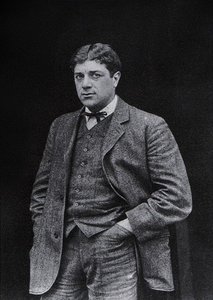
Georges Braque
1882 - 1963 , Frankreich
Kurzinfos
- Beeinflusste Künstler: ['Pablo Picasso']
- Bemerkenswerte Werke:
- Häuser in L'Estaque
- Die Geduld (Fauvismus)
- Stillleben mit Pfeife
- Mandola
- Einflussreiche Künstler:
- Henri Matisse
- André Derain
- Paul Cézanne
- Geburtsdatum: 13. Mai 1882
- Geburtsort: Argenteuil, Frankreich
- Künstlerischer Stil: Kubismus, Fauvismus
- Nationalität: Französisch
- Sterbedatum: 1963
- Vollständiger Name: Georges Braque

