


 In echtem Maßstab anzeigen
 Versenden als Grußkarte
 Teilen
 Details anzeigen
 Leitfaden

 Herunterladen
 Ähnliche Objekte
 Röntgenaufnahme
 Diashow
 Besucherstatistiken
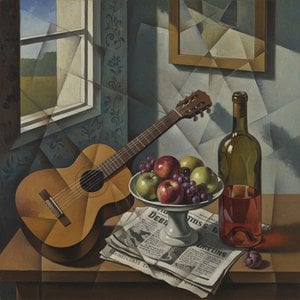
Still Life with a Pitcher

 Mehr anzeigen
Handgefertigte Ölreproduktion
Handgemaltes Ölgemälde auf Leinwand in Ihrer Wunschgröße und mit Rahmen, auf Bestellung von unseren Künstlern angefertigt. ( Zum Druck wechseln Zum digitalen Bild wechseln)




P118B $10

P118H $10

P118W $10

P438Z $10

P508JH $12

P508YH $12

P805H $10

P805Z $10

P919BZ $10

P919G $10

P919XJ $10

P959ZH $10

P968JZ $12

W106C $8

W218G $10

W218JH $8

W218Y $10

W307PJ $10

W316G $10

W316PJ $8

W316Y $10

W398PJ $8

W4111J $10

W500HY $15

W500JH $15

W692G $12

W849H $8

W940BG $15

W953PJ $8




Wählen Sie aus unseren vordefinierten Formaten, die den ursprünglichen Proportionen des Kunstwerks entsprechen.

Sie können Ihre eigenen Maße eingeben, um einen bestimmten Rahmen oder Platz auszufüllen. Wenn die gewählte Größe nicht den Proportionen des Originalbildes entspricht, werden wir das Kunstwerk entweder beschneiden oder das Gemälde durch zusätzliche, handgemalte Elemente erweitern. Ein digitales Mockup wird Ihnen zur Genehmigung zugesandt, bevor die Produktion beginnt.
Bitte beachten Sie, dass die Bildschirmvorschau nicht die tatsächliche Beschneidung oder Erweiterung widerspiegelt. Nur das Mockup zeigt die endgültige Komposition exakt an.
Obwohl Sondermaße verfügbar sind, empfehlen wir, eine Größe aus der vordefinierten Liste zu wählen, um die ursprünglichen Proportionen beizubehalten.
Nach der Bestellung wird das ArtsDot.com-Team dem Kunden Anweisungen per E-Mail zusenden und eine Mockup-Vorschau bereitstellen.
Weltweiter Versand () in nur 3 bis 4 Wochen statt der üblichen 5 Wochen. (25 September). Keine Kompromisse bei der Qualität.

Kostenloser weltweiter Expressversand

Hochwertige Leinenleinwand

Vollständiger Versicherungsschutz beim Versand

Zollgebühren-Rückerstattungsgarantie

Garantie für exakte Farbtreue

100-tägiges Rückgaberecht (nur bei Mängeln)

100% Geld-zurück-Garantie

Angebot für Mengenrabatt
 Die Glasoption ist nur für Größen unter 110 cm verfügbar.

Still Life with a Pitcher
Reproduktionsmedium
Format der Reproduktion
-


Gesamtpreis
$ 263
Georges Braque’s Still Life with a Pitcher – A Window into Cubist Perception
Georges Braque's "Still Life with a Pitcher," painted around 1927, isn’t merely a depiction of everyday objects; it’s a meticulously constructed exploration of perception and the very nature of representation. This artwork, now available as a stunning hand-painted reproduction from ArtsDot.com, offers a captivating glimpse into the heart of Cubism – a movement that fundamentally challenged traditional artistic conventions and redefined how we see the world. Braque, alongside Pablo Picasso, pioneered this revolutionary style, seeking to capture not just what an object *looks* like, but rather how it *appears* from multiple viewpoints simultaneously.
The painting itself is deceptively simple at first glance. A red apple dominates the center, its form fragmented and reassembled into geometric planes – a clear hallmark of Analytical Cubism. Surrounding this central focus are other apples, carefully arranged to create a dynamic visual balance, alongside a pitcher, rendered with similar attention to deconstruction. The muted color palette—primarily ochres, browns, and grays—further emphasizes the painting’s emphasis on form over realistic color. Notice how Braque utilizes subtle variations in tone and texture to suggest depth and volume, despite the flattened perspective characteristic of Cubism.
The Language of Deconstruction: Analytical Cubism
Understanding the context of Analytical Cubism is crucial to appreciating this work. Following the initial, more expressive phase of Synthetic Cubism (characterized by collage elements), Braque’s “Still Life with a Pitcher” embodies a shift towards a more rigorous and intellectual approach. The artist meticulously breaks down each object into its constituent parts – planes, angles, and lines – then reconstructs them on the canvas from multiple viewpoints. This process isn't about creating an illusion of three-dimensionality; instead, it’s about revealing the underlying structure of reality itself. The apple, for instance, is not presented as a single, unified form but rather as a collection of interlocking geometric shapes, each reflecting a different angle of observation.
Braque's technique here is particularly noteworthy. He employed a dry brushstroke and often applied layers of paint to create a textured surface that subtly suggests the materiality of the objects depicted. The use of sand mixed into his pigments – a technique he frequently utilized – adds an intriguing tactile quality, further emphasizing the painting’s focus on form and texture. This deliberate manipulation of the paint itself becomes part of the artwork's visual language.
Symbolism and Emotional Resonance
While often associated with intellectual rigor, Cubist paintings like “Still Life with a Pitcher” also possess a subtle emotional resonance. The arrangement of the fruits – particularly the prominent red apple – can be interpreted as a reference to *vanitas* paintings, a popular genre in Dutch Golden Age art that served as reminders of mortality and the transience of earthly pleasures. The pitcher, often associated with abundance and hospitality, contrasts with the fragmented nature of the fruit, suggesting a contemplation on the fleeting beauty of life.
However, Braque’s work transcends simple moralizing. The painting's power lies in its ability to provoke a sense of visual curiosity and intellectual engagement. It invites the viewer to actively participate in the process of reconstruction, piecing together the fragmented forms and contemplating the multiple perspectives presented. The resulting experience is one of both analytical observation and emotional reflection – a testament to Braque’s masterful command of form and his profound understanding of the human condition.
Bringing “Still Life with a Pitcher” Home: A ArtsDot Reproduction
A hand-painted reproduction from ArtsDot.com offers an exceptional opportunity to experience the beauty and intellectual depth of this iconic Cubist still life in your own space. Our skilled artisans meticulously recreate Braque’s nuanced techniques, capturing the subtle textures, muted colors, and dynamic composition with remarkable fidelity. Whether you're a seasoned art collector or simply seeking to add a touch of artistic sophistication to your interior design, our reproduction provides an authentic and affordable way to bring this masterpiece into your home.
Explore the full detail and quality of our hand-painted reproduction at here. Let “Still Life with a Pitcher” become a conversation starter, a source of contemplation, and a timeless addition to your collection.
Ähnliche Kunstwerke


Biografie des Künstlers
**frühes Leben und Ausbildung**
Georges Braque, ein prominenter französischer Maler, Kollagist, Bleistrichzeichner, Grafiker und Bildhauer, wurde am 13. Mai 1882 in Argenteuil, Val-d'oise, geboren. Er wuchs in Le Havre auf und erhielt zunächst eine Ausbildung als Hausmaler und Dekorateur wie sein Vater und Großvater. Braques künstlerische Neigungen führten ihn jedoch dazu, von 1897 bis 1899 an der École des Beaux-Arts in Le Havre Malerei zu studieren.**Künstlerische Entwicklung und Fauvisme**
Im Jahr 1902, nachdem er seine Lehre bei einem Dekorateur in Paris abgeschlossen hatte, besuchte Braque bis 1904 die Académie Humbert. Dieser Zeitraum markierte seine Einführung ins Fauvismus, einen Stil, der durch lebendige Farben und emotionale Reaktionen gekennzeichnet ist. Beeinflusst von den Werken von Henri Matisse und André Derain, übernahm Braque einen fauvistischen Ansatz, wie in seinem Gemälde The Patience (Fauvismus, Öl auf Leinwand).**Beitrag zum Kubismus**
Braques Zusammenarbeit mit Pablo Picasso von 1908 bis 1912 führte zur Entwicklung des Kubismus. Ihre analytischen kubistischen Werke, wie z.B. Georges Braque: The Patience und Pablo Picasso: Clarinet(analytischer Kubismus, Öl auf Leinwand), gelten heute als Meilensteine der Kunstgeschichte.**Erbe und bemerkenswerte Werke**
* Houses at L'Estaques: Ein Zeugnis für Braques innovatives Einsatz von Geometrie und simultaner Perspektive. * The Patience(Fauvismus, Öl auf Leinwand): Demonstriert Braques fauvistischen Stil. * Clarinet(analytischer Kubismus, Öl auf Leinwand): Eine kollaborative kubistische Arbeit mit Picasso.**Museen und Sammlungen**
* Musée d'Orsay: Bietet eine umfangreiche Sammlung impressionistischer und postimpressionistischer Kunst, darunter Werke von Braque. * Musée de l'Orangerie: Zeigt eine breite Palette von Kunstwerken, darunter Werke von Braque und anderen bedeutenden Künstlern.- Erfahren Sie mehr über Georges Braques Leben und Werk auf ArtsDot.com
- Entdecken Sie die Sammlung des Musée d'Orsay, die Werke von Braque und anderen Künstlern umfasst, unter Musée d'Orsay - Wikipedia
- Erfahren Sie mehr über den Fauvismus und seinen Einfluss auf die Entwicklung des Kubismus mit Fauvismus Kunstbewegung auf ArtsDot.com

Georges Braque
1882 - 1963 , Frankreich
Eckdaten zum Künstler
- Beeinflusste Künstler: ['Pablo Picasso']
- Bemerkenswerte Werke:
- Häuser in L'Estaque
- Die Geduld (Fauvismus)
- Stillleben mit Pfeife
- Mandola
- Einflussreiche Künstler:
- Henri Matisse
- André Derain
- Paul Cézanne
- Geburtsdatum: 13. Mai 1882
- Geburtsort: Argenteuil, Frankreich
- Künstlerischer Stil: Kubismus, Fauvismus
- Nationalität: Französisch
- Sterbedatum: 1963
- Vollständiger Name: Georges Braque
Verwandte Artikel

Deconstructing Reality: Cubism's Revolutionary Impact on 20th-Century Art
Explore the revolutionary world of Cubism with ArtsDot. Discover Picasso & Braque's groundbreaking techniques, its philosophical roots, and lasting impact on modern art. Expert insights for collectors.

Georges Braque: Die 25 Meisterwerke des Kubismus für Ihr Zuhause | ArtsDot
Entdecken Sie die 25 bedeutendsten Kunstwerke von Georges Braque – vom Kubismus bis zum Fauvismus. Erfahren Sie die Geschichten hinter den Meisterwerken und finden Sie hochwertige Reproduktionen für Ihr Zuhause auf ArtsDot.com.

Georges Braque: Pionier des Kubismus und die Evolution moderner Formensprache
Entdecken Sie Georges Braques revolutionären Einfluss auf den Kubismus und die moderne Kunstgeschichte. Expertenanalyse seiner Formensprache, Werke & Bedeutung. Jetzt lesen!
Deconstructing Reality: A Comprehensive Exploration of Cubist Still Life
Explore the revolutionary world of Cubist Still Life with ArtsDot. Discover Picasso & Braque's groundbreaking techniques, its philosophical roots, and lasting impact on modern art. Expert insights for collectors.

Paul Cézanne: Die 25 Meisterwerke des Impressionismus | ArtsDot
Entdecken Sie die 25 Meisterwerke von Paul Cézanne! Tauchen Sie ein in die Welt des Impressionismus und Postimpressionismus. Erfahren Sie mehr über seine Stillleben, Landschaften & berühmten Gemälde – jetzt hochwertige Kunstdrucke auf ArtsDot.com.


