


 In echtem Maßstab anzeigen
 Versenden als Grußkarte
 Teilen
 Details anzeigen
 Leitfaden

 Herunterladen
 Ähnliche Objekte
 Röntgenaufnahme
 Diashow
 Besucherstatistiken
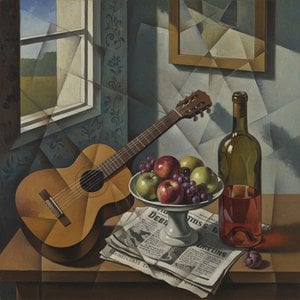
Melon, Fruits, Glass


 Mehr anzeigen
Handgefertigte Ölreproduktion
Handgemaltes Ölgemälde auf Leinwand in Ihrer Wunschgröße und mit Rahmen, auf Bestellung von unseren Künstlern angefertigt. ( Zum Druck wechseln Zum digitalen Bild wechseln)




P118B $10

P118H $10

P118W $10

P438Z $10

P508JH $12

P508YH $12

P805H $10

P805Z $10

P919BZ $10

P919G $10

P919XJ $10

P959ZH $10

P968JZ $12

W106C $8

W218G $10

W218JH $8

W218Y $10

W307PJ $10

W316G $10

W316PJ $8

W316Y $10

W398PJ $8

W4111J $10

W500HY $15

W500JH $15

W692G $12

W849H $8

W940BG $15

W953PJ $8




Wählen Sie aus unseren vordefinierten Formaten, die den ursprünglichen Proportionen des Kunstwerks entsprechen.

Sie können Ihre eigenen Maße eingeben, um einen bestimmten Rahmen oder Platz auszufüllen. Wenn die gewählte Größe nicht den Proportionen des Originalbildes entspricht, werden wir das Kunstwerk entweder beschneiden oder das Gemälde durch zusätzliche, handgemalte Elemente erweitern. Ein digitales Mockup wird Ihnen zur Genehmigung zugesandt, bevor die Produktion beginnt.
Bitte beachten Sie, dass die Bildschirmvorschau nicht die tatsächliche Beschneidung oder Erweiterung widerspiegelt. Nur das Mockup zeigt die endgültige Komposition exakt an.
Obwohl Sondermaße verfügbar sind, empfehlen wir, eine Größe aus der vordefinierten Liste zu wählen, um die ursprünglichen Proportionen beizubehalten.
Nach der Bestellung wird das ArtsDot.com-Team dem Kunden Anweisungen per E-Mail zusenden und eine Mockup-Vorschau bereitstellen.
Weltweiter Versand () in nur 3 bis 4 Wochen statt der üblichen 5 Wochen. (22 September). Keine Kompromisse bei der Qualität.

Kostenloser weltweiter Expressversand

Hochwertige Leinenleinwand

Vollständiger Versicherungsschutz beim Versand

Zollgebühren-Rückerstattungsgarantie

Garantie für exakte Farbtreue

100-tägiges Rückgaberecht (nur bei Mängeln)

100% Geld-zurück-Garantie

Angebot für Mengenrabatt
 Die Glasoption ist nur für Größen unter 110 cm verfügbar.

Melon, Fruits, Glass
Reproduktionsmedium
Format der Reproduktion
-


Gesamtpreis
$ 263
Georges Braque: A Pioneer of Cubism and the Essence of Still Life
Georges Braque (1882-1963), born in Argenteuil, France, stands as a monumental figure in 20th-century art—a sculptor, draughtsman, printmaker, and painter whose relentless experimentation fundamentally reshaped artistic perception. His formative years were steeped in the traditions of his family’s profession: house painting and decoration – an upbringing that instilled not only meticulous craftsmanship but also a profound appreciation for visual structure and form. While initially pursuing this familial path, Braque's innate artistic curiosity swiftly propelled him toward formal training at the École des Beaux-Arts in Le Havre, establishing a bedrock of knowledge upon which he would later build his groundbreaking innovations.
Early Artistic Influences and The École des Beaux-Arts
Le Havre’s École des Beaux-Arts proved instrumental in shaping Braque's artistic sensibilities. Surrounded by fellow artists like Marie Laurencin and Francis Picabia, he absorbed the prevailing currents of Impressionism and Post-Impressionism—particularly Cézanne’s exploration of geometric simplification and Picasso’s burgeoning interest in fracturing perspective. These influences would coalesce into a distinctive approach that prioritized observation and abstraction, rejecting representational illusion for a more intellectually stimulating engagement with reality.
The Birth of Cubism: A Revolutionary Vision
Braque's artistic breakthrough arrived in 1908 alongside Pablo Picasso—a collaboration that irrevocably altered the course of modern art. Together they embarked on a daring endeavor to dismantle traditional pictorial conventions, initiating what would become known as Analytical Cubism. Rejecting single-point perspective and chiaroscuro shading, they dissected objects into fragmented planes rendered in muted tones, presenting multiple viewpoints simultaneously on a canvas surface. This radical technique demanded an unprecedented level of intellectual effort from the artist—a conscious rejection of passive observation in favor of active conceptualization.
“Fruit Dish and Glass”: A Masterpiece of Analytical Cubism
"Fruit Dish and Glass," created in 1912, exemplifies Braque’s mastery of Analytical Cubism. Executed on cardboard with charcoal and meticulously adhered fragments of faux bois wallpaper—a deliberately inexpensive material chosen to subtly undermine the illusion of depth—the painting captures a deceptively simple scene: a glass bowl containing pears and grapes alongside a wine glass.
- Technique: Braque employed charcoal lines to delineate contours and create textural variations, juxtaposed with carefully positioned wallpaper strips that mimic wood grain.
- Color Palette: The subdued hues of beige and gray dominate the composition, reflecting Braque’s desire to minimize visual distraction and emphasize geometric forms.
- Composition: The flattened planes of the fruit and glass are arranged in a manner that defies conventional spatial relationships—a deliberate provocation designed to challenge viewers' perceptions of reality.
More than just a depiction of still life, “Fruit Dish and Glass” embodies Braque’s philosophical commitment to dismantling illusionistic representation. It represents a pivotal moment in the evolution of Cubism—a testament to Braque’s unwavering pursuit of artistic innovation and his enduring legacy as one of the most influential artists of the 20th century.
Legacy and Influence
Braque's influence extended far beyond Cubism, impacting subsequent movements such as Synthetic Cubism and Surrealism. His pioneering use of collage—incorporating non-painterly materials into a canvas surface—opened up new avenues for artistic expression and foreshadowed the experimental spirit of later avant-garde artists. Today, Braque’s work continues to inspire admiration for its intellectual rigor, formal elegance, and profound exploration of visual perception.
Ähnliche Kunstwerke


Biografie des Künstlers
**frühes Leben und Ausbildung**
Georges Braque, ein prominenter französischer Maler, Kollagist, Bleistrichzeichner, Grafiker und Bildhauer, wurde am 13. Mai 1882 in Argenteuil, Val-d'oise, geboren. Er wuchs in Le Havre auf und erhielt zunächst eine Ausbildung als Hausmaler und Dekorateur wie sein Vater und Großvater. Braques künstlerische Neigungen führten ihn jedoch dazu, von 1897 bis 1899 an der École des Beaux-Arts in Le Havre Malerei zu studieren.**Künstlerische Entwicklung und Fauvisme**
Im Jahr 1902, nachdem er seine Lehre bei einem Dekorateur in Paris abgeschlossen hatte, besuchte Braque bis 1904 die Académie Humbert. Dieser Zeitraum markierte seine Einführung ins Fauvismus, einen Stil, der durch lebendige Farben und emotionale Reaktionen gekennzeichnet ist. Beeinflusst von den Werken von Henri Matisse und André Derain, übernahm Braque einen fauvistischen Ansatz, wie in seinem Gemälde The Patience (Fauvismus, Öl auf Leinwand).**Beitrag zum Kubismus**
Braques Zusammenarbeit mit Pablo Picasso von 1908 bis 1912 führte zur Entwicklung des Kubismus. Ihre analytischen kubistischen Werke, wie z.B. Georges Braque: The Patience und Pablo Picasso: Clarinet(analytischer Kubismus, Öl auf Leinwand), gelten heute als Meilensteine der Kunstgeschichte.**Erbe und bemerkenswerte Werke**
* Houses at L'Estaques: Ein Zeugnis für Braques innovatives Einsatz von Geometrie und simultaner Perspektive. * The Patience(Fauvismus, Öl auf Leinwand): Demonstriert Braques fauvistischen Stil. * Clarinet(analytischer Kubismus, Öl auf Leinwand): Eine kollaborative kubistische Arbeit mit Picasso.**Museen und Sammlungen**
* Musée d'Orsay: Bietet eine umfangreiche Sammlung impressionistischer und postimpressionistischer Kunst, darunter Werke von Braque. * Musée de l'Orangerie: Zeigt eine breite Palette von Kunstwerken, darunter Werke von Braque und anderen bedeutenden Künstlern.- Erfahren Sie mehr über Georges Braques Leben und Werk auf ArtsDot.com
- Entdecken Sie die Sammlung des Musée d'Orsay, die Werke von Braque und anderen Künstlern umfasst, unter Musée d'Orsay - Wikipedia
- Erfahren Sie mehr über den Fauvismus und seinen Einfluss auf die Entwicklung des Kubismus mit Fauvismus Kunstbewegung auf ArtsDot.com

Georges Braque
1882 - 1963 , Frankreich
Eckdaten zum Künstler
- Beeinflusste Künstler: ['Pablo Picasso']
- Bemerkenswerte Werke:
- Häuser in L'Estaque
- Die Geduld (Fauvismus)
- Stillleben mit Pfeife
- Mandola
- Einflussreiche Künstler:
- Henri Matisse
- André Derain
- Paul Cézanne
- Geburtsdatum: 13. Mai 1882
- Geburtsort: Argenteuil, Frankreich
- Künstlerischer Stil: Kubismus, Fauvismus
- Nationalität: Französisch
- Sterbedatum: 1963
- Vollständiger Name: Georges Braque
Verwandte Artikel

Deconstructing Identity: A Comprehensive Exploration of Cubist Portraiture
Explore the revolutionary world of Cubist portraiture with our comprehensive guide. Discover Picasso, Braque, Gris & the movement's impact on modern art. Expert analysis for collectors and enthusiasts.

Die 10 Meisterwerke des Kubismus: Kunst für Ihr Zuhause | ArtsDot
Entdecken Sie die 10 bedeutendsten Meisterwerke des Kubismus von Picasso, Braque & Gris! Erfahren Sie mehr über Kunstgeschichte, Techniken und Farben. Hochwertige Kunstdrucke auf ArtsDot.com – für stilvolle Wandgestaltung.

Georges Braque: Die 25 Meisterwerke des Kubismus für Ihr Zuhause | ArtsDot
Entdecken Sie die 25 bedeutendsten Kunstwerke von Georges Braque – vom Kubismus bis zum Fauvismus. Erfahren Sie die Geschichten hinter den Meisterwerken und finden Sie hochwertige Reproduktionen für Ihr Zuhause auf ArtsDot.com.

Deconstructing Reality: Analytical Cubism's Formative Years & Lasting Influence
Explore the revolutionary world of Analytical Cubism with ArtsDot. Discover Picasso & Braque's groundbreaking techniques, its philosophical roots, and lasting impact on modern art. Expert insights for collectors.
Deconstructing Reality: A Comprehensive Exploration of Cubist Still Life
Explore the revolutionary world of Cubist Still Life with ArtsDot. Discover Picasso & Braque's groundbreaking techniques, its philosophical roots, and lasting impact on modern art. Expert insights for collectors.


