In echtem Maßstab anzeigen
 Versenden als Grußkarte
 Teilen
 Details anzeigen
 Leitfaden öffnen

 Herunterladen
 Ähnliche Objekte
 Röntgenaufnahme
 Diashow
 Besucherstatistiken
The Prodigal Son
 Oil On Canvas
- WallArt
- Baroque
 1640
1640- Early Modern
 77.0 x 66.0 cm
 Eremitage Museum
 Mehr anzeigen
Handgefertigte Ölreproduktion
Handgemaltes Ölgemälde auf Leinwand in Ihrer Wunschgröße und mit Rahmen, auf Bestellung von unseren Künstlern angefertigt. ( Zum Druck wechseln Zum digitalen Bild wechseln)




P118B €10

P118H €10

P118W €10

P438Z €10

P508JH €12

P508YH €12

P805H €10

P805Z €10

P919BZ €10

P919G €10

P919XJ €10

P959ZH €10

P968JZ €12

W106C €8

W218G €10

W218JH €8

W218Y €10

W307PJ €10

W316G €10

W316PJ €8

W316Y €10

W398PJ €8

W4111J €10

W500HY €15

W500JH €15

W692G €12

W849H €8

W940BG €15

W953PJ €8




Wählen Sie aus unseren vordefinierten Formaten, die den ursprünglichen Proportionen des Kunstwerks entsprechen.

Geben Sie die Breite und die Höhe an, die Sie für Ihren Rahmen oder Ihre Wand benötigen. Da dieses Werk handgemalt ist, kann der Künstler bei einer anderen Form etwas mehr um das Bild herum malen oder etwas abschneiden – Sie entscheiden. Wir senden Ihnen ein digitales Mockup zur Freigabe, bevor mit dem Malen begonnen wird. Das auf dieser Seite gezeigte Bild stellt nicht das tatsächliche Ergebnis dar – dies tut nur das Mockup.
Nach der Bestellung wird das ArtsDot.com-Team dem Kunden Anweisungen per E-Mail zusenden und eine Mockup-Vorschau bereitstellen.
Weltweiter Versand () in nur 3 bis 4 Wochen statt der üblichen 5 Wochen. (24 Oktober). Keine Kompromisse bei der Qualität.

Kostenloser weltweiter Expressversand

Hochwertige Leinenleinwand

Vollständiger Versicherungsschutz beim Versand

Zollgebühren-Rückerstattungsgarantie

Garantie für exakte Farbtreue

100-tägiges Rückgaberecht (nur bei Mängeln)

100% Geld-zurück-Garantie

Angebot für Mengenrabatt
 Die Glasoption ist nur für Größen unter 110 cm verfügbar.

The Prodigal Son
Reproduktionsmedium
Format der Reproduktion
-


Gesamtpreis
€ 318
A Masterpiece of Redemption and Splendor
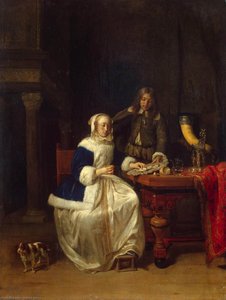
In the heart of the Dutch Golden Age, few works capture the profound tension between worldly temptation and spiritual homecoming as exquisitely as Gabriel Metsu’s The Prodigal Son. Executed around 1640, this Baroque masterpiece is far more than a mere biblical illustration; it is a psychological drama rendered in oil and canvas. The painting invites viewers into a lavish, intimate bedroom where the air seems thick with the weight of unspoken emotions. Here, Metsu orchestrates a poignant tableau of familial reconciliation, depicting the moment a wealthy father welcomes his estranged son back into the fold after years of wandering. It is a scene that resonates deeply with anyone who has experienced the complexities of loss, regret, and the transformative power of forgiveness.
The narrative strength of the piece lies in its ability to juxtapose physical opulence with internal struggle. As the figures are positioned within an environment of extreme luxury—surrounded by heavy draperies and ornate furnishings—the setting serves as a deliberate metaphor for the very temptations that led the son astray. The contrast between the son’s state of repentance and the surrounding grandeur creates a captivating tension, making the artwork a profound meditation on the human condition. For the discerning collector or interior designer, this painting offers a sophisticated focal point that brings both historical gravity and narrative depth to any curated space.
The Artistry of Light and Texture
Metsu’s technical prowess is on full display through his masterful use of chiaroscuro. By employing a dramatic light source originating from an unseen point above and to the left, he sculpts the figures out of the surrounding shadows, lending them a three-dimensional, lifelike presence. This interplay of light and dark does more than create depth; it heightens the theatricality of the reunion, casting a spotlight on the emotional expressions of the characters while allowing the corners of the room to recede into mysterious, velvety gloom.
The tactile quality of the painting is nothing short of breathtaking. A close inspection reveals Metsu’s dedication to illusionistic realism, particularly in his rendering of diverse textures. One can almost feel the weight of the heavy bed canopy, the smoothness of the silk gowns, and the soft, organic contours of the skin tones. His color palette is a sophisticated blend of warm earth tones—rich ochre, deep gold, and resonant browns—which evoke a sense of aristocratic warmth. These are punctuated by strategic bursts of cooler blues and vibrant reds in the clothing, adding a rhythmic visual interest that guides the eye across the complex composition.
A Timeless Symbolism for the Modern Collector
Beyond its aesthetic brilliance, The Prodigal Son is rich with symbolic resonance. The discarded garments and the subtle gestures of the figures hint at themes of lost virtue and the pursuit of excess. Every element, from the way the light hits a piece of jewelry to the contemplative gaze of an observer in the background, contributes to a larger story of moral complexity. This layer of meaning ensures that the artwork remains intellectually stimulating long after the initial visual impact has been felt.
For those seeking to adorn a home or gallery with a high-quality reproduction, this piece offers an unparalleled opportunity to integrate a sense of history and soul into an interior design scheme. Whether placed in a quiet study to inspire reflection or as a grand statement piece in a formal living area, Metsu’s work brings with it the prestige of the Dutch masters. It is an investment in beauty, a tribute to the enduring power of storytelling, and a window into a golden era of artistic innovation.
Fragen & Antworten
Wie stehen die Farben von "The Prodigal Son" zueinander?
Die Farben von "The Prodigal Son" von Gabriel Metsu zeigen eine Strong Color Unity Harmonie. Harmonie beschreibt, wie die Farben zueinander in Beziehung stehen.
Welche Technik wurde für "The Prodigal Son" von Gabriel Metsu verwendet?
"The Prodigal Son" wurde in Oil On Canvas ausgeführt.
Wer verkauft handgemalte Kopien von "The Prodigal Son" von Gabriel Metsu?
Eine handgemalte Reproduktion von "The Prodigal Son" von Gabriel Metsu können Sie direkt auf der entsprechenden Handgemalte Reproduktion-Seite bestellen: eine handgemalte Ölreproduktion auf Leinenleinwand, auf Bestellung angefertigt.
Ähnliche Kunstwerke


Biografie des Künstlers
Ein Leben voller künstlerischer Erkundungen: Gabriël Metsu
- Geboren: Leiden, Niederlande (1629)
- Gestorben: 1667
Frühes Leben und Einflüsse
Gabriël Metsu führte ein Leben, das von künstlerischer Erkundung und Innovation geprägt war. Geboren 1629, war er der Sohn von Jacques Metsu, einem Teppichweber und Maler aus Hainault. Dieser vielfältige Hintergrund beeinflusste wahrscheinlich sein frühes Interesse an verschiedenen künstlerischen Techniken. Der Umzug seiner Familie nach Leiden setzte ihn zahlreichen kulturellen Einflüssen aus.
Künstlerische Karriere: Ein eklektischer Stil
Metsus Karriere war durch eine Ablehnung eines einzigen Stils oder einer Technik gekennzeichnet, was ihm den Titel des „hochgradig eklektischen Künstlers“ einbrachte. Seine Werke umfassten historische Gemälde, Stillleben, Porträts und Genrekunst. Bemerkenswert ist, dass nur 14 seiner 133 bekannten Arbeiten datiert sind, was vieles über seinen kreativen Prozess zu entdecken lässt.
- Frühe Einflüsse: Rembrandts Einfluss auf Metsus frühe Arbeit zeigt sich in seinem Gebrauch von Licht und Farbe.
- Amsterdamer Periode (ab 1655): Sein Umzug nach Amsterdam markierte eine Verschiebung hin zu häuslichen Innenräumen und Genreszenen, mit größerem Schwerpunkt auf Detailtreue und Realismus.
- Ausbildung & Mentorenschaft: Er unterrichtete Michiel van Musscher und Joost van Geel, was sein Engagement für die künstlerische Gemeinschaft widerspiegelt.
Bemerkenswerte Werke und künstlerische Entwicklung
Metsus Gemälde zeigten oft junge Frauen, Marktszenen und alte Menschen und griffen dabei auf beliebte Embleme der Zeit zurück. Sein Stil entwickelte sich im Laufe seiner Karriere weiter und demonstrierte eine Beherrschung verschiedener Techniken.
- Das kranke Kind (ca. 1664): Dieses Werk spiegelt Metsus Bewunderung für Johannes Vermeers akribische Detailgenauigkeit und Lichtverwendung wider.
- Porträt der Familie Hinlopen: Ein Meisterwerk, das Genrekunst mit Porträtkunst verbindet und seine Fähigkeit zeigt, sowohl individuellen Charakter als auch häusliches Leben einzufangen.
- Der verlorene Sohn (ca. 1640): Demonstriert einen Barock-Einfluss mit seiner dramatischen Komposition und reichen Detailgenauigkeit.
- Wiederkehrende Themen: Metsu stellte häufig Szenen des täglichen Lebens dar, oft mit symbolischer Bedeutung versehen.
Historische Bedeutung und Vermächtnis
Gabriëls Vermächtnis liegt in seiner Vielseitigkeit und seinem Beitrag zum Goldenen Zeitalter der Niederlande. Sein eklektischer Stil beeinflusste nachfolgende Generationen von Künstlern. Heute befinden sich seine Werke in renommierten Museen auf der ganzen Welt.
- Holländischer Maler des Goldenen Zeitalters: Er gilt als bedeutende Figur innerhalb der lebendigen künstlerischen Landschaft des 17. Jahrhunderts in den Niederlanden.
- Museumsbestände: Seine Gemälde befinden sich in verschiedenen Museen, darunter das Rijksmuseum in Amsterdam.
- Fortwährende Wertschätzung: Metsus Kunst fasziniert und inspiriert weiterhin Betrachter mit ihrem Realismus, ihrer Detailgenauigkeit und ihren subtilen Erzählungen.

Gabriel Metsu
1629 - 1667 , Niederlande
Eckdaten zum Künstler
- Bemerkenswerte Werke:
- Das kranke Kind
- Familienporträt Hinlopen
- Hühnerverkäuferin
- Der Briefleser
- Der verlorene Sohn
- Einflussreiche Künstler:
- Rembrandt van Rijn
- Johannes Vermeer
- Geburtsdatum: 1629
- Geburtsort: Leiden, Niederlande
- Künstlerische Richtung: Goldenes Zeitalter
- Nationalität: Niederländisch
- Sterbedatum: 1667
- Vollständiger Name: Gabriël Metsu
Verwandte Artikel

Golden Age Reflections: Dutch Baroque Painting & Cultural Innovation
Explore the Dutch Golden Age of painting! Discover key artists like Vermeer & ter Borch, their innovative techniques, and the rich cultural context behind these Baroque masterpieces. Learn about collecting & appreciating this iconic art period.

Illuminating Innovation: Exploring the Dutch Golden Age of Painting
Explore the Dutch Golden Age of painting with ArtsDot. Discover Rembrandt, Vermeer & other Masters. Learn about key characteristics, iconic artworks, and lasting influence. Expert insights for collectors & enthusiasts.

Dante Gabriel Rossetti: Die 25 Meisterwerke des Präraffelitismus | ArtsDot
Entdecken Sie die 25 schönsten Gemälde von Dante Gabriel Rossetti! Tauchen Sie ein in die Welt der Präraffeliten, symbolistischer Kunst & viktorianischer Romantik. Hochwertige Reproduktionen für Ihr Zuhause – jetzt bei ArtsDot.com!

Gabriel Metsu: Licht und Detail als Spiegel niederländischer Lebenswelten
Entdecken Sie Gabriel Metsu, einen vergessenen Meister des Goldenen Zeitalters! Erfahren Sie mehr über sein Leben, seinen Stil und seine faszinierenden Genrebilder. Expertenwissen & hochwertige Reproduktionen auf ArtsDot.

Die 10 Meisterwerke der niederländischen Barockmalerei – Kunst für Ihr Zuhause | ArtsDot
Entdecken Sie die 10 prägendsten Meisterwerke der niederländischen Barockmalerei! Von Rembrandt bis Vermeer – erleben Sie Kunstgeschichte, Techniken & Emotionen. Hochwertige Reproduktionen für Ihr Zuhause auf ArtsDot.com.