In echtem Maßstab anzeigen
 Versenden als Grußkarte
 Teilen
 Details anzeigen
 Leitfaden öffnen

 Herunterladen
 Ähnliche Objekte
 Röntgenaufnahme
 Diashow
 Besucherstatistiken
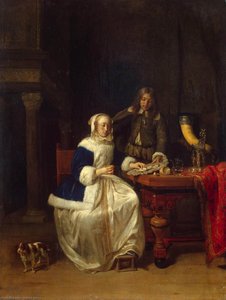
The Cook
 Oil On Canvas
- WallArt
- Dutch Golden Age
 1657
1657- Early Modern
 40.0 x 34.0 cm
 Thyssen-Bornemisza Museum
 Mehr anzeigen
Giclée / Kunstdruck
Giclée- oder Leinwanddruck in Museumsqualität mit schneller Produktion und flexiblen Veredelungsoptionen. ( Handgemalte Reproduktion kaufen Zum digitalen Bild wechseln)




P118B €10

P118H €10

P118W €10

P438Z €10

P508JH €12

P508YH €12

P805H €10

P805Z €10

P919BZ €10

P919G €10

P919XJ €10

P959ZH €10

P968JZ €12

W106C €8

W218G €10

W218JH €8

W218Y €10

W307PJ €10

W316G €10

W316PJ €8

W316Y €10

W398PJ €8

W4111J €10

W500HY €15

W500JH €15

W692G €12

W849H €8

W940BG €15

W953PJ €8




Wählen Sie aus unseren vordefinierten Formaten, die den ursprünglichen Proportionen des Kunstwerks entsprechen.

Geben Sie die Breite und die Höhe an, die Sie benötigen, damit der Druck perfekt in Ihren Rahmen oder an Ihre Wand passt. Ein Druck kann nur beschnitten werden und niemals größer als das Originalbild gemacht werden; daher verliert ein Format mit einer anderen Proportion einen Teil des Bildes. Wir senden Ihnen ein digitales Mockup zur Freigabe, bevor wir den Druck ausführen. Das auf dieser Seite gezeigte Bild zeigt nicht den tatsächlichen Beschnitt – dies ist nur im Mockup ersichtlich.
Weltweiter Versand () innerhalb von 2 Wochen statt der üblichen 4/5 Wochen. (24 Oktober)

Kostenloser weltweiter Expressversand

Hochwertige Leinenleinwand

Vollständiger Versicherungsschutz beim Versand

Zollgebühren-Rückerstattungsgarantie

Garantie für exakte Farbtreue

100-tägiges Rückgaberecht (nur bei Mängeln)

100% Geld-zurück-Garantie

Angebot für Mengenrabatt
 Die Glasoption ist nur für Größen unter 110 cm verfügbar.

The Cook
Giclée / Kunstdruck
Format der Reproduktion
-


Gesamtpreis
€ 54
A Moment Frozen in Time: The Quiet Majesty of Gabriel Metsu
In the heart of the Dutch Golden Age, amidst a period defined by unparalleled prosperity and a burgeoning middle class, Gabriel Metsu captured something far more profound than mere domesticity. His 1657 masterpiece, "The Cook," currently held in the prestigious Museo Thtle Thyssen-Bornemisza in Madrid, serves as a breathtaking window into the seventeenth century. At first glance, the painting presents a deceptively simple tableau of everyday life, yet beneath its surface lies a masterful distillation of realism and psychological depth. The scene centers on a woman, draped in a striking blue gown that commands the viewer's attention, standing before a monumental oven. Her posture, marked by a calm and steady confidence, suggests a moment of quiet purpose as she holds aloft a tray laden with food, inviting us to witness the sacred rituals of nourishment and service.
Metsu’s technical prowess is nothing short of extraordinary, making this piece an essential inspiration for those who appreciate the fine nuances of classical oil painting. He employs chiaroscuro with surgical precision, skillfully manipulating light and shadow to sculpt the physical forms within the room. The way the light catches the subtle sheen on the food tray or illuminates the rugged texture of the oven’s brickwork creates a sense of three-dimensional reality that is almost tactile. Through the delicate use of glazing—layering thin, translucent washes of pigment over thicker underlayers—Metsu achieves a luminous, ethereal quality. This technique imbues the painting with a soft glow, as if the scene itself is breathing, making it an ideal centerpiece for any collection seeking to evoke warmth and timeless elegance.
Symbolism and the Soul of the Dutch Interior
Beyond its visual splendor, "The Cook" is a tapestry of symbolic meaning, reflecting the core values of seventeenth-century Dutch society. The oven, a dominant and rustic presence in the composition, is far more than a kitchen appliance; it stands as a powerful emblem of warmth, stability, and the hearth—the very foundation of domestic life. Even the small details, such as the bird hanging from the rafters, are heavy with intent. This poultry, likely a chicken, serves as a subtle nod to fertility and the prosperity of the household, grounding the painting in the era's preoccupation with abundance and the rewards of diligent labor.
For the discerning collector or interior designer, this work offers a unique emotional resonance. It does not shout; rather, it whispers stories of peace, sustenance, and the beauty found in the mundane. The dark, atmospheric background provides a dramatic contrast that pushes the central figures forward, creating a focal point that can anchor a room with its quiet intensity. Whether viewed as a historical document or a triumph of Baroque technique, "The Cook" remains a captivating testament to Metsu's ability to elevate the ordinary into the extraordinary, offering a sense of enduring grace to any space it inhabits.
Fragen & Antworten
Inwiefern lässt sich der Stil von "The Cook" mit der Epoche seines Schöpfers in Verbindung bringen?
"The Cook" von Gabriel Metsu lässt sich der Dutch Golden Age-Strömung innerhalb der – Frühe Neuzeit-Ära seines Schöpfers zuordnen.
In welchem Raum des Zuhauses lässt sich eine Reproduktion von "The Cook" gut platzieren?
Der empfohlene Raum für "The Cook" von Gabriel Metsu ist ein Living Room. Dieser Vorschlag kann natürlich an Ihr Interieur angepasst werden.
Wer hat "The Cook" geschaffen und in welchem Jahr?
Gabriel Metsu schuf „The Cook“ im Jahr 1657.
Ähnliche Kunstwerke


Biografie des Künstlers
Ein Leben voller künstlerischer Erkundungen: Gabriël Metsu
- Geboren: Leiden, Niederlande (1629)
- Gestorben: 1667
Frühes Leben und Einflüsse
Gabriël Metsu führte ein Leben, das von künstlerischer Erkundung und Innovation geprägt war. Geboren 1629, war er der Sohn von Jacques Metsu, einem Teppichweber und Maler aus Hainault. Dieser vielfältige Hintergrund beeinflusste wahrscheinlich sein frühes Interesse an verschiedenen künstlerischen Techniken. Der Umzug seiner Familie nach Leiden setzte ihn zahlreichen kulturellen Einflüssen aus.
Künstlerische Karriere: Ein eklektischer Stil
Metsus Karriere war durch eine Ablehnung eines einzigen Stils oder einer Technik gekennzeichnet, was ihm den Titel des „hochgradig eklektischen Künstlers“ einbrachte. Seine Werke umfassten historische Gemälde, Stillleben, Porträts und Genrekunst. Bemerkenswert ist, dass nur 14 seiner 133 bekannten Arbeiten datiert sind, was vieles über seinen kreativen Prozess zu entdecken lässt.
- Frühe Einflüsse: Rembrandts Einfluss auf Metsus frühe Arbeit zeigt sich in seinem Gebrauch von Licht und Farbe.
- Amsterdamer Periode (ab 1655): Sein Umzug nach Amsterdam markierte eine Verschiebung hin zu häuslichen Innenräumen und Genreszenen, mit größerem Schwerpunkt auf Detailtreue und Realismus.
- Ausbildung & Mentorenschaft: Er unterrichtete Michiel van Musscher und Joost van Geel, was sein Engagement für die künstlerische Gemeinschaft widerspiegelt.
Bemerkenswerte Werke und künstlerische Entwicklung
Metsus Gemälde zeigten oft junge Frauen, Marktszenen und alte Menschen und griffen dabei auf beliebte Embleme der Zeit zurück. Sein Stil entwickelte sich im Laufe seiner Karriere weiter und demonstrierte eine Beherrschung verschiedener Techniken.
- Das kranke Kind (ca. 1664): Dieses Werk spiegelt Metsus Bewunderung für Johannes Vermeers akribische Detailgenauigkeit und Lichtverwendung wider.
- Porträt der Familie Hinlopen: Ein Meisterwerk, das Genrekunst mit Porträtkunst verbindet und seine Fähigkeit zeigt, sowohl individuellen Charakter als auch häusliches Leben einzufangen.
- Der verlorene Sohn (ca. 1640): Demonstriert einen Barock-Einfluss mit seiner dramatischen Komposition und reichen Detailgenauigkeit.
- Wiederkehrende Themen: Metsu stellte häufig Szenen des täglichen Lebens dar, oft mit symbolischer Bedeutung versehen.
Historische Bedeutung und Vermächtnis
Gabriëls Vermächtnis liegt in seiner Vielseitigkeit und seinem Beitrag zum Goldenen Zeitalter der Niederlande. Sein eklektischer Stil beeinflusste nachfolgende Generationen von Künstlern. Heute befinden sich seine Werke in renommierten Museen auf der ganzen Welt.
- Holländischer Maler des Goldenen Zeitalters: Er gilt als bedeutende Figur innerhalb der lebendigen künstlerischen Landschaft des 17. Jahrhunderts in den Niederlanden.
- Museumsbestände: Seine Gemälde befinden sich in verschiedenen Museen, darunter das Rijksmuseum in Amsterdam.
- Fortwährende Wertschätzung: Metsus Kunst fasziniert und inspiriert weiterhin Betrachter mit ihrem Realismus, ihrer Detailgenauigkeit und ihren subtilen Erzählungen.

Gabriel Metsu
1629 - 1667 , Niederlande
Eckdaten zum Künstler
- Bemerkenswerte Werke:
- Das kranke Kind
- Familienporträt Hinlopen
- Hühnerverkäuferin
- Der Briefleser
- Der verlorene Sohn
- Einflussreiche Künstler:
- Rembrandt van Rijn
- Johannes Vermeer
- Geburtsdatum: 1629
- Geburtsort: Leiden, Niederlande
- Künstlerische Richtung: Goldenes Zeitalter
- Nationalität: Niederländisch
- Sterbedatum: 1667
- Vollständiger Name: Gabriël Metsu
Verwandte Artikel

Die 10 Meisterwerke des Goldenen Zeitalters der niederländischen Malerei |
Entdecken Sie die 10 Meisterwerke des Niederländischen Goldenen Zeitalters! Von Rembrandt bis Vermeer – erleben Sie Kunstgeschichte, Techniken & Emotionen. Hochwertige Gemäldereproduktionen für Ihr Zuhause auf .

Dante Gabriel Rossetti: Die 25 Meisterwerke des Präraffelitismus | ArtsDot
Entdecken Sie die 25 schönsten Gemälde von Dante Gabriel Rossetti! Tauchen Sie ein in die Welt der Präraffeliten, symbolistischer Kunst & viktorianischer Romantik. Hochwertige Reproduktionen für Ihr Zuhause – jetzt bei ArtsDot.com!

Die 10 Meisterwerke der niederländischen Barockmalerei – Kunst für Ihr Zuhause | ArtsDot
Entdecken Sie die 10 prägendsten Meisterwerke der niederländischen Barockmalerei! Von Rembrandt bis Vermeer – erleben Sie Kunstgeschichte, Techniken & Emotionen. Hochwertige Reproduktionen für Ihr Zuhause auf ArtsDot.com.

Golden Age Reflections: Dutch Baroque Painting & Cultural Innovation
Explore the Dutch Golden Age of painting! Discover key artists like Vermeer & ter Borch, their innovative techniques, and the rich cultural context behind these Baroque masterpieces. Learn about collecting & appreciating this iconic art period.

Illuminating Innovation: Exploring the Dutch Golden Age of Painting
Explore the Dutch Golden Age of painting with ArtsDot. Discover Rembrandt, Vermeer & other Masters. Learn about key characteristics, iconic artworks, and lasting influence. Expert insights for collectors & enthusiasts.