


 Versenden
 Teilen
 Details anzeigen

 Herunterladen
 Ähnliche Objekte
 Diashow
The Broncho Buster


 Weiterlesen
Giclée / Kunstdruck
Giclée- oder Leinwanddruck in Museumsqualität mit schneller Produktion und flexiblen Veredelungsoptionen. ( Handgemalte Reproduktion bestellen Bild kaufen)




































Wählen Sie aus unseren vordefinierten Formaten, die den ursprünglichen Proportionen des Kunstwerks entsprechen.

Sie können Ihre eigenen Maße eingeben, um ein bestimmtes Format oder einen speziellen Platz einzupassen. Wenn das von Ihnen gewählte Format nicht den Proportionen des Originalbildes entspricht, werden wir das Kunstwerk entweder beschneiden oder das Bild mit einem gespiegelten oder einfarbigen Rand erweitern. Ein digitaler Entwurf wird Ihnen zur Genehmigung zugesandt, bevor die Produktion beginnt.
Bitte beachten Sie, dass die Vorschau auf dem Bildschirm nicht den tatsächlichen Zuschnitt oder die Erweiterung widerspiegelt. Nur der Entwurf zeigt die endgültige Komposition präzise an.
Obwohl Sondermaße verfügbar sind, empfehlen wir die Auswahl eines Maßes aus der vordefinierten Liste, um die ursprünglichen Proportionen zu bewahren.
Weltweiter Versand () innerhalb von 2 Wochen statt der üblichen 4/5 Wochen. (21 August)

Kostenloser weltweiter Expressversand

Hochwertige Leinenleinwand

Umfassender Versicherungsschutz beim Versand

Zollgebühren-Rückerstattungsgarantie

Garantie für exakte Farbtreue

60 Tage Rückgaberecht (nur bei Mängeln)

100% Geld-zurück-Garantie

Mengenrabatt verfügbar
 Die Glasoption ist nur für Größen unter 110 cm verfügbar.

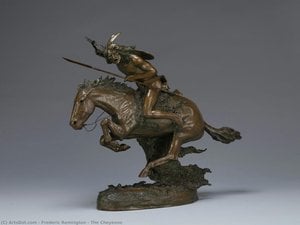
The Broncho Buster
Giclée / Kunstdruck
Format der Reproduktion
-


Gesamtpreis
$ 62
Sammlerstück-Beschreibung
A Monument to the Frontier Spirit: Frederic Remington’s “The Broncho Buster”
Frederic Remington's "The Broncho Buster," created in 1895, isn’t merely a sculpture; it’s a vibrant embodiment of the American West—a romanticized yet undeniably powerful depiction of the cowboy and his relationship with the untamed landscape. This iconic bronze captures a fleeting moment of exhilarating struggle between man and beast, instantly transporting viewers to the dusty plains and rugged trails of the late 19th century. Remington, a self-taught artist initially drawn to military subjects, meticulously researched and immersed himself in the lore of the frontier, transforming his observations into enduring works that continue to resonate today.
The sculpture’s genesis lies within the burgeoning fascination with the West following the Civil War. Remington, despite his Eastern roots, recognized a potent narrative thread—the westward expansion, the clash between civilization and wilderness, and the heroic figures who embodied this dynamic. “The Broncho Buster” became one of his most commercially successful pieces, cementing his reputation as *the* artist of the vanishing West. It was commissioned by Remington’s patron, Joseph Gliddon, and produced in a limited edition of sixty-four sand cast bronzes, making each piece a significant collectible.
Craftsmanship and Technique: A Masterclass in Bronze Casting
Remington's choice to employ the sand casting method for this particular sculpture is crucial to understanding its unique character. This technique, favored by Remington for its ability to retain fine detail from the original clay model, allowed him to meticulously sculpt the musculature of both the cowboy and the horse with remarkable precision. The resulting surface exhibits a rich, dark patina—a testament to the transformative process of bronze casting—that adds depth and visual interest. The sculpture’s base is circular and textured, providing a stable foundation for the dynamic figures above, grounding the scene in its physical reality.
Interestingly, Remington experimented with different casting methods throughout his career, eventually transitioning to the lost wax process at the Roman Bronze Works. However, “The Broncho Buster” stands as a prime example of his skill and mastery with sand casting, showcasing the intricate details achieved through this traditional technique. The welding together of multiple pieces—a testament to the labor-intensive nature of bronze production—further emphasizes the dedication required to bring this monumental work to life.
Symbolism and Narrative: More Than Just a Cowboy Ride
Beyond its immediate depiction of a cowboy taming a wild horse, “The Broncho Buster” carries profound symbolic weight. The image speaks to themes of courage, skill, and the enduring spirit of the frontier. The cowboy’s determined expression, his grip on the reins, and the horse's frantic struggle all contribute to a narrative of control versus chaos—a microcosm of the broader conflict between civilization and nature that defined the American West.
The horse itself is not simply a wild animal; it represents the untamed wilderness, the challenges faced by settlers, and the inherent danger of this new frontier. The cowboy’s victory isn't merely about subjugating the beast but about mastering the environment—a metaphor for the westward expansion and the shaping of America itself. Remington skillfully captures this duality, creating a work that is both thrillingly energetic and deeply symbolic.
A Legacy in Bronze: Collecting and Displaying “The Broncho Buster”
“The Broncho Buster” remains one of Frederic Remington’s most celebrated works, appreciated for its dynamic composition, technical brilliance, and evocative portrayal of the American West. Reproductions are available through reputable art reproduction companies, offering a way to bring this iconic sculpture into your home or office. When selecting a reproduction, consider the materials used—a high-quality print on archival paper will best capture the richness of the original bronze patina. This piece is more than just decoration; it’s a window into a pivotal era in American history and a testament to the enduring allure of the frontier spirit.
Ähnliche Kunstwerke



Über den Künstler
Frühe Jahre und Ausbildung
- Geburt und Familie: Frederic Sackrider Remington wurde am 4. Oktober 1861 in Canton, New York, geboren. Seine Familie hatte französisch-baskische Wurzeln.
- Militärische Prägung: Sein Vater, Colonel Seth Pierrepont Remington, ein Hardwarehändler und Bürgerkriegsveteran, beeinflusste sein frühes Leben maßgeblich. Die Exposition gegenüber militärischen Themen sollte später seine Kunst prägen.
- Frühe Ausbildung: Er besuchte das Vermont Episcopal Institute, eine Militärschule, wo er mit dem Zeichnen begann. Später wechselte er an eine andere Militärakademie, verfolgte aber schließlich aufgrund mangelnder Konzentration die Kunst statt einer militärischen Karriere.
Künstlerische Laufbahn und Stil
- Frühe Illustrationen: Remingtons erste veröffentlichte Illustration war eine Karikatur für das Yale Courant, die ein frühes Talent für die Darstellung von Actionszenen demonstrierte.
- Fokus auf den Westen: Eine entscheidende Reise nach Montana im Jahr 1881 weckte seine Faszination für den amerikanischen Westen, der zum zentralen Thema seiner künstlerischen Karriere wurde.
- Themenwahl: Seine Werke zeigten prominent Cowboys, Native Americans und die US Cavalry und fingen den Geist und die Herausforderungen des Frontier-Lebens ein.
- Künstlerischer Stil: Remington entwickelte einen unverwechselbaren Stil, der sich durch dynamische Kompositionen, energiegeladene Pinselstriche und einen Fokus auf Realismus gepaart mit dramatischem Flair auszeichnete. Er nutzte oft schnelle Skizzen, um Bewegung und Emotion einzufangen.
Wichtige Werke und Errungenschaften
- Bemerkenswerte Gemälde: Mehrere Werke stechen als bedeutende Beispiele seines Talents hervor:
- My Ranch – Zeigt Remingtons einzigartige Perspektive auf den Westen.
- Waiting in the Moonlight – Demonstriert seine Fähigkeit, das Wesen des amerikanischen Westens durch eindringliche Bilder einzufangen.
- Ridden Down (1905) - Eine kraftvolle Darstellung eines Kavallerieangriffs.
- The Long-Horn Cattle Sign (1908) – Fängt die Lebendigkeit des Cowboy-Lebens ein.
- Illustrationen und Skulpturen: Neben der Malerei war Remington auch ein produktiver Illustrator für Zeitschriften wie Harper’s Weekly und Collier’s. Er schuf auch Skulpturen, die seine künstlerische Vielseitigkeit weiter demonstrierten.
- Anerkennung: Seine Arbeit erlangte zu Lebzeiten weite Anerkennung und etablierte ihn als führende Figur in der Kunst des amerikanischen Westens.
Vermächtnis und Einfluss
- Einfluss auf die Western-Kunst: Frederic Remingtons Beiträge zur Darstellung des amerikanischen Westens sind unbestreitbar. Er half, das Genre zu definieren und Bilder von Cowboys, Native Americans und Frontier-Leben populär zu machen.
- Einfluss auf andere Künstler: Seine Arbeit inspirierte zahlreiche Künstler, darunter N.C. Wyeth und Zane Grey.
- Frederic Remington Art Museum: Das Frederic Remington Art Museum in Ogdensburg, New York, bewahrt sein Erbe durch eine umfangreiche Sammlung von Gemälden, Skizzen und Skulpturen.
- Historische Bedeutung: Remingtons Kunst bietet wertvolle Einblicke in die Geschichte, Kultur und Mythologie des amerikanischen Westens während einer Zeit bedeutender Veränderungen und Konflikte. Seine Darstellungen bieten einen Einblick in eine entscheidende Ära der amerikanischen Geschichte, auch wenn sie manchmal romantisiert sind.
Späte Jahre und Tod
- Fortsetzung der künstlerischen Produktion: Remington produzierte bis zu seinem Tod weiterhin produktiv Kunstwerke.
- Gesundheitsverschlechterung: Im Jahr 1909 litt er an Blinddarmentzündung, während er sich auf einer Mission in Florida befand.
- Tod: Frederic Remington starb am 26. Oktober 1909 in Bronxville, New York, im Alter von 48 Jahren. Sein Erbe als bedeutender amerikanischer Künstler inspiriert und fesselt das Publikum bis heute.

Frederic Remington
1861 - 1909 , Vereinigte Staaten von Amerika
Kurzinfos
- Beeinflusste Künstler:
- N. C. Wyeth
- Zane Grey
- Bemerkenswerte Werke:
- My Ranch
- Waiting in the Moonlight
- Ridden Down
- The Long-Horn Cattle Sign
- The Trooper
- The Smoke Signal
- Geburtsdatum: 4. Oktober 1861
- Geburtsort: Canton, Vereinigte Staaten
- Künstlerische Richtung: Realismus Malerei
- Nationalität: Amerikanisch
- Todatum: 26. Dezember 1909
- Vollständiger Name: Frederic Sackrider Remington
Ähnliche Artikel

Die 10 legendärsten Bronzestatuen: Meisterwerke, die Kunstgeschichte schrieben | ArtsDot
Entdecken Sie die 10 legendärsten Bronzestatuen der Kunstgeschichte! Von Rodin bis Michelangelo – erfahren Sie die Geschichten hinter ikonischen Skulpturen und finden Sie hochwertige Reproduktionen für Ihr Zuhause. Jetzt bei ArtsDot entdecken!

Bronze-Meisterwerke: Die 10 Skulpturen, die Kunstgeschichte schrieben | ArtsDot
Entdecken Sie die 10 legendärsten Bronze Skulpturen der Kunstgeschichte! Von Michelangelo bis Rodin – erfahren Sie die Geschichten hinter den Meisterwerken und lassen Sie sich von Wanddeko-Ideen inspirieren. Hochwertige Kunstdrucke auf ArtsDot.com.

The Enduring Legacy of Bronze: A Historical & Artistic Exploration for the Collector
Explore the rich history & enduring appeal of bronze sculpture with expert insights for collectors at ArtsDot. Learn about casting techniques, iconic artists, collecting tips & contemporary interpretations.

The Enduring Legacy of Bronze: History, Technique & Artistic Expression for the Collector
Explore the rich history & enduring appeal of bronze sculpture with expert insights for collectors at ArtsDot. Learn about casting techniques, iconic artists, and collecting tips.

The Enduring Legacy of Bronze Sculpture: A Collector's Guide to Form & Cultural Significance
Explore the rich history & enduring appeal of bronze sculpture with expert insights for collectors at ArtsDot. Learn about casting techniques, iconic artists, and collecting tips to build a discerning art collection.



