


Das Bild passt sich Ihren Auswahlmöglichkeiten an: , .
Beschreibung des Sammlerstücks
Franz Marc's 'Springendes Pferd' fängt die Energie des Expressionismus ein. Ein kraftvolles Tier in leuchtenden Farben, das Freiheit und Spiritualität verkörpert. Entdecken Sie dieses Meisterwerk!
 Weiterlesen
Künstlerbiografie
Entdecken Sie Franz Marc (1880-1916), Pionier des Expressionismus & Mitbegründer der 'Blauen Reiter'. Ikonische Tierbilder, leuchtende Farben & spirituelle Themen erwarten Sie! Erfahren Sie mehr über sein Vermächtnis!
Handgefertigte Ölreproduktion
Handgemaltes Ölgemälde auf Leinwand in Ihrer Wunschgröße und mit Rahmen, auf Bestellung von unseren Künstlern angefertigt. ( Zum Druck wechseln Zum digitalen Bild wechseln)
Mehr über dieses Gemälde
 Vorschau anzeigen
 Versenden
 Teilen
 Details anzeigen
 Leitfaden

 Herunterladen
 Ähnliche Objekte
 Röntgenaufnahme
 Diashow
 Fragen & Antworten
 Statistiken
Bestellen Sie Ihr Gemälde in vier einfachen Schritten
Lassen Sie sich Zeit. Sie können jede Antwort jederzeit ändern; der Preis in Ihrem Warenkorb passt sich jeder Auswahl automatisch an.
1 Schritt eins von vier
Welche Größe möchten Sie wählen?
Diese Formate bewahren die Proportionen des Originalgemäldes. Die Zeichnung zeigt Ihre Auswahl an einer Wand, oberhalb eines zwei Meter breiten Sofas.
Oder geben Sie Ihre eigenen Maße an
Wählen Sie aus unseren vordefinierten Formaten, die den ursprünglichen Proportionen des Kunstwerks entsprechen.

Geben Sie die Breite und die Höhe an, die Sie für Ihren Rahmen oder Ihre Wand benötigen. Da dieses Werk handgemalt ist, kann der Künstler bei einer anderen Form etwas mehr um das Bild herum malen oder etwas abschneiden – Sie entscheiden. Wir senden Ihnen ein digitales Mockup zur Freigabe, bevor mit dem Malen begonnen wird. Das auf dieser Seite gezeigte Bild stellt nicht das tatsächliche Ergebnis dar – dies tut nur das Mockup.
2 Schritt zwei von vier
Wie soll es vorbereitet werden: gerollt, auf Keilrahmen gespannt oder gerahmt?
Die unten aufgeführten Preise beziehen sich auf die in Schritt eins gewählte Größe.
Wählen Sie die Kanten der Leinwand aus
Wählen Sie Ihren Rahmen

Weißer Rand €1

verlaufende Kanten €1

Umrandung €1

P118B €10

P118H €10

P118W €10

P438Z €10

P508JH €12

P508YH €12

P805H €10

P805Z €10

P919BZ €10

P919G €10

P919XJ €10

P959ZH €10

P968JZ €12

W106C €8

W218G €10

W218JH €8

W218Y €10

W307PJ €10

W316G €10

W316PJ €8

W316Y €10

W398PJ €8

W4111J €10

W500HY €15

W500JH €15

W692G €12

W849H €8

W940BG €15

W953PJ €8

H24-GOLD €30

H24-SILVER €30

H36-GOLD €45

H36-SILVER €45
Gerahmt
Profil: . Gesamtgröße mit Rahmen: .
3 Schritt drei von vier
Möchten Sie am Gemälde noch etwas ändern?
Die meisten Menschen antworten mit Nein. Da jedes Gemälde von Hand gefertigt wird, kann unser Künstler es jedoch auch individuell für Sie anpassen.
Nach der Bestellung wird das Team von ArtsDot.com den Kunden per E-Mail kontaktieren, um Anweisungen einzuholen und eine Vorschau des Entwurfs bereitzustellen
4 Schritt vier von vier
Einige Veredelungsmöglichkeiten
Alle Angaben sind optional. Für bereits ausgewählte Antworten entstehen keine zusätzlichen Kosten.
Wer hat es gemalt?
Weltweiter Versand () in nur 3 bis 4 Wochen statt der üblichen 5 Wochen. (5 November). Keine Kompromisse bei der Qualität.
Ein Namensschild, wie im Museum?
Details der gravierten Bronzetafel
This elegant plaque features the artist's name and the title of the artwork, finely engraved for a timeless presentation.
It is made from bronze with a refined, elegant finish. The text is precisely laser-engraved for a sharp and permanent result. Measuring 9x2 cm, the plaque is compact yet easy to read. It's built to be durable and scratch-resistant, offering a professional, museum-quality look. Mounting is simple thanks to the included adhesive backing.
Details zur Acrylglas-Plakette (transparent)
The plaque includes essential engraved details such as the artist's name, the title of the artwork, the date it was created, the type of media used-like oil on canvas or watercolor-a brief description of the piece, and a QR code that links to the complete artwork information.
It is crafted from clear acrylic, offering a sleek, modern appearance. The text is UV-engraved in black to ensure strong visual contrast. With a size of 10x15 cm, it ensures optimal readability. It comes equipped with two metal hooks for secure wall mounting. The plaque is designed to be weather-resistant, making it suitable for various environments, and it includes interactive features that work seamlessly with smartphone scanning.
Details zur schwarzen Acryltafel
This elegant plaque includes engraved information such as the artist's name, the title of the artwork, the date it was created, the type of media used (like oil on canvas or watercolor), a short description of the artwork, and a QR code for quick access to more information.
The plaque itself is made from refined black acrylic with a premium finish. The text is laser-engraved in white for high contrast and readability. Its size is 10x15 cm, designed to be easy to read. It comes with two metal hooks for professional mounting. The design is sleek and fits any interior style. It is also weather-resistant and durable, with built-in digital integration for mobile compatibility.
Ein Schutzlack?
Bis wann benötigen Sie es?
✓ Prüfen und bestellen
Ihr Gemälde, wie von Ihnen bestellt

Springendes Pferd
Art der Reproduktion
Format der Reproduktion
-

Erstklassige Meisterkünstler
Mehr Detailtiefe, Raffinesse und zusätzliche Produktionszeit
-

Rahmen für Reproduktionen
-
-
Bei Kunstwerken oder Reproduktionen, die an einer Seite größer als 105 cm (ca. 41 Zoll) sind, wird der Rahmen zerlegt als Bausatz geliefert. Diese Methode gewährleistet eine sichere Zustellung und verhindert Schäden während des Transports.
Professionelle Montage erforderlich – dies ist kein DIY-Produkt.
Der Bausatz muss von einem erfahrenen professionellen Rahmenmacher zusammengebaut und die Leinwand gespannt werden. Hierfür werden Holzleim (nicht im Lieferumfang enthalten), eine Leinwandspannzange sowie Klemmen benötigt, um die Keilleisten während des Trocknungsvorgangs rechtwinklig zu halten. Eine unsachgemäße Montage oder eine ungleichmäßige Spannung der Leinwand kann das Kunstwerk dauerhaft beschädigen und ist nicht durch unsere Garantie abgedeckt.
 Bei Kunstwerken oder Reproduktionen, die an einer Seite größer als 105 cm (ca. 41 Zoll) sind, wird der Rahmen zerlegt als Bausatz geliefert. Diese Methode gewährleistet eine sichere Zustellung und verhindert Schäden während des Transports.
Alle Vollholzkomponenten sind enthalten, präzise auf Maß zugeschnitten.
Der Zusammenbau erfolgt mit den mitgelieferten Schrauben sowie Holzkleber für die Eckverbindungen, der nicht im Lieferumfang enthalten ist und vom Rahmenbauer selbst beschafft werden muss.
Professionelles Werkzeug ist erforderlich und nicht im Lieferumfang enthalten: eine Keilrahmenzange (Spannwerkzeug) sowie Klammern, um die Leisten während der Trocknungszeit des Klebers rechtwinklig zu fixieren.
Wichtiger Hinweis:
Für die Eckverbindungen wird Holzleim benötigt, die Leisten müssen mit Zwingen fixiert werden, bis der Leim vollständig getrocknet ist, und das Spannen der Leinwand auf dem fertigen Rahmen erfordert eine Keilrahmen-Zange. Keines dieser Utensilien ist im Set enthalten. Bitte stellen Sie sicher, dass ein erfahrener Rahmenmacher zur Verfügung steht, bevor Sie diese Größe bestellen.

Beschriftung
-
-

Schutzlackierung
Glanzlack (verstärkt die Farben, schützt vor Licht und Feuchtigkeit)
-

Mein Kunstwerk personalisieren
Beispiele für Anpassungsmöglichkeiten: Gesicht durch Kundenfoto ersetzen; Haustier hinzufügen (z. B. Katze durch Hund ersetzen); Versteckte Nachricht im Hintergrund einfügen; Hintergrundlandschaft oder -elemente ändern.
-

Eilt sehr
Weltweiter Versand () in nur 3 bis 4 Wochen statt der üblichen 5 Wochen. (5 November). Keine Kompromisse bei der Qualität.
-
Expressversand
Weltweiter Versand () innerhalb von 5 Wochen. (12 November).
Inklusive Versand
Endpreis
€ 234
Die Glasoption ist nur für Größen unter 110 cm verfügbar.
In jeder Bestellung enthalten
- Kostenloser weltweiter Expressversand
- Hochwertige Leinenleinwand
- Umfassender Versicherungsschutz beim Versand
- Zollgebühren-Rückerstattungsgarantie
- Garantie für exakte Farbtreue
- 100 Tage Rückgaberecht (nur bei Mängeln)
- 100% Geld-zurück-Garantie
- Mengenrabatt verfügbar


Franz Marc’s “Jumping Horse”: A Symphony of Color and Spirit
Franz Marc's "Jumping Horse" (1913) isn't merely a depiction of an equine leap; it’s a profound distillation of the Expressionist movement’s core tenets – a vibrant, emotionally charged exploration of the natural world. This painting, housed within ArtsDot’s exceptional collection of hand-painted reproductions, invites us into a realm where color transcends representation and instinct reigns supreme. Marc, deeply influenced by his spiritual leanings and a fascination with animal life, sought to capture not just the outward appearance of a horse, but its very essence – its freedom, energy, and inherent connection to the earth.
The painting’s dynamism is immediately arresting. The horse, rendered in bold strokes of crimson, ochre, and turquoise, dominates the composition, seemingly bursting forth from the canvas with unrestrained power. Its head, tilted slightly towards the viewer, exudes a sense of joyous abandon. Marc masterfully employs distortion – elongating limbs, flattening forms – to heighten the feeling of movement and immediacy. The inclusion of a soaring bird in the upper right corner introduces an element of serenity and grace, a counterpoint to the horse’s raw energy. A cactus and potted plant, strategically placed on either side, ground the scene, providing a visual anchor amidst the swirling colors and suggesting a connection between the wildness of nature and the domestic sphere.
Expressionism: Capturing Inner Experience
“Jumping Horse” is a quintessential example of Expressionist art. Unlike Impressionism’s focus on capturing fleeting moments of light, Expressionism aimed to convey subjective emotions and inner experiences. Marc achieves this through his deliberate use of color – not as a faithful representation of reality, but as a vehicle for expressing feeling. The vibrant palette isn't simply decorative; it’s deeply symbolic. Red signifies passion and vitality, while turquoise evokes the vastness of the sky and the horse’s connection to the heavens. The overall effect is one of heightened intensity, inviting the viewer to step into the artist’s emotional landscape.
Furthermore, Marc's simplification of forms – reducing the horse to its essential shapes – reinforces this expressive intent. He strips away unnecessary detail, focusing instead on capturing the *feeling* of movement and life. This approach aligns with the Expressionist desire to break free from traditional artistic conventions and explore new ways of representing reality.
A Testament to Early 20th-Century Vision
Created in 1913, during a period of immense social and political upheaval, “Jumping Horse” reflects the anxieties and aspirations of its time. The Expressionist movement emerged as a response to the perceived alienation and spiritual emptiness of modern life. Marc’s work can be interpreted as a yearning for connection with nature, a rejection of materialism, and a celebration of instinctual values. The painting's bold colors and emotionally charged imagery resonate powerfully even today, reminding us of the enduring relevance of these themes.
ArtsDot’s meticulous hand-painted reproductions ensure that you can experience the full richness and emotional depth of Marc’s masterpiece. Each brushstroke faithfully captures the artist’s unique style and vision, allowing you to bring this iconic work into your home or office with confidence. Explore the complete collection of Franz Marc's works on ArtsDot – including “The First Animals” and “Fabulous Beast II” – and discover a world of color, spirit, and profound artistic expression.
Further Exploration: Delving Deeper into Marc’s World
To gain a deeper understanding of Franz Marc's life and work, we encourage you to visit the Franz Marc Museum in Kochel am See, Germany (link provided above). This museum offers an unparalleled opportunity to immerse yourself in the artist’s world and examine his paintings firsthand. You can also explore additional resources on ArtsDot, including our comprehensive article on “Top 5 Famous Expressionism Artists of All Time” (link provided above), which provides valuable context for appreciating Marc's place within the broader movement.
For those seeking a more detailed biographical account, we recommend consulting Wikipedia’s entry on Franz Marc (link provided above). This resource offers a comprehensive overview of his life, career, and artistic influences.
Fragen & Antworten
Welche Farbe dominiert in "Springendes Pferd" von Franz Marc?
Ein Goldgelbe Farbtöne Farbton durchzieht "Springendes Pferd" von Franz Marc.
Wie wird die Farbpalette von "Springendes Pferd" von Franz Marc beschrieben?
Die Farben von "Springendes Pferd" bilden eine Erdig-Palette. Diese Klassifizierung beschreibt die dominierenden Farbfamilien.
Wie kann ich das Bild von "Springendes Pferd" von Franz Marc herunterladen?
Für „Springendes Pferd“ steht ein Download zur Verfügung: Die Download-Seite des Kunstwerks bietet hochauflösender digitaler Bild-Download.
Ähnliche Kunstwerke


Franz Marc
1880 - 1916, Deutschland
Künstlerbiografie
Franz Marc: Ein Pionier des Deutschen Expressionismus
Frühes Leben und Ausbildung
- Franz Moritz Wilhelm Marc wurde am 8. Februar 1880 in München, Deutschland, geboren.
- Sein Vater, Wilhelm Marc, war Landschaftsmaler und beeinflusste seinen Sohn zunächst durch seine künstlerischen Neigungen.
- Marc erwog kurz Theologie, bevor er sich der Kunst widmete und nach dem Besuch der Universität München an der Akademie der Bildenden Künste in München studierte.
- Zu den frühen Studien gehörten das Kopieren von Meistern und die Erforschung verschiedener künstlerischer Techniken.
Künstlerische Entwicklung und Einflüsse
- Anfangs wurden Marcs Werke von Impressionismus und akademischen Malstilen beeinflusst.
- Ein entscheidender Moment war seine Besuche in Paris, wo er die Werke von Vincent van Gogh entdeckte und seine Verwendung von Farbe und emotionaler Ausdruck maßgeblich prägte.
- Er experimentierte mit verschiedenen künstlerischen Gruppen wie der Neuen Künstlervereinigung München, bevor er Der Blaue Reiter gemeinsam gründete.
- Auch Robert Delaunays Werk beeinflusste Marcs Erkundung abstrakter Formen und lebendiger Farben.
Der Blaue Reiter und Schlüsselwerke
- Im Jahr 1911 gründete Marc gemeinsam mit Wassily Kandinsky Der Blaue Reiter (Der Blaue Reiter), eine Zeitschrift und Künstlergruppe, die für den deutschen Expressionismus von zentraler Bedeutung wurde.
- Diese Gruppe suchte nach spiritueller Bedeutung in der Kunst und lehnte traditionelle künstlerische Konventionen ab.
- Bekannte Werke aus dieser Zeit sind:
- Der Tiger (1912) – zeigend seinen sich entwickelnden Stil und seine symbolische Verwendung von Tieren.
- Rehdamee (1912) - demonstrierend eine wachsende Konzentration auf Tierdarstellungen.
- Der Turm der blauen Pferde, Die Füchse und das Schicksal der Tiere (1913) – repräsentierend die Culmination seiner künstlerischen Vision.
Themen und Künstlerischer Stil
- Marcs Kunst ist durch ihre lebendigen Farben, vereinfachte Formen und symbolische Darstellung von Tieren gekennzeichnet.
- Er glaubte, dass Tiere eine Reinheit und eine spirituelle Verbindung zur Natur besaßen, die der Mensch verloren hatte.
- Seine Verwendung von Farbe diente nicht nur der Beschreibung, sondern auch dem Ausdruck, Emotionen und innere Zustände zu vermitteln.
- Er versuchte, die Essenz seiner Motive darzustellen, anstatt realistische Darstellungen.
Erster Weltkrieg und tragisches Ende
- Mit dem Ausbruch des Ersten Weltkriegs im Jahr 1914 wurde Marc in die deutsche Armee eingezogen.
- Trotz seines Versuchs, aufgrund seiner künstlerischen Tätigkeit von der Dienstpflicht freigestellt zu werden, diente er als Kavallerieoffizier.
- Er starb am 4. März 1916 im Verlauf der Schlacht an der Verdun tragisch.
- Sein Tod beendete eine vielversprechende Karriere, festigte aber gleichzeitig seinen Platz in der Kunstgeschichte.
Vermächtnis und historische Bedeutung
- Marcs Werk bleibt hoch einflussreich für seine expressive Verwendung von Farbe, symbolische Bilder und spirituelle Tiefe.
- Er gilt als eine Schlüsselgestalt bei der Entwicklung des Deutschen Expressionismus und als Vorläufer der abstrakten Kunst.
- Seine Gemälde werden in großen Museen auf der ganzen Welt ausgestellt, darunter das Lenbachhaus in München, das eine umfangreiche Sammlung seiner Werke beherbergt.
- Marcs künstlerische Vision inspiriert weiterhin Künstler und fesselt das Publikum bis heute.


Ähnliche Artikel

The Noble Steed: A Historical and Artistic Exploration of Horses in Fine Art
Explore the rich history of horses in fine art! From ancient depictions to Renaissance masterpieces & beyond, discover iconic artworks and artists. Learn about symbolism, techniques, and find museum-quality reproductions at ArtsDot.
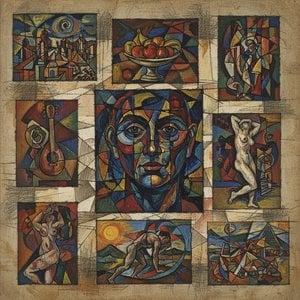
Kubistischer Expressionismus: Die 10 Meisterwerke, die eine Kunstrevolution prägten | ArtsDot
Entdecken Sie die 10 prägendsten Meisterwerke des Kubismus & Expressionismus! Erfahren Sie die Geschichten von Picasso, Braque und mehr. Kunstdrucke in Museumsqualiät für Ihr Zuhause – jetzt auf ArtsDot.com!

The Noble Steed on Canvas: A Historical & Artistic Exploration of Horse Painting Across Cultures
Explore the rich history of horse painting! Discover masterpieces from Stubbs to Munnings & learn about symbolism, techniques & artists. Find museum-quality reproductions at ArtsDot.