

 Vorschau anzeigen
 Versenden
 Teilen
 Details anzeigen
 Leitfaden

 Herunterladen
 Ähnliche Objekte
 Röntgenaufnahme
 Diashow
 Q&A
Q&A Statistiken
Six Monkeys


 Weiterlesen
Giclée / Kunstdruck
Giclée- oder Leinwanddruck in Museumsqualität mit schneller Produktion und flexiblen Veredelungsoptionen. ( Handgemalte Reproduktion bestellen Zum digitalen Bild wechseln)




P118B €10

P118H €10

P118W €10

P438Z €10

P508JH €12

P508YH €12

P805H €10

P805Z €10

P919BZ €10

P919G €10

P919XJ €10

P959ZH €10

P968JZ €12

W106C €8

W218G €10

W218JH €8

W218Y €10

W307PJ €10

W316G €10

W316PJ €8

W316Y €10

W398PJ €8

W4111J €10

W500HY €15

W500JH €15

W692G €12

W849H €8

W940BG €15

W953PJ €8




Wählen Sie aus unseren vordefinierten Formaten, die den ursprünglichen Proportionen des Kunstwerks entsprechen.

Geben Sie die benötigte Breite und Höhe an, damit der Druck perfekt in Ihren Rahmen oder an Ihre Wand passt. Ein Druck kann nur beschnitten, aber niemals größer als das Originalbild angefertigt werden; daher verliert ein Format mit anderen Proportionen einen Teil des Bildes. Wir senden Ihnen ein digitales Mockup zur Freigabe, bevor wir den Druck ausführen. Das auf dieser Seite gezeigte Bild zeigt nicht den tatsächlichen Beschnitt – dies ist nur im Mockup ersichtlich.
Weltweiter Versand () innerhalb von 2 Wochen statt der üblichen 4/5 Wochen. (2 November)

Kostenloser weltweiter Expressversand

Hochwertige Leinenleinwand

Umfassender Versicherungsschutz beim Versand

Zollgebühren-Rückerstattungsgarantie

Garantie für exakte Farbtreue

100 Tage Rückgaberecht (nur bei Mängeln)

100% Geld-zurück-Garantie

Mengenrabatt verfügbar
 Die Glasoption ist nur für Größen unter 110 cm verfügbar.

Six Monkeys
Giclée / Kunstdruck
Format der Reproduktion
-


Endpreis
€ 55
Franz Marc's "Six Monkeys": A Symphony of Spirit and Color
Franz Marc’s “Six Monkeys,” painted in 1913, is more than just a depiction of animals on a boat; it’s a profound meditation on the interconnectedness of life, spirituality, and the animal kingdom – a cornerstone of German Expressionism. Created during a pivotal moment in art history, this work embodies Marc's deeply held belief that nature, particularly its creatures, possessed an inherent spiritual significance. The painting’s dramatic use of black and blue hues immediately establishes a mood of solemnity and introspection, reflecting the artist’s desire to move beyond mere representation towards conveying deeper truths.
- Subject Matter: Six monkeys are arranged on a small boat adrift in a vast, dark ocean. This seemingly simple composition holds layers of symbolic meaning.
- Color Palette: The dominant use of black and blue evokes a sense of melancholy, mystery, and the unknown – colors frequently associated with spiritual contemplation and the subconscious.
- Composition: Marc masterfully employs a triangular composition, drawing the viewer’s eye towards the central group of monkeys, reinforcing their importance within the narrative.
The Expressionist Vision
“Six Monkeys” firmly places Marc within the burgeoning movement of German Expressionism. Unlike Impressionists who sought to capture fleeting moments of light and color, Expressionists aimed to express subjective emotions and inner experiences through distorted forms and intense colors. Marc’s work aligns with this approach, prioritizing emotional impact over realistic depiction. The monkeys aren't simply animals; they are imbued with a sense of vulnerability, loneliness, and perhaps even a hint of existential questioning – feelings that resonate deeply within the viewer.
The painting’s creation coincided with Marc’s exploration of syncretism, blending Christian symbolism with his fascination for animal life. This is evident in the monkeys' postures and expressions, which can be interpreted as echoes of biblical narratives or allegorical representations of human struggles and spiritual journeys. The vastness of the ocean mirrors the immensity of the divine, while the small boat represents humanity’s fragile existence within a larger cosmic order.
Technique and Artistic Process
Marc employed a distinctive technique characterized by bold brushstrokes and a flattened perspective – hallmarks of Expressionism. He utilized oil paints with considerable impasto, building up thick layers of color to create a tactile surface that enhances the painting’s emotional intensity. The meticulous rendering of each monkey's individual expression, coupled with the dramatic lighting, contributes significantly to the work’s captivating quality. His training at the Munich Academy is evident in his skillful handling of form and color, yet he deliberately subverted academic conventions to achieve a more profound artistic effect.
Symbolic Resonance and Lasting Impact
"Six Monkeys" continues to resonate with viewers today due to its timeless themes of isolation, spirituality, and the search for meaning. It’s a powerful reminder of our connection to the natural world and the enduring human desire to understand our place within it. This reproduction offers an exceptional opportunity to own a piece of art history – a testament to Franz Marc's visionary spirit and his profound belief in the power of art to illuminate the deepest aspects of the human condition.
Fragen & Antworten
Inwiefern steht das Sujet von „Six Monkeys“ in Beziehung zu den üblichen Themen von Franz Marc?
"Six Monkeys" stellt monkeys, boat, ocean, animals, color palette, expressionism, landscape dar, während die dokumentierten Themen von Franz Marc van gogh influence, spiritual reflection, animal symbolism, expressionist vision sind. Ein Vergleich der beiden zeigt, wie das Werk mit den üblichen Sujets des Künstlers in Verbindung steht.
Wie verbinden sich Medium und Bewegung in "Six Monkeys"?
In "Six Monkeys" trifft die Acrylic On Canvas-Technik auf die German Expressionism-Strömung.
Kann ich eine Röntgenaufnahme von "Six Monkeys" von Franz Marc sehen?
Die Röntgenansicht von "Six Monkeys" von Franz Marc finden Sie auf der Röntgenblick-Seite des Kunstwerks: eine interaktive Untersuchung des Bildes durch elf optische Schichten.
Ähnliche Kunstwerke


Künstlerbiografie
Franz Marc: Ein Pionier des Deutschen Expressionismus
Frühes Leben und Ausbildung
- Franz Moritz Wilhelm Marc wurde am 8. Februar 1880 in München, Deutschland, geboren.
- Sein Vater, Wilhelm Marc, war Landschaftsmaler und beeinflusste seinen Sohn zunächst durch seine künstlerischen Neigungen.
- Marc erwog kurz Theologie, bevor er sich der Kunst widmete und nach dem Besuch der Universität München an der Akademie der Bildenden Künste in München studierte.
- Zu den frühen Studien gehörten das Kopieren von Meistern und die Erforschung verschiedener künstlerischer Techniken.
Künstlerische Entwicklung und Einflüsse
- Anfangs wurden Marcs Werke von Impressionismus und akademischen Malstilen beeinflusst.
- Ein entscheidender Moment war seine Besuche in Paris, wo er die Werke von Vincent van Gogh entdeckte und seine Verwendung von Farbe und emotionaler Ausdruck maßgeblich prägte.
- Er experimentierte mit verschiedenen künstlerischen Gruppen wie der Neuen Künstlervereinigung München, bevor er Der Blaue Reiter gemeinsam gründete.
- Auch Robert Delaunays Werk beeinflusste Marcs Erkundung abstrakter Formen und lebendiger Farben.
Der Blaue Reiter und Schlüsselwerke
- Im Jahr 1911 gründete Marc gemeinsam mit Wassily Kandinsky Der Blaue Reiter (Der Blaue Reiter), eine Zeitschrift und Künstlergruppe, die für den deutschen Expressionismus von zentraler Bedeutung wurde.
- Diese Gruppe suchte nach spiritueller Bedeutung in der Kunst und lehnte traditionelle künstlerische Konventionen ab.
- Bekannte Werke aus dieser Zeit sind:
- Der Tiger (1912) – zeigend seinen sich entwickelnden Stil und seine symbolische Verwendung von Tieren.
- Rehdamee (1912) - demonstrierend eine wachsende Konzentration auf Tierdarstellungen.
- Der Turm der blauen Pferde, Die Füchse und das Schicksal der Tiere (1913) – repräsentierend die Culmination seiner künstlerischen Vision.
Themen und Künstlerischer Stil
- Marcs Kunst ist durch ihre lebendigen Farben, vereinfachte Formen und symbolische Darstellung von Tieren gekennzeichnet.
- Er glaubte, dass Tiere eine Reinheit und eine spirituelle Verbindung zur Natur besaßen, die der Mensch verloren hatte.
- Seine Verwendung von Farbe diente nicht nur der Beschreibung, sondern auch dem Ausdruck, Emotionen und innere Zustände zu vermitteln.
- Er versuchte, die Essenz seiner Motive darzustellen, anstatt realistische Darstellungen.
Erster Weltkrieg und tragisches Ende
- Mit dem Ausbruch des Ersten Weltkriegs im Jahr 1914 wurde Marc in die deutsche Armee eingezogen.
- Trotz seines Versuchs, aufgrund seiner künstlerischen Tätigkeit von der Dienstpflicht freigestellt zu werden, diente er als Kavallerieoffizier.
- Er starb am 4. März 1916 im Verlauf der Schlacht an der Verdun tragisch.
- Sein Tod beendete eine vielversprechende Karriere, festigte aber gleichzeitig seinen Platz in der Kunstgeschichte.
Vermächtnis und historische Bedeutung
- Marcs Werk bleibt hoch einflussreich für seine expressive Verwendung von Farbe, symbolische Bilder und spirituelle Tiefe.
- Er gilt als eine Schlüsselgestalt bei der Entwicklung des Deutschen Expressionismus und als Vorläufer der abstrakten Kunst.
- Seine Gemälde werden in großen Museen auf der ganzen Welt ausgestellt, darunter das Lenbachhaus in München, das eine umfangreiche Sammlung seiner Werke beherbergt.
- Marcs künstlerische Vision inspiriert weiterhin Künstler und fesselt das Publikum bis heute.

Franz Marc
1880 - 1916 , Deutschland
Kurzinfos
- Beeinflusste Kunstrichtungen: ['Abstrakte Kunst']
- Beeinflusste Künstler: ['Vincent van Gogh']
- Bekannte Werke:
- Der Tiger (1912)
- Rehdamee (1912)
- Turm der blauen Pferde (1913)
- Die Füchse und das Schicksal
- Geburtsdatum: 08. Februar 1880
- Geburtsort: München, Deutschland
- Künstlerische Richtung: Deutscher Expressionismus
- Nationalität: Deutsch
- Todatum: 4. März 1916
- Vollständiger Name: Franz Marc
Ähnliche Artikel

Die Top 10 berühmter Gemälde im Reich der dunklen Töne |
Entdecken Sie die Top 10 berühmter Gemälde, beherrscht von dunklen Tönen! Von Caravaggio bis Manet – erfahren Sie die Geschichten hinter Meisterwerken der Kunstgeschichte. Finden Sie Ihre perfekte Reproduktion auf .
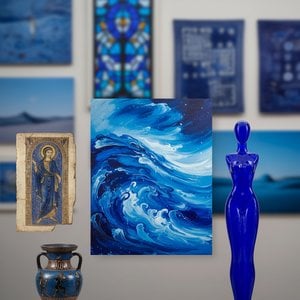
The Allure of Azure: Exploring the Symbolic & Aesthetic Depths of Blue in Art History
Explore the rich history of blue in art! Discover its symbolism, from ancient pigments to modern masterpieces by Kandinsky & Seurat. Uncover the psychological impact and cultural meanings behind this captivating hue.

Die Top 10 Gemälde in Schattierungen von 'Slate Blue': Kunst für Ihr Zuhause
Entdecken Sie die Top 10 Gemälde in faszinierenden 'Slate Blue' Tönen! Von Monet bis Manet – erleben Sie Kunstgeschichte und lassen Sie sich von Meisterwerken inspirieren. Hochwertige Kunstdrucke auf

Deutsche Expressionismus Meisterwerke: Die 10 wichtigsten Kunstwerke für Ihr Zuhause
Entdecken Sie die 10 bedeutendsten Werke des Deutschen Expressionismus! Kirchner, Nolde & Co. – ihre Geschichten, Techniken und zeitlose Schönheit. Hochwertige Kunstdrucke auf ArtsDot.com kaufen und Ihr Zuhause mit emotionaler Kunst bereichern. Jetzt entdecken!

Boote in der Kunst: Die 10 schönsten Meisterwerke & ihre Geschichten | ArtsDot
Entdecken Sie die 10 schönsten Bootsgemälde der Kunstgeschichte! Von Monet bis Van Gogh – erfahren Sie die Geschichten hinter ikonischen Werken, Techniken & Marinemalerei. Hochwertige Reproduktionen auf ArtsDot.com.


